Charging is possible by using a regular wall plug or a charging station. Public charging is always done through a charging station. How fast the EV can charge depends on the charging station (EVSE) used and the maximum charging capacity of the EV. The table below shows all possible options for charging the Hyundai INSTER Long Range. Each option shows how fast the battery can be charged from empty to full.
Europe
Charging an EV in Europe differs by country. Some European countries primarily use 1-phase connections to the grid, while other countries are almost exclusively using a 3-phase connection. The table below shows all possible ways the Hyundai INSTER Long Range can be charged, but some modes of charging might not be widely available in certain countries.
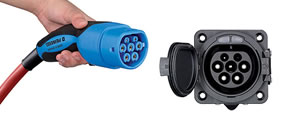
Type 2 (Mennekes - IEC 62196)
Charging Point
Max. Power
Power
Time
Rate
Wall Plug (2.3 kW)
230V / 1x10A
2.3 kW
23h45m
12 km/h
1-phase 16A (3.7 kW)
230V / 1x16A
3.7 kW
14h45m
20 km/h
1-phase 32A (7.4 kW)
230V / 1x32A
7.4 kW
7h30m
39 km/h
3-phase 16A (11 kW)
400V / 3x16A
11 kW
5 hours
59 km/h
3-phase 32A (22 kW)
400V / 3x16A
11 kW †
5 hours
59 km/h
† = Limited by on-board charger, vehicle cannot charge faster.
Fast Charging (10 -> 80%)
Rapid charging enables longer journeys by adding as much range as possible in the shortest amount of time. Charging power will decrease significantly after 80% state-of-charge has been reached. A typical rapid charge therefore rarely exceeds 80% SoC. The rapid charge rate of an EV depends on the charger used and the maximum charging power the EV can handle. The table below shows all details for rapid charging the Hyundai INSTER Long Range.
Max. Power: maximum power provided by charge point
Avg. Power: average power provided by charge point over a session from 10% to 80%
Time: time needed to charge from 10% to 80%
Rate: average charging speed over a session from 10% to 80%
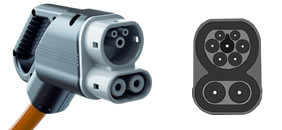
Combined Charging System (CCS Combo 2)
Charging Point
Max. Power
Avg. Power
Time
Rate
CCS (50 kW DC)
50 kW
40 kW †
51 min
240 km/h
CCS (100 kW DC)
85 kW †
70 kW †
29 min
420 km/h
CCS (150 kW DC)
85 kW †
70 kW †
29 min
420 km/h
This vehicle does not support Plug & Charge
† = Limited by charging capabilities of vehicle
Plug & Charge: allows for automatic initiation of a charging session at supported CCS charging stations in accordance with ISO 15118.
Actual charging rates may differ from data shown due to factors like outside temperature, state of the battery and driving style.
Hyundai Claimed Specifications
The table below shows the claimed specifications from the manufacturer for charging the Hyundai INSTER Long Range. The specifications can differ from the table above for a variety of reasons. If real-world charge tests are available, these differences can be signifcant. If no real-world tests are available, the table above will be based on the manufacturer specifications as per the table below.
Max. Power: maximum charge power during charging session
Charge From: battery percentage (% SoC) where charging session is started
Charge To: battery percentage (% SoC) where charging session is ended
Time: time needed for charging session
Hyundai Claimed Specifications
Max. Power
Charge From
Charge To
Time
85 kW
10 %
80 %
30 min
Dimensions and Weight
Length
3825 mm
Width
1610 mm
Width with mirrors
No Data
Height
1575 mm
Wheelbase
2580 mm
Weight Unladen (EU)
1418 kg
Gross Vehicle Weight (GVWR)
1745 kg
Max. Payload
402 kg
Cargo Volume
280 L
Cargo Volume Max
351 L
Cargo Volume Frunk
No Data
Roof Load
75 kg
Tow Hitch Possible
No Data
Towing Weight Unbraked
No Data
Towing Weight Braked
No Data
Vertical Load Max
No Data
About this Vehicle
Hyundai INSTER Long Range Overview
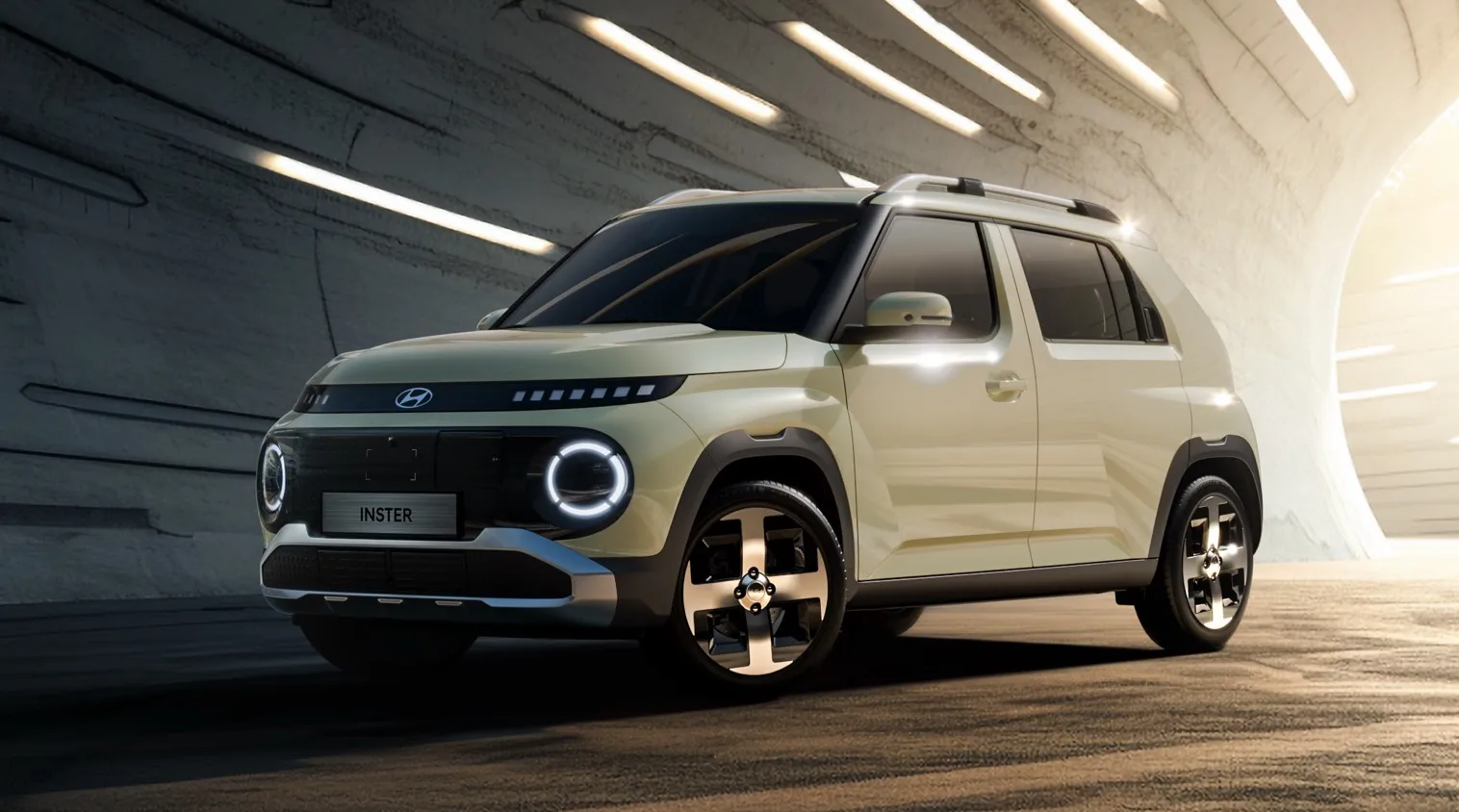
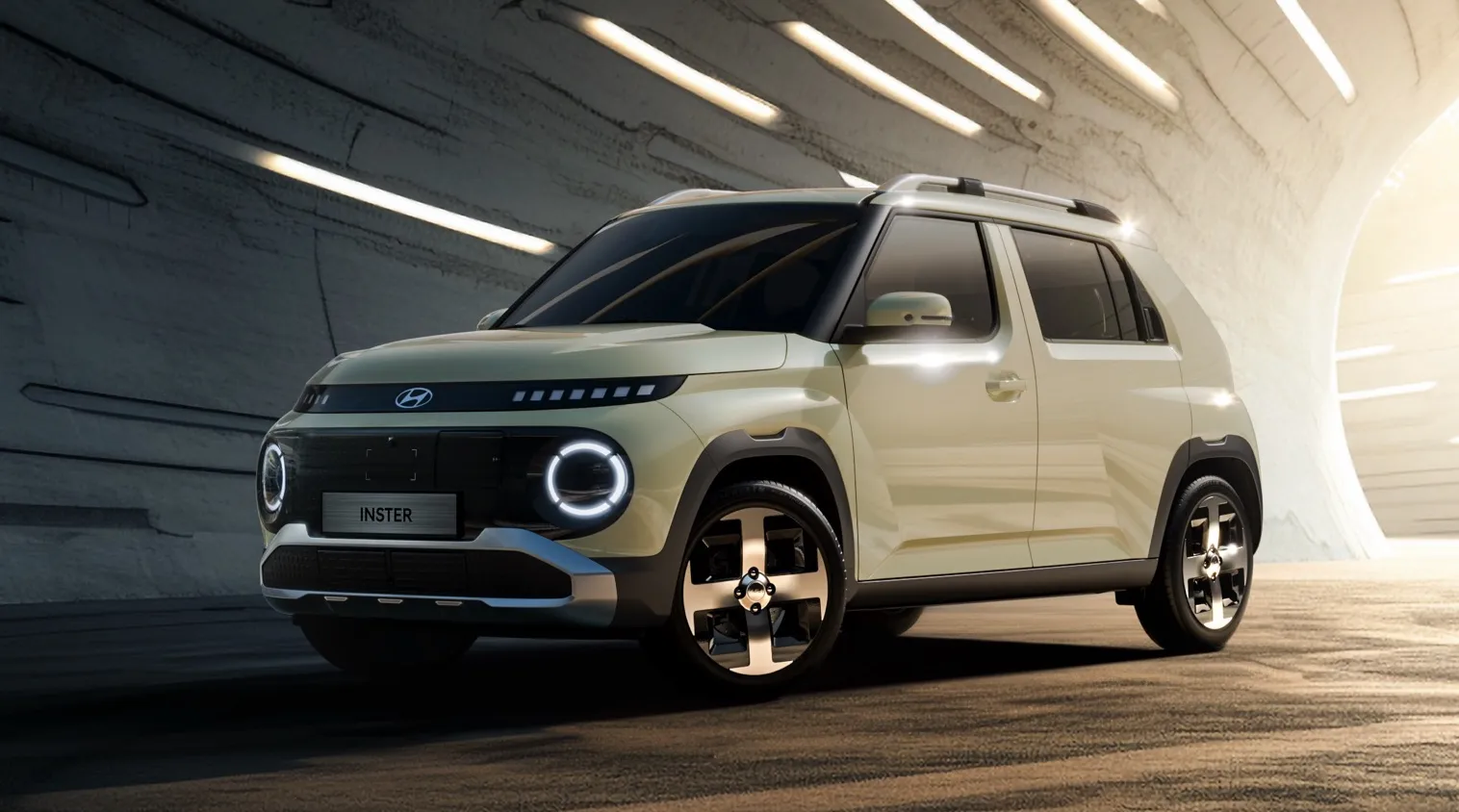
The Hyundai INSTER Long Range is Hyundai’s new A-segment electric SUV, positioned as an affordable but tech-rich city EV with genuinely usable range beyond the urban core. It targets drivers who want a compact footprint for tight streets and parking, but who don’t want to compromise on EV specs, safety tech, or refinement. With its boxy crossover stance, upright seating, and clever packaging, the INSTER Long Range bridges the gap between a city car and a small SUV.
Built on a modified compact platform rather than a dedicated skateboard EV architecture, the Hyundai IONIQ Long Range focuses on efficiency, lightweight design, and smart use of space, rather than outright performance. Hyundai’s pixel-inspired design language, modern LED lighting and contrasting trim give it a distinctive, almost “mini Ioniq” look. The tech story is strong too, with a heat pump, battery pre-conditioning, OTA updates and Vehicle-to-Load (V2L) capability available. In the crowded small EV market, the INSTER Long Range matters because it delivers up to around 229 miles WLTP range in a city-sized footprint, making it one of the most practical and efficient small electric SUVs currently available.
Hyundai INSTER Long Range Performance and Driving Experience
On the road, the Hyundai INSTER Long Range favours smooth, efficient progress over outright speed, but it still feels nippy in typical city and suburban driving. A single front-mounted motor produces about 115 hp (84.5 kW) and 147 Nm of torque, driving the front wheels (FWD only). Hyundai quotes around 10.6 seconds 0-100 km/h, which translates to roughly 10.3 seconds 0-60 mph – perfectly adequate for merging, overtaking at lower speeds and brisk urban getaways.
The steering is light and the turning circle tight, which makes the INSTER Long Range very maneuverable in congested streets and parking garages. Suspension tuning leans toward comfort, soaking up poor surfaces well for such a short-wheelbase EV, while the low centre of gravity from the battery keeps body roll in check. There is no AWD option, and Hyundai is not expected to add one, but the front-wheel-drive setup and stability systems provide predictable, confidence-inspiring traction in most conditions.
Specification
Value
0-60 mph (0-100 km/h)
~10.3 sec / 10.6 sec
Top Speed
93 mph / 150 km/h
Power Output
115 hp / 84.5 kW
Torque
108 lb-ft / 147 Nm
Hyundai INSTER Long Range and Battery Specifications
The headline figure for the Hyundai INSTER Long Range WLTP range is around 229 miles (370 km) on the most efficient 15-inch wheel configuration, putting it at the top of its class for a small urban EV. In mixed real-world driving, you should expect the Hyundai INSTER Long Range real-world range to land between 160–280 miles (260–450 km) depending on climate, speed and driving style, with many owners likely seeing around 200–230 miles on a charge in mild conditions.
Under the floor sits a 49 kWh battery (about 46 kWh usable) using NMC chemistry, tuned for high efficiency rather than high performance. Official consumption figures are as low as 14.9–15.3 kWh/100 km, which equates to roughly 4.1–4.2 mi/kWh – strong numbers for any electric vehicle, especially one with SUV-style aerodynamics. Cold weather, high motorway speeds, roof accessories and aggressive acceleration will all cut into range, while city driving at moderate temperatures will maximise it.
Range Metric
Value
WLTP Range
229 miles / 370 km
EPA Range
N/A (not yet rated)
Real-World Range
~200–230 miles / ~320–370 km (typical)
Battery Capacity
46 kWh usable (49 kWh gross)
Hyundai INSTER Long Range Charging Times and Options
For home use, the Hyundai INSTER Long Range comes with an 11 kW onboard AC charger, making it ideal for overnight charging on a 3‑phase wallbox. On a typical 7 kW single-phase home charger, you can comfortably recharge from low to full in a working day or overnight. Public AC posts at 11 kW will refill the battery in roughly 4.5–5 hours. The car also features a standard battery heating system and is available with a high-efficiency heat pump to help preserve range and charge speeds in colder climates.
On the DC side, the INSTER Long Range supports fast charging up to 85–120 kW depending on the source, with Hyundai quoting 10–80% in around 30 minutes under optimal conditions. That makes it perfectly viable for occasional longer trips, even if this is primarily a city-focused EV. CCS compatibility gives access to most major rapid charging networks in Europe and other markets, and V2L functionality allows you to power external devices like e-bikes, laptops or camping equipment straight from the vehicle.
Charging Method
Time
Speed
Level 1 (120V)
~24–30 hours (0–100%)
~2 kW
Level 2 (240V/7kW)
~7 hours (0–100%)
~7 kW
Level 2 (240V/11kW)
~4.5–5 hours (0–100%)
~11 kW
DC Fast Charge (10-80%)
~30 min
up to 85–120 kW
Hyundai INSTER Long Range vs Competitors
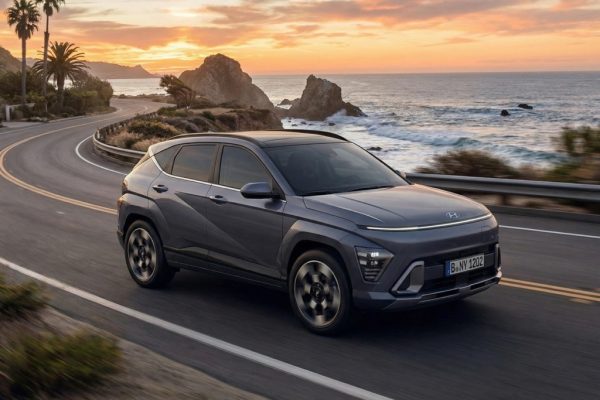
In a Hyundai INSTER Long Range comparison with rivals like the Hyundai Kona Electric, Kia EV3, and smaller premium EVs such as the BMW iX1, the INSTER trades outright space and performance for price and city-friendly dimensions. Versus a Tesla Model 3 or Model Y, the INSTER Long Range is much smaller and slower, but easier to park and significantly more affordable while still offering respectable range. For buyers considering Hyundai INSTER Long Range vs Kona Electric, the Kona is the better all-rounder for frequent long trips, while the INSTER Long Range is optimised for urban use with lower running costs, lighter weight and a more compact footprint.
Frequently Asked Questions
In everyday mixed driving, the Hyundai INSTER Long Range typically delivers around 200–230 miles (320–370 km) on a full charge, depending on temperature, speed and driving style, compared with its official 229-mile (370 km) WLTP rating.
On a 7 kW home wallbox, a 0–100% charge takes about 7 hours, while a full 11 kW AC supply can do the same in roughly 4.5–5 hours. Using a compatible DC fast charger, the Hyundai INSTER Long Range can go from 10–80% in about 30 minutes under optimal conditions.
The Hyundai INSTER Long Range is front-wheel drive (FWD) only, with a single electric motor on the front axle. Hyundai has not announced any AWD or dual-motor versions.
Hyundai’s Vehicle-to-Load (V2L) system in the INSTER Long Range allows the high-voltage battery to power external devices via internal and external outlets. You can run or charge items like laptops, e-bikes or camping gear directly from the car without additional inverters.
Compared with a Tesla Model 3, the Hyundai INSTER Long Range is smaller, less powerful and has a shorter motorway range, but it is easier to maneuver in cities, generally cheaper to buy, and designed as a compact urban EV rather than a long-distance cruiser.
The Hyundai INSTER Long Range is a strong choice if you want a compact electric SUV with excellent efficiency, competitive range for its size, fast charging, and useful tech like a heat pump and V2L. Its main drawbacks are modest performance, no AWD option and a smaller cabin than larger EV crossovers, but as a city-focused EV, it is one of the most compelling options currently available.> The Hyundai INSTER Long Range is a sub-compact electric SUV from Hyundai offering up to around 229 miles (370 km) WLTP range from a 49 kWh battery, plus a 115 hp front-mounted motor and DC fast charging in about 30 minutes from 10–80%. With efficient energy use, V2L functionality and city-friendly dimensions, the Hyundai INSTER Long Range stands out as an affordable, highly efficient small EV for urban and suburban drivers.


 Hyundai
 Hyundai
 Hyundai
 Hyundai