Charging is possible by using a regular wall plug or a charging station. Public charging is always done through a charging station. How fast the EV can charge depends on the charging station (EVSE) used and the maximum charging capacity of the EV. The table below shows all possible options for charging the BYD SEAL 82.5 kWh RWD Design. Each option shows how fast the battery can be charged from empty to full.
Europe
Charging an EV in Europe differs by country. Some European countries primarily use 1-phase connections to the grid, while other countries are almost exclusively using a 3-phase connection. The table below shows all possible ways the BYD SEAL 82.5 kWh RWD Design can be charged, but some modes of charging might not be widely available in certain countries.
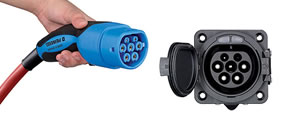
Type 2 (Mennekes - IEC 62196)
Charging Point
Max. Power
Power
Time
Rate
Wall Plug (2.3 kW)
230V / 1x10A
2.3 kW
42h15m
11 km/h
1-phase 16A (3.7 kW)
230V / 1x16A
3.7 kW
26h15m
18 km/h
1-phase 32A (7.4 kW)
230V / 1x32A
7.4 kW
13h15m
36 km/h
3-phase 16A (11 kW)
400V / 3x16A
11 kW
9 hours
53 km/h
3-phase 32A (22 kW)
400V / 3x16A
11 kW †
9 hours
53 km/h
† = Limited by on-board charger, vehicle cannot charge faster.
Fast Charging (10 -> 80%)
Rapid charging enables longer journeys by adding as much range as possible in the shortest amount of time. Charging power will decrease significantly after 80% state-of-charge has been reached. A typical rapid charge therefore rarely exceeds 80% SoC. The rapid charge rate of an EV depends on the charger used and the maximum charging power the EV can handle. The table below shows all details for rapid charging the BYD SEAL 82.5 kWh RWD Design.
Max. Power: maximum power provided by charge point
Avg. Power: average power provided by charge point over a session from 10% to 80%
Time: time needed to charge from 10% to 80%
Rate: average charging speed over a session from 10% to 80%
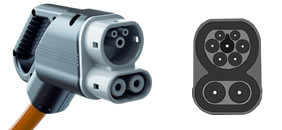
Combined Charging System (CCS Combo 2)
Charging Point
Max. Power
Avg. Power
Time
Rate
CCS (50 kW DC)
50 kW
45 kW †
81 min
240 km/h
CCS (100 kW DC)
100 kW
80 kW †
46 min
430 km/h
CCS (150 kW DC)
150 kW
95 kW †
38 min
530 km/h
CCS (175 kW DC)
150 kW †
95 kW †
38 min
530 km/h
CCS (350 kW DC)
150 kW †
95 kW †
38 min
530 km/h
This vehicle supports Autocharge
This vehicle does not support Plug & Charge
† = Limited by charging capabilities of vehicle
Autocharge: allows for automatic initiation of a charging session at supported CCS charging stations.
Plug & Charge: allows for automatic initiation of a charging session at supported CCS charging stations in accordance with ISO 15118.
Actual charging rates may differ from data shown due to factors like outside temperature, state of the battery and driving style.
BYD Claimed Specifications
The table below shows the claimed specifications from the manufacturer for charging the BYD SEAL 82.5 kWh RWD Design. The specifications can differ from the table above for a variety of reasons. If real-world charge tests are available, these differences can be signifcant. If no real-world tests are available, the table above will be based on the manufacturer specifications as per the table below.
Max. Power: maximum charge power during charging session
Charge From: battery percentage (% SoC) where charging session is started
Charge To: battery percentage (% SoC) where charging session is ended
Time: time needed for charging session
BYD Claimed Specifications
Max. Power
Charge From
Charge To
Time
150 kW
10 %
80 %
37 min
Dimensions and Weight
Length
4800 mm
Width
1875 mm
Width with mirrors
2150 mm
Height
1460 mm
Wheelbase
2920 mm
Weight Unladen (EU)
2130 kg
Gross Vehicle Weight (GVWR)
2501 kg
Max. Payload
446 kg
Cargo Volume
400 L
Cargo Volume Max
No Data
Cargo Volume Frunk
53 L
Roof Load
No Data
Tow Hitch Possible
No Data
Towing Weight Unbraked
No Data
Towing Weight Braked
No Data
Vertical Load Max
No Data
About this Vehicle
BYD SEAL 82.5 kWh RWD Design Overview
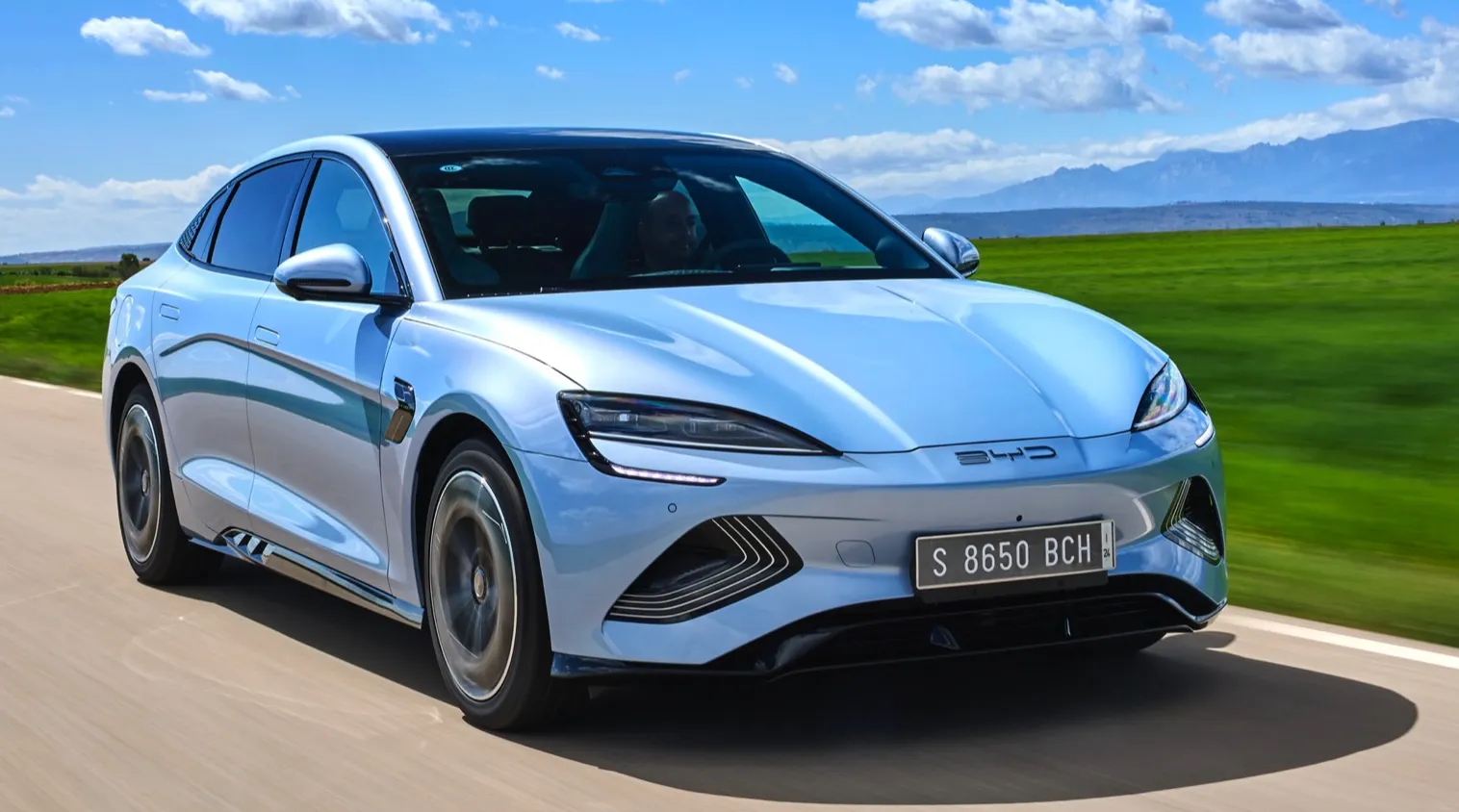
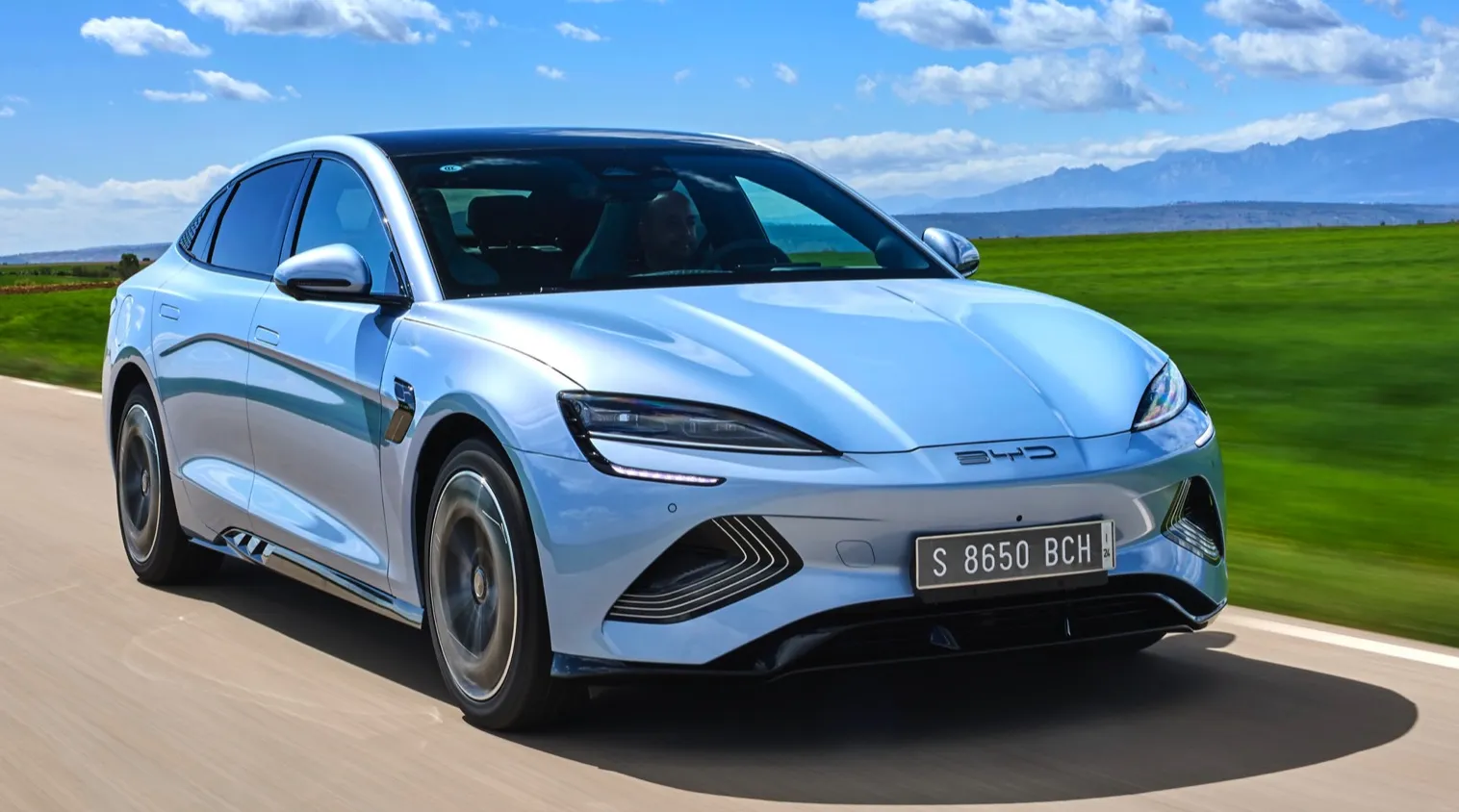
The BYD SEAL 82.5 kWh RWD Design positions itself as a premium electric sedan in the competitive EV market, blending striking aesthetics with advanced Chinese engineering at a compelling price point of around $42,490 in the US. Targeted at tech-savvy drivers seeking a stylish alternative to mainstream EVs, it appeals to urban professionals and enthusiasts who prioritize design, safety, and value over established brand loyalty. Built on BYD’s e-Platform 3.0, the BYD Seal features the innovative LFP Blade battery for superior safety and longevity, a low-slung silhouette inspired by ocean dynamics, and a unique rotating 15.6-inch touchscreen that sets it apart in the BYD electric sedan segment.
What makes the BYD SEAL 82.5 kWh RWD Design matter in the EV landscape is its bold entry into markets like the US, challenging Tesla’s dominance with impressive EV specs, including real-world range exceeding 300 miles and engaging rear-wheel-drive dynamics. In this BYD Seal review, the model’s electric vehicle range, premium interior with panoramic roof, and 400L trunk plus frunk highlight its practicality. As BYD expands globally, the Seal underscores the rise of affordable, high-tech EVs from China, backed by an 8-year battery warranty.
BYD SEAL 82.5 kWh RWD Design Performance and Driving Experience
The BYD SEAL 82.5 kWh RWD Design delivers spirited performance with its single Permanent Magnet Synchronous Motor producing 308 hp and 266 lb-ft of torque, propelling it from 0-60 mph in 5.7 seconds. Rear-wheel drive enhances handling with playful dynamics, offering a comfortable ride for daily commutes and adjustable regenerative braking for efficient energy recovery. Real-world impressions praise its zesty acceleration, precise steering, and balanced chassis, making it engaging for enthusiasts without sacrificing refinement.
Specification
Value
0-60 mph (0-100 km/h)
5.7 sec
Top Speed
112 mph / 180 km/h
Power Output
308 hp / 230 kW
Torque
266 lb-ft / 360 Nm
BYD SEAL 82.5 kWh RWD Design Range and Battery Specifications
Boasting an 82.5 kWh usable LFP Blade battery, the BYD SEAL 82.5 kWh RWD Design achieves a WLTP range of 354 miles, with EPA estimates around 300 miles and real-world figures of 301 miles under mixed conditions. Energy efficiency stands at 3.65 mi/kWh, influenced by factors like cold weather, aggressive driving, or highway speeds that can reduce range by 10-20%. The Blade battery’s structural integration boosts rigidity and safety, earning top crash ratings.
BYD Seal WLTP range excels for long trips, while real-world range holds up well in tests, and battery specs include an 8-year warranty for peace of mind.
Range Metric
Value
WLTP Range
354 miles / 570 km
EPA Range
~300 miles / 483 km
Real-World Range
301 miles / 484 km
Battery Capacity
82.5 kWh (usable)
BYD SEAL 82.5 kWh RWD Design Charging Times and Options
Home charging is straightforward with the onboard 11 kW AC charger, filling the battery in about 7.5 hours on a Level 2 setup, ideal for overnight top-ups. DC fast charging peaks at 150 kW, enabling a 10-80% charge in 30 minutes, compatible with CCS in Europe and likely NACS for US models. Practical scenarios include quick highway sessions or garage Level 2 for daily use, though speeds aren’t class-leading.
Charging Method
Time
Speed
Level 1 (120V)
24 hours
~1.4 kW
Level 2 (240V/7kW)
11 hours
~7 kW
Level 2 (240V/11kW)
7.5 hours
~11 kW
DC Fast Charge (10-80%)
30 min
up to 150 kW
BYD SEAL 82.5 kWh RWD Design vs Competitors
In the BYD Seal vs Tesla Model 3 matchup, the Seal 82.5 kWh RWD Design offers superior real-world range at 301 miles and a unique rotating screen versus the Model 3’s 272 miles EPA, though Tesla edges in charging speed and supercharger access. Compared to the Hyundai Ioniq 6, the BYD Seal matches acceleration at 5.7 seconds 0-60 while undercutting price, but trails the Ioniq’s 800V architecture for faster charges. Against the BMW i4, it provides better value with similar power but lacks the premium badge appeal in the BYD Seal comparison.
Frequently Asked Questions
The BYD SEAL 82.5 kWh RWD Design delivers around 301 miles in real-world tests, with 354 miles WLTP and efficiency of 3.65 mi/kWh; expect 250-280 miles in cold weather or highway driving.
Level 2 (11 kW) takes 7.5 hours for a full charge, while DC fast charging at 150 kW achieves 10-80% in 30 minutes, suiting daily and road-trip needs.
It’s strictly RWD with a single 308 hp rear motor for engaging handling; AWD variants exist in other trims with 523 hp.
The LFP Blade battery is a structural 82.5 kWh pack using lithium iron phosphate chemistry for enhanced safety, no fire risk, and integration into the chassis for supercar-level stiffness.
The BYD Seal beats Model 3 on range (301 vs 272 miles real-world) and features like the rotating screen at a lower price, but Tesla leads in charging network and software.
Yes, with pros like 301-mile range, 5.7-second 0-60, safe Blade battery, and premium design; cons include new US brand presence and average DC speeds.> The BYD SEAL 82.5 kWh RWD Design is a premium electric sedan with 308 hp, 301-mile real-world range, and an 82.5 kWh LFP Blade battery for top safety. It stands out with RWD dynamics, a rotating touchscreen, and value pricing versus Tesla Model 3, making it ideal for style-conscious EV buyers seeking efficiency and fun.


 BYD
BYD
 BYD
BYD
 BYD
BYD
 BYD
BYD