Charging is possible by using a regular wall plug or a charging station. Public charging is always done through a charging station. How fast the EV can charge depends on the charging station (EVSE) used and the maximum charging capacity of the EV. The table below shows all possible options for charging the BMW iX1 eDrive20. Each option shows how fast the battery can be charged from empty to full.
Europe
Charging an EV in Europe differs by country. Some European countries primarily use 1-phase connections to the grid, while other countries are almost exclusively using a 3-phase connection. The table below shows all possible ways the BMW iX1 eDrive20 can be charged, but some modes of charging might not be widely available in certain countries.
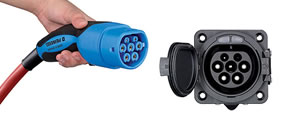
Type 2 (Mennekes - IEC 62196)
Charging Point
Max. Power
Power
Time
Rate
Standard 11.0 kW On-Board Charger
Wall Plug (2.3 kW)
230V / 1x10A
2.3 kW
33h15m
12 km/h
1-phase 16A (3.7 kW)
230V / 1x16A
3.7 kW
20h45m
19 km/h
1-phase 32A (7.4 kW)
230V / 1x32A
7.4 kW
10h30m
37 km/h
3-phase 16A (11 kW)
400V / 3x16A
11 kW
7 hours
56 km/h
3-phase 32A (22 kW)
400V / 3x16A
11 kW †
7 hours
56 km/h
Optional 22.0kW On-Board Charger
Wall Plug (2.3 kW)
230V / 1x10A
2.3 kW
33h15m
12 km/h
1-phase 16A (3.7 kW)
230V / 1x16A
3.7 kW
20h45m
19 km/h
1-phase 32A (7.4 kW)
230V / 1x32A
7.4 kW
10h30m
37 km/h
3-phase 16A (11 kW)
400V / 3x16A
11 kW
7 hours
56 km/h
3-phase 32A (22 kW)
400V / 3x32A
22 kW †
3h30m
110 km/h
† = Limited by on-board charger, vehicle cannot charge faster.
Fast Charging (10 -> 80%)
Rapid charging enables longer journeys by adding as much range as possible in the shortest amount of time. Charging power will decrease significantly after 80% state-of-charge has been reached. A typical rapid charge therefore rarely exceeds 80% SoC. The rapid charge rate of an EV depends on the charger used and the maximum charging power the EV can handle. The table below shows all details for rapid charging the BMW iX1 eDrive20.
Max. Power: maximum power provided by charge point
Avg. Power: average power provided by charge point over a session from 10% to 80%
Time: time needed to charge from 10% to 80%
Rate: average charging speed over a session from 10% to 80%
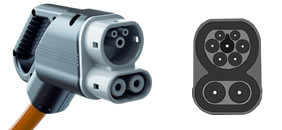
Combined Charging System (CCS Combo 2)
Charging Point
Max. Power
Avg. Power
Time
Rate
CCS (50 kW DC)
40 kW †
39 kW †
73 min
220 km/h
CCS (150 kW DC)
128 kW †
94 kW †
30 min
540 km/h
Charge Curve
Data made available by Fastned
This vehicle does not support Autocharge
This vehicle does not support Plug & Charge
† = Limited by charging capabilities of vehicle
Autocharge: allows for automatic initiation of a charging session at supported CCS charging stations.
Plug & Charge: allows for automatic initiation of a charging session at supported CCS charging stations in accordance with ISO 15118.
Actual charging rates may differ from data shown due to factors like outside temperature, state of the battery and driving style.
BMW Claimed Specifications
The table below shows the claimed specifications from the manufacturer for charging the BMW iX1 eDrive20. The specifications can differ from the table above for a variety of reasons. If real-world charge tests are available, these differences can be signifcant. If no real-world tests are available, the table above will be based on the manufacturer specifications as per the table below.
Max. Power: maximum charge power during charging session
Charge From: battery percentage (% SoC) where charging session is started
Charge To: battery percentage (% SoC) where charging session is ended
Time: time needed for charging session
BMW Claimed Specifications
Max. Power
Charge From
Charge To
Time
130 kW
10 %
80 %
29 min
Dimensions and Weight
Length
4500 mm
Width
1845 mm
Width with mirrors
2104 mm
Height
1616 mm
Wheelbase
2692 mm
Weight Unladen (EU)
1940 kg
Gross Vehicle Weight (GVWR)
2435 kg
Max. Payload
570 kg
Cargo Volume
490 L
Cargo Volume Max
1495 L
Cargo Volume Frunk
0 L
Roof Load
75 kg
Tow Hitch Possible
Yes
Towing Weight Unbraked
750 kg
Towing Weight Braked
750 kg
Vertical Load Max
75 kg
About this Vehicle
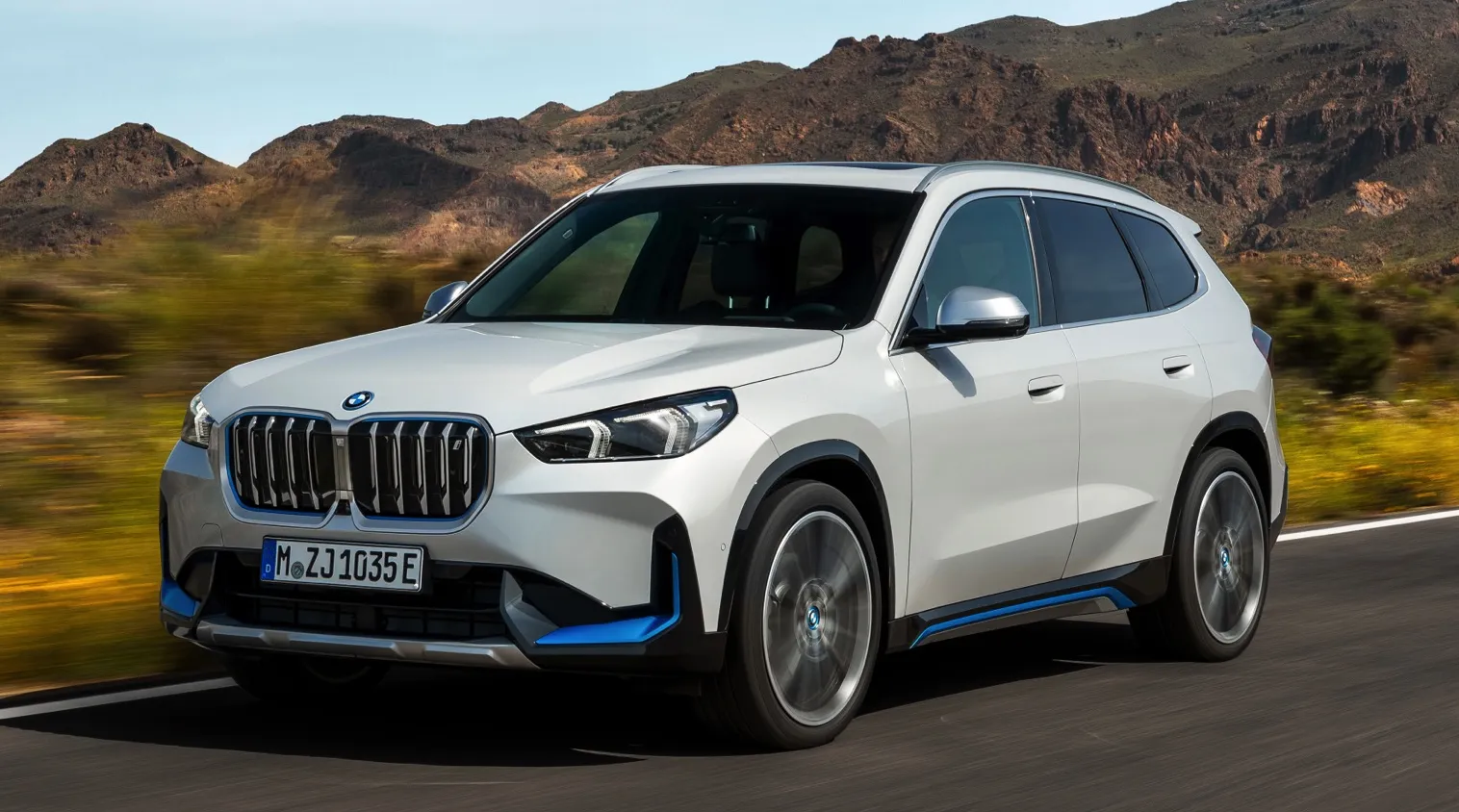
BMW iX1 eDrive20 Overview
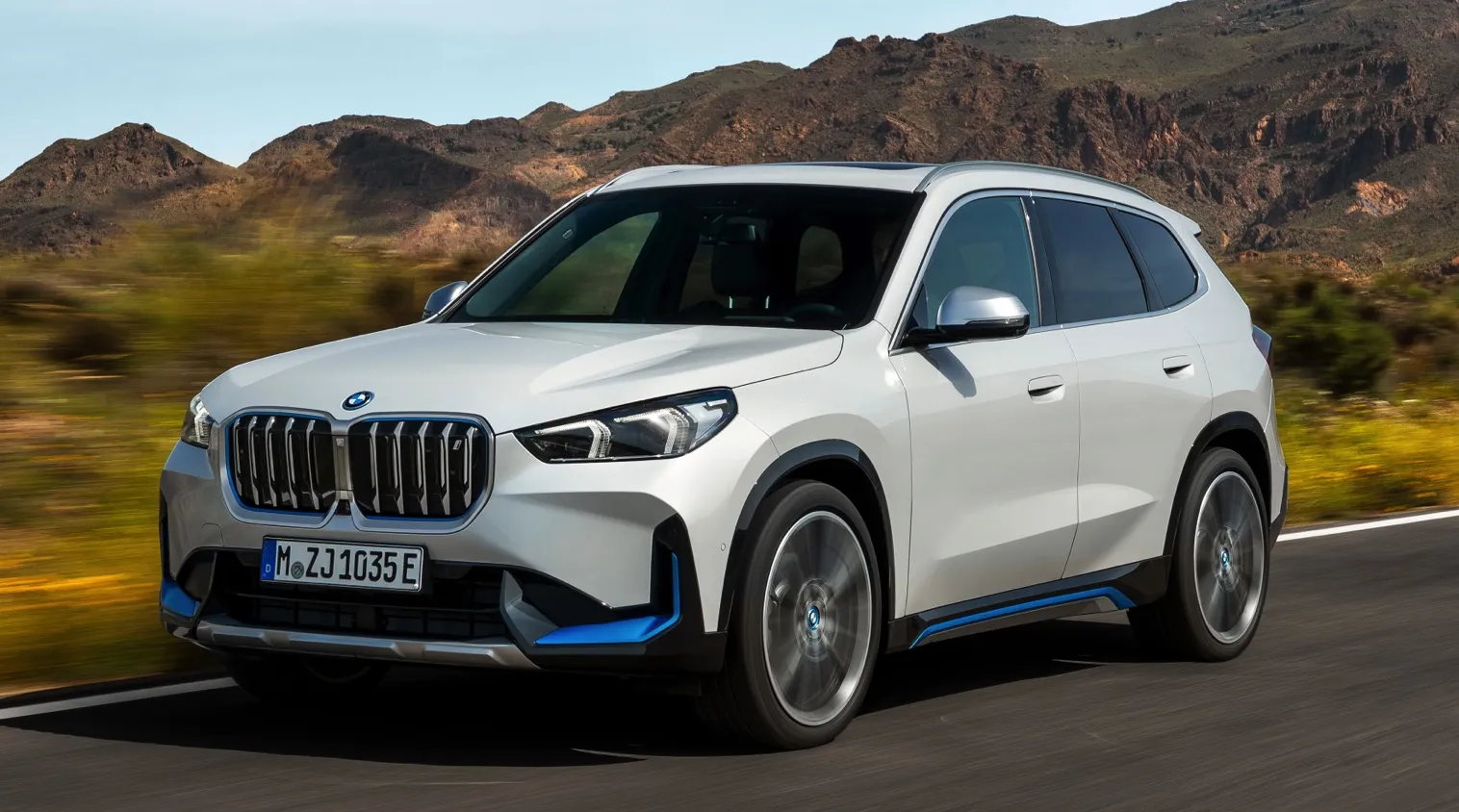
The BMW iX1 eDrive20 is a compact premium electric SUV that positions itself as an accessible entry point into BMW’s electrified lineup. This front-wheel-drive model targets urban professionals and families seeking a practical, efficient electric vehicle with the prestige of the BMW brand. The iX1 eDrive20 combines BMW’s renowned engineering with modern EV technology, featuring a single permanent magnet synchronous motor that delivers responsive performance without compromising efficiency. Measuring 177.2 inches long and 72.6 inches wide, the iX1 eDrive20 offers a confident stance while maintaining maneuverability for city driving. What sets this BMW electric SUV apart is its adaptive suspension system with electronically controlled damping, available across all trims, ensuring a refined driving experience that balances comfort with dynamic handling.
The BMW iX1 eDrive20 represents BMW’s commitment to making premium electric vehicles more accessible to mainstream buyers. With its compact dimensions and efficient powertrain, this electric SUV appeals to those transitioning from traditional combustion engines while maintaining the luxury expectations BMW customers demand. The model’s design philosophy emphasizes practicality without sacrificing the brand’s characteristic elegance, making it an ideal choice for daily commuting and weekend adventures.
BMW iX1 eDrive20 Performance and Driving Experience
The iX1 eDrive20 delivers a smooth, sophisticated driving experience tailored for efficiency and everyday usability. Its single front-mounted motor produces 150 kW (204 hp) with 250 Nm (184 lb-ft) of torque, enabling a respectable 0-60 mph acceleration in approximately 8.0-8.6 seconds. While not designed for performance thrills, the BMW iX1 eDrive20 provides sufficient power for highway merging and confident city driving. The front-wheel-drive setup maximizes interior space and efficiency, while BMW’s tuned suspension—featuring double-joint spring struts up front and multilink rear suspension—delivers the poised handling characteristic of the brand, prioritizing comfort and refinement over sportiness.
The iX1 eDrive20 incorporates multiple regenerative braking modes that capture energy during deceleration, extending range and reducing wear on traditional brakes. Electronic stability control and available automatic emergency steering enhance safety, while the adaptive damping system continuously adjusts to road conditions, ensuring a composed ride whether navigating city streets or cruising highways.
Specification
Value
0-60 mph (0-100 km/h)
8.0-8.6 sec
Top Speed
106 mph / 170 km/h
Power Output
150 kW / 204 hp
Torque
250 Nm / 184 lb-ft
BMW iX1 eDrive20 Range and Battery Specifications
The BMW iX1 eDrive20 is powered by a 64.7 kWh usable lithium-ion battery pack with NMC cathode chemistry, delivering impressive efficiency for its class. Official WLTP range sits between 458-461 km (approximately 285-286 miles), while real-world testing suggests around 245 miles under typical driving conditions. The iX1 eDrive20 achieves energy consumption of 16.0-16.1 kWh/100 km according to WLTP standards, translating to approximately 3.79 miles per kilowatt-hour—excellent efficiency for a premium compact SUV. Range varies based on driving style, weather conditions, and terrain; highway driving at higher speeds will reduce range compared to city driving with frequent regenerative braking opportunities.
The battery’s 286V nominal voltage and intelligent thermal management system ensure consistent performance across temperature ranges. The BMW iX1 eDrive20 battery is designed for longevity, with BMW backing the vehicle with a comprehensive 5-year unlimited-kilometer warranty.
Range Metric
Value
WLTP Range
458-461 km / 285-286 miles
Real-World Range
~245 miles / ~394 km
Battery Capacity
64.7 kWh (usable)
Energy Efficiency
16.0-16.1 kWh/100 km
BMW iX1 eDrive20 Charging Times and Options
The BMW iX1 eDrive20 supports multiple charging scenarios to fit various lifestyles. At home, the standard 11 kW onboard charger can replenish the battery overnight using a 240V Level 2 connection, adding approximately 30-40 miles of range per hour. For faster home charging, an optional 11 kW charger is available. The iX1 eDrive20 supports DC fast charging at up to 130 kW, enabling a 10-80% charge in roughly 30 minutes—ideal for road trips and quick top-ups. The vehicle features a CCS Type 1 charging port compatible with most public charging networks across North America and Europe.
Charging Method
Time
Speed
Level 1 (120V)
~34 hours
~1.4 kW
Level 2 (240V/11kW)
~6-7 hours
11 kW
DC Fast Charge (10-80%)
~30 minutes
up to 130 kW
BMW iX1 eDrive20 vs Competitors
The BMW iX1 eDrive20 competes directly with the Audi Q4 e-tron 40, Hyundai Ioniq 5 Standard Range, and Tesla Model Y RWD. While the iX1 eDrive20 prioritizes refinement and premium interior quality, the Audi Q4 e-tron offers slightly more range and faster acceleration. The Hyundai Ioniq 5 provides superior DC fast charging speeds and more aggressive styling, though at a higher price point. The Tesla Model Y RWD delivers quicker acceleration and access to Tesla’s Supercharger network, but lacks the BMW iX1 eDrive20’s adaptive suspension and traditional luxury appointments. The iX1 eDrive20 stands out for those valuing BMW’s brand heritage, refined handling, and efficient everyday practicality over raw performance.
Frequently Asked Questions
The BMW iX1 eDrive20 delivers approximately 245 miles of real-world range under typical driving conditions, though this varies based on weather, driving style, and terrain. Official WLTP range is rated at 458-461 km (285-286 miles).
Home charging with a 240V Level 2 charger takes 6-7 hours for a full charge, while DC fast charging from 10-80% takes approximately 30 minutes. Standard 120V charging requires about 34 hours.
The iX1 eDrive20 is front-wheel drive, powered by a single front-mounted motor. BMW also offers the iX1 xDrive30 with dual motors and all-wheel drive for those requiring additional traction.
The iX1 eDrive20 features adaptive suspension with electronically controlled damping, voice control, Apple CarPlay and Android Auto support, in-car navigation, optional head-up display, and available automatic emergency steering through the Driving Assistant Professional package.
Both are premium compact electric SUVs, but the iX1 eDrive20 emphasizes refined handling and interior quality, while the Audi Q4 e-tron offers slightly more range and faster acceleration. The iX1 eDrive20 is more efficient at 16.0-16.1 kWh/100 km versus the Q4’s higher consumption.
Yes, the BMW iX1 eDrive20 excels for buyers prioritizing premium quality, efficiency, and refined driving dynamics. Its 245-mile real-world range suits daily commuting and weekend trips, while adaptive suspension and BMW’s engineering deliver a composed, sophisticated experience. However, those seeking maximum performance or lowest pricing may prefer alternatives.> The BMW iX1 eDrive20 is a premium compact electric SUV delivering 150 kW (204 hp) of power, 458-461 km WLTP range, and sophisticated adaptive suspension technology. This front-wheel-drive BMW electric vehicle achieves exceptional 16.0-16.1 kWh/100 km efficiency while maintaining the brand’s renowned handling characteristics, making it an ideal choice for discerning buyers seeking luxury, practicality, and environmental responsibility in a compact package.



 BMW
BMW
 BMW
BMW
 BMW
BMW
 BMW
BMW