

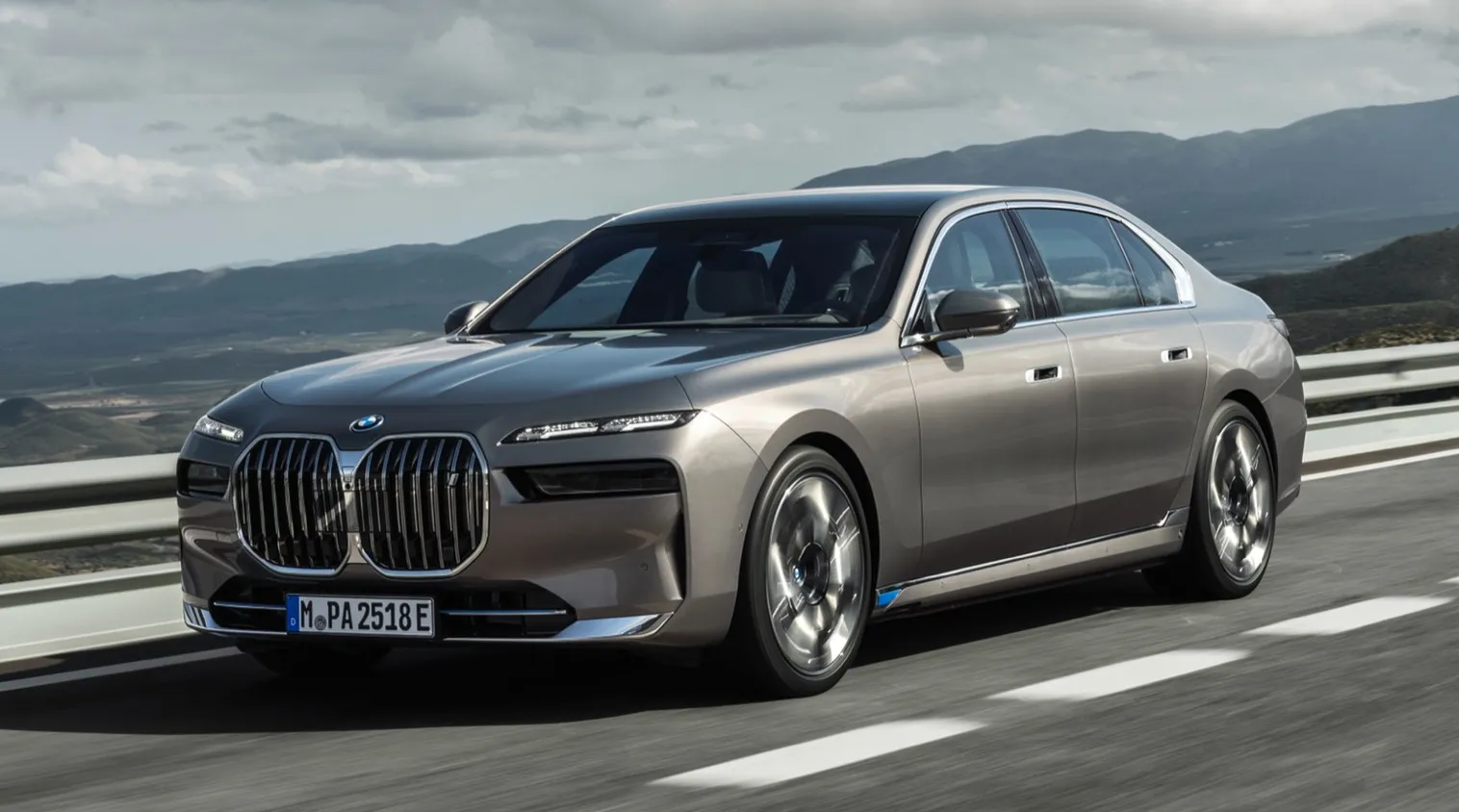
BMW i7 eDrive50
Key Specifications
Real Range Estimation
| City - Cold Weather * | 505 km |
| Highway - Cold Weather * | 380 km |
| Combined - Cold Weather * | 440 km |
between 380 - 735 km
| City - Mild Weather * | 735 km |
| Highway - Mild Weather * | 490 km |
| Combined - Mild Weather * | 595 km |
Battery
| Nominal Capacity | 105.7 kWh |
| Battery Type | Lithium-ion |
| Number of Cells | No Data |
| Architecture | 400 V |
| Warranty Period | No Data |
| Warranty Mileage | No Data |
| Useable Capacity | 101.7 kWh |
| Cathode Material | No Data |
| Pack Configuration | No Data |
| Nominal Voltage | 376 V |
| Form Factor | No Data |
| Name / Reference | No Data |
Performance
| Acceleration 0 - 100 km/h | 5.5 sec |
| Top Speed | 205 km/h |
| Electric Range * | 520 km |
| Total Power | 335 kW (455 PS) |
| Total Torque | 650 Nm |
| Drive | Rear |
Home and Destination Charging (0 -> 100%)
Charging is possible by using a regular wall plug or a charging station. Public charging is always done through a charging station. How fast the EV can charge depends on the charging station (EVSE) used and the maximum charging capacity of the EV. The table below shows all possible options for charging the BMW i7 eDrive50. Each option shows how fast the battery can be charged from empty to full.
Europe
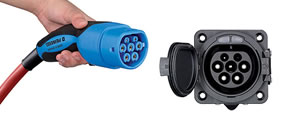
Charging an EV in Europe differs by country. Some European countries primarily use 1-phase connections to the grid, while other countries are almost exclusively using a 3-phase connection. The table below shows all possible ways the BMW i7 eDrive50 can be charged, but some modes of charging might not be widely available in certain countries.
| Type 2 (Mennekes - IEC 62196) |
|---|
 |
| Charging Point | Max. Power | Power | Time | Rate |
|---|---|---|---|---|
| Standard 11.0 kW On-Board Charger | ||||
| Wall Plug (2.3 kW) | 230V / 1x10A | 2.3 kW | 52h15m | 10 km/h |
| 1-phase 16A (3.7 kW) | 230V / 1x16A | 3.7 kW | 32h30m | 16 km/h |
| 1-phase 32A (7.4 kW) | 230V / 1x32A | 7.4 kW | 16h15m | 32 km/h |
| 3-phase 16A (11 kW) | 400V / 3x16A | 11 kW | 11 hours | 47 km/h |
| 3-phase 32A (22 kW) | 400V / 3x16A | 11 kW † | 11 hours | 47 km/h |
| Optional 22.0kW On-Board Charger * | ||||
| Wall Plug (2.3 kW) | 230V / 1x10A | 2.3 kW | 52h15m | 10 km/h |
| 1-phase 16A (3.7 kW) | 230V / 1x16A | 3.7 kW | 32h30m | 16 km/h |
| 1-phase 32A (7.4 kW) | 230V / 1x32A | 7.4 kW | 16h15m | 32 km/h |
| 3-phase 16A (11 kW) | 400V / 3x16A | 11 kW | 11 hours | 47 km/h |
| 3-phase 32A (22 kW) | 400V / 3x32A | 22 kW † | 5h30m | 95 km/h |
† = Limited by on-board charger, vehicle cannot charge faster.
* = Optional in some countries, standard in others. Check local specifications for details.
Fast Charging (10 -> 80%)
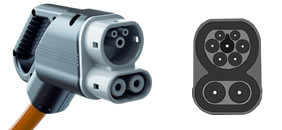
Rapid charging enables longer journeys by adding as much range as possible in the shortest amount of time. Charging power will decrease significantly after 80% state-of-charge has been reached. A typical rapid charge therefore rarely exceeds 80% SoC. The rapid charge rate of an EV depends on the charger used and the maximum charging power the EV can handle. The table below shows all details for rapid charging the BMW i7 eDrive50.
- Max. Power: maximum power provided by charge point
- Avg. Power: average power provided by charge point over a session from 10% to 80%
- Time: time needed to charge from 10% to 80%
- Rate: average charging speed over a session from 10% to 80%
| Combined Charging System (CCS Combo 2) |
|---|
 |
| Charging Point | Max. Power | Avg. Power | Time | Rate |
|---|---|---|---|---|
| CCS (50 kW DC) | 50 kW | 50 kW | 90 min | 240 km/h |
| CCS (150 kW DC) | 150 kW | 135 kW † | 33 min | 660 km/h |
| CCS (300 kW DC) | 200 kW † | 159 kW † | 28 min | 780 km/h |
| Charge Curve |
|---|
 |
Data made available by Fastned |
| This vehicle does not support Autocharge |
|---|
| This vehicle supports Plug & Charge |
† = Limited by charging capabilities of vehicle
Autocharge: allows for automatic initiation of a charging session at supported CCS charging stations.
Plug & Charge: allows for automatic initiation of a charging session at supported CCS charging stations in accordance with ISO 15118.
Actual charging rates may differ from data shown due to factors like outside temperature, state of the battery and driving style.
BMW Claimed Specifications
The table below shows the claimed specifications from the manufacturer for charging the BMW i7 eDrive50. The specifications can differ from the table above for a variety of reasons. If real-world charge tests are available, these differences can be signifcant. If no real-world tests are available, the table above will be based on the manufacturer specifications as per the table below.
- Max. Power: maximum charge power during charging session
- Charge From: battery percentage (% SoC) where charging session is started
- Charge To: battery percentage (% SoC) where charging session is ended
- Time: time needed for charging session
| BMW Claimed Specifications |
|---|
| Max. Power | Charge From | Charge To | Time |
|---|---|---|---|
| 195 kW | 10 % | 80 % | 34 min |
Dimensions and Weight
| Length | 5391 mm |
| Width | 1950 mm |
| Width with mirrors | 2192 mm |
| Height | 1544 mm |
| Wheelbase | 3215 mm |
| Weight Unladen (EU) | 2595 kg |
| Gross Vehicle Weight (GVWR) | 3130 kg |
| Max. Payload | 610 kg |
| Cargo Volume | 500 L |
| Cargo Volume Max | No Data |
| Cargo Volume Frunk | No Data |
| Roof Load | 0 kg |
| Tow Hitch Possible | No |
| Towing Weight Unbraked | 0 kg |
| Towing Weight Braked | 0 kg |
| Vertical Load Max | 0 kg |
About this Vehicle
BMW i7 eDrive50 Overview
The BMW i7 eDrive50 stands as a premium flagship electric sedan, blending luxury with cutting-edge EV technology in the ultra-high-end market. Positioned above mainstream EVs, this BMW electric sedan targets affluent executives, tech-savvy professionals, and luxury buyers seeking a serene, tech-laden alternative to gas-powered S-Class rivals. Built on BMW’s advanced CLAR platform adapted for electrification, it features a 5th-generation electric synchronous motor, air suspension, and the iconic BMW i7 review highlights like the panoramic Sky Lounge LED roof for an immersive cabin experience.
What sets the BMW i7 eDrive50 apart is its emphasis on opulent design philosophy—galvanized steel/aluminum panels, soft-close doors, and a Live Cockpit Pro interface with augmented reality navigation. In the EV landscape, it matters as BMW’s pinnacle of electric luxury, offering EV specs like 449 hp and serene highway cruising, challenging Tesla’s tech dominance with superior craftsmanship. Ideal for long-distance refinement, the BMW i7 eDrive50 elevates the electric vehicle range segment for those prioritizing comfort over raw sportiness.
BMW i7 eDrive50 Performance and Driving Experience
The BMW i7 eDrive50 delivers smooth, effortless power with 449 hp and 479 lb-ft of torque from its single rear-mounted electric motor, achieving 0-60 mph in 5.3 seconds. Its rear-wheel drive setup paired with a one-speed transmission provides linear acceleration, while adaptive air suspension—double wishbone front and multi-link rear with auto-leveling—ensures a plush ride over imperfections. Handling shines in composed dynamics, thanks to anti-roll bars, regenerative braking, and electric power-assist steering with a 39.7 ft turning circle, making it surprisingly agile for its 5,635-5,917 lb curb weight.
Real-world impressions reveal a cosseting cruiser: effortless overtaking, minimal noise intrusion, and optional Driving Assistant Professional for hands-free Autobahn runs up to 85 mph. The BMW i7 eDrive50 excels in executive duties, balancing luxury with precise control.
| Specification | Value |
|---|---|
| 0-60 mph (0-100 km/h) | 5.3 sec |
| Top Speed | 149 mph / 240 km/h |
| Power Output | 449 hp / 335 kW |
| Torque | 479 lb-ft / 650 Nm |
BMW i7 eDrive50 Range and Battery Specifications
The BMW i7 eDrive50 boasts an EPA range of 314 miles, with real-world figures around 280-300 miles depending on conditions, supported by its massive 105.7 kWh lithium-ion battery. Efficiency hits 88 MPGe combined (85 city/93 highway), or about 38 kWh/100 mi, making it competitive in the luxury EV specs class. BMW i7 eDrive50 WLTP range equivalents suggest up to 380-735 km in varied tests, but real-world range dips in cold weather or aggressive driving.
Battery tech includes run-down protection and an 11 kW onboard charger, with air springs aiding efficiency on highways. Factors like terrain, HVAC use, and speed significantly impact range—milder climates and eco modes yield the best results.
| Range Metric | Value |
|---|---|
| WLTP Range | 349 miles / 562 km |
| EPA Range | 314 miles / 505 km |
| Real-World Range | 285 miles / 459 km |
| Battery Capacity | 105.7 kWh (usable) |
BMW i7 eDrive50 Charging Times and Options
Home charging for the BMW i7 eDrive50 is straightforward: Level 1 takes about 90 hours for a full charge, while Level 2 at 11 kW completes it in 11-12 hours via the SAE Combo port. DC fast charging peaks at 195 kW, achieving 10-80% in under 35 minutes on compatible networks like Electrify America, ensuring minimal downtime for road trips. It pairs seamlessly with BMW’s public charging ecosystem.
Practical scenarios favor overnight Level 2 for daily use (adding 30-40 miles/hour), and DC stops for longer hauls, with features like preconditioning optimizing sessions.
| Charging Method | Time | Speed |
|---|---|---|
| Level 1 (120V) | 90 hours | ~1.4 kW |
| Level 2 (240V/7kW) | 16 hours | ~7 kW |
| Level 2 (240V/11kW) | 11 hours | ~11 kW |
| DC Fast Charge (10-80%) | 34 min | up to 195 kW |
BMW i7 eDrive50 vs Competitors
The BMW i7 eDrive50 vs Tesla Model S favors BMW’s superior interior luxury and ride quality over Tesla’s longer 405-mile range and faster charging, though the i7 edges in build refinement. Against the Mercedes EQE, it offers more power (449 hp vs 402 hp) and space, but the EQE is lighter and cheaper. Compared to the Audi e-tron GT, the BMW i7 eDrive50 provides better sedan practicality and range in this BMW i7 eDrive50 comparison, cementing its luxury sedan lead.
Frequently Asked Questions
Related Vehicles
View All BMW
BMW
BMW iX2 xDrive30 2026
 BMW
BMW
BMW iX1 eDrive20 2026
 BMW
BMW
BMW i5 M60 xDrive Touring
 BMW
BMW