

Audi Q6 e-tron Sportback quattro
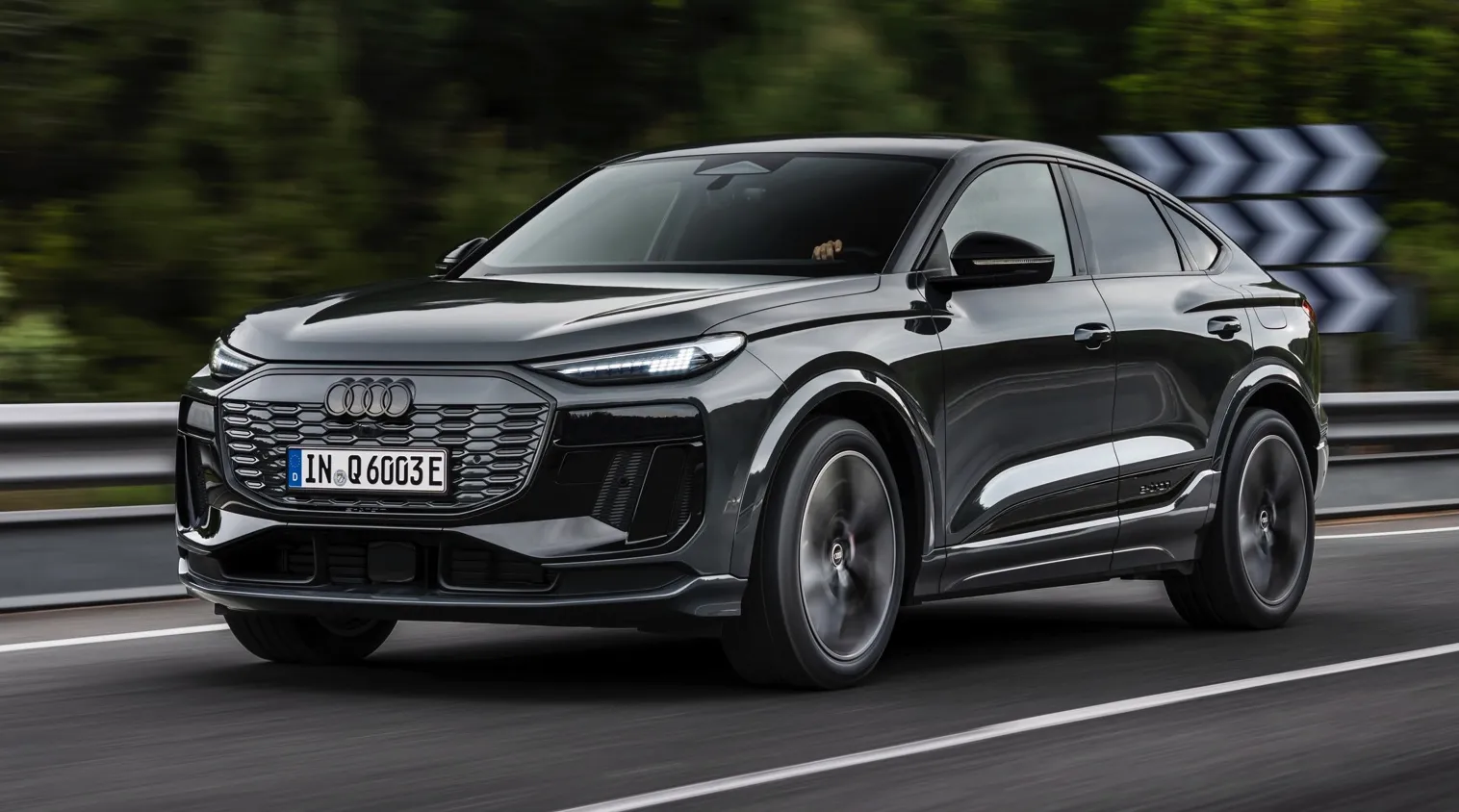
Key Specifications
Real Range Estimation
| City - Cold Weather * | 490 km |
| Highway - Cold Weather * | 360 km |
| Combined - Cold Weather * | 420 km |
between 360 - 715 km
| City - Mild Weather * | 715 km |
| Highway - Mild Weather * | 460 km |
| Combined - Mild Weather * | 570 km |
Battery
| Nominal Capacity | 100.0 kWh |
| Battery Type | Lithium-ion |
| Number of Cells | 180 |
| Architecture | 800 V |
| Warranty Period | No Data |
| Warranty Mileage | No Data |
| Useable Capacity | 94.9 kWh |
| Cathode Material | NCM811 |
| Pack Configuration | 180s1p |
| Nominal Voltage | 662 V |
| Form Factor | Prismatic |
| Name / Reference | No Data |
Performance
| Acceleration 0 - 100 km/h | 5.9 sec |
| Top Speed | 210 km/h |
| Electric Range * | 500 km |
| Total Power | 285 kW (387 PS) |
| Total Torque | 855 Nm |
| Drive | AWD |
Home and Destination Charging (0 -> 100%)
Charging is possible by using a regular wall plug or a charging station. Public charging is always done through a charging station. How fast the EV can charge depends on the charging station (EVSE) used and the maximum charging capacity of the EV. The table below shows all possible options for charging the Audi Q6 e-tron Sportback quattro. Each option shows how fast the battery can be charged from empty to full.
Europe
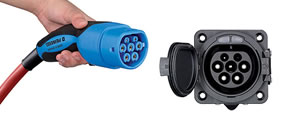
Charging an EV in Europe differs by country. Some European countries primarily use 1-phase connections to the grid, while other countries are almost exclusively using a 3-phase connection. The table below shows all possible ways the Audi Q6 e-tron Sportback quattro can be charged, but some modes of charging might not be widely available in certain countries.
| Type 2 (Mennekes - IEC 62196) |
|---|
 |
| Charging Point | Max. Power | Power | Time | Rate |
|---|---|---|---|---|
| Standard 11.0 kW On-Board Charger | ||||
| Wall Plug (2.3 kW) | 230V / 1x10A | 2.3 kW | 48h45m | 10 km/h |
| 1-phase 16A (3.7 kW) | 230V / 1x16A | 3.7 kW | 30h15m | 17 km/h |
| 1-phase 32A (7.4 kW) | 230V / 1x32A | 7.4 kW | 15h15m | 33 km/h |
| 3-phase 16A (11 kW) | 400V / 3x16A | 11 kW | 10h15m | 49 km/h |
| 3-phase 32A (22 kW) | 400V / 3x16A | 11 kW † | 10h15m | 49 km/h |
| Optional 22.0kW On-Board Charger | ||||
| Wall Plug (2.3 kW) | 230V / 1x10A | 2.3 kW | 48h45m | 10 km/h |
| 1-phase 16A (3.7 kW) | 230V / 1x16A | 3.7 kW | 30h15m | 17 km/h |
| 1-phase 32A (7.4 kW) | 230V / 1x32A | 7.4 kW | 15h15m | 33 km/h |
| 3-phase 16A (11 kW) | 400V / 3x16A | 11 kW | 10h15m | 49 km/h |
| 3-phase 32A (22 kW) | 400V / 3x32A | 22 kW † | 5h15m | 95 km/h |
† = Limited by on-board charger, vehicle cannot charge faster.
Fast Charging (10 -> 80%)
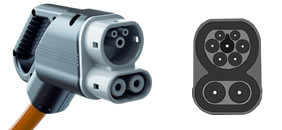
Rapid charging enables longer journeys by adding as much range as possible in the shortest amount of time. Charging power will decrease significantly after 80% state-of-charge has been reached. A typical rapid charge therefore rarely exceeds 80% SoC. The rapid charge rate of an EV depends on the charger used and the maximum charging power the EV can handle. The table below shows all details for rapid charging the Audi Q6 e-tron Sportback quattro.
- Max. Power: maximum power provided by charge point
- Avg. Power: average power provided by charge point over a session from 10% to 80%
- Time: time needed to charge from 10% to 80%
- Rate: average charging speed over a session from 10% to 80%
| Combined Charging System (CCS Combo 2) |
|---|
 |
| Charging Point | Max. Power | Avg. Power | Time | Rate |
|---|---|---|---|---|
| CCS (50 kW DC) | 50 kW | 50 kW | 84 min | 250 km/h |
| CCS (100 kW DC) | 100 kW | 95 kW † | 44 min | 470 km/h |
| CCS (150 kW DC) | 150 kW | 125 kW † | 34 min | 610 km/h |
| CCS (175 kW DC) | 175 kW | 145 kW † | 29 min | 720 km/h |
| CCS (350 kW DC) | 270 kW † | 200 kW † | 21 min | 1000 km/h |
| This vehicle supports Plug & Charge |
|---|
† = Limited by charging capabilities of vehicle
Plug & Charge: allows for automatic initiation of a charging session at supported CCS charging stations in accordance with ISO 15118.
Actual charging rates may differ from data shown due to factors like outside temperature, state of the battery and driving style.
Audi Claimed Specifications
The table below shows the claimed specifications from the manufacturer for charging the Audi Q6 e-tron Sportback quattro. The specifications can differ from the table above for a variety of reasons. If real-world charge tests are available, these differences can be signifcant. If no real-world tests are available, the table above will be based on the manufacturer specifications as per the table below.
- Max. Power: maximum charge power during charging session
- Charge From: battery percentage (% SoC) where charging session is started
- Charge To: battery percentage (% SoC) where charging session is ended
- Time: time needed for charging session
| Audi Claimed Specifications |
|---|
| Max. Power | Charge From | Charge To | Time |
|---|---|---|---|
| 270 kW | 10 % | 80 % | 21 min |
Dimensions and Weight
| Length | 4771 mm |
| Width | 1939 mm |
| Width with mirrors | 2193 mm |
| Height | 1665 mm |
| Wheelbase | 2889 mm |
| Weight Unladen (EU) * | 2400 kg |
| Gross Vehicle Weight (GVWR) | No Data |
| Max. Payload | No Data |
| Cargo Volume | 511 L |
| Cargo Volume Max | 1373 L |
| Cargo Volume Frunk | 64 L |
| Roof Load | 75 kg |
| Tow Hitch Possible | Yes |
| Towing Weight Unbraked | 750 kg |
| Towing Weight Braked | 2400 kg |
| Vertical Load Max | 100 kg |
About this Vehicle
Audi Q6 e-tron Sportback quattro Overview
The Audi Q6 e-tron Sportback quattro positions itself as a premium midsize Audi electric SUV with a coupe-style roofline, aimed at buyers who want EQE SUV and Model Y levels of performance wrapped in true Audi refinement. Built on the all-new Premium Platform Electric (PPE), this electric crossover blends long-distance comfort with sharp design and advanced tech, targeting tech-savvy families and company-car drivers looking to upgrade from combustion Q5 or Q7 models.
In this Audi Q6 e-tron Sportback review, the standout features are its dual‑motor quattro all‑wheel drive, up to 456 hp with launch control, adaptive air suspension on higher trims, and a high‑efficiency 100 kWh battery. Audi’s latest infotainment, including a panoramic digital cockpit and EV‑specific navigation with charging planning, underlines the brand’s tech‑forward design philosophy. As one of the first PPE-based models, the Q6 Sportback e-tron matters because it sets the template for future Audi EV specs in terms of range, charging speed, and driving refinement—pushing the brand closer to Tesla, BMW, Mercedes, and Hyundai‑Kia rivals in the rapidly growing premium electric SUV space.
—
Audi Q6 e-tron Sportback quattro Performance and Driving Experience
The Q6 e-tron Sportback quattro uses a dual‑motor setup with quattro all‑wheel drive, delivering up to 456 hp with launch control and around 422 hp in regular driving, depending on specification. Audi quotes a 0–60 mph time of about 4.9 seconds for the quattro variants, backed by a governed top speed of 130 mph (210 km/h). The result is instant, linear acceleration with a strong mid‑range punch for overtakes, feeling more like a performance SUV than a family crossover.
On the road, the Audi Q6 e-tron Sportback quattro emphasizes stability and refinement rather than outright sportiness, though adaptive air suspension (trim-dependent) can lower the ride for better dynamics or raise it for comfort. Multiple drive modes—Comfort, Balanced, Dynamic, Offroad, and Efficiency—let drivers tailor steering weight, throttle response, and suspension. Real‑world impressions from early drives highlight quiet cruising, strong regenerative braking (including near one‑pedal driving), and confident traction in poor weather from the AWD system.
| Specification | Value |
|---|---|
| 0-60 mph (0-100 km/h) | 4.9 sec / ~5.1 sec |
| Top Speed | 130 mph / 210 km/h |
| Power Output | 456 hp / 340 kW |
| Torque | ~479 lb-ft / ~650 Nm (est., dual-motor) |
—
Audi Q6 e-tron Sportback quattro Range and Battery Specifications
The Audi Q6 e-tron Sportback quattro uses a 100 kWh lithium-ion battery (around 94–95 kWh usable) on the PPE platform. Audi quotes an EPA-estimated range up to 319 miles for the Q6 Sportback e-tron with standard equipment, with WLTP figures in Europe typically higher (over 530 km) depending on wheel size and trim. In real-world mixed driving, you can expect roughly 270–300 miles (435–480 km), making the Q6 Sportback competitive in its class.
Energy consumption for the Q6 e-tron family falls in the 16–20 kWh/100 km band, translating to roughly 270–310 Wh/mile depending on speed, temperature, and wheel choice. As with any EV, Q6 e-tron Sportback WLTP range and real‑world range are influenced by winter temperatures, high‑speed motorway driving, heavy loads, and aggressive acceleration. Still, the Q6 e-tron Sportback battery specs place it squarely among the most capable long‑range premium EVs.
| Range Metric | Value |
|---|---|
| WLTP Range | up to ~387 miles / 623 km (est., best-case) |
| EPA Range | up to 319 miles / 513 km |
| Real-World Range | ~270–300 miles / 435–480 km |
| Battery Capacity | ~94.4 kWh (usable) |
—
Audi Q6 e-tron Sportback quattro Charging Times and Options
For home use, the Audi Q6 e-tron Sportback quattro supports AC charging via dual ports, simplifying driveway placement. With a typical Level 2 240V home wallbox (around 9.6–11 kW), a full charge from a low state of charge generally takes about 9–11 hours, ideal for overnight replenishing. Level 1 (120V) charging is technically possible but extremely slow and best reserved for emergencies.
On the road, the Q6 e-tron Sportback shines with DC fast charging up to 270 kW. On capable high‑power chargers, Audi claims a 10–80% charge in around 21–30 minutes, depending on conditions, thanks to an 800‑volt architecture on PPE that enables high sustained charging speeds. The car is compatible with major public charging networks, and built‑in route planning can precondition the battery before fast‑charge stops to maximize power intake.
| Charging Method | Time | Speed |
|---|---|---|
| Level 1 (120V) | 60+ hours (0–100%) | ~1.4 kW |
| Level 2 (240V/7kW) | ~13–14 hours (0–100%) | ~7 kW |
| Level 2 (240V/11kW) | ~9–10 hours (0–100%) | ~11 kW |
| DC Fast Charge (10-80%) | ~25 min | up to 270 kW |
—
Audi Q6 e-tron Sportback quattro vs Competitors
In Audi Q6 e-tron Sportback vs Tesla Model Y comparisons, the Audi trails slightly on outright efficiency but counters with superior cabin quality, refinement and perceived build. Against the BMW iX and Mercedes EQE SUV, the Q6 Sportback sits as a slightly smaller, more agile alternative with faster charging and a sportier silhouette. Versus mainstream rivals like Hyundai Ioniq 5 and Kia EV6, the Audi Q6 e-tron Sportback quattro justifies its premium with a more luxurious interior, PPE platform sophistication, and traditional Audi driving polish, while still offering competitive EV specs for range and charging.
—
Frequently Asked Questions
Related Vehicles
View All Audi
Audi
Audi SQ6 e-tron Sportback
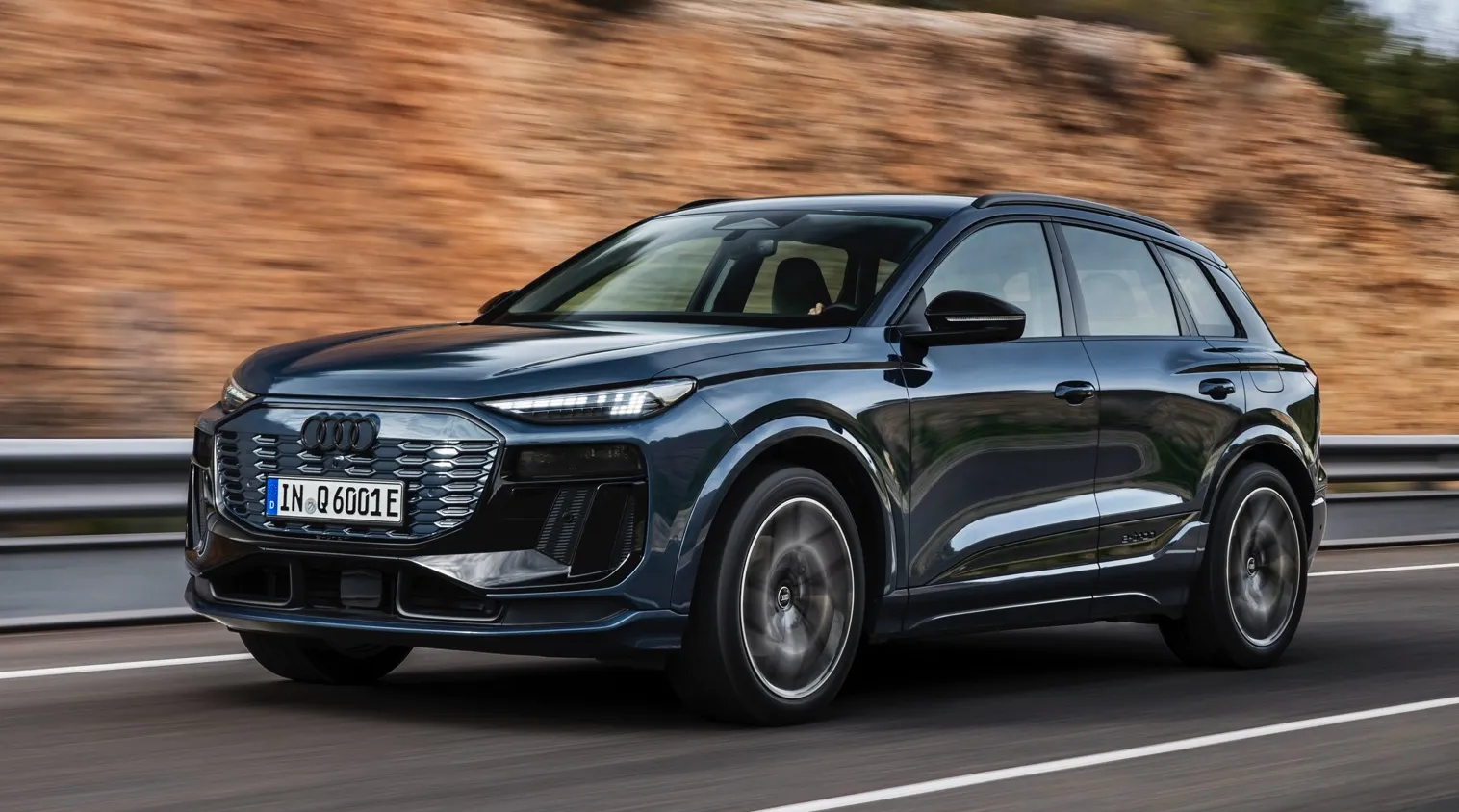 Audi
Audi
Audi Q6 e-tron
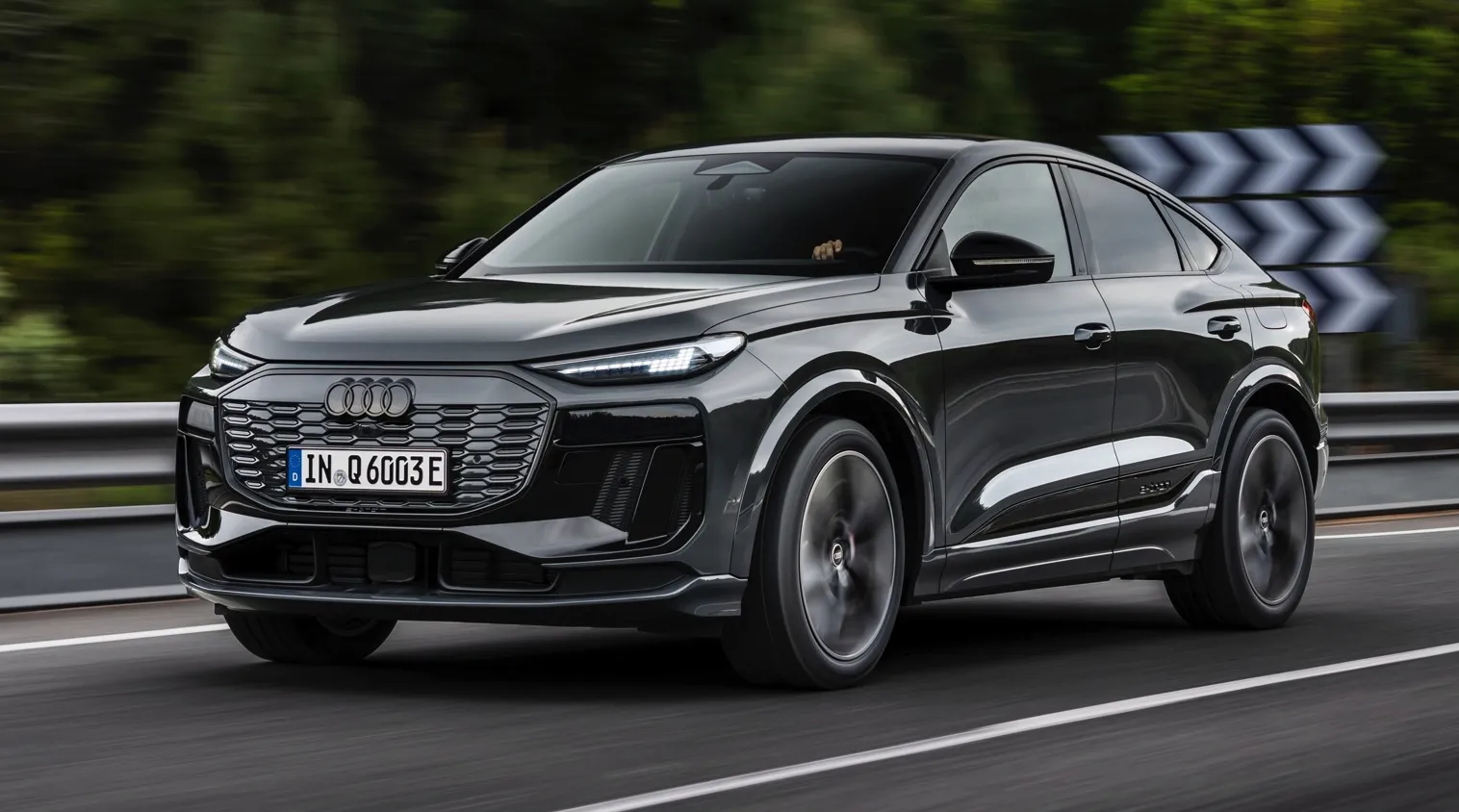 Audi
Audi
Audi Q6 e-tron Sportback performance
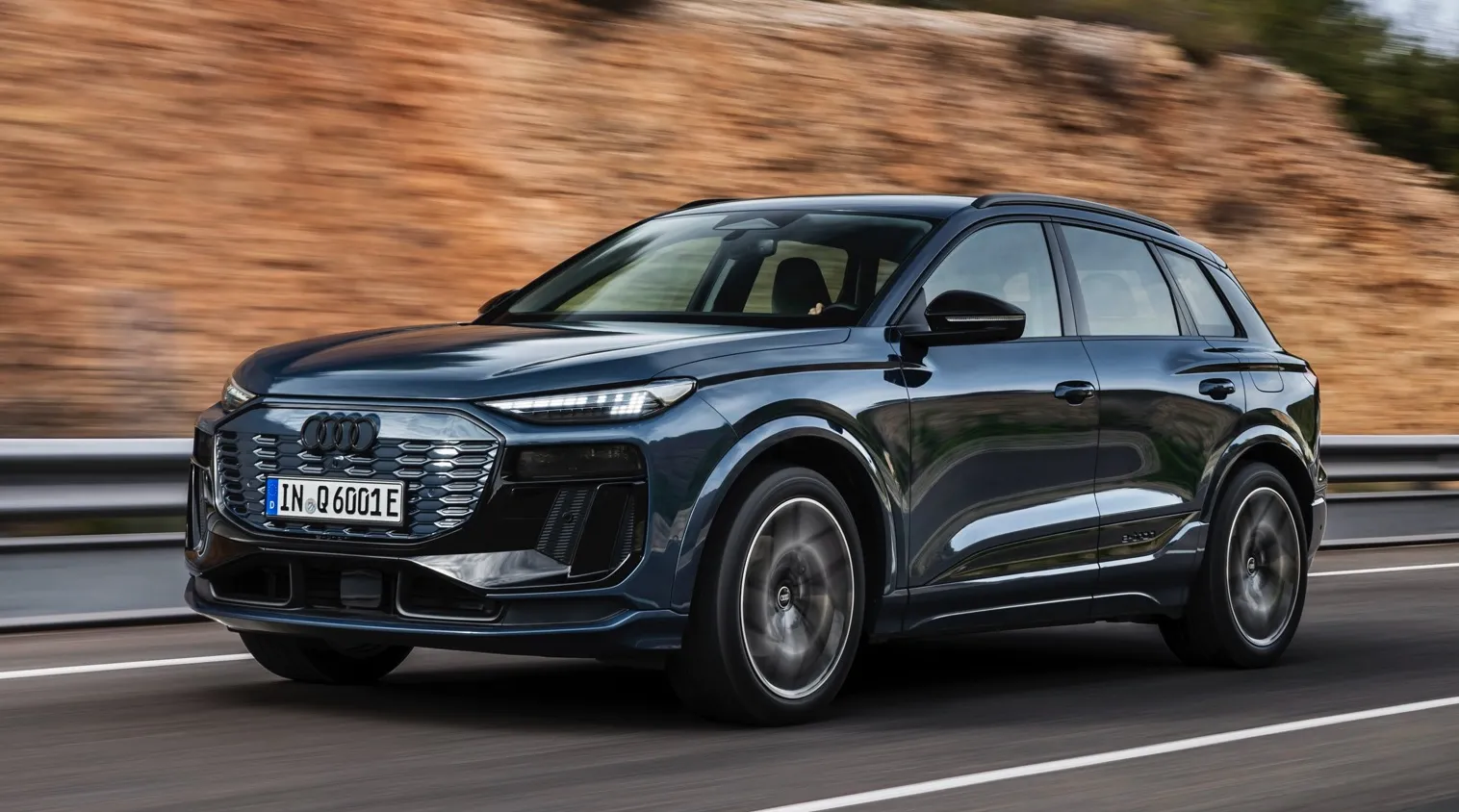 Audi
Audi