

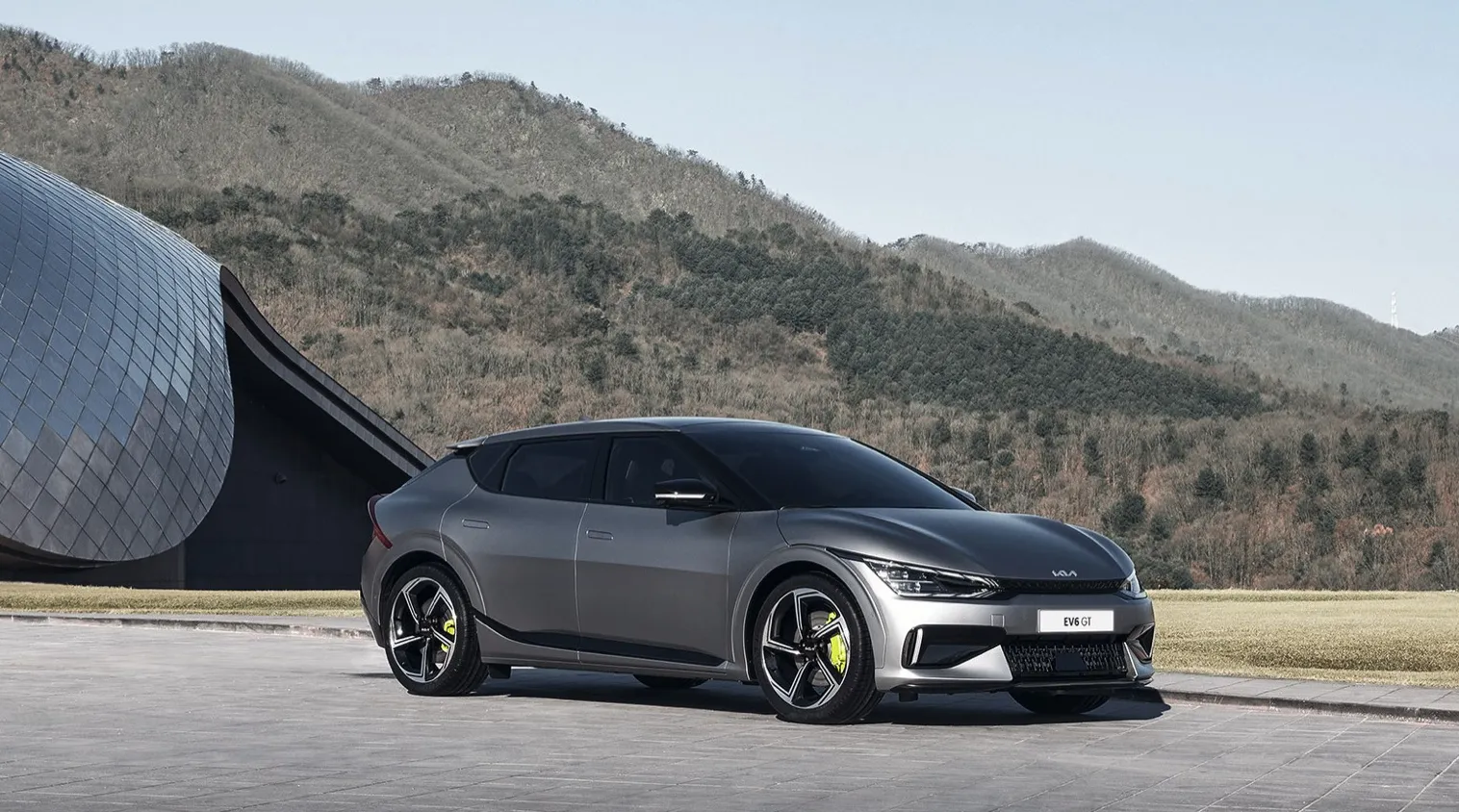
Kia EV6 GT
Key Specifications
Real Range
| City - Cold Weather | 360 km |
| Highway - Cold Weather | 255 km |
| Combined - Cold Weather | 305 km |
between 255 - 520 km
| City - Mild Weather | 520 km |
| Highway - Mild Weather | 325 km |
| Combined - Mild Weather | 405 km |
Battery
| Nominal Capacity | 77.4 kWh |
| Battery Type | Lithium-ion |
| Number of Cells | 384 |
| Architecture | 800 V |
| Warranty Period | No Data |
| Warranty Mileage | No Data |
| Useable Capacity* | 74.0 kWh |
| Cathode Material | No Data |
| Pack Configuration | 192s2p |
| Nominal Voltage | 697 V |
| Form Factor | No Data |
| Name / Reference | No Data |
Performance
| Acceleration 0 - 100 km/h | 3.5 sec |
| Top Speed | 260 km/h |
| Electric Range | 360 km |
| Total Power | 430 kW (585 PS) |
| Total Torque | 740 Nm |
| Drive | AWD |
Home and Destination Charging (0 -> 100%)
Charging is possible by using a regular wall plug or a charging station. Public charging is always done through a charging station. How fast the EV can charge depends on the charging station (EVSE) used and the maximum charging capacity of the EV. The table below shows all possible options for charging the Kia EV6 GT. Each option shows how fast the battery can be charged from empty to full.
Europe
Charging an EV in Europe differs by country. Some European countries primarily use 1-phase connections to the grid, while other countries are almost exclusively using a 3-phase connection. The table below shows all possible ways the Kia EV6 GT can be charged, but some modes of charging might not be widely available in certain countries.
| Type 2 (Mennekes - IEC 62196) |
|---|
 |
| Charging Point | Max. Power | Power | Time | Rate |
|---|---|---|---|---|
| Wall Plug (2.3 kW) | 230V / 1x10A | 2.3 kW | 38 hours | 9 km/h |
| 1-phase 16A (3.7 kW) | 230V / 1x16A | 3.7 kW | 23h45m | 15 km/h |
| 1-phase 32A (7.4 kW) | 230V / 1x32A | 7.4 kW | 11h45m | 31 km/h |
| 3-phase 16A (11 kW) | 400V / 3x16A | 11 kW | 8 hours | 45 km/h |
| 3-phase 32A (22 kW) | 400V / 3x16A | 11 kW † | 8 hours | 45 km/h |
† = Limited by on-board charger, vehicle cannot charge faster.
Fast Charging (10 -> 80%)
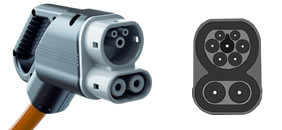
Rapid charging enables longer journeys by adding as much range as possible in the shortest amount of time. Charging power will decrease significantly after 80% state-of-charge has been reached. A typical rapid charge therefore rarely exceeds 80% SoC. The rapid charge rate of an EV depends on the charger used and the maximum charging power the EV can handle. The table below shows all details for rapid charging the Kia EV6 GT.
- Max. Power: maximum power provided by charge point
- Avg. Power: average power provided by charge point over a session from 10% to 80%
- Time: time needed to charge from 10% to 80%
- Rate: average charging speed over a session from 10% to 80%
| Combined Charging System (CCS Combo 2) |
|---|
 |
| Charging Point | Max. Power | Avg. Power | Time | Rate |
|---|---|---|---|---|
| CCS (50 kW DC) | 50 kW | 50 kW | 65 min | 230 km/h |
| CCS (150 kW DC) | 150 kW | 149 kW † | 22 min | 680 km/h |
| CCS (300 kW DC) | 233 kW † | 200 kW † | 16 min | 940 km/h |
| Charge Curve |
|---|
 |
Data made available by Fastned |
| This vehicle supports Autocharge |
|---|
| This vehicle does not support Plug & Charge |
† = Limited by charging capabilities of vehicle
Autocharge: allows for automatic initiation of a charging session at supported CCS charging stations.
Plug & Charge: allows for automatic initiation of a charging session at supported CCS charging stations in accordance with ISO 15118.
Actual charging rates may differ from data shown due to factors like outside temperature, state of the battery and driving style.
Kia Claimed Specifications
The table below shows the claimed specifications from the manufacturer for charging the Kia EV6 GT. The specifications can differ from the table above for a variety of reasons. If real-world charge tests are available, these differences can be signifcant. If no real-world tests are available, the table above will be based on the manufacturer specifications as per the table below.
- Max. Power: maximum charge power during charging session
- Charge From: battery percentage (% SoC) where charging session is started
- Charge To: battery percentage (% SoC) where charging session is ended
- Time: time needed for charging session
| Kia Claimed Specifications |
|---|
| Max. Power | Charge From | Charge To | Time |
|---|---|---|---|
| 240 kW | 10 % | 80 % | 18 min |
Dimensions and Weight
| Length | 4695 mm |
| Width | 1890 mm |
| Width with mirrors | No Data |
| Height | 1545 mm |
| Wheelbase | 2900 mm |
| Weight Unladen (EU) | 2200 kg |
| Gross Vehicle Weight (GVWR) | 2610 kg |
| Max. Payload | 485 kg |
| Cargo Volume | 480 L |
| Cargo Volume Max | 1260 L |
| Cargo Volume Frunk | 20 L |
| Roof Load | 80 kg |
| Tow Hitch Possible | Yes |
| Towing Weight Unbraked | 750 kg |
| Towing Weight Braked | 1800 kg |
| Vertical Load Max | 100 kg |
About this Vehicle
# Kia EV6 GT
Kia EV6 GT Overview
The Kia EV6 GT stands as a premium performance electric vehicle that combines cutting-edge technology with exhilarating driving dynamics. Positioned at the top of the EV6 lineup, this dual-motor AWD model targets enthusiasts who refuse to compromise on acceleration, handling, or practicality. The EV6 GT represents Kia’s commitment to delivering high-performance electric vehicles that challenge traditional sports cars while maintaining the efficiency and sustainability benefits of EV ownership.
The Kia EV6 GT utilizes Kia’s E-GMP platform, a dedicated electric architecture engineered specifically for performance and range optimization. This platform enables the GT variant to achieve sub-3.5-second acceleration while maintaining a sophisticated, aerodynamic design with a 0.3 drag coefficient. The vehicle appeals to drivers seeking a practical five-passenger electric wagon with genuine performance credentials, making it ideal for those who want daily usability without sacrificing thrilling acceleration and responsive handling characteristics.
What distinguishes the Kia EV6 GT in the competitive EV market is its combination of 800-volt charging architecture, electronically controlled suspension with adjustable damping, and an electronically limited-slip differential. These features work together to deliver a driving experience that rivals traditional performance vehicles while offering the convenience of electric propulsion. The EV6 GT’s wagon body style provides 480 liters of trunk space, expanding to 1,260 liters with rear seats folded, making it one of the most practical high-performance electric vehicles available.
Kia EV6 GT Performance and Driving Experience
The Kia EV6 GT delivers extraordinary performance with its dual-motor setup producing 650 horsepower and 568 lb-ft of torque, enabling acceleration from 0-60 mph in just 3.2 seconds in real-world testing. The vehicle’s top speed reaches 260 kph (162 mph), positioning it among the quickest production electric vehicles. The electronically controlled suspension features adjustable damping on both front and rear axles, allowing drivers to fine-tune handling characteristics across different driving modes. The front MacPherson strut and rear multilink suspension geometry, combined with stiffer rear sway bars and softer front springs on the GT variant, deliver responsive cornering and confident high-speed stability.
Drivers consistently praise the Kia EV6 GT for its agile handling, satisfying acceleration response, and adjustable regenerative braking settings that enhance the driving experience. The electronic limited-slip differential optimizes traction during aggressive acceleration, while the firmer chassis tuning and stouter brakes provide confidence during spirited driving. The vehicle’s 155mm ground clearance and 11.9-meter turning circle make it surprisingly nimble for its size, while the 2,175 kg curb weight distribution contributes to balanced handling dynamics.
| Specification | Value |
|---|---|
| 0-60 mph (0-100 km/h) | 3.2 sec |
| Top Speed | 162 mph / 260 km/h |
| Power Output | 650 hp / 478 kW |
| Torque | 568 lb-ft / 740 Nm |
Kia EV6 GT Range and Battery Specifications
The Kia EV6 GT features an 84 kWh gross battery capacity (80 kWh usable) with an official WLTP range of 450 km, though real-world range varies between 280-570 km depending on driving conditions, temperature, and driving style. The battery utilizes NMC cathode chemistry with a 192s2p pack configuration and 697V nominal voltage, optimized for both performance and efficiency. Energy consumption averages 17.8 kWh/100km under WLTP testing conditions, though performance driving and highway speeds increase consumption to approximately 20.6 kWh/100km, including charging losses.
The Kia EV6 GT achievesan EPA-estimated range of 231 miles, lower than less powerful variants due to the performance-oriented tuning and heavier dual-motor setup. Cold weather, highway driving at sustained high speeds, and aggressive acceleration all reduce available range. However, the vehicle’s 800-volt architecture enables rapid charging that partially offsets the shorter range, allowing drivers to quickly replenish battery capacity during longer journeys.
| Range Metric | Value |
|---|---|
| WLTP Range | 450 km / 280 miles |
| EPA Range | 231 miles |
| Real-World Range | 280-570 km |
| Battery Capacity | 80 kWh (usable) / 84 kWh (gross) |
Kia EV6 GT Charging Times and Options
The Kia EV6 GT supports rapid charging through its 800-volt architecture, achieving 10-80% charge in under 18-20 minutes on a 350 kW DC fast charger. The vehicle’s peak DC fast-charging rate reaches 260 kW, enabling efficient charging at compatible networks. Home charging via a 10.9 kW onboard charger provides convenient overnight replenishment, while Level 2 charging options accommodate various residential electrical setups.
The Kia EV6 GT integrates seamlessly with major charging networks through its 800-volt system compatibility. DC fast charging from 10-80% typically requires 18-20 minutes, making road trips practical despite the GT’s shorter range compared to less powerful EV6 variants. The vehicle’s charging speed represents a significant advantage for performance-oriented drivers who want minimal charging downtime.
| Charging Method | Time | Speed |
|---|---|---|
| Level 1 (120V) | ~40 hours | ~1.4 kW |
| Level 2 (240V/7kW) | ~12 hours | 7 kW |
| Level 2 (240V/11kW) | ~8 hours | 11 kW |
| DC Fast Charge (10-80%) | 18-20 min | up to 260 kW |
Kia EV6 GT vs Competitors
The Kia EV6 GT competes directly with the Tesla Model Y Performance, BMW iX M60, and Hyundai Ioniq 5 N. While the Tesla Model Y Performance offers slightly faster acceleration (3.1 seconds) and longer range (330 miles EPA), the Kia EV6 GT provides superior charging speed, more practical wagon styling, and comparable handling dynamics at a lower price point. The BMW iX M60 delivers luxury positioning but sacrifices the EV6’s agility and charging speed. The Hyundai Ioniq 5 N shares the same E-GMP platform and similar performance but offers a different design language and slightly different range characteristics. The Kia EV6 GT stands out for delivering genuine performance thrills with practical five-passenger capacity and industry-leading 800-volt charging technology.
Frequently Asked Questions
Related Vehicles
View All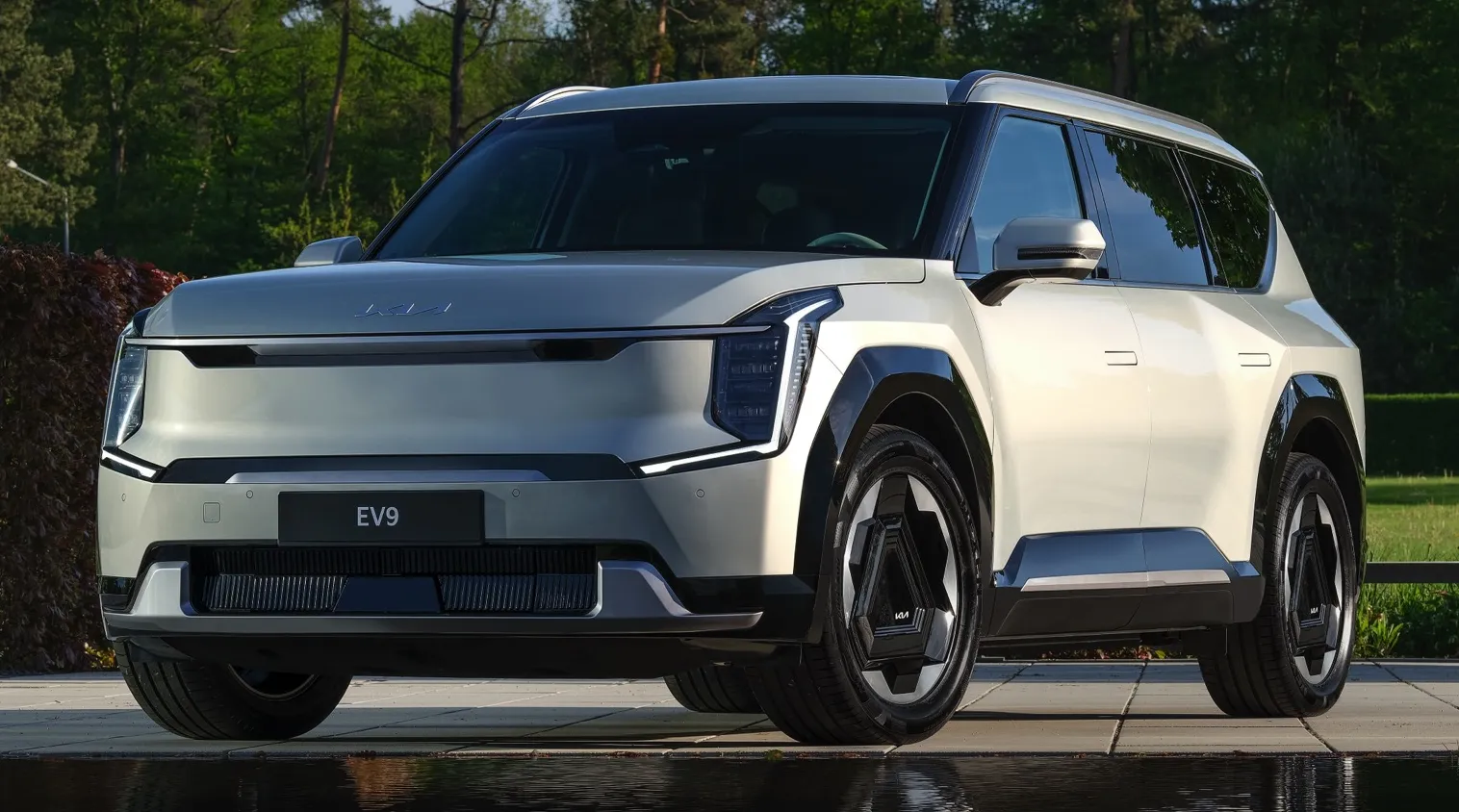 Kia
Kia
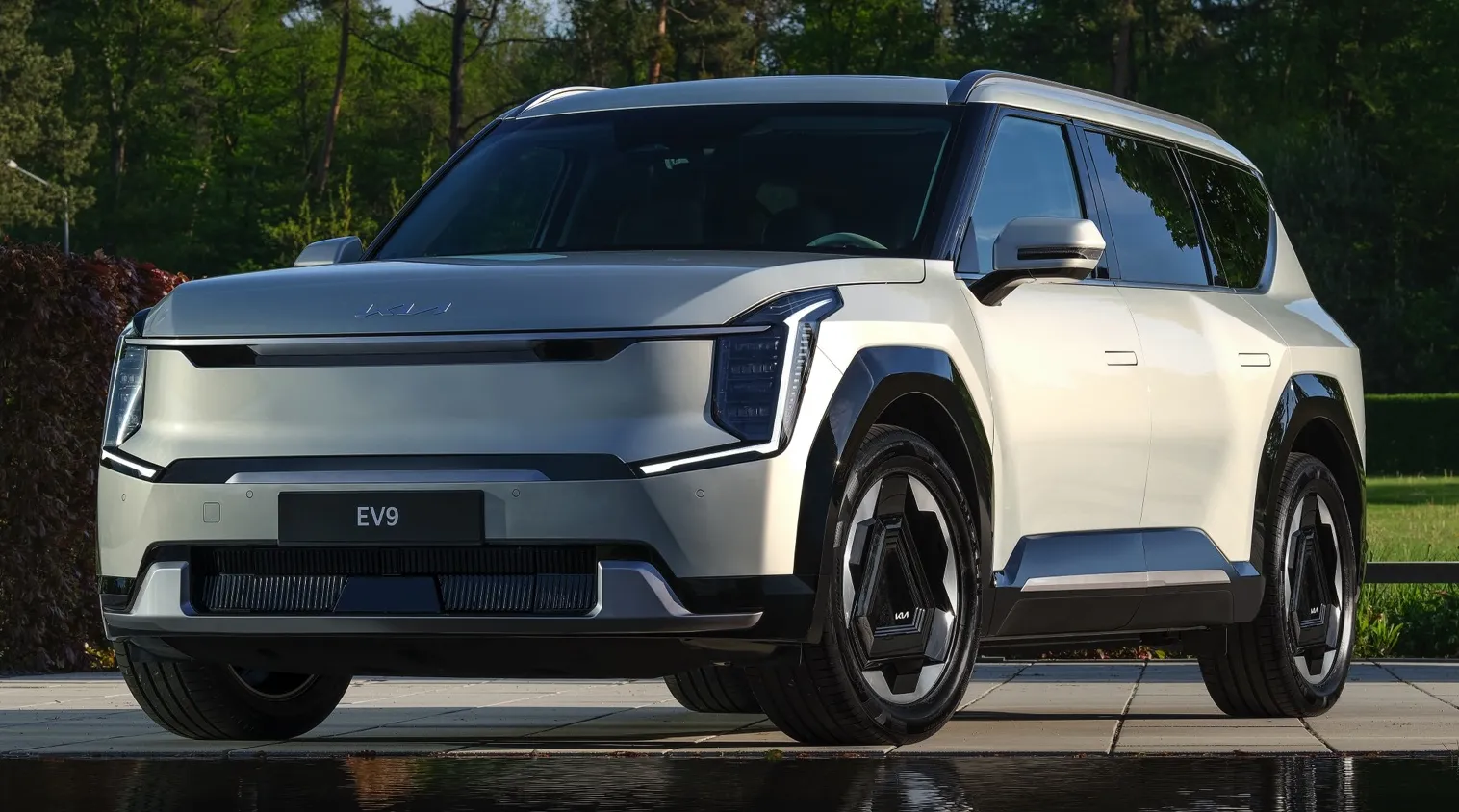
Kia EV9 76.1 kWh RWD
 Kia
Kia
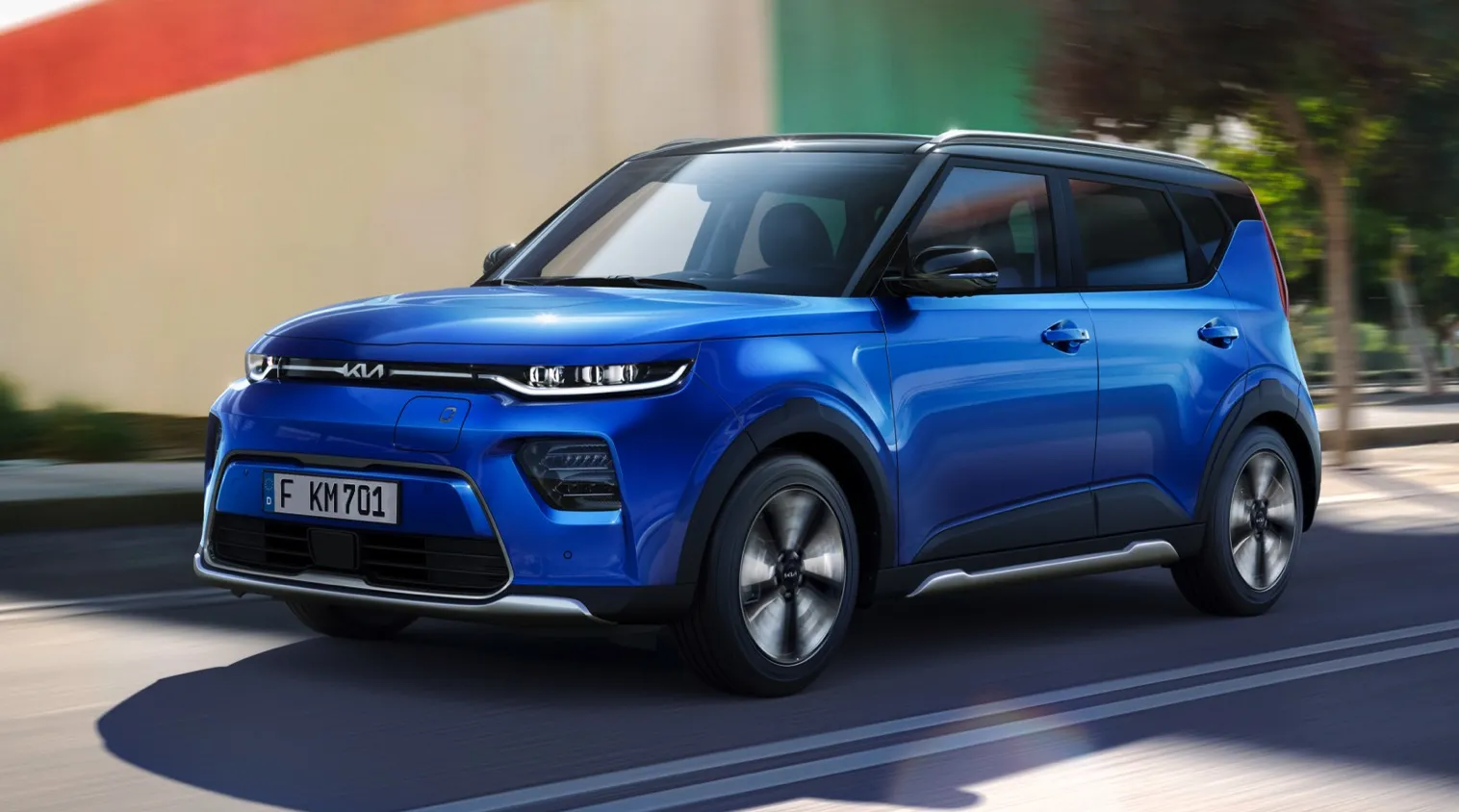
Kia e-Soul 64 kWh
 Kia
Kia
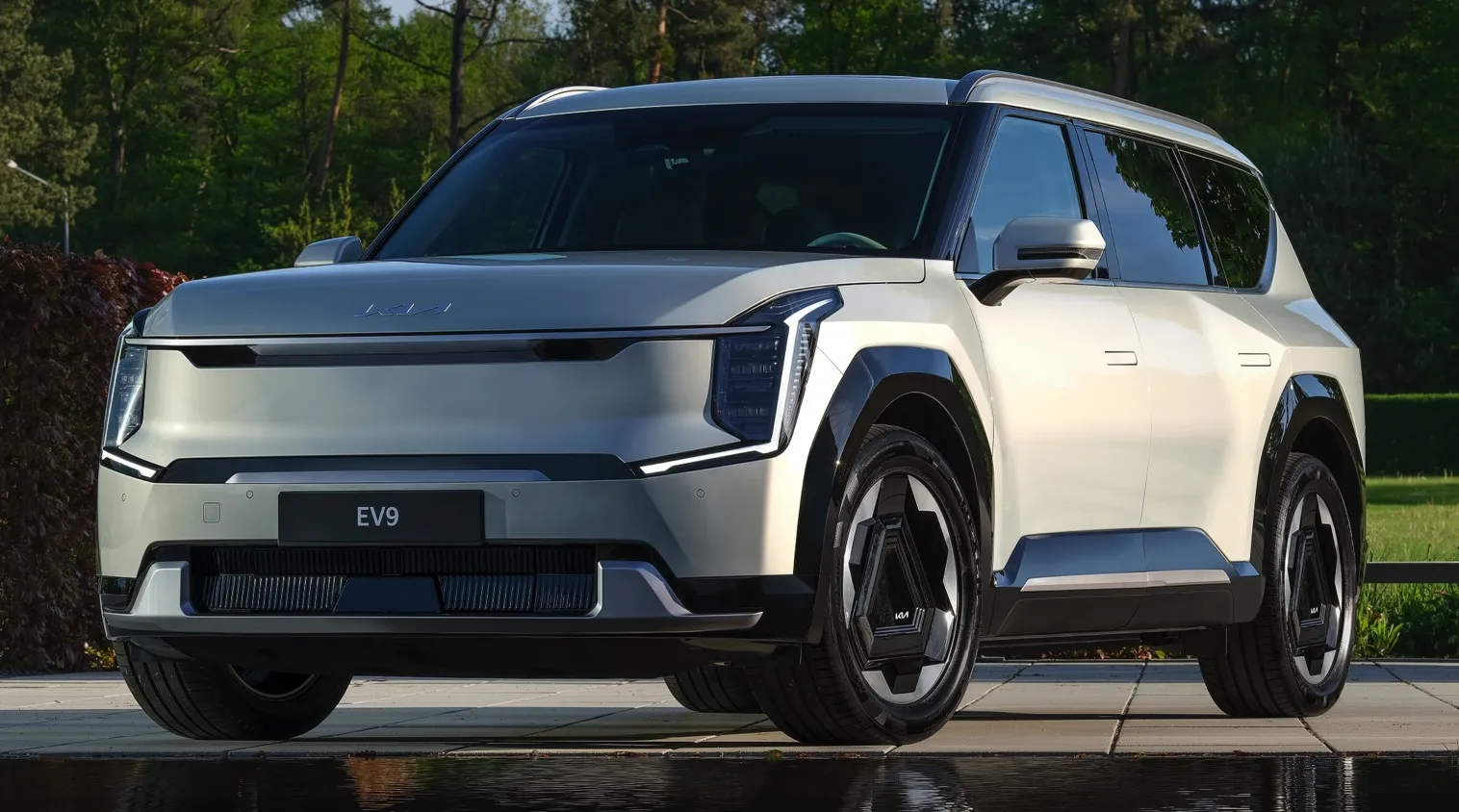
Kia EV9 99.8 kWh AWD
 Kia
Kia