Charging is possible by using a regular wall plug or a charging station. Public charging is always done through a charging station. How fast the EV can charge depends on the charging station (EVSE) used and the maximum charging capacity of the EV. The table below shows all possible options for charging the Kia Niro EV. Each option shows how fast the battery can be charged from empty to full.
Europe
Charging an EV in Europe differs by country. Some European countries primarily use 1-phase connections to the grid, while other countries are almost exclusively using a 3-phase connection. The table below shows all possible ways the Kia Niro EV can be charged, but some modes of charging might not be widely available in certain countries.
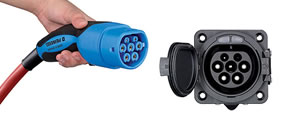
Type 2 (Mennekes - IEC 62196)
Charging Point
Max. Power
Power
Time
Rate
Wall Plug (2.3 kW)
230V / 1x10A
2.3 kW
33h15m
12 km/h
1-phase 16A (3.7 kW)
230V / 1x16A
3.7 kW
20h45m
19 km/h
1-phase 32A (7.4 kW)
230V / 1x32A
7.4 kW
10h30m
37 km/h
3-phase 16A (11 kW)
400V / 3x16A
11 kW
7 hours
55 km/h
3-phase 32A (22 kW)
400V / 3x16A
11 kW †
7 hours
55 km/h
† = Limited by on-board charger, vehicle cannot charge faster.
Fast Charging (10 -> 80%)
Rapid charging enables longer journeys by adding as much range as possible in the shortest amount of time. Charging power will decrease significantly after 80% state-of-charge has been reached. A typical rapid charge therefore rarely exceeds 80% SoC. The rapid charge rate of an EV depends on the charger used and the maximum charging power the EV can handle. The table below shows all details for rapid charging the Kia Niro EV.
Max. Power: maximum power provided by charge point
Avg. Power: average power provided by charge point over a session from 10% to 80%
Time: time needed to charge from 10% to 80%
Rate: average charging speed over a session from 10% to 80%
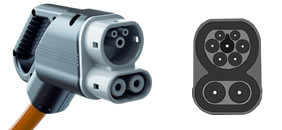
Combined Charging System (CCS Combo 2)
Charging Point
Max. Power
Avg. Power
Time
Rate
CCS (50 kW DC)
50 kW
45 kW †
64 min
250 km/h
CCS (100 kW DC)
80 kW †
70 kW †
41 min
390 km/h
CCS (150 kW DC)
80 kW †
70 kW †
41 min
390 km/h
This vehicle supports Autocharge
This vehicle does not support Plug & Charge
† = Limited by charging capabilities of vehicle
Autocharge: allows for automatic initiation of a charging session at supported CCS charging stations.
Plug & Charge: allows for automatic initiation of a charging session at supported CCS charging stations in accordance with ISO 15118.
Actual charging rates may differ from data shown due to factors like outside temperature, state of the battery and driving style.
Dimensions and Weight
Length
4420 mm
Width
1825 mm
Width with mirrors
No Data
Height
1570 mm
Wheelbase
2720 mm
Weight Unladen (EU)
1757 kg
Gross Vehicle Weight (GVWR)
2200 kg
Max. Payload
518 kg
Cargo Volume
475 L
Cargo Volume Max
1392 L
Cargo Volume Frunk
20 L
Roof Load
100 kg
Tow Hitch Possible
Yes
Towing Weight Unbraked
300 kg
Towing Weight Braked
750 kg
Vertical Load Max
100 kg
About this Vehicle
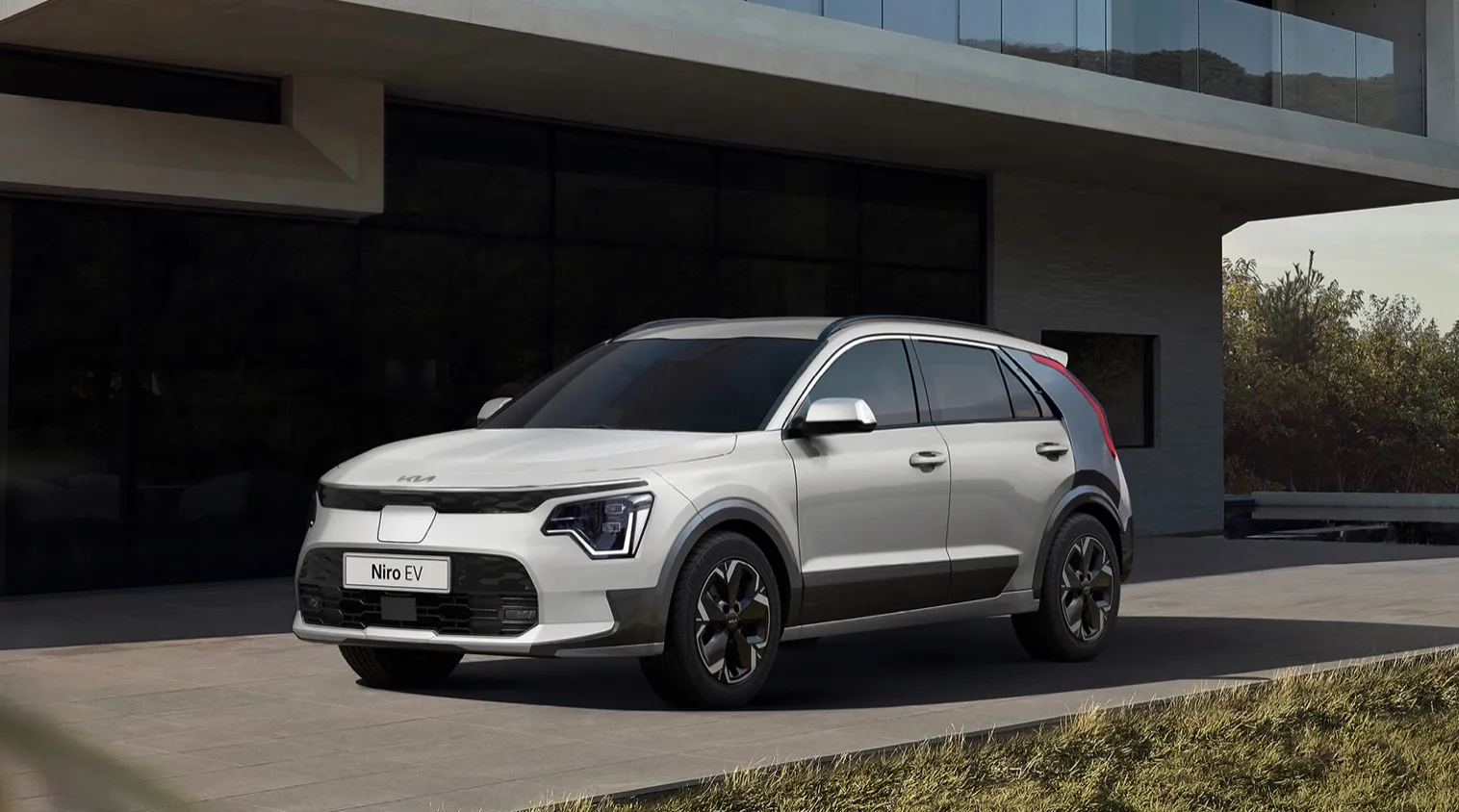
Kia Niro EV Overview
The Kia Niro EV positions itself as a mainstream electric SUV, blending affordability, practicality, and modern tech for urban commuters and small families seeking an accessible entry into electric driving. Priced around $33,000 base, this Kia electric SUV targets budget-conscious buyers who want EV specs like solid range and quick acceleration without premium pricing. Available in Wind and Wave trims, the Kia Niro EV review highlights its compact crossover design on Kia’s dedicated EV platform, emphasizing efficiency, spacious interiors with dual 10.25-inch displays, and advanced driver aids like Forward Collision-Avoidance Assist.
What sets the Kia Niro EV apart is its bold exterior styling, tech-forward cabin with Apple CarPlay, Android Auto, and Digital Key 2.0, plus cold-weather capability for reliable performance. In the competitive electric vehicle range segment, the Kia Niro EV matters as a versatile daily driver that outperforms hybrids in zero-emission driving while offering 23 cubic feet of cargo space expandable to 63.7 cubic feet. Its front-wheel-drive setup and regenerative braking via i-PEDAL mode make it ideal for city life, proving Kia’s push toward sustainable mobility without sacrificing fun or utility.
Kia Niro EV Performance and Driving Experience
The Kia Niro EV delivers peppy performance with a single permanent-magnet synchronous electric motor producing smooth, near-instant torque for effortless merging and city sprints. Real-world driving impressions praise its composed handling on highways, capable city traffic navigation, and responsive dynamics that avoid straining under load—though Eco mode tempers enthusiasm. The front-wheel-drive system shines in everyday scenarios, with regenerative braking recapturing energy effectively for a one-pedal driving feel via i-PEDAL mode.
Specification
Value
0-60 mph (0-100 km/h)
6.7 sec
Top Speed
106 mph / 170 km/h
Power Output
201 hp / 150 kW
Torque
188 lb-ft / 255 Nm
Kia Niro EV Range and Battery Specifications
The Kia Niro EV boasts an EPA range of 253 miles, with real-world tests achieving around 210 miles on highways at 75 mph—solid for its class despite variables like cold weather or aggressive driving. Its 64.8 kWh liquid-cooled lithium-ion battery supports efficient energy use at 113 MPGe combined (126 city/101 highway), influenced by terrain, style, and climate. The Kia Niro EV WLTP range hits about 253-401 km in varied estimates, making it reliable for commutes with smart regen tech optimizing every mile.
Range Metric
Value
WLTP Range
253 miles / 407 km
EPA Range
253 miles / 407 km
Real-World Range
210 miles / 338 km
Battery Capacity
64.8 kWh (usable)
Kia Niro EV Charging Times and Options
Home charging for the Kia Niro EV is straightforward with Level 1 or 2 options via its front-mounted port, while DC fast charging reaches 10-80% in 45 minutes at up to 85 kW—practical for road trips with compatible networks. An 11 kW onboard charger handles Level 2 efficiently, and the external power indicator simplifies checks. Everyday scenarios like overnight garage charging suit most owners, balancing convenience with Kia’s focus on accessible EV infrastructure.
Charging Method
Time
Speed
Level 1 (120V)
50+ hours
~1.4 kW
Level 2 (240V/7kW)
~9 hours
~7 kW
Level 2 (240V/11kW)
~6 hours
~11 kW
DC Fast Charge (10-80%)
45 min
up to 85 kW
Kia Niro EV vs Competitors
In the Kia Niro EV vs Tesla Model Y matchup, the Niro offers better value and efficiency at a lower price than the pricier Model Y, though it trails in range and AWD options. Compared to the Hyundai Ioniq 5, the Kia Niro EV provides similar Kia Niro EV comparison perks like fast charging but edges out with more cargo space and a lower center of gravity for agile handling. Against the Volkswagen ID.4, it surpasses in MPGe ratings while matching urban appeal.
Frequently Asked Questions
The Kia Niro EV delivers around 210 miles in 75-mph highway tests, with an EPA estimate of 253 miles; factors like weather and driving style can reduce it to 200-240 miles typically.
Level 2 (11 kW) takes about 6 hours for a full charge, while DC fast charging hits 10-80% in 45 minutes at up to 85 kW—ideal for quick top-ups on longer drives.
The Kia Niro EV is front-wheel-drive (FWD) only, powered by a single electric motor for efficient, responsive traction suited to daily commuting.
i-PEDAL mode enables single-pedal driving by enhancing regenerative braking for seamless acceleration, deceleration, and stopping, maximizing energy recapture and ease.
The Kia Niro EV matches the Ioniq 5’s fast charging and tech but offers superior cargo versatility (63.7 cu ft max) at a lower starting price, though the Ioniq 5 has optional AWD.
Yes, with pros like 201 hp pep, 253-mile range, and premium features outweighing cons such as slower DC charging speeds and FWD-only setup—great for efficient urban EV life.> The 2026 Kia Niro EV is a mainstream electric SUV with 201 hp, 253-mile EPA range, and a 64.8 kWh battery, excelling in efficiency (113 MPGe) and practicality for families. Its fast-charging (85 kW peak), spacious cabin, and advanced aids like i-PEDAL make it a top Kia Niro EV review pick versus pricier rivals, blending value with zero-emission fun.


 Kia
Kia
 Kia
Kia
 Kia
Kia
 Kia
Kia