Charging is possible by using a regular wall plug or a charging station. Public charging is always done through a charging station. How fast the EV can charge depends on the charging station (EVSE) used and the maximum charging capacity of the EV. The table below shows all possible options for charging the Peugeot e-Traveller L2 50 kWh. Each option shows how fast the battery can be charged from empty to full.
Europe
Charging an EV in Europe differs by country. Some European countries primarily use 1-phase connections to the grid, while other countries are almost exclusively using a 3-phase connection. The table below shows all possible ways the Peugeot e-Traveller L2 50 kWh can be charged, but some modes of charging might not be widely available in certain countries.
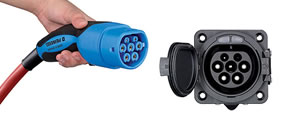
Type 2 (Mennekes - IEC 62196)
Charging Point
Max. Power
Power
Time
Rate
Wall Plug (2.3 kW)
230V / 1x10A
2.3 kW
23h45m
8 km/h
1-phase 16A (3.7 kW)
230V / 1x16A
3.7 kW
14h45m
12 km/h
1-phase 32A (7.4 kW)
230V / 1x32A
7.4 kW
7h30m
24 km/h
3-phase 16A (11 kW)
400V / 3x16A
11 kW
5 hours
36 km/h
3-phase 32A (22 kW)
400V / 3x16A
11 kW †
5 hours
36 km/h
† = Limited by on-board charger, vehicle cannot charge faster.
Fast Charging (10 -> 80%)
Rapid charging enables longer journeys by adding as much range as possible in the shortest amount of time. Charging power will decrease significantly after 80% state-of-charge has been reached. A typical rapid charge therefore rarely exceeds 80% SoC. The rapid charge rate of an EV depends on the charger used and the maximum charging power the EV can handle. The table below shows all details for rapid charging the Peugeot e-Traveller L2 50 kWh.
Max. Power: maximum power provided by charge point
Avg. Power: average power provided by charge point over a session from 10% to 80%
Time: time needed to charge from 10% to 80%
Rate: average charging speed over a session from 10% to 80%
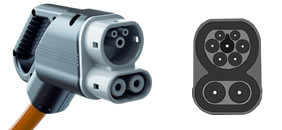
Combined Charging System (CCS Combo 2)
Charging Point
Max. Power
Avg. Power
Time
Rate
CCS (50 kW DC)
50 kW
40 kW †
51 min
140 km/h
CCS (100 kW DC)
100 kW
75 kW †
27 min
280 km/h
CCS (150 kW DC)
101 kW †
78 kW †
26 min
290 km/h
This vehicle supports Autocharge
This vehicle does not support Plug & Charge
† = Limited by charging capabilities of vehicle
Autocharge: allows for automatic initiation of a charging session at supported CCS charging stations.
Plug & Charge: allows for automatic initiation of a charging session at supported CCS charging stations in accordance with ISO 15118.
Actual charging rates may differ from data shown due to factors like outside temperature, state of the battery and driving style.
Peugeot Claimed Specifications
The table below shows the claimed specifications from the manufacturer for charging the Peugeot e-Traveller L2 50 kWh. The specifications can differ from the table above for a variety of reasons. If real-world charge tests are available, these differences can be signifcant. If no real-world tests are available, the table above will be based on the manufacturer specifications as per the table below.
Max. Power: maximum charge power during charging session
Charge From: battery percentage (% SoC) where charging session is started
Charge To: battery percentage (% SoC) where charging session is ended
Time: time needed for charging session
Peugeot Claimed Specifications
Max. Power
Charge From
Charge To
Time
100 kW
0 %
80 %
30 min
Dimensions and Weight
Length
4983 mm
Width
1920 mm
Width with mirrors
2204 mm
Height
1890 mm
Wheelbase
3275 mm
Weight Unladen (EU)
2027 kg
Gross Vehicle Weight (GVWR)
2941 kg
Max. Payload
989 kg
Cargo Volume
603 L
Cargo Volume Max
3968 L
Cargo Volume Frunk
0 L
Roof Load
150 kg
Tow Hitch Possible
Yes
Towing Weight Unbraked
750 kg
Towing Weight Braked
1000 kg
Vertical Load Max
60 kg
About this Vehicle
Peugeot e-Traveller L2 50 kWh Overview
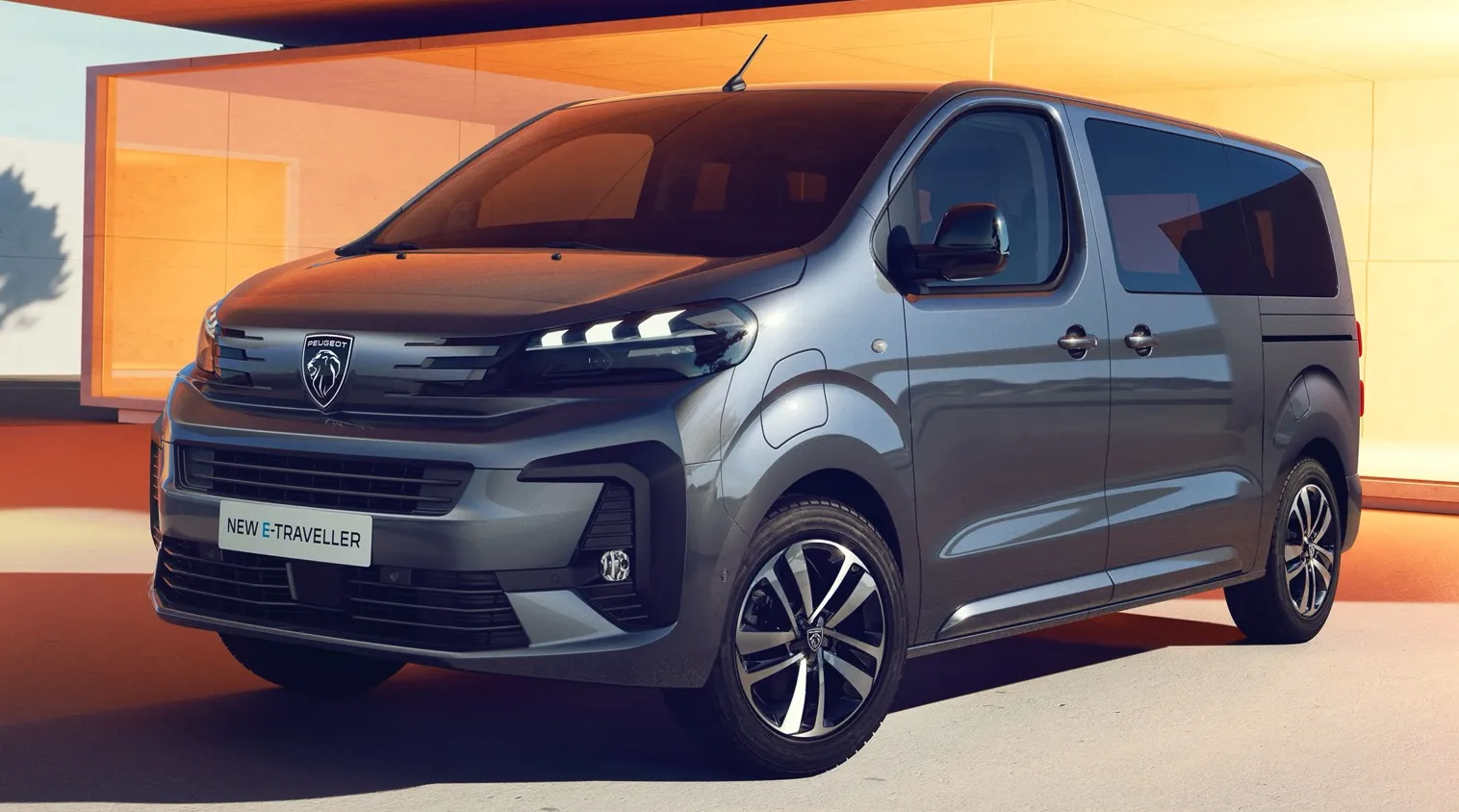
The Peugeot e-Traveller L2 50 kWh positions itself as a premium electric MPV in the zero-emissions van segment, ideal for business fleets, VIP shuttles, and large families seeking spacious, eco-friendly transport. As a Peugeot electric SUV alternative in MPV form, this L2 long-wheelbase model offers modular seating for up to eight passengers, a compact 1.9m height for easy urban parking, and a boot capacity of up to 4,900 litres with seats removed. Its EV specs shine through a dedicated electric platform shared with Stellantis siblings, emphasizing quiet refinement and modularity over outright speed.
Targeted at professionals needing versatile people-carrying without fossil fuels, the Peugeot e-Traveller L2 50 kWh review highlights its distinguishing features: a 50 kWh battery underfloor for maximum interior space, three driving modes (Eco, Normal, Power), and advanced connectivity like a 10-inch touchscreen with wireless Apple CarPlay and Android Auto. In the EV landscape, it matters as an accessible electrified van—starting around £37,430—bridging premium comfort with practicality, backed by an eight-year/100,000-mile battery warranty. This electric vehicle range contender delivers up to 148 miles WLTP, making it a smart choice for short-haul duties in a market dominated by Tesla SUVs.
Peugeot e-Traveller L2 50 kWh Performance and Driving Experience
The Peugeot e-Traveller L2 50 kWh delivers smooth, instant torque from its front-mounted electric motor, providing responsive acceleration suited to city shuttling and overtaking. With 136 hp and 260 Nm, power delivery feels flexible and quiet, enhanced by selectable modes: Eco for range priority, Normal for balanced daily use, and Power for dynamic surges. Handling is composed of its 5.3m length, with electric power steering and optional regenerative braking paddles offering moderate or increased deceleration to recharge the battery. Real-world impressions praise its serene cabin, making it ideal for passenger comfort on motorways or urban runs, though its van roots mean it’s more about stability than sportiness.
Specification
Value
0-60 mph (0-100 km/h)
11.3 sec
Top Speed
81 mph / 130 km/h
Power Output
136 hp / 100 kW
Torque
260 lb-ft / 260 Nm
Peugeot e-Traveller L2 50 kWh Range and Battery Specifications
Official Peugeot e-Traveller L2 50 kWh WLTP range reaches 148 miles, but real-world range varies from 125-275 km (78-171 miles) per EV Database estimates, dropping to 121 miles in cold city weather or extending in mild highway conditions. The 50.0 kWh nominal (usable similar) lithium-ion battery uses advanced thermal management for consistent performance. Energy efficiency hovers at 181-290 Wh/mi, influenced by weather, load (up to eight passengers), driving style, and terrain—highway speeds or air conditioning can reduce range by 20-30%.
Range Metric
Value
WLTP Range
148 miles / 238 km
EPA Range
N/A
Real-World Range
125-171 miles / 200-275 km
Battery Capacity
50.0 kWh (usable)
Peugeot e-Traveller L2 50 kWh Charging Times and Options
Home charging for the Peugeot e-Traveller L2 50 kWh is straightforward with Level 1 or 2 options, while its 100 kW DC fast-charging peak recovers 80% in 30 minutes on compatible public networks like POLAR (six-month free subscription included). Onboard AC supports up to 11 kW, ideal for overnight top-ups. Practical scenarios suit fleet depots or home garages; regenerative braking adds minor range during drives. Network compatibility spans CCS for rapid DC, ensuring versatility for daily operations.
Charging Method
Time
Speed
Level 1 (120V)
28 hours
~2.3 kW
Level 2 (240V/7kW)
7.5 hours
~7 kW
Level 2 (240V/11kW)
5 hours
~11 kW
DC Fast Charge (10-80%)
30 min
up to 100 kW
Peugeot e-Traveller L2 50 kWh vs Competitors
In the Peugeot e-Traveller L2 50 kWh vs competitors matchup, it outshines the Mercedes EQV with better modularity and a lower £37k entry price versus the EQV’s £60k+, while matching a similar 148-mile WLTP range but adding faster 100 kW charging. Against the Kia EV9, the Peugeot prioritizes van-like space (4,900L max load) over the EV9’s SUV styling and 304-mile range, appealing more to shuttle operators. The Tesla Model Y edges in performance and 319-mile range but lacks the e-Traveller’s eight-seat flexibility and 1.9m height for tight parking.
Frequently Asked Questions
Real-world range spans 125-275 km (78-171 miles), with 195 km (121 miles) in cold city conditions and up to 171 miles in mild highway driving, per EV Database tests factoring weather, load, and style.
Full Level 2 (11 kW) takes about 5 hours; DC fast charging hits 80% in 30 minutes at up to 100 kW. Level 1 is slower at 28 hours.
It’s front-wheel drive (FWD) only, delivering efficient power to the front axle with 260 Nm torque for smooth urban handling—no AWD option available.
The e-toggle is a compact gearbox selector for Reverse/Neutral/Drive, paired with push-button Park, Brake mode, and driving modes (Eco/Normal/Power), optimizing electric mobility via the touchscreen’s electrical menu.
The Peugeot offers similar 148-mile WLTP range at a lower price (£37k vs £60k+), superior seat modularity, and faster charging, but the EQV provides more luxury finishes.
Yes for fleets and families—pros include 8-seat versatility, 148-mile range, quick charging, and quiet drive; cons are modest performance (11.3s 0-60) and no AWD.> The Peugeot e-Traveller L2 50 kWh is a versatile electric MPV from Peugeot with a 50 kWh battery, 148-mile WLTP range, 136 hp power, and up to 100 kW fast charging. It excels in passenger-hauling modularity for up to eight, urban-friendly 1.9m height, and business efficiency, outpacing pricier rivals like the Mercedes EQV in value.


 Peugeot
 Peugeot
 Peugeot
 Peugeot