Charging is possible by using a regular wall plug or a charging station. Public charging is always done through a charging station. How fast the EV can charge depends on the charging station (EVSE) used and the maximum charging capacity of the EV. The table below shows all possible options for charging the Volvo EX30 Twin Motor Performance. Each option shows how fast the battery can be charged from empty to full.
Europe
Charging an EV in Europe differs by country. Some European countries primarily use 1-phase connections to the grid, while other countries are almost exclusively using a 3-phase connection. The table below shows all possible ways the Volvo EX30 Twin Motor Performance can be charged, but some modes of charging might not be widely available in certain countries.
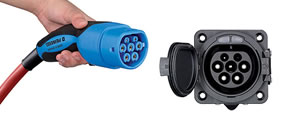
Type 2 (Mennekes - IEC 62196)
Charging Point
Max. Power
Power
Time
Rate
Standard 11.0 kW On-Board Charger
Wall Plug (2.3 kW)
230V / 1x10A
2.3 kW
32h45m
10 km/h
1-phase 16A (3.7 kW)
230V / 1x16A
3.7 kW
20h30m
16 km/h
1-phase 32A (7.4 kW)
230V / 1x32A
7.4 kW
10h15m
33 km/h
3-phase 16A (11 kW)
400V / 3x16A
11 kW
7 hours
48 km/h
3-phase 32A (22 kW)
400V / 3x16A
11 kW †
7 hours
48 km/h
Optional 22.0kW On-Board Charger
Wall Plug (2.3 kW)
230V / 1x10A
2.3 kW
32h45m
10 km/h
1-phase 16A (3.7 kW)
230V / 1x16A
3.7 kW
20h30m
16 km/h
1-phase 32A (7.4 kW)
230V / 1x32A
7.4 kW
10h15m
33 km/h
3-phase 16A (11 kW)
400V / 3x16A
11 kW
7 hours
48 km/h
3-phase 32A (22 kW)
400V / 3x32A
22 kW †
3h30m
96 km/h
† = Limited by on-board charger, vehicle cannot charge faster.
Fast Charging (10 -> 80%)
Rapid charging enables longer journeys by adding as much range as possible in the shortest amount of time. Charging power will decrease significantly after 80% state-of-charge has been reached. A typical rapid charge therefore rarely exceeds 80% SoC. The rapid charge rate of an EV depends on the charger used and the maximum charging power the EV can handle. The table below shows all details for rapid charging the Volvo EX30 Twin Motor Performance.
Max. Power: maximum power provided by charge point
Avg. Power: average power provided by charge point over a session from 10% to 80%
Time: time needed to charge from 10% to 80%
Rate: average charging speed over a session from 10% to 80%
Combined Charging System (CCS Combo 2)
Charging Point
Max. Power
Avg. Power
Time
Rate
CCS (50 kW DC)
50 kW
50 kW
57 min
240 km/h
CCS (150 kW DC)
150 kW
111 kW †
25 min
560 km/h
CCS (300 kW DC)
158 kW †
113 kW †
25 min
560 km/h
Charge Curve
Data made available by Fastned
This vehicle does not support Plug & Charge
† = Limited by charging capabilities of vehicle
Plug & Charge: allows for automatic initiation of a charging session at supported CCS charging stations in accordance with ISO 15118.
Actual charging rates may differ from data shown due to factors like outside temperature, state of the battery and driving style.
Volvo Claimed Specifications
The table below shows the claimed specifications from the manufacturer for charging the Volvo EX30 Twin Motor Performance. The specifications can differ from the table above for a variety of reasons. If real-world charge tests are available, these differences can be signifcant. If no real-world tests are available, the table above will be based on the manufacturer specifications as per the table below.
Max. Power: maximum charge power during charging session
Charge From: battery percentage (% SoC) where charging session is started
Charge To: battery percentage (% SoC) where charging session is ended
Time: time needed for charging session
Volvo Claimed Specifications
Max. Power
Charge From
Charge To
Time
153 kW
10 %
80 %
28 min
Dimensions and Weight
Length
4233 mm
Width
1837 mm
Width with mirrors
2032 mm
Height
1549 mm
Wheelbase
2650 mm
Weight Unladen (EU)
1960 kg
Gross Vehicle Weight (GVWR)
2335 kg
Max. Payload
450 kg
Cargo Volume
318 L
Cargo Volume Max
904 L
Cargo Volume Frunk
7 L
Roof Load
75 kg
Tow Hitch Possible
Yes
Towing Weight Unbraked
750 kg
Towing Weight Braked
1600 kg
Vertical Load Max
100 kg
About this Vehicle
Volvo EX30 Twin Motor Performance Overview
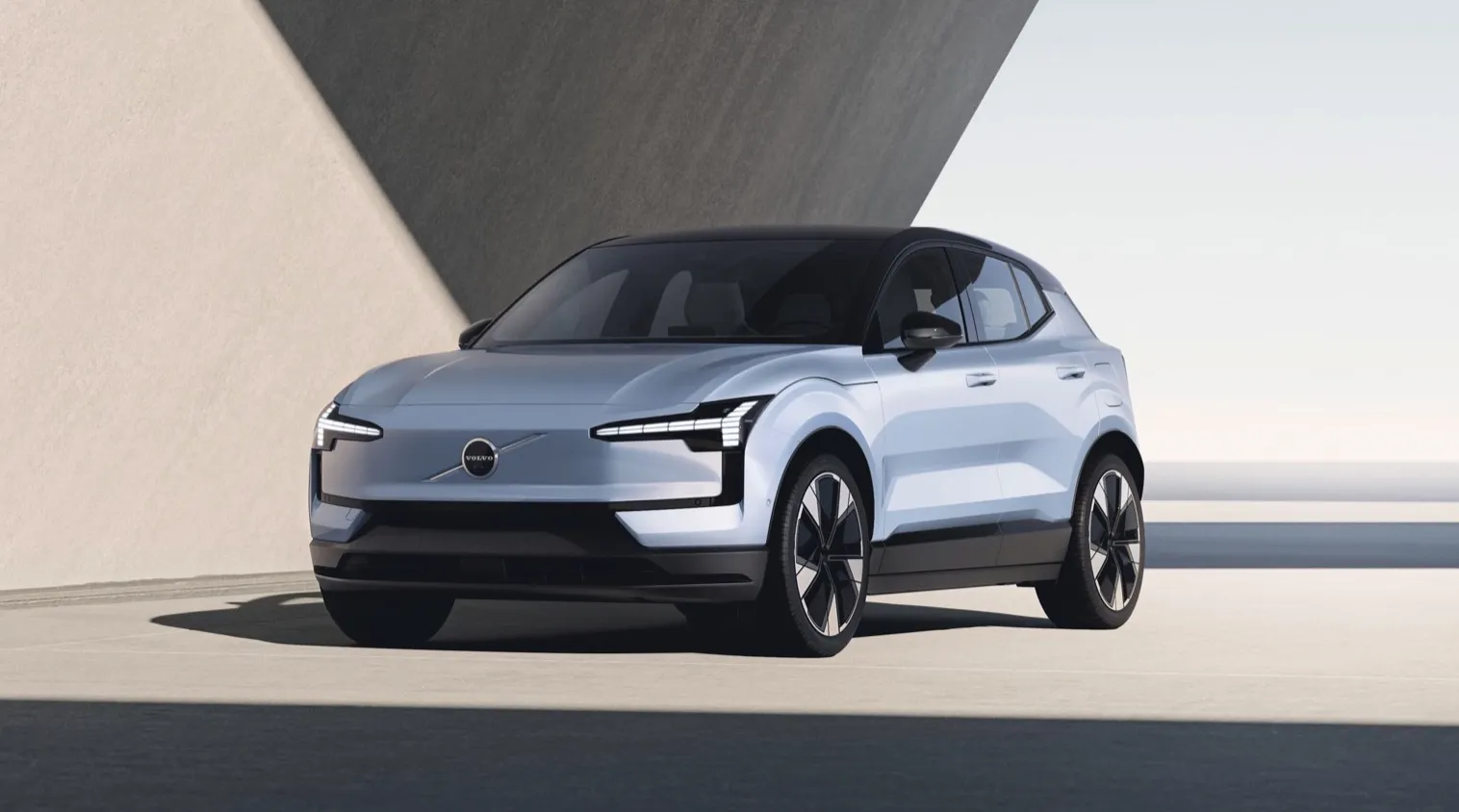
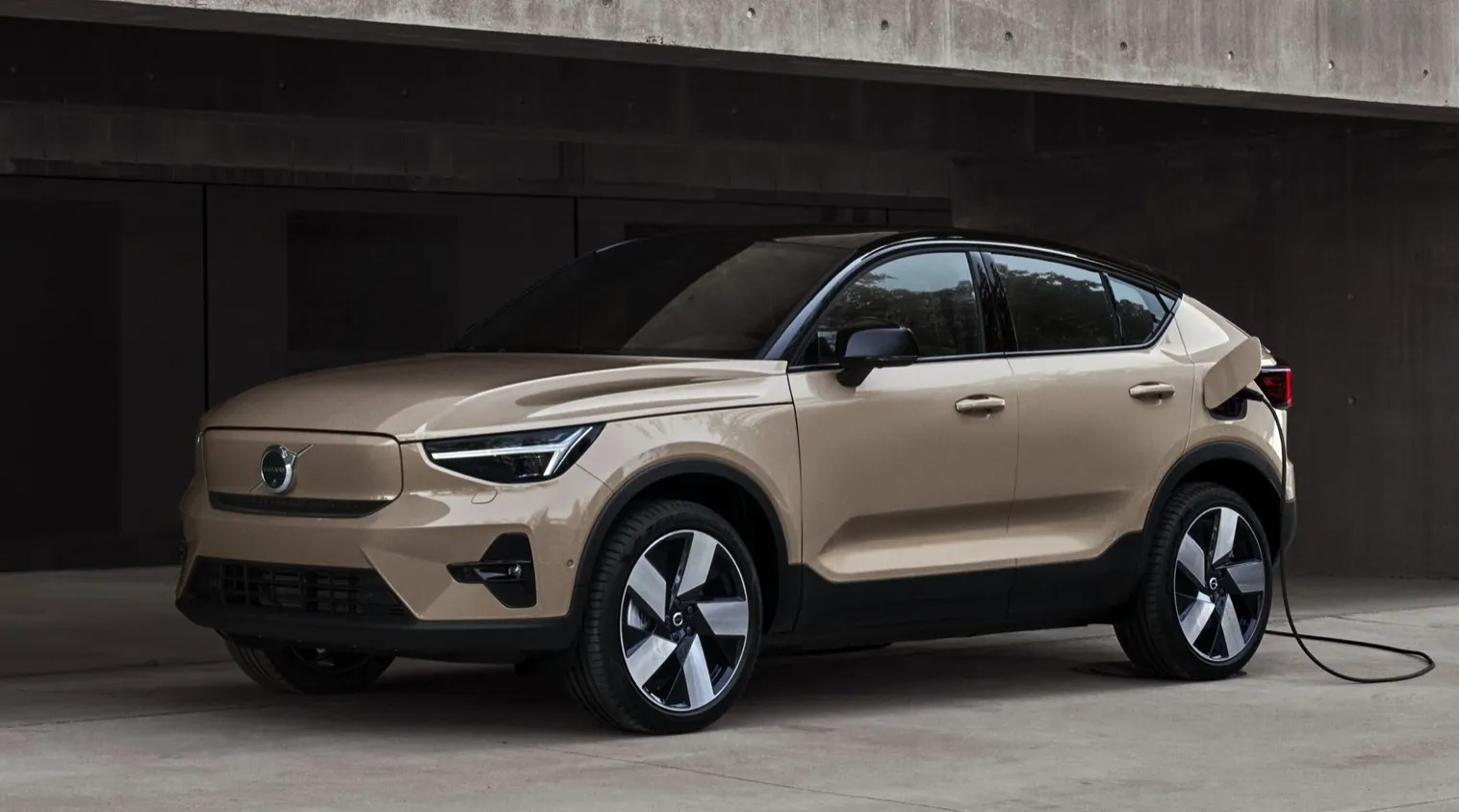
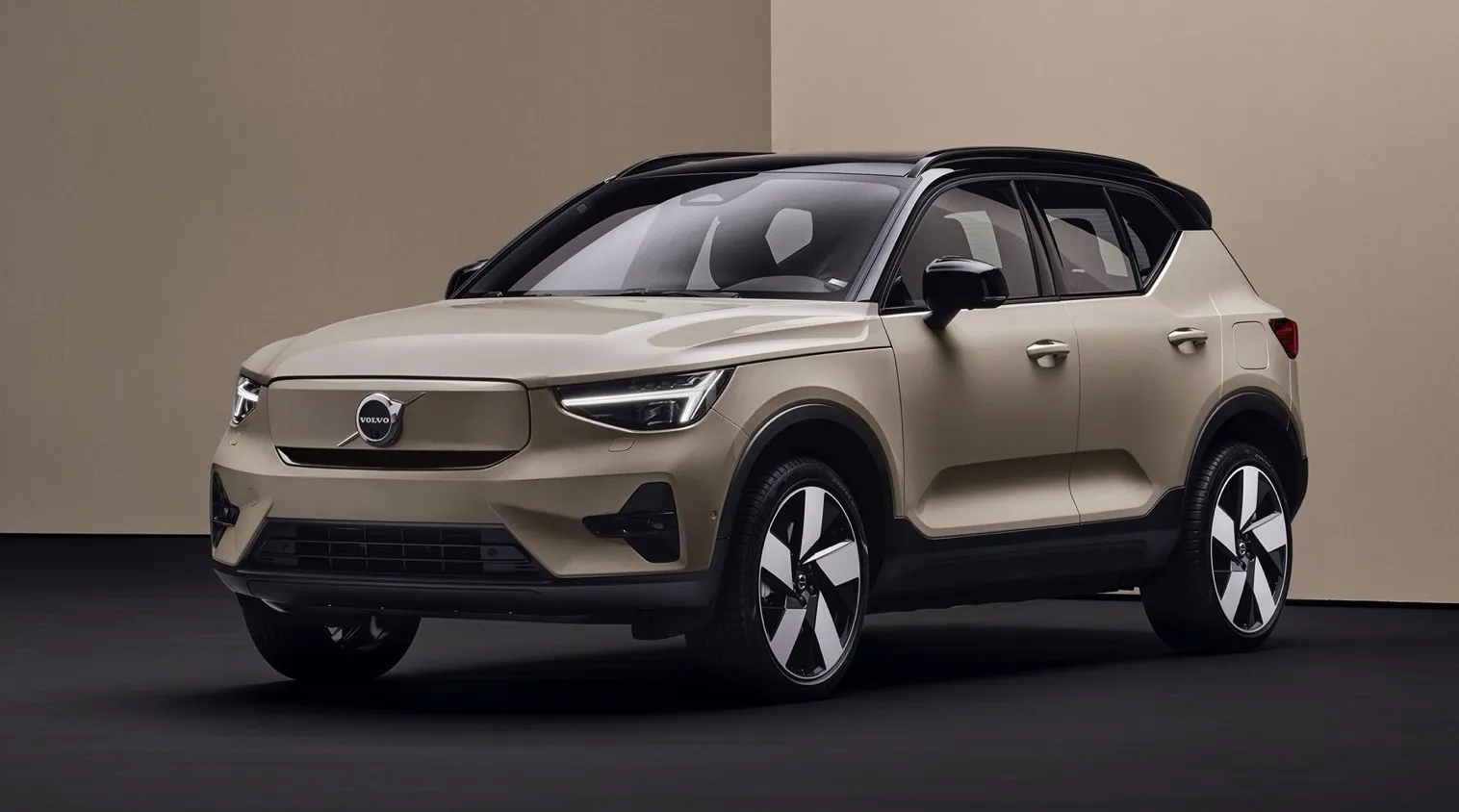
The Volvo EX30 Twin Motor Performance positions itself as a premium compact electric SUV, blending Scandinavian safety, minimalist design, and blistering performance in the competitive EV market. Priced starting around $46,345, this Volvo electric SUV targets urban drivers and families seeking a stylish, tech-forward alternative to mainstream crossovers, with its subcompact footprint ideal for city parking and agile handling. Built on Volvo’s sustainable EMA platform using recycled materials, the EX30 emphasizes efficiency and eco-conscious engineering, featuring a Harman Kardon audio system, advanced driver aids, and a driver-focused cockpit with a wraparound infotainment screen.
What sets the Volvo EX30 Twin Motor Performance apart is its dual-motor AWD setup delivering supercar-like acceleration in a lightweight package under 4,200 pounds, making it a standout in the EV specs landscape. This EX30 review highlights its role as a game-changer for buyers wanting luxury without excess size—offering an electric vehicle range up to 253 miles EPA while prioritizing fun-to-drive dynamics. In the evolving EV space, the EX30 matters for proving premium brands can deliver accessible thrills, challenging larger SUVs with superior maneuverability and zero-emission refinement.
Volvo EX30 Twin Motor Performance and Driving Experience
The Volvo EX30 Twin Motor Performance unleashes 422 horsepower and 400 lb-ft of torque from its dual permanent-magnet motors—a front unit at 154 hp/148 lb-ft and rear at 268 hp/253 lb-ft—propelling it from 0-60 mph in just 3.3 seconds, rivaling sports cars. Power delivery is instantaneous thanks to direct-drive transmission, with no lag in throttle response across modes, though Performance AWD locks both motors for maximum grip. Handling shines with a short wheelbase minimizing body roll, responsive steering (tunable via settings), and composed dynamics on twisty roads or urban streets, pulling 0.85 g on the skidpad despite all-season tires.
Real-world impressions praise its zippy town maneuvering and one-pedal driving for effortless stops, though brakes excel at hauling from 70-0 mph in 166 feet. The lightweight 4,189-pound curb weight enhances agility without sacrificing Volvo’s plush ride.
Specification
Value
0-60 mph (0-100 km/h)
3.3 sec (3.6 sec)
Top Speed
114 mph / 184 km/h
Power Output
422 hp / 315 kW
Torque
400 lb-ft / 543 Nm
Volvo EX30 Twin Motor Performance Range and Battery Specifications
The Volvo EX30 Twin Motor Performance boasts an EPA range of 253 miles from its 64 kWh liquid-cooled lithium-ion battery (usable capacity around 64 kWh), with WLTP figures reaching up to 279 miles in optimal conditions. Real-world EX30 WLTP range drops to about 160 miles at 75-mph highway speeds, influenced by AWD engagement, cold weather, or aggressive driving—city cold-weather estimates hit 340 km in tests. Energy efficiency stands at 109 MPGe combined (116 city/100 highway), or roughly 310 Wh/mi, making it stout for its modest battery size thanks to eco modes that idle the front motor.
EX30 real-world range varies with terrain and style: expect 200-240 miles in mixed use, dipping in winter or with loads, but its efficiency edges out heavier rivals.
Range Metric
Value
WLTP Range
279 miles / 449 km
EPA Range
253 miles / 407 km
Real-World Range
160-253 miles / 257-407 km
Battery Capacity
64 kWh (usable)
Volvo EX30 Twin Motor Performance Charging Times and Options
Charging the Volvo EX30 Twin Motor Performance is practical with an 11 kW onboard AC charger for home use and up to 153 kW DC fast-charging capability, though real-world peaks average 83 kW. Level 2 setups restore a full charge overnight, while DC hits 10-80% in under 27 minutes per Volvo (39 minutes to 90% in tests). It pairs with major networks like Electrify America, supporting everyday scenarios like quick top-ups on road trips.
Home Level 1 suits overnight trickle-charging, but Level 2 or public DC shines for efficiency.
Charging Method
Time
Speed
Level 1 (120V)
28 hours
~1.4 kW
Level 2 (240V/7kW)
7-8 hours
~7 kW
Level 2 (240V/11kW)
6 hours
~11 kW
DC Fast Charge (10-80%)
27 min
up to 153 kW
Volvo EX30 Twin Motor Performance vs Competitors
In the Volvo EX30 Twin Motor Performance vs Tesla Model Y, the EX30 edges with quicker 3.3-second 0-60 and lighter weight for nimbler handling, though the Model Y offers superior range (up to 320 miles). Against the Hyundai Ioniq 5, the EX30’s premium interior and safety tech outshine the Ioniq’s value pricing, but match its fast charging; versus the Kia EV6, it delivers similar AWD punch (422 hp) with better efficiency in a smaller package. The EX30 comparison favors Volvo for urban premium appeal over these rivals’ space focus.
Frequently Asked Questions
Real-world range for the Volvo EX30 Twin Motor Performance averages 160 miles at 75-mph highway speeds, up to 253 miles EPA or 200-240 miles in mixed driving, dropping in cold weather or with AWD fully engaged.
Home Level 2 (11 kW) takes about 6 hours for a full charge; DC fast charging reaches 10-80% in 27 minutes at up to 153 kW, though tests show 39 minutes to 90% at 83 kW average.
It’s dual-motor AWD standard, with a front 154 hp motor and rear 268 hp unit for 422 hp total, enabling instant torque vectoring and superior traction without sacrificing much range.
Volvo’s Core Compute is the central computing hub powering the EX30’s intuitive infotainment, ADAS features, and over-the-air updates, integrating a single-screen interface for seamless control.
The EX30 accelerates faster (3.3 sec 0-60 vs Model Y’s 4.8 sec base), feels lighter and more agile, but trails in range (253 vs 320 miles) and Supercharger access.
Yes, with pros like explosive 422 hp performance, premium safety, and 253-mile range, cons include modest real-world highway range (160 miles) and average charging speeds in tests.> The Volvo EX30 Twin Motor Performance is a premium compact electric SUV from Volvo delivering 422 hp, 253-mile EPA range, and 3.3-second 0-60 acceleration in a lightweight AWD package. It excels in urban agility and safety tech, outpacing rivals like Tesla Model Y in quickness while offering efficient 64 kWh battery charging up to 153 kW. Ideal for thrill-seeking EV buyers prioritizing style and dynamics over max range.




 Volvo
Volvo
 Volvo
Volvo
 Volvo
Volvo
 Volvo
Volvo