Charging is possible by using a regular wall plug or a charging station. Public charging is always done through a charging station. How fast the EV can charge depends on the charging station (EVSE) used and the maximum charging capacity of the EV. The table below shows all possible options for charging the Volkswagen ID. Buzz NWB GTX. Each option shows how fast the battery can be charged from empty to full.
Europe
Charging an EV in Europe differs by country. Some European countries primarily use 1-phase connections to the grid, while other countries are almost exclusively using a 3-phase connection. The table below shows all possible ways the Volkswagen ID. Buzz NWB GTX can be charged, but some modes of charging might not be widely available in certain countries.
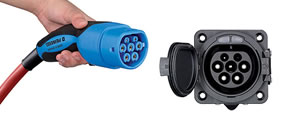
Type 2 (Mennekes - IEC 62196)
Charging Point
Max. Power
Power
Time
Rate
Wall Plug (2.3 kW)
230V / 1x10A
2.3 kW
40h30m
8 km/h
1-phase 16A (3.7 kW)
230V / 1x16A
3.7 kW
25h15m
13 km/h
1-phase 32A (7.4 kW)
230V / 1x32A
7.4 kW
12h45m
26 km/h
3-phase 16A (11 kW)
400V / 3x16A
11 kW
8h30m
39 km/h
3-phase 32A (22 kW)
400V / 3x16A
11 kW †
8h30m
39 km/h
† = Limited by on-board charger, vehicle cannot charge faster.
Fast Charging (10 -> 80%)
Rapid charging enables longer journeys by adding as much range as possible in the shortest amount of time. Charging power will decrease significantly after 80% state-of-charge has been reached. A typical rapid charge therefore rarely exceeds 80% SoC. The rapid charge rate of an EV depends on the charger used and the maximum charging power the EV can handle. The table below shows all details for rapid charging the Volkswagen ID. Buzz NWB GTX.
Max. Power: maximum power provided by charge point
Avg. Power: average power provided by charge point over a session from 10% to 80%
Time: time needed to charge from 10% to 80%
Rate: average charging speed over a session from 10% to 80%
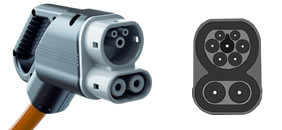
Combined Charging System (CCS Combo 2)
Charging Point
Max. Power
Avg. Power
Time
Rate
CCS (50 kW DC)
50 kW
50 kW
70 min
200 km/h
CCS (100 kW DC)
100 kW
90 kW †
39 min
360 km/h
CCS (150 kW DC)
150 kW
115 kW †
30 min
460 km/h
CCS (175 kW DC)
175 kW
130 kW †
27 min
520 km/h
CCS (350 kW DC)
185 kW †
135 kW †
26 min
540 km/h
This vehicle does not support Autocharge
This vehicle supports Plug & Charge
† = Limited by charging capabilities of vehicle
Autocharge: allows for automatic initiation of a charging session at supported CCS charging stations.
Plug & Charge: allows for automatic initiation of a charging session at supported CCS charging stations in accordance with ISO 15118.
Actual charging rates may differ from data shown due to factors like outside temperature, state of the battery and driving style.
Volkswagen Claimed Specifications
The table below shows the claimed specifications from the manufacturer for charging the Volkswagen ID. Buzz NWB GTX. The specifications can differ from the table above for a variety of reasons. If real-world charge tests are available, these differences can be signifcant. If no real-world tests are available, the table above will be based on the manufacturer specifications as per the table below.
Max. Power: maximum charge power during charging session
Charge From: battery percentage (% SoC) where charging session is started
Charge To: battery percentage (% SoC) where charging session is ended
Time: time needed for charging session
Volkswagen Claimed Specifications
Max. Power
Charge From
Charge To
Time
185 kW
10 %
80 %
25 min
Dimensions and Weight
Length
4712 mm
Width
1985 mm
Width with mirrors
2212 mm
Height
1925 mm
Wheelbase
2989 mm
Weight Unladen (EU) *
2500 kg
Gross Vehicle Weight (GVWR)
No Data
Max. Payload
No Data
Cargo Volume
1121 L
Cargo Volume Max
2123 L
Cargo Volume Frunk
0 L
Roof Load
No Data
Tow Hitch Possible
Yes
Towing Weight Unbraked
750 kg
Towing Weight Braked
1800 kg
Vertical Load Max
No Data
About this Vehicle
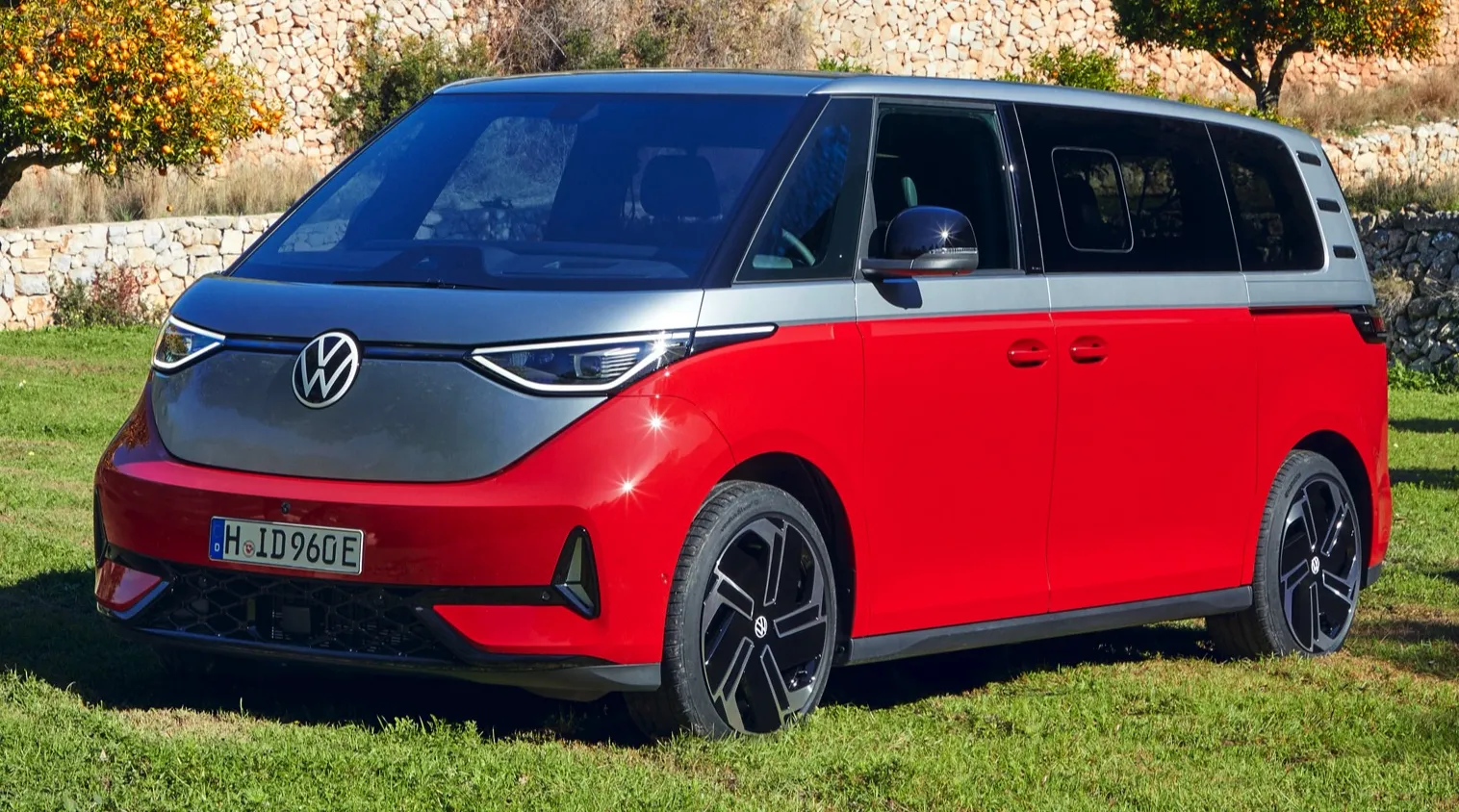
# Volkswagen ID. Buzz NWB GTX: The Ultimate Electric Performance Van
Volkswagen ID. Buzz NWB GTX Overview
The Volkswagen ID. Buzz GTX represents a revolutionary approach to the electric van segment, combining the iconic retro-inspired design of VW’s legendary Microbus with cutting-edge EV performance technology. Positioned as a premium electric people-mover, the ID. Buzz GTX targets families and businesses seeking a spacious, practical vehicle without compromising on driving dynamics. Built on Volkswagen’s scalable MEB platform—the same architecture powering the ID.3, ID.4, and ID.5—the ID. Buzz GTX has been specifically engineered for maximum interior space with a 2,988mm wheelbase that rivals traditional combustion-engine vans.
The GTX variant stands apart as the performance flagship of the ID. The Buzz lineup features dual-motor all-wheel drive (4MOTION) and significantly enhanced power delivery compared to standard RWD models. This electric van matters in today’s EV landscape because it proves that practicality and performance aren’t mutually exclusive. The ID. Buzz GTX delivers the versatility of a seven-seater with the acceleration of a sports car, making it the most powerful Volkswagen bus ever produced. Its distinctive sliding doors on both sides, panoramic glass roof, and modern interior technology create an experience that appeals to both practical buyers and enthusiasts seeking something genuinely different.
Volkswagen ID. Buzz NWB GTX Performance and Driving Experience
The ID. Buzz GTX transforms the driving experience of a large van through its dual-motor setup, delivering impressive acceleration that defies its 2.7-tonne kerb weight. The GTX’s all-wheel-drive system provides exceptional grip and stability, while the sportier suspension reduces body lean compared to standard models, enabling confident cornering despite the vehicle’s tall, boxy profile. Drivers report that the ID. Buzz GTX feels surprisingly composed on motorways, maintaining stability at speed while offering enough agility for country roads. The rear-mounted motor in standard versions provides adequate town driving punch, but the GTX’s twin-motor configuration delivers the vigour needed for highway merging and overtaking maneuvers.
Specification
Value
0-60 mph (0-100 km/h)
6.1-6.5 sec
Top Speed
112 mph / 180 km/h
Power Output
335 hp / 250 kW
Torque
413 lb-ft / 560 Nm
Volkswagen ID. Buzz NWB GTX Range and Battery Specifications
The ID. Buzz GTX comes equipped with either a 79kWh or 86kWh battery pack, with the larger unit offering superior real-world range. The 86kWh usable battery delivers approximately 280-290 miles of WLTP range, though real-world driving typically yields 255-320 miles depending on weather conditions, driving style, and terrain. The dual motors of the GTX variant consume more energy than single-motor versions, resulting in slightly reduced range compared to standard RWD models. Energy efficiency remains respectable for a vehicle of this size and weight, with the ID. Buzz GTX manages approximately 3.5-4.0 miles per kWh under typical driving conditions.
Range Metric
Value
WLTP Range
280-290 miles / 450 km
Real-World Range
255-320 miles / 410-515 km
Battery Capacity
86 kWh (usable)
Energy Efficiency
3.5-4.0 mi/kWh
Volkswagen ID. Buzz NWB GTX Charging Times and Options
The ID. Buzz GTX supports rapid charging capabilities that make long-distance travel practical. DC fast charging reaches peak speeds of 200kW, enabling a 20-80% charge in approximately 20 minutes—impressive for a vehicle of this size. Home charging via Level 2 (240V/7kW) takes roughly 12-14 hours for a full charge, while Level 2 at 11kW reduces this to 8-10 hours. The ID. Buzz GTX’s charging infrastructure compatibility ensures access to most European and UK charging networks, making it suitable for both daily commuting and extended journeys.
Charging Method
Time
Speed
Level 1 (120V)
48+ hours
~1.4 kW
Level 2 (240V/7kW)
12-14 hours
7 kW
Level 2 (240V/11kW)
8-10 hours
11 kW
DC Fast Charge (20-80%)
20 minutes
up to 200 kW
Volkswagen ID. Buzz NWB GTX vs Competitors
The ID. Buzz GTX occupies a unique market position with limited direct competition. While the Mercedes EQV offers similar seven-seat capacity, it lacks the GTX’s performance credentials and modern design language. The Volkswagen ID. Buzz GTX outperforms traditional MPVs like the Kia Carnival EV in acceleration and technology, though it sacrifices some interior refinement. Compared to the Tesla Model Y (which seats five), the ID. Buzz GTX provides significantly more passenger space and practicality, though at a higher price point. The Hyundai Ioniq 7 (when released) may offer competition, but the ID. Buzz GTX’s established platform, proven reliability, and distinctive retro-modern aesthetic give it a compelling advantage in the premium electric van segment.
Frequently Asked Questions
The ID. Buzz GTX delivers 255-320 miles of real-world range with the 86kWh battery, depending on driving conditions, weather, and driving style. WLTP testing shows 280-290 miles, though dual motors consume more energy than single-motor variants.
DC fast charging completes a 20-80% charge in approximately 20 minutes at 200kW. Home charging via Level 2 (7kW) takes 12-14 hours, while 11kW charging reduces this to 8-10 hours for a full charge.
Yes, the ID. Buzz GTX exclusively features 4MOTION all-wheel drive with dual motors—one on each axle. Standard RWD models use a single rear motor, while the GTX’s twin-motor setup delivers 335 hp and superior traction.
The ID. Buzz GTX features dual-motor all-wheel drive producing 335 hp versus 282 hp in RWD models, sportier suspension for reduced body lean, enhanced towing capacity (1,800kg vs 1,000kg), and 0-60 acceleration of 6.1-6.5 seconds compared to 7.6 seconds in standard versions.
The ID. Buzz GTX offers superior performance with 335 hp and 6.1-6.5 second 0-60 acceleration, modern MEB platform technology, and distinctive retro design. The Mercedes EQV prioritizes luxury refinement but lacks the GTX’s performance credentials and contemporary styling.
The ID. Buzz GTX excels as a premium electric people-mover, combining practical seven-seat capacity with genuine performance and modern technology. Its dual-motor system, rapid charging, and iconic design make it ideal for families and businesses seeking practicality without sacrificing driving engagement, though its range is modest compared to dedicated cargo vans.> The Volkswagen ID. Buzz NWB GTX redefines the electric van category with 335 hp of dual-motor power, 280-290 miles of WLTP range, and 20-minute DC fast charging. This premium all-wheel-drive people-mover combines retro-inspired design with cutting-edge EV technology, delivering 0-60 acceleration in 6.1-6.5 seconds while seating up to seven passengers—making it the most powerful Volkswagen bus ever created.


 Volkswagen
 Volkswagen
 Volkswagen
 Volkswagen