

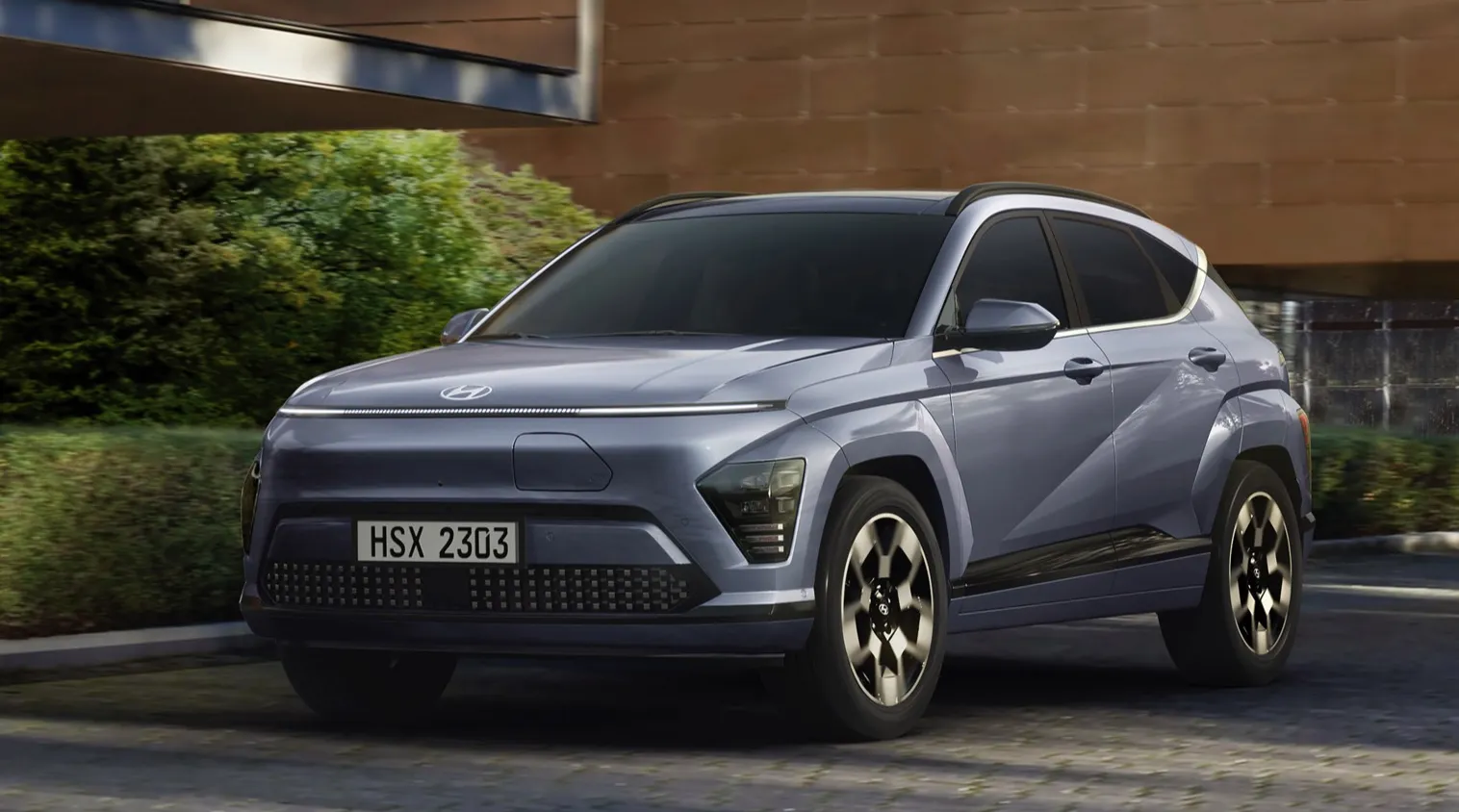
Hyundai Kona Electric 48 kWh
Key Specifications
Real Range Estimation
| City - Cold Weather * | 290 km |
| Highway - Cold Weather * | 205 km |
| Combined - Cold Weather * | 245 km |
between 205 - 435 km
| City - Mild Weather * | 435 km |
| Highway - Mild Weather * | 270 km |
| Combined - Mild Weather * | 340 km |
Battery
| Nominal Capacity* | 51.0 kWh |
| Battery Type | Lithium-ion |
| Number of Cells | No Data |
| Architecture | 400 V |
| Warranty Period | 8 years |
| Warranty Mileage | 160,000 km |
| Useable Capacity | 48.4 kWh |
| Cathode Material | No Data |
| Pack Configuration | No Data |
| Nominal Voltage | 295 V |
| Form Factor | No Data |
| Name / Reference | No Data |
Performance
| Acceleration 0 - 100 km/h | 8.8 sec |
| Top Speed | 160 km/h |
| Electric Range * | 295 km |
| Total Power | 115 kW (156 PS) |
| Total Torque | 255 Nm |
| Drive | Front |
Home and Destination Charging (0 -> 100%)
Charging is possible by using a regular wall plug or a charging station. Public charging is always done through a charging station. How fast the EV can charge depends on the charging station (EVSE) used and the maximum charging capacity of the EV. The table below shows all possible options for charging the Hyundai Kona Electric 48 kWh. Each option shows how fast the battery can be charged from empty to full.
Europe
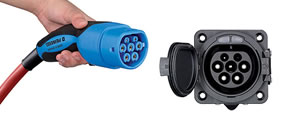
Charging an EV in Europe differs by country. Some European countries primarily use 1-phase connections to the grid, while other countries are almost exclusively using a 3-phase connection. The table below shows all possible ways the Hyundai Kona Electric 48 kWh can be charged, but some modes of charging might not be widely available in certain countries.
| Type 2 (Mennekes - IEC 62196) |
|---|
 |
| Charging Point | Max. Power | Power | Time | Rate |
|---|---|---|---|---|
| Wall Plug (2.3 kW) | 230V / 1x10A | 2.3 kW | 24h45m | 12 km/h |
| 1-phase 16A (3.7 kW) | 230V / 1x16A | 3.7 kW | 15h30m | 19 km/h |
| 1-phase 32A (7.4 kW) | 230V / 1x32A | 7.4 kW | 7h45m | 38 km/h |
| 3-phase 16A (11 kW) | 400V / 3x16A | 11 kW | 5h15m | 56 km/h |
| 3-phase 32A (22 kW) | 400V / 3x16A | 11 kW † | 5h15m | 56 km/h |
† = Limited by on-board charger, vehicle cannot charge faster.
Fast Charging (10 -> 80%)
Rapid charging enables longer journeys by adding as much range as possible in the shortest amount of time. Charging power will decrease significantly after 80% state-of-charge has been reached. A typical rapid charge therefore rarely exceeds 80% SoC. The rapid charge rate of an EV depends on the charger used and the maximum charging power the EV can handle. The table below shows all details for rapid charging the Hyundai Kona Electric 48 kWh.
Hyundai has not released details about rapid charging the Kona. The information below is based on estimated values of the most likely rapid charging capabilities.
- Max. Power: maximum power provided by charge point
- Avg. Power: average power provided by charge point over a session from 10% to 80%
- Time: time needed to charge from 10% to 80%
- Rate: average charging speed over a session from 10% to 80%
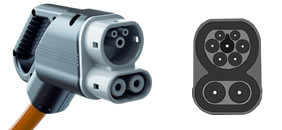
| Combined Charging System (CCS Combo 2) |
|---|
 |
| Charging Point | Max. Power | Avg. Power | Time | Rate |
|---|---|---|---|---|
| CCS (50 kW DC) | 50 kW | 35 kW † | 61 min | 200 km/h |
| CCS (100 kW DC) | 75 kW † | 50 kW † | 43 min | 280 km/h |
| CCS (150 kW DC) | 75 kW † | 50 kW † | 43 min | 280 km/h |
| This vehicle supports Autocharge |
|---|
| This vehicle supports Plug & Charge |
† = Limited by charging capabilities of vehicle
Autocharge: allows for automatic initiation of a charging session at supported CCS charging stations.
Plug & Charge: allows for automatic initiation of a charging session at supported CCS charging stations in accordance with ISO 15118.
Actual charging rates may differ from data shown due to factors like outside temperature, state of the battery and driving style.
Dimensions and Weight
| Length | 4355 mm |
| Width | 1825 mm |
| Width with mirrors | No Data |
| Height | 1575 mm |
| Wheelbase | 2660 mm |
| Weight Unladen (EU) | 1690 kg |
| Gross Vehicle Weight (GVWR) | 2110 kg |
| Max. Payload | 495 kg |
| Cargo Volume | 466 L |
| Cargo Volume Max | 1300 L |
| Cargo Volume Frunk | 27 L |
| Roof Load | 100 kg |
| Tow Hitch Possible | Yes |
| Towing Weight Unbraked | 300 kg |
| Towing Weight Braked | 300 kg |
| Vertical Load Max | 0 kg |
About this Vehicle
Hyundai Kona Electric 48 kWh Overview
The Hyundai Kona Electric 48 kWh positions itself as a budget-friendly mainstream electric SUV, ideal for urban commuters and small families seeking an affordable entry into EV ownership. With a starting price around £34,995 in key markets, this Hyundai electric SUV targets value-conscious buyers who prioritize efficiency and practicality over luxury. Its compact dimensions—4,355 mm long and 2,100 mm wide with mirrors—make it perfect for city parking and maneuvering, while seating five passengers comfortably.
Key distinguishing features include a 400V architecture with a Permanent Magnet Synchronous Motor (PMSM), delivering smooth front-wheel drive (FWD) performance. The Hyundai Kona Electric 48 kWh review highlights its advanced aerodynamics (drag coefficient of 0.275), standard heat pump for efficiency, and active airflow management. In the competitive EV landscape, it matters as a high-efficiency subcompact option with real-world usability, offering up to 200 miles EPA range and versatile cargo space (466L trunk, expanding to 1,300L). This electric vehicle range champ stands out for blending affordability with modern tech like Vehicle-to-Load (V2L) capability.
Hyundai Kona Electric 48 kWh Performance and Driving Experience
The Hyundai Kona Electric 48 kWh delivers competent acceleration with its 133 hp (99 kW) single front motor producing 255 Nm (188 lb-ft) of instant torque, hitting 0-60 mph in about 8.6-8.8 seconds. Top speed caps at 160 km/h (99 mph), prioritizing efficiency over outright speed. Handling is tuned for comfort, with a quiet cabin and isolated electric powertrain making it an easygoing daily driver—ideal for highways and city streets, though not sporty.
Real-world impressions emphasize its smooth FWD dynamics, competent cornering, and relaxed ride, thanks to the subcompact SUV platform. No AWD option here, keeping it lightweight at 1,690 kg curb weight.
| Specification | Value |
|---|---|
| 0-60 mph (0-100 km/h) | 8.6-8.8 sec |
| Top Speed | 99 mph / 160 km/h |
| Power Output | 133 hp / 99 kW |
| Torque | 188 lb-ft / 255 Nm |
Hyundai Kona Electric 48 kWh Range and Battery Specifications
Official Hyundai Kona Electric 48 kWh WLTP range reaches 377 km (234 miles), while EPA range is 200 miles, with real-world estimates around 200-235 miles (322 km GCC, 295 km tested). The 48.4 kWh usable (51 kWh nominal) lithium-ion battery excels in efficiency at 15.5 kWh/100 km (110 MPGe combined), aided by a heat pump and low-drag design. Factors like cold weather, aggressive driving, or hilly terrain can drop real-world range by 20-30%.
This setup suits most daily needs, with energy use varying: 131 MPGe city, 105 MPGe highway.
| Range Metric | Value |
|---|---|
| WLTP Range | 234 miles / 377 km |
| EPA Range | 200 miles / 322 km |
| Real-World Range | 200-235 miles / 313-295 km |
| Battery Capacity | 48.4 kWh (usable) |
Hyundai Kona Electric 48 kWh Charging Times and Options
Home charging is straightforward: Level 1 (120V) takes about 30+ hours for a full charge, while Level 2 at 11 kW (240V) completes in 4-5 hours (10-100%). DC fast charging peaks at 75 kW, achieving 10-80% in 43-45 minutes via CCS Type 2 port—compatible with major networks. Practical scenarios include overnight Level 2 for commuters or quick DC top-ups on road trips, with V2L for powering devices.
| Charging Method | Time | Speed |
|---|---|---|
| Level 1 (120V) | 30+ hours | ~1.4 kW |
| Level 2 (240V/7kW) | 7-8 hours | ~7 kW |
| Level 2 (240V/11kW) | 4 hrs 55 min | ~11 kW |
| DC Fast Charge (10-80%) | 43-45 min | up to 75 kW |
Hyundai Kona Electric 48 kWh vs Competitors
The Hyundai Kona Electric 48 kWh edges out the Volkswagen ID.4 base model in efficiency (110 MPGe vs. lower highway ratings) and price, while matching the Hyundai Kona Electric 48 kWh vs Tesla Model 3 in affordability but trailing in range (200 vs. 272 miles EPA). Against the Hyundai Ioniq 5, it offers a smaller footprint for urban use with similar charging speeds, though the Ioniq provides more power and space. In the Kona Electric comparison, it shines for budget buyers over pricier BMW i4 options.
Frequently Asked Questions
Related Vehicles
View All Hyundai
Hyundai Kona Electric 48.6 kWh 2026
 Hyundai
Hyundai Kona Electric 64.8 kWh 2026
 Hyundai
Hyundai INSTER Standard Range
 Hyundai