Charging is possible by using a regular wall plug or a charging station. Public charging is always done through a charging station. How fast the EV can charge depends on the charging station (EVSE) used and the maximum charging capacity of the EV. The table below shows all possible options for charging the Ford Mustang Mach-E Rally. Each option shows how fast the battery can be charged from empty to full.
Europe
Charging an EV in Europe differs by country. Some European countries primarily use 1-phase connections to the grid, while other countries are almost exclusively using a 3-phase connection. The table below shows all possible ways the Ford Mustang Mach-E Rally can be charged, but some modes of charging might not be widely available in certain countries.
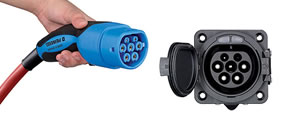
Type 2 (Mennekes - IEC 62196)
Charging Point
Max. Power
Power
Time
Rate
Wall Plug (2.3 kW)
230V / 1x10A
2.3 kW
46h45m
9 km/h
1-phase 16A (3.7 kW)
230V / 1x16A
3.7 kW
29 hours
14 km/h
1-phase 32A (7.4 kW)
230V / 1x32A
7.4 kW
14h30m
28 km/h
3-phase 16A (11 kW)
400V / 3x16A
11 kW
9h45m
42 km/h
3-phase 32A (22 kW)
400V / 3x16A
11 kW †
9h45m
42 km/h
† = Limited by on-board charger, vehicle cannot charge faster.
Fast Charging (10 -> 80%)
Rapid charging enables longer journeys by adding as much range as possible in the shortest amount of time. Charging power will decrease significantly after 80% state-of-charge has been reached. A typical rapid charge therefore rarely exceeds 80% SoC. The rapid charge rate of an EV depends on the charger used and the maximum charging power the EV can handle. The table below shows all details for rapid charging the Ford Mustang Mach-E Rally.
Max. Power: maximum power provided by charge point
Avg. Power: average power provided by charge point over a session from 10% to 80%
Time: time needed to charge from 10% to 80%
Rate: average charging speed over a session from 10% to 80%
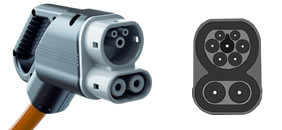
Combined Charging System (CCS Combo 2)
Charging Point
Max. Power
Avg. Power
Time
Rate
CCS (50 kW DC)
50 kW
45 kW †
89 min
190 km/h
CCS (100 kW DC)
100 kW
75 kW †
54 min
310 km/h
CCS (150 kW DC)
150 kW
85 kW †
47 min
360 km/h
CCS (175 kW DC)
150 kW †
85 kW †
47 min
360 km/h
CCS (350 kW DC)
150 kW †
85 kW †
47 min
360 km/h
This vehicle supports Autocharge
This vehicle supports Plug & Charge
† = Limited by charging capabilities of vehicle
Autocharge: allows for automatic initiation of a charging session at supported CCS charging stations.
Plug & Charge: allows for automatic initiation of a charging session at supported CCS charging stations in accordance with ISO 15118.
Actual charging rates may differ from data shown due to factors like outside temperature, state of the battery and driving style.
Ford Claimed Specifications
The table below shows the claimed specifications from the manufacturer for charging the Ford Mustang Mach-E Rally. The specifications can differ from the table above for a variety of reasons. If real-world charge tests are available, these differences can be signifcant. If no real-world tests are available, the table above will be based on the manufacturer specifications as per the table below.
Max. Power: maximum charge power during charging session
Charge From: battery percentage (% SoC) where charging session is started
Charge To: battery percentage (% SoC) where charging session is ended
Time: time needed for charging session
Ford Claimed Specifications
Max. Power
Charge From
Charge To
Time
150 kW
10 %
80 %
36 min
Dimensions and Weight
Length
4743 mm
Width
1881 mm
Width with mirrors
2097 mm
Height
1633 mm
Wheelbase
2984 mm
Weight Unladen (EU)
2348 kg
Gross Vehicle Weight (GVWR)
2717 kg
Max. Payload
444 kg
Cargo Volume
322 L
Cargo Volume Max
1420 L
Cargo Volume Frunk
100 L
Roof Load
No Data
Tow Hitch Possible
Yes
Towing Weight Unbraked
750 kg
Towing Weight Braked
750 kg
Vertical Load Max
30 kg
About this Vehicle
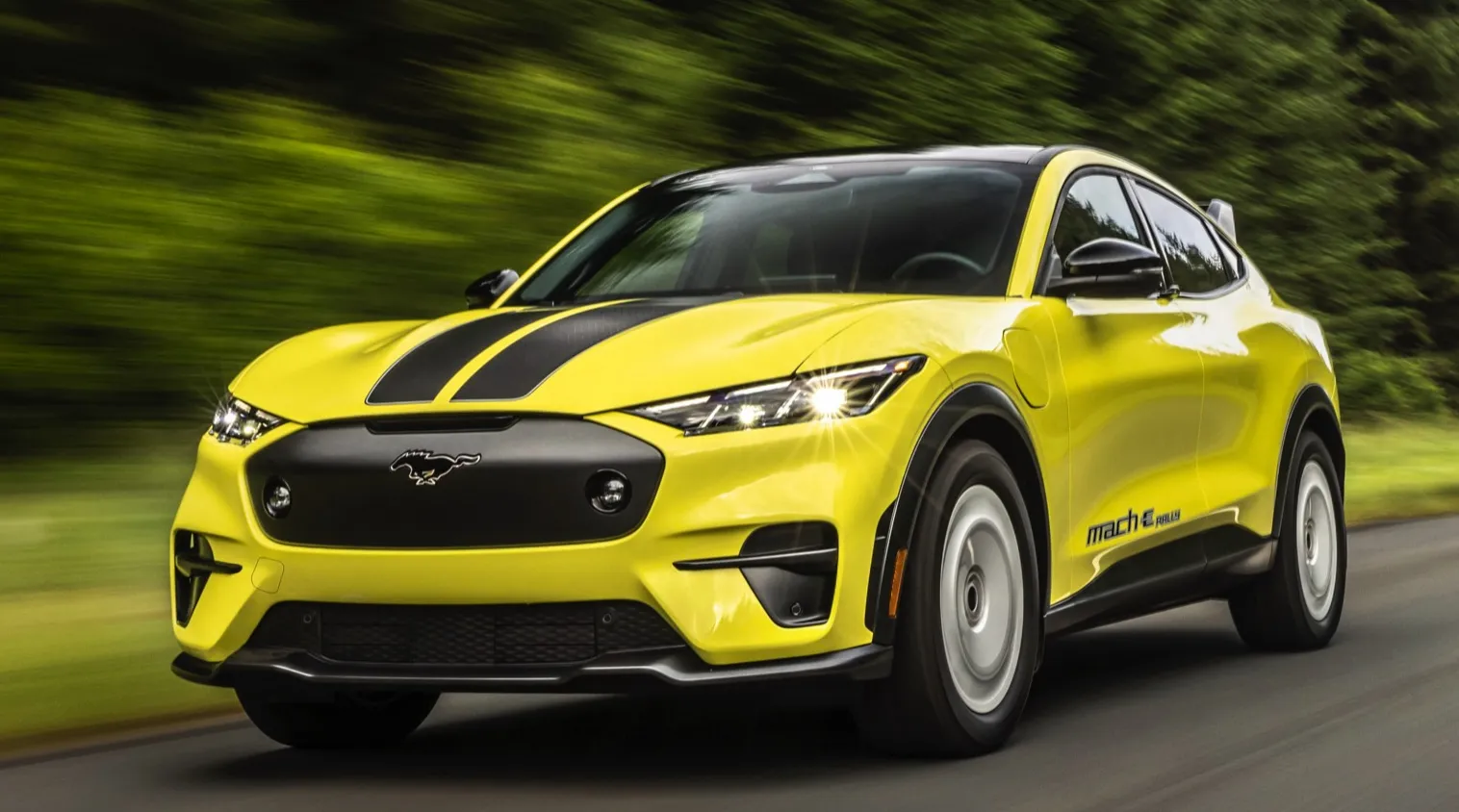
Ford Mustang Mach-E Rally Overview
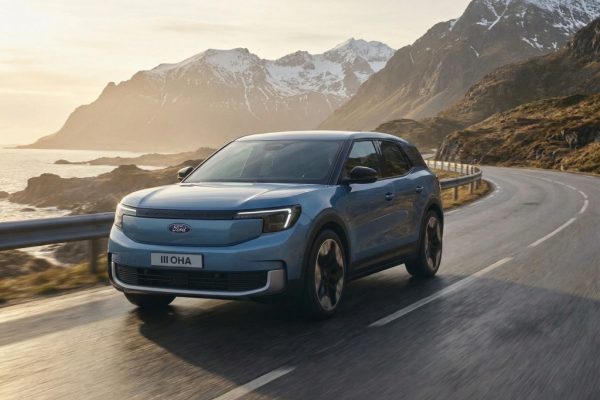
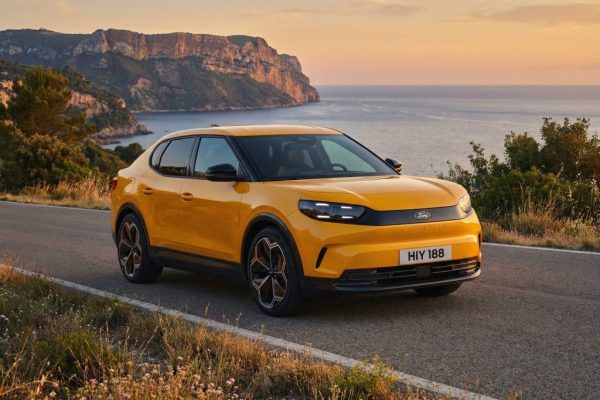
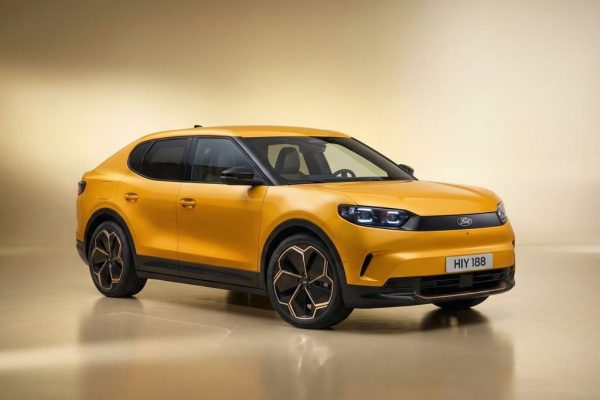
The Ford Mustang Mach-E Rally positions itself as a premium electric SUV in the performance-oriented EV segment, blending Mustang heritage with rally-inspired ruggedness for enthusiasts seeking thrilling drives beyond urban streets. Targeted at adventure-loving drivers who want a compact electric SUV with sporty dynamics, it competes in the high-performance EV market against mainstream crossovers. Built on Ford’s dedicated EV platform, the Mach-E Rally features off-road tuned suspension, rally-specific styling like hood stripes and 19-inch wheels, and advanced tech including BlueCruise hands-free highway driving.
Key distinguishing features include its dual-motor all-wheel-drive system, liquid-cooled 91 kWh lithium-ion battery, and rally modes for gravel or loose surfaces, making it stand out in the Ford Mustang Mach-E lineup. This model matters in the EV landscape by proving electric SUVs can deliver uncompromised fun, with EV specs like 480 hp pushing boundaries for family-friendly electric vehicles. In our Ford Mustang Mach-E Rally review, it shines for combining electric vehicle range up to 280 miles EPA with Mustang soul.
Ford Mustang Mach-E Rally Performance and Driving Experience
The Ford Mustang Mach-E Rally unleashes 480 horsepower and up to 700 lb-ft of torque from its dual permanent-magnet motors, delivering explosive acceleration with a 0-60 mph sprint in 3.3-3.6 seconds. Its rally-tuned suspension with front and rear stabilizer bars provides sharp handling on pavement and controlled composure on gravel, while the AWD system intelligently distributes power for superior traction. Real-world impressions highlight its playful dynamics, quick steering response, and stable high-speed stability up to 124 mph, making it feel more like a hot hatch than a typical electric SUV.
Specification
Value
0-60 mph (0-100 km/h)
3.3-3.6 sec
Top Speed
124 mph / 200 km/h
Power Output
480 hp / 358 kW
Torque
700 lb-ft / 949 Nm
Ford Mustang Mach-E Rally Range and Battery Specifications
The Ford Mustang Mach-E Rally offers an EPA-estimated 280 miles of range with its 91 kWh usable lithium-ion battery, though real-world figures drop to around 240-260 miles in mixed driving due to its performance focus. WLTP estimates reach 426 km (265 miles), but efficiency averages 37 kWh/100 miles EPA or 24.5 kWh/100 km combined. Factors like cold weather, aggressive acceleration, or rally terrain can reduce the Ford Mustang Mach-E Rally’s real-world range by 20-30%, yet its energy management shines on highways.
Ford Mustang Mach-E Rally battery specs include liquid cooling for sustained performance, supporting daily commutes and weekend adventures.
Range Metric
Value
WLTP Range
265 miles / 426 km
EPA Range
280 miles / 451 km
Real-World Range
240-260 miles / 386-418 km
Battery Capacity
91.0 kWh (usable)
Ford Mustang Mach-E Rally Charging Times and Options
Charging the Ford Mustang Mach-E Rally is practical with an 11 kW onboard charger for Level 2 home setups, fully replenishing the 91 kWh pack in about 9.9 hours on a 48-amp 240V outlet. DC fast charging peaks at 150 kW via SAE Combo port, achieving 10-80% in under 40 minutes, compatible with Electrify America and other CCS networks. For daily use, Level 1 suffices for overnight top-ups, while road trips benefit from its quick DC rates—ideal for rally enthusiasts hitting remote chargers.
Charging Method
Time
Speed
Level 1 (120V)
20+ hours
~1.4 kW
Level 2 (240V/7kW)
13 hours
~7 kW
Level 2 (240V/11kW)
9.9 hours
~11 kW
DC Fast Charge (10-80%)
36 min
up to 150 kW
Ford Mustang Mach-E Rally vs Competitors
The Ford Mustang Mach-E Rally edges out the Tesla Model Y Performance in raw fun with rally suspension and 700 lb-ft torque versus the Model Y’s 510 lb-ft, while matching its 280-mile range at a lower starting price around $58,000. Against the Hyundai Ioniq 5 N, it offers superior highway stability but trails in track-focused grip; the Kia EV6 GT provides similar 576 hp yet lacks the Rally’s off-road tuning. In Ford Mustang Mach-E Rally vs Tesla Model Y and Ford Mustang Mach-E Rally comparison battles, its Mustang character and AWD versatility make it the driver’s choice.
Frequently Asked Questions
The Ford Mustang Mach-E Rally delivers 240-260 miles in real-world mixed driving, down from its 280-mile EPA estimate, impacted by performance mode, cold weather, or highway speeds above 70 mph.
Home Level 2 charging (11 kW) takes 9.9 hours for a full charge; DC fast charging hits 10-80% in 36 minutes at up to 150 kW, perfect for quick road trip stops.
The Rally is exclusively all-wheel drive (AWD) with dual motors, providing 480 hp, 700 lb-ft torque, and rally-optimized traction for pavement and loose surfaces.
The available upgrade boosts torque to 700 lb-ft via software tweaks to the dual motors and battery management, enhancing 0-60 times to 3.3 seconds without hardware changes.
It matches the Model Y’s range and power but adds rally suspension, more torque, and engaging handling at a competitive price, though Tesla leads in supercharger access.
Yes, with blistering acceleration, versatile AWD, and 280-mile range, pros include thrilling dynamics and tech; cons are firmer ride and slightly lower efficiency than base Mach-E trims.> The 2026 Ford Mustang Mach-E Rally from Ford packs 480 hp, 700 lb-ft torque, and 280 miles EPA range in a rally-ready electric SUV. Its dual-motor AWD and performance suspension outshine rivals like Tesla Model Y for driving excitement. Ideal for EV buyers craving Mustang thrill with practical EV specs.


 Ford
Ford
 Ford
Ford
 Ford
Ford
 Ford
Ford