

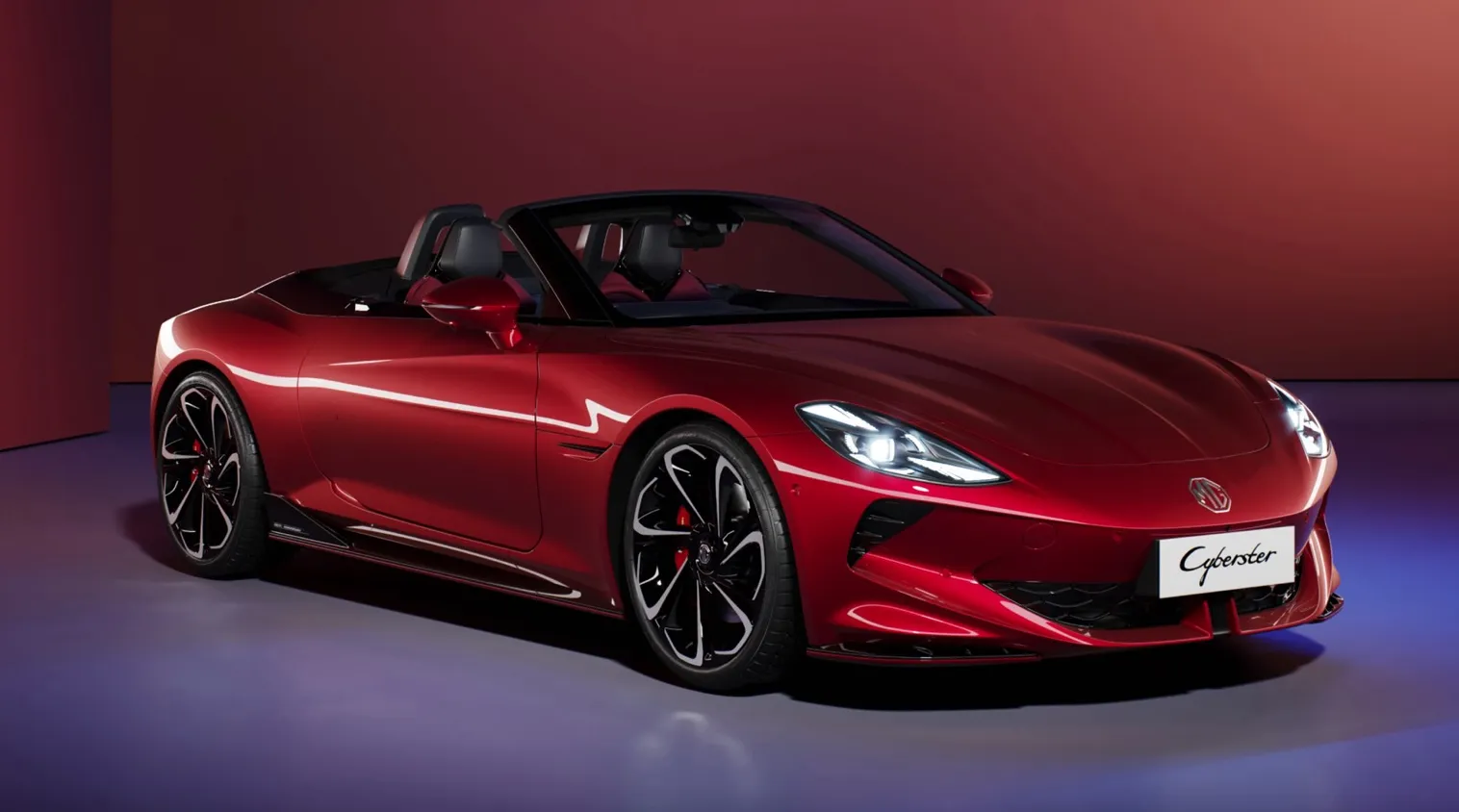
MG Cyberster GT
Key Specifications
Real Range Estimation
| City - Cold Weather * | 395 km |
| Highway - Cold Weather * | 290 km |
| Combined - Cold Weather * | 340 km |
between 290 - 580 km
| City - Mild Weather * | 580 km |
| Highway - Mild Weather * | 370 km |
| Combined - Mild Weather * | 460 km |
Battery
| Nominal Capacity | 77.0 kWh |
| Battery Type | Lithium-ion |
| Number of Cells | No Data |
| Architecture | 400 V |
| Warranty Period | No Data |
| Warranty Mileage | No Data |
| Useable Capacity | 74.4 kWh |
| Cathode Material | No Data |
| Pack Configuration | No Data |
| Nominal Voltage | No Data |
| Form Factor | No Data |
| Name / Reference | No Data |
Performance
| Acceleration 0 - 100 km/h | 3.2 sec |
| Top Speed | 200 km/h |
| Electric Range * | 400 km |
| Total Power | 375 kW (510 PS) |
| Total Torque | 725 Nm |
| Drive | AWD |
Home and Destination Charging (0 -> 100%)
Charging is possible by using a regular wall plug or a charging station. Public charging is always done through a charging station. How fast the EV can charge depends on the charging station (EVSE) used and the maximum charging capacity of the EV. The table below shows all possible options for charging the MG Cyberster GT. Each option shows how fast the battery can be charged from empty to full.
Europe
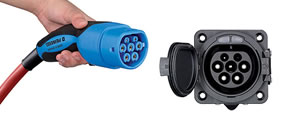
Charging an EV in Europe differs by country. Some European countries primarily use 1-phase connections to the grid, while other countries are almost exclusively using a 3-phase connection. The table below shows all possible ways the MG Cyberster GT can be charged, but some modes of charging might not be widely available in certain countries.
| Type 2 (Mennekes - IEC 62196) |
|---|
 |
| Charging Point | Max. Power | Power | Time | Rate |
|---|---|---|---|---|
| Wall Plug (2.3 kW) | 230V / 1x10A | 2.3 kW | 38h15m | 10 km/h |
| 1-phase 16A (3.7 kW) | 230V / 1x16A | 3.7 kW | 23h45m | 17 km/h |
| 1-phase 32A (7.4 kW) | 230V / 1x32A | 7.4 kW | 12 hours | 33 km/h |
| 3-phase 16A (11 kW) | 400V / 3x16A | 11 kW | 8 hours | 50 km/h |
| 3-phase 32A (22 kW) | 400V / 3x16A | 11 kW † | 8 hours | 50 km/h |
† = Limited by on-board charger, vehicle cannot charge faster.
Fast Charging (10 -> 80%)
Rapid charging enables longer journeys by adding as much range as possible in the shortest amount of time. Charging power will decrease significantly after 80% state-of-charge has been reached. A typical rapid charge therefore rarely exceeds 80% SoC. The rapid charge rate of an EV depends on the charger used and the maximum charging power the EV can handle. The table below shows all details for rapid charging the MG Cyberster GT.
- Max. Power: maximum power provided by charge point
- Avg. Power: average power provided by charge point over a session from 10% to 80%
- Time: time needed to charge from 10% to 80%
- Rate: average charging speed over a session from 10% to 80%
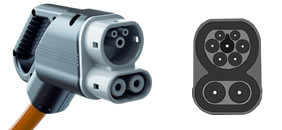
| Combined Charging System (CCS Combo 2) |
|---|
 |
| Charging Point | Max. Power | Avg. Power | Time | Rate |
|---|---|---|---|---|
| CCS (50 kW DC) | 50 kW | 40 kW † | 82 min | 200 km/h |
| CCS (100 kW DC) | 100 kW | 70 kW † | 47 min | 350 km/h |
| CCS (150 kW DC) | 144 kW † | 85 kW † | 39 min | 430 km/h |
| This vehicle does not support Plug & Charge |
|---|
† = Limited by charging capabilities of vehicle
Plug & Charge: allows for automatic initiation of a charging session at supported CCS charging stations in accordance with ISO 15118.
Actual charging rates may differ from data shown due to factors like outside temperature, state of the battery and driving style.
MG Claimed Specifications
The table below shows the claimed specifications from the manufacturer for charging the MG Cyberster GT. The specifications can differ from the table above for a variety of reasons. If real-world charge tests are available, these differences can be signifcant. If no real-world tests are available, the table above will be based on the manufacturer specifications as per the table below.
- Max. Power: maximum charge power during charging session
- Charge From: battery percentage (% SoC) where charging session is started
- Charge To: battery percentage (% SoC) where charging session is ended
- Time: time needed for charging session
| MG Claimed Specifications |
|---|
| Max. Power | Charge From | Charge To | Time |
|---|---|---|---|
| 144 kW | 10 % | 80 % | 38 min |
Dimensions and Weight
| Length | 4535 mm |
| Width | 1913 mm |
| Width with mirrors | 2110 mm |
| Height | 1329 mm |
| Wheelbase | 2690 mm |
| Weight Unladen (EU) * | 2000 kg |
| Gross Vehicle Weight (GVWR) | 2210 kg |
| Max. Payload | No Data |
| Cargo Volume | 249 L |
| Cargo Volume Max | No Data |
| Cargo Volume Frunk | 0 L |
| Roof Load | No Data |
| Tow Hitch Possible | No Data |
| Towing Weight Unbraked | No Data |
| Towing Weight Braked | No Data |
| Vertical Load Max | No Data |
About this Vehicle
MG Cyberster GT Overview
The MG Cyberster GT is MG’s flagship all-electric roadster, positioned as a premium yet relatively attainable performance EV for enthusiasts who want open‑top thrills without supercar pricing. This MG electric sports car targets drivers who value design drama, sharp performance and cutting‑edge tech more than family practicality, sitting in a niche between hot EV coupes and exotic roadsters.
As a halo MG electric convertible, the Cyberster GT stands out with its dramatic scissor doors, fully electric fabric roof and a wraparound three‑screen digital cockpit that gives it distinct concept‑car vibes on the road. It sits on SAIC’s Modular Scalable Platform and uses a substantial 77 kWh NMC battery, underpinning competitive EV specs for range and performance. The model matters in the current electric vehicle landscape because it brings back the classic British two‑seat roadster formula in zero‑emission form, offering a fresh alternative to the usual electric SUV crowd and adding diversity to the growing EV sports segment. For buyers researching an MG Cyberster GT review, this is one of the few EVs that prioritizes emotional appeal as much as efficiency and range.
—
MG Cyberster GT Performance and Driving Experience
The MG Cyberster GT is the performance hero of the Cyberster line-up, using dual motors and all‑wheel drive to deliver 375 kW (503 hp) and about 725 Nm (535 lb‑ft) of torque. Officially, MG claims 0–100 km/h in 3.2 seconds and independent data lists 0–60 mph in around 3.1 seconds, putting this electric roadster firmly in sports‑car territory. Power delivery is immediate and strong, with that typical EV surge that makes overtaking effortless even at motorway speeds.
Despite its roughly 2,200 kg curb weight, the Cyberster GT offers secure, planted handling with the traction benefits of AWD and a low centre of gravity from the battery pack. Reviews note that it feels more like a fast GT cruiser than a razor‑edged track car, but the steering, launch control and selectable drive modes (including a more aggressive “Super Sport” setting) give it a playful side on twisty roads while remaining comfortable for daily driving.
| Specification | Value |
|---|---|
| 0-60 mph (0-100 km/h) | 3.1–3.2 sec |
| Top Speed | 124–125 mph / 200 km/h |
| Power Output | 503 hp / 375 kW |
| Torque | 535 lb-ft / 725 Nm |
—
MG Cyberster GT Range and Battery Specifications
The MG Cyberster GT WLTP range is quoted at about 444–446 km (275–276 miles) on the combined cycle, reflecting the dual‑motor setup and performance‑oriented tyres. Real‑world range estimates from independent EV databases suggest between roughly 285 and 360 km (175–225 miles) in mixed driving, depending heavily on temperature, speed and how often you exploit its acceleration. For most owners, planning around a real‑world range of about 210–220 miles will be realistic.
Under the floor sits a 77 kWh lithium‑ion NMC battery with about 74.4 kWh usable capacity, shared across the Cyberster range. Energy consumption is listed at about 16.7 kWh/100 km at its most efficient, rising in spirited use. As with any performance EV, winter weather, sustained high‑speed driving and aggressive acceleration will all reduce the MG Cyberster GT’s real‑world range, while gentler urban or suburban use can get closer to its WLTP claim.
| Range Metric | Value |
|---|---|
| WLTP Range | 276 miles / 444 km |
| EPA Range | ~230 miles / ~370 km (estimated) |
| Real-World Range | 210–220 miles / 340–355 km (typical) |
| Battery Capacity | 74.4 kWh (usable) |
—
MG Cyberster GT Charging Times and Options
For home use, the MG Cyberster GT battery specs include an 11 kW onboard AC charger, ideal for a 3‑phase wallbox in suitable markets. On a typical 7 kW single‑phase home charger, a full charge from near empty to 100% will take roughly 11–12 hours, making overnight charging straightforward. Basic 120V/230V portable charging is possible but very slow and best reserved for emergencies.
On the road, the MG Cyberster GT supports DC fast charging up to about 144 kW. MG quotes 10–80% in roughly 38 minutes on a 150 kW charger, aligning with independent data from EV spec sites. It uses the CCS charging standard and will work with most public networks in Europe and the UK. In practical terms, a 15–25 minute coffee stop can add well over 100 miles of range, making weekend road trips feasible as long as you plan charging stops.
| Charging Method | Time | Speed |
|---|---|---|
| Level 1 (120V) | 30–40 hours (0–100%) | ~2 kW |
| Level 2 (240V/7kW) | 11–12 hours (0–100%) | ~7 kW |
| Level 2 (240V/11kW) | 7–8 hours (0–100%) | ~11 kW |
| DC Fast Charge (10-80%) | ~38 min | up to 144 kW |
—
MG Cyberster GT vs Competitors
In MG Cyberster GT vs Tesla Model 3 Performance comparisons, the Tesla offers greater efficiency and a larger charging ecosystem, but lacks the open‑top roadster character and dramatic design of the MG. Against the BMW i4 M50 and Audi e‑tron GT, the Cyberster GT is less practical but more distinctive, with scissor doors and a convertible roof that rivals cannot match. Versus the Hyundai Ioniq 5 N and Kia EV6 GT, the MG Cyberster GT trades some hatchback usability for a more emotional, classic sports‑car layout, appealing strongly to drivers who prioritize style and open‑air driving over rear seats and cargo space.
—
Frequently Asked Questions
Related Vehicles
View All MG
MG
MG MG4 Electric XPOWER
 MG
MG
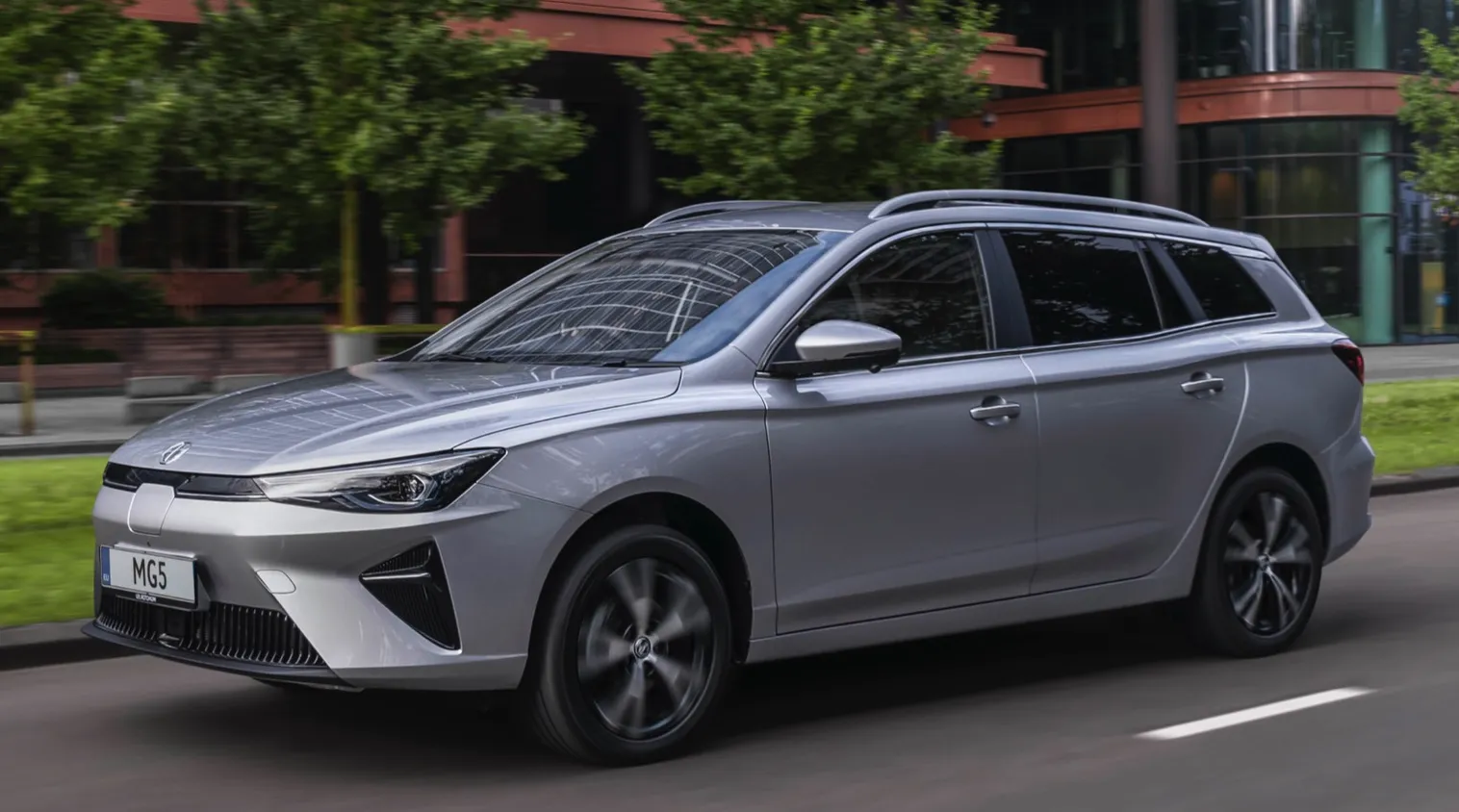
MG MG5 Electric Standard Range
 MG
MG
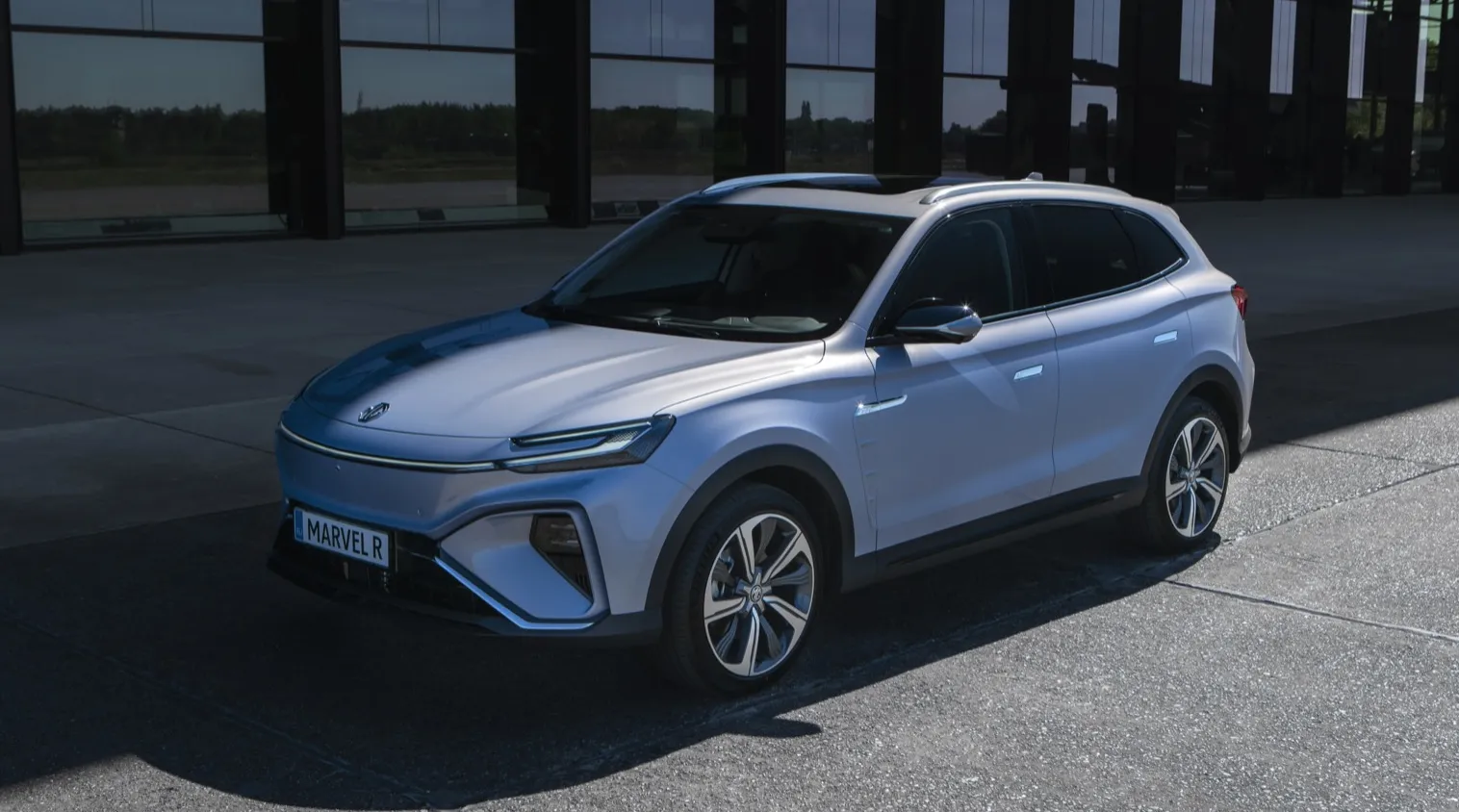
MG Marvel R Performance
 MG
MG