

Volvo EC40 Single Motor
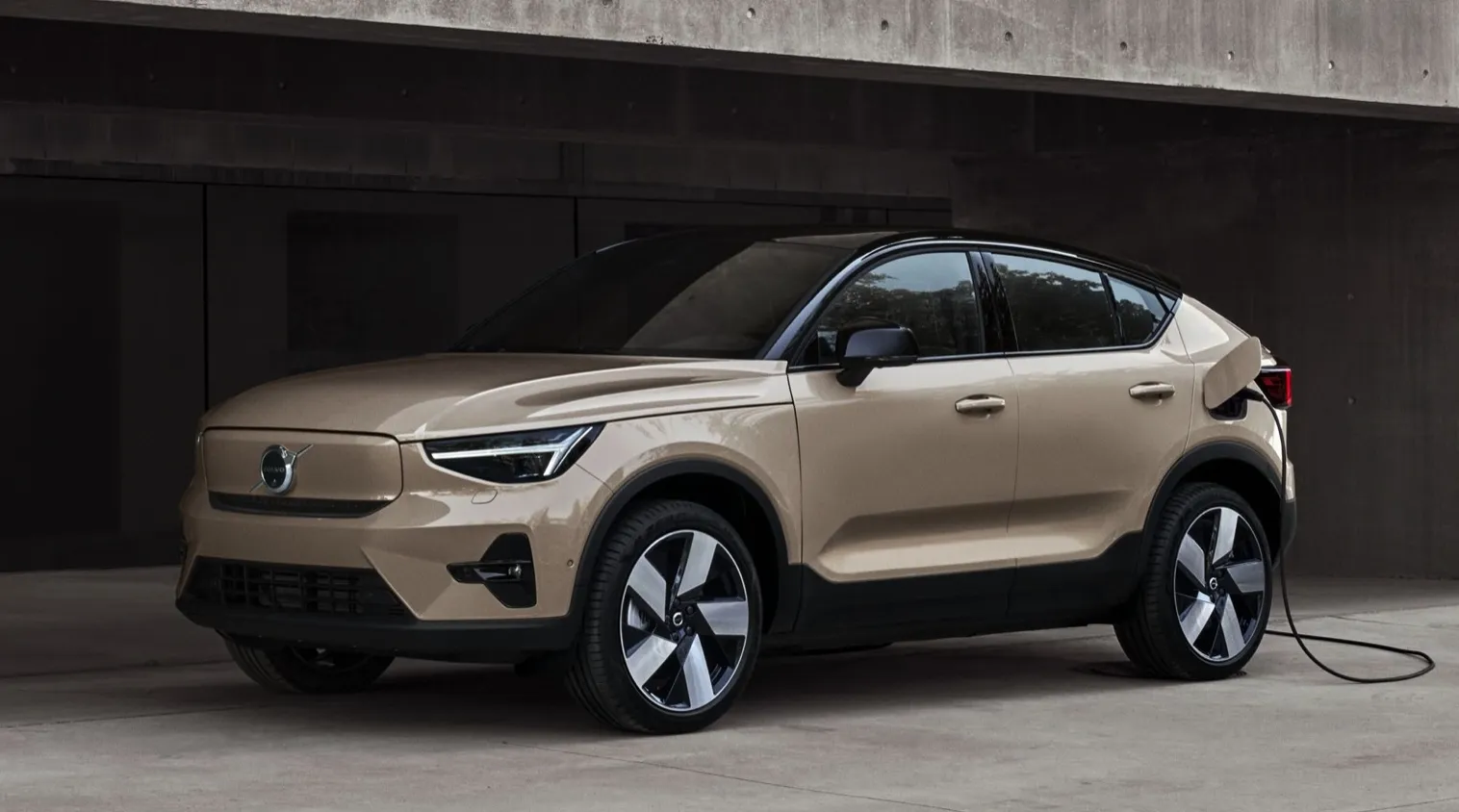
Key Specifications
Real Range Estimation
| City - Cold Weather * | 360 km |
| Highway - Cold Weather * | 255 km |
| Combined - Cold Weather * | 305 km |
between 255 - 530 km
| City - Mild Weather * | 530 km |
| Highway - Mild Weather * | 325 km |
| Combined - Mild Weather * | 410 km |
Battery
| Nominal Capacity | 70.0 kWh |
| Battery Type | Lithium-ion |
| Number of Cells | No Data |
| Architecture | 400 V |
| Warranty Period | 8 years |
| Warranty Mileage | 160,000 km |
| Useable Capacity | 67.0 kWh |
| Cathode Material | NCM |
| Pack Configuration | No Data |
| Nominal Voltage | No Data |
| Form Factor | No Data |
| Name / Reference | No Data |
Performance
| Acceleration 0 - 100 km/h | 7.3 sec |
| Top Speed | 180 km/h |
| Electric Range * | 360 km |
| Total Power | 175 kW (238 PS) |
| Total Torque | 420 Nm |
| Drive | Rear |
Home and Destination Charging (0 -> 100%)
Charging is possible by using a regular wall plug or a charging station. Public charging is always done through a charging station. How fast the EV can charge depends on the charging station (EVSE) used and the maximum charging capacity of the EV. The table below shows all possible options for charging the Volvo EC40 Single Motor. Each option shows how fast the battery can be charged from empty to full.
Europe
Charging an EV in Europe differs by country. Some European countries primarily use 1-phase connections to the grid, while other countries are almost exclusively using a 3-phase connection. The table below shows all possible ways the Volvo EC40 Single Motor can be charged, but some modes of charging might not be widely available in certain countries.
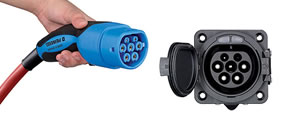
| Type 2 (Mennekes - IEC 62196) |
|---|
 |
| Charging Point | Max. Power | Power | Time | Rate |
|---|---|---|---|---|
| Wall Plug (2.3 kW) | 230V / 1x10A | 2.3 kW | 34h30m | 10 km/h |
| 1-phase 16A (3.7 kW) | 230V / 1x16A | 3.7 kW | 21h30m | 17 km/h |
| 1-phase 32A (7.4 kW) | 230V / 1x32A | 7.4 kW | 10h45m | 33 km/h |
| 3-phase 16A (11 kW) | 400V / 3x16A | 11 kW | 7h15m | 50 km/h |
| 3-phase 32A (22 kW) | 400V / 3x16A | 11 kW † | 7h15m | 50 km/h |
† = Limited by on-board charger, vehicle cannot charge faster.
Fast Charging (10 -> 80%)
Rapid charging enables longer journeys by adding as much range as possible in the shortest amount of time. Charging power will decrease significantly after 80% state-of-charge has been reached. A typical rapid charge therefore rarely exceeds 80% SoC. The rapid charge rate of an EV depends on the charger used and the maximum charging power the EV can handle. The table below shows all details for rapid charging the Volvo EC40 Single Motor.
- Max. Power: maximum power provided by charge point
- Avg. Power: average power provided by charge point over a session from 10% to 80%
- Time: time needed to charge from 10% to 80%
- Rate: average charging speed over a session from 10% to 80%
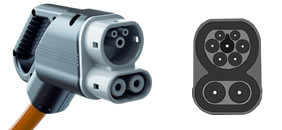
| Combined Charging System (CCS Combo 2) |
|---|
 |
| Charging Point | Max. Power | Avg. Power | Time | Rate |
|---|---|---|---|---|
| CCS (50 kW DC) | 50 kW | 45 kW † | 66 min | 220 km/h |
| CCS (100 kW DC) | 100 kW | 80 kW † | 37 min | 400 km/h |
| CCS (150 kW DC) | 150 kW | 100 kW † | 30 min | 500 km/h |
| CCS (175 kW DC) | 175 kW | 105 kW † | 28 min | 540 km/h |
| CCS (350 kW DC) | 180 kW † | 110 kW † | 27 min | 560 km/h |
| This vehicle supports Autocharge |
|---|
| This vehicle does not support Plug & Charge |
† = Limited by charging capabilities of vehicle
Autocharge: allows for automatic initiation of a charging session at supported CCS charging stations.
Plug & Charge: allows for automatic initiation of a charging session at supported CCS charging stations in accordance with ISO 15118.
Actual charging rates may differ from data shown due to factors like outside temperature, state of the battery and driving style.
Volvo Claimed Specifications
The table below shows the claimed specifications from the manufacturer for charging the Volvo EC40 Single Motor. The specifications can differ from the table above for a variety of reasons. If real-world charge tests are available, these differences can be signifcant. If no real-world tests are available, the table above will be based on the manufacturer specifications as per the table below.
- Max. Power: maximum charge power during charging session
- Charge From: battery percentage (% SoC) where charging session is started
- Charge To: battery percentage (% SoC) where charging session is ended
- Time: time needed for charging session
| Volvo Claimed Specifications |
|---|
| Max. Power | Charge From | Charge To | Time |
|---|---|---|---|
| 180 kW | 10 % | 80 % | 26 min |
Dimensions and Weight
| Length | 4440 mm |
| Width | 1873 mm |
| Width with mirrors | 2034 mm |
| Height | 1596 mm |
| Wheelbase | 2702 mm |
| Weight Unladen (EU) | 2057 kg |
| Gross Vehicle Weight (GVWR) | 2460 kg |
| Max. Payload | 478 kg |
| Cargo Volume | 404 L |
| Cargo Volume Max | 1196 L |
| Cargo Volume Frunk | 31 L |
| Roof Load | 75 kg |
| Tow Hitch Possible | Yes |
| Towing Weight Unbraked | 750 kg |
| Towing Weight Braked | 1500 kg |
| Vertical Load Max | 100 kg |
About this Vehicle
Volvo EC40 Single Motor Overview
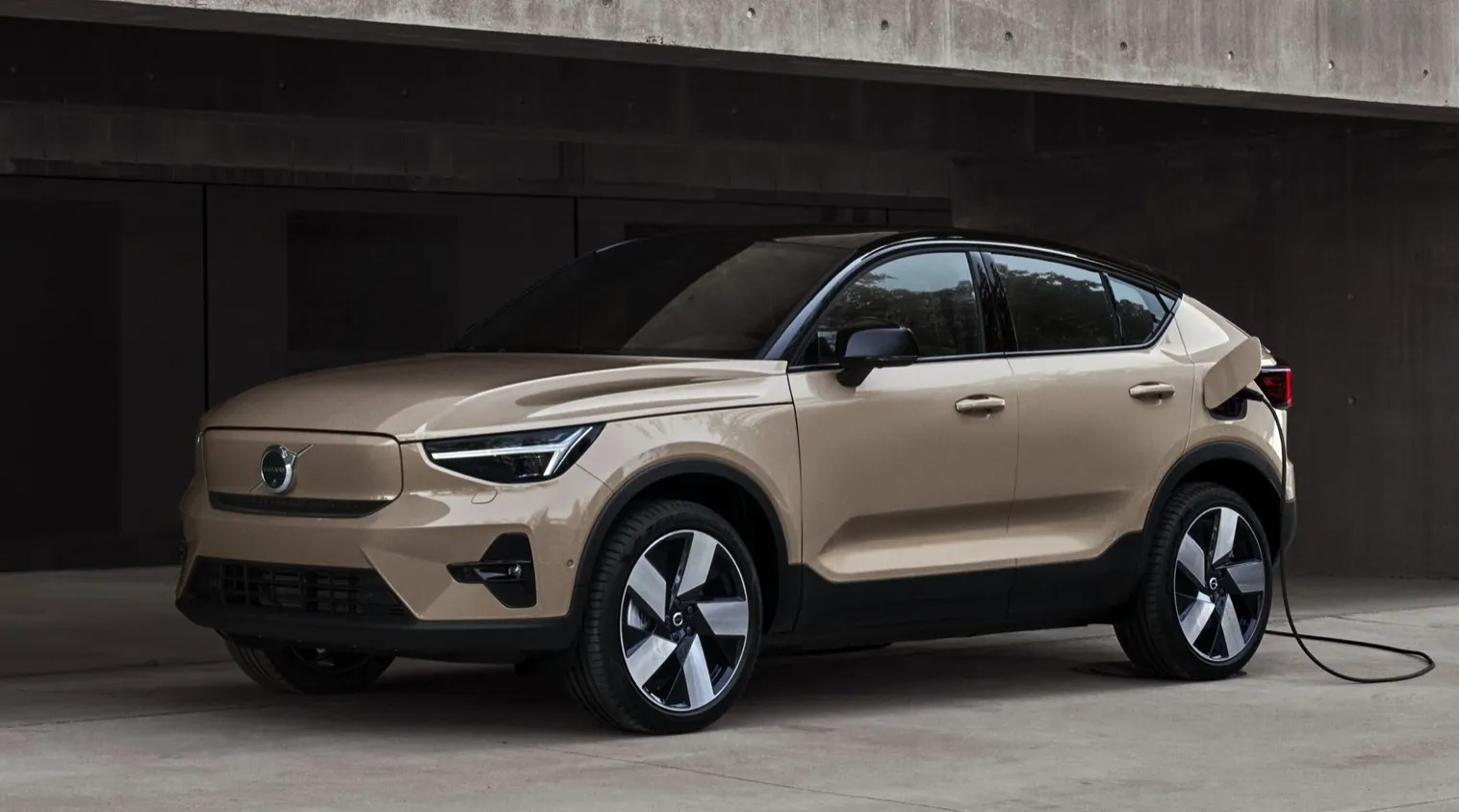
The Volvo EC40 Single Motor is Volvo’s compact premium electric SUV, essentially the renamed and updated C40 Recharge, aimed at drivers who want Scandinavian design, strong safety tech, and usable range without the price of a luxury flagship. As a stylish Volvo electric SUV, it targets urban professionals, young families, and downsizing couples who value comfort and sustainability as much as performance. With its coupe‑style roofline and high seating position, it bridges the gap between crossover practicality and sporty styling.
Built on Volvo’s CMA platform with a dedicated EV powertrain, the Volvo EC40 Single Motor focuses on efficiency and simplicity rather than headline‑grabbing power. Rear‑wheel drive brings improved driving dynamics versus earlier front‑drive versions, and the latest software optimizes efficiency, one‑pedal driving, and driver‑assist systems. Key EV specs include a usable battery capacity of around 66–70 kWh, WLTP range close to 478 km (about 297 miles), and DC fast charging capability. This combination makes the Volvo EC40 review especially relevant for buyers comparing electric SUV options such as the Tesla Model Y, Hyundai Ioniq 5, and Kia EV6. In a crowded EV landscape, the EC40 matters because it delivers a balanced package of range, safety, and comfort in a compact footprint.
—
Volvo EC40 Single Motor Performance and Driving Experience
The Volvo EC40 Single Motor delivers a refined, relaxed performance profile rather than aggressive acceleration. Power output is around 175–185 kW (238–252 hp) depending on market, with torque rated at 420 Nm (310 lb‑ft), enough for confident merging and brisk overtakes. It sprints from 0–100 km/h in about 7.3 seconds, with a top speed limited to 180 km/h (112 mph), in line with Volvo’s safety‑focused speed cap. Rear‑wheel drive gives a more natural, balanced feel than earlier front‑drive setups, improving traction under acceleration and adding a slightly sportier character.
On the road, the EC40 Single Motor is tuned for comfort and stability. Steering is light but accurate, and the suspension filters out most bumps without feeling overly soft. One‑pedal driving is available and well calibrated for city use, making stop‑and‑go traffic less tiring. Noise levels are low thanks to good insulation and the inherently quiet electric drivetrain, reinforcing the car’s premium character.
| Specification | Value |
|---|---|
| 0-60 mph (0-100 km/h) | ~7.1–7.3 sec |
| Top Speed | 112 mph / 180 km/h |
| Power Output | 238–252 hp / 175–185 kW |
| Torque | 310 lb-ft / 420 Nm |
—
Volvo EC40 Single Motor Range and Battery Specifications
Official Volvo EC40 Single Motor WLTP range figures reach up to 478 km (about 297 miles) depending on trim, with some markets quoting as high as ~569 km for the latest Single Motor Extended Range variant. In U.S. terms, Volvo dealers quote an EPA‑estimated range of around 298 miles for the 2025 EC40 Single Motor Extended Range. Realistically, drivers can expect a real‑world range of roughly 240–280 miles (385–450 km) in mixed conditions, depending on speed, temperature, and load.
The Volvo EC40 battery specs include a gross capacity of about 69–70 kWh and a usable capacity of around 66 kWh, using NMC chemistry. Energy consumption sits roughly in the 16–18 kWh/100 km range (about 260–290 Wh/mile) in typical driving, with best results in city use. Cold weather, high motorway speeds, and hilly terrain will reduce the Volvo EC40’s real‑world range, while gentle driving and mild temperatures can get close to WLTP numbers.
| Range Metric | Value |
|---|---|
| WLTP Range | ~297–354 miles / 478–569 km |
| EPA Range | ~298 miles / 480 km (est., Single Motor ER) |
| Real-World Range | ~240–280 miles / 385–450 km |
| Battery Capacity | ~66 kWh (usable) |
—
Volvo EC40 Single Motor Charging Times and Options
The Volvo EC40 Single Motor supports versatile home and public charging solutions. An 11 kW AC onboard charger is standard, ideal for home wallboxes or workplace chargers. On a typical 7 kW home charger, a full charge from near empty to 100% usually takes around 10–11 hours, while a full 0–100% at 11 kW is closer to 7–8 hours, perfect for overnight charging.
For road trips, DC fast charging is a strong point. Earlier Single Motor versions charge at up to 130 kW DC, while updated Single Motor Extended Range variants can accept up to 200–205 kW DC in some markets. Under optimal conditions, you can expect a 10–80% fast charge in about 28–35 minutes, making it easy to add hundreds of kilometers of range during a quick stop. The EC40 uses the CCS standard in most regions and integrates well with major charging networks, so planning longer journeys is straightforward.
| Charging Method | Time | Speed |
|---|---|---|
| Level 1 (120V) | ~30–40 hours (0–100%) | ~2 kW |
| Level 2 (240V/7kW) | ~10–11 hours (0–100%) | ~7 kW |
| Level 2 (240V/11kW) | ~7–8 hours (0–100%) | ~11 kW |
| DC Fast Charge (10-80%) | ~28–35 min | up to 130–205 kW |
—
Volvo EC40 Single Motor vs Competitors
In a Volvo EC40 vs Tesla Model Y comparison, the EC40 typically trails the Tesla for outright efficiency and supercharger network access, but answers with superior cabin refinement, safety features, and a more relaxed driving feel. Against the Hyundai Ioniq 5 and Kia EV6, the Volvo EC40 Single Motor may offer slightly less rear space but competes strongly on real‑world range, interior quality, and brand safety reputation. Compared with premium rivals like the BMW iX1 or Mercedes EQA, the Volvo’s minimalist design, strong driver‑assist suite, and competitive EV specs make it a well‑rounded, premium‑feeling choice.
—
Frequently Asked Questions
Related Vehicles
View All Volvo
Volvo
Volvo EX90 Twin Motor
 Volvo
Volvo
Volvo EC40 Twin Motor
 Volvo
Volvo
Volvo EX40 Single Motor ER
 Volvo
Volvo