

Polestar 3 Long Range Single motor
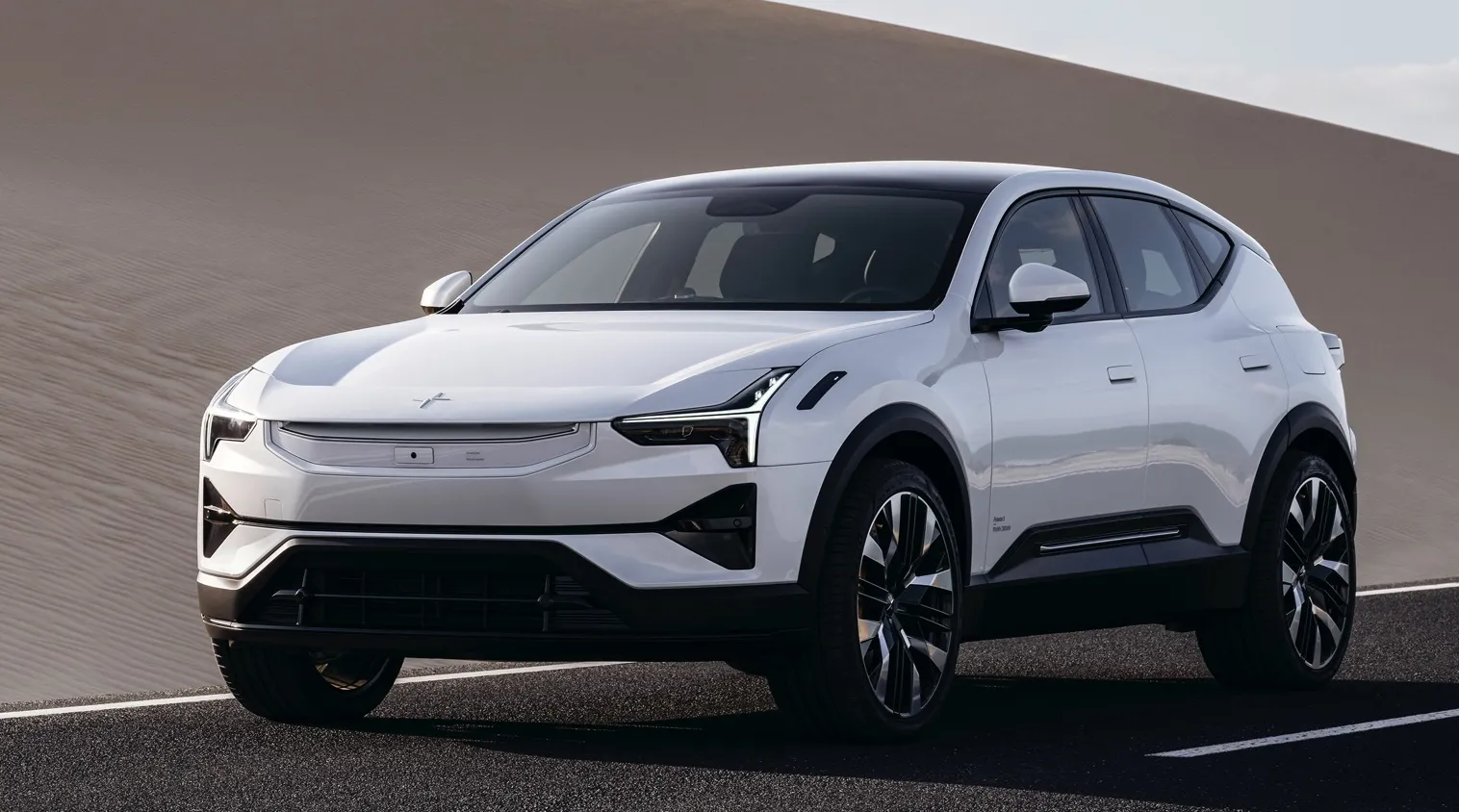
Key Specifications
Real Range Estimation
| City - Cold Weather * | 500 km |
| Highway - Cold Weather * | 360 km |
| Combined - Cold Weather * | 430 km |
between 360 - 720 km
| City - Mild Weather * | 720 km |
| Highway - Mild Weather * | 460 km |
| Combined - Mild Weather * | 570 km |
Battery
| Nominal Capacity | 111.0 kWh |
| Battery Type | Lithium-ion |
| Number of Cells | 204 |
| Architecture | 400 V |
| Warranty Period | 8 years |
| Warranty Mileage | 160,000 km |
| Useable Capacity | 107.0 kWh |
| Cathode Material | NCM |
| Pack Configuration | 102s2p |
| Nominal Voltage | No Data |
| Form Factor | No Data |
| Name / Reference | No Data |
Performance
| Acceleration 0 - 100 km/h | 7.8 sec |
| Top Speed | 180 km/h |
| Electric Range * | 500 km |
| Total Power | 220 kW (299 PS) |
| Total Torque | 490 Nm |
| Drive | Rear |
Home and Destination Charging (0 -> 100%)
Charging is possible by using a regular wall plug or a charging station. Public charging is always done through a charging station. How fast the EV can charge depends on the charging station (EVSE) used and the maximum charging capacity of the EV. The table below shows all possible options for charging the Polestar 3 Long Range Single motor. Each option shows how fast the battery can be charged from empty to full.
Europe
Charging an EV in Europe differs by country. Some European countries primarily use 1-phase connections to the grid, while other countries are almost exclusively using a 3-phase connection. The table below shows all possible ways the Polestar 3 Long Range Single motor can be charged, but some modes of charging might not be widely available in certain countries.
| Type 2 (Mennekes - IEC 62196) |
|---|
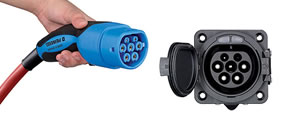 |
| Charging Point | Max. Power | Power | Time | Rate |
|---|---|---|---|---|
| Wall Plug (2.3 kW) | 230V / 1x10A | 2.3 kW | 54h45m | 9 km/h |
| 1-phase 16A (3.7 kW) | 230V / 1x16A | 3.7 kW | 34h15m | 15 km/h |
| 1-phase 32A (7.4 kW) | 230V / 1x32A | 7.4 kW | 17 hours | 29 km/h |
| 3-phase 16A (11 kW) | 400V / 3x16A | 11 kW | 11h30m | 43 km/h |
| 3-phase 32A (22 kW) | 400V / 3x16A | 11 kW † | 11h30m | 43 km/h |
† = Limited by on-board charger, vehicle cannot charge faster.
Fast Charging (10 -> 80%)
Rapid charging enables longer journeys by adding as much range as possible in the shortest amount of time. Charging power will decrease significantly after 80% state-of-charge has been reached. A typical rapid charge therefore rarely exceeds 80% SoC. The rapid charge rate of an EV depends on the charger used and the maximum charging power the EV can handle. The table below shows all details for rapid charging the Polestar 3 Long Range Single motor.
- Max. Power: maximum power provided by charge point
- Avg. Power: average power provided by charge point over a session from 10% to 80%
- Time: time needed to charge from 10% to 80%
- Rate: average charging speed over a session from 10% to 80%
| Combined Charging System (CCS Combo 2) |
|---|
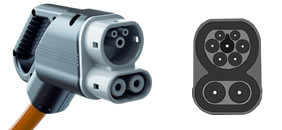 |
| Charging Point | Max. Power | Avg. Power | Time | Rate |
|---|---|---|---|---|
| CCS (50 kW DC) | 50 kW | 50 kW | 95 min | 220 km/h |
| CCS (100 kW DC) | 100 kW | 85 kW † | 56 min | 370 km/h |
| CCS (150 kW DC) | 150 kW | 110 kW † | 43 min | 480 km/h |
| CCS (175 kW DC) | 175 kW | 125 kW † | 38 min | 550 km/h |
| CCS (350 kW DC) | 250 kW † | 150 kW † | 32 min | 650 km/h |
| This vehicle supports Autocharge |
|---|
| This vehicle does not support Plug & Charge |
† = Limited by charging capabilities of vehicle
Autocharge: allows for automatic initiation of a charging session at supported CCS charging stations.
Plug & Charge: allows for automatic initiation of a charging session at supported CCS charging stations in accordance with ISO 15118.
Actual charging rates may differ from data shown due to factors like outside temperature, state of the battery and driving style.
Polestar Claimed Specifications
The table below shows the claimed specifications from the manufacturer for charging the Polestar 3 Long Range Single motor. The specifications can differ from the table above for a variety of reasons. If real-world charge tests are available, these differences can be signifcant. If no real-world tests are available, the table above will be based on the manufacturer specifications as per the table below.
- Max. Power: maximum charge power during charging session
- Charge From: battery percentage (% SoC) where charging session is started
- Charge To: battery percentage (% SoC) where charging session is ended
- Time: time needed for charging session
| Polestar Claimed Specifications |
|---|
| Max. Power | Charge From | Charge To | Time |
|---|---|---|---|
| 250 kW | 10 % | 80 % | 30 min |
Dimensions and Weight
| Length | 4900 mm |
| Width | 1968 mm |
| Width with mirrors | 2120 mm |
| Height | 1614 mm |
| Wheelbase | 2985 mm |
| Weight Unladen (EU) * | 2575 kg |
| Gross Vehicle Weight (GVWR) | No Data |
| Max. Payload | No Data |
| Cargo Volume | 484 L |
| Cargo Volume Max | 1411 L |
| Cargo Volume Frunk | 32 L |
| Roof Load | 100 kg |
| Tow Hitch Possible | Yes |
| Towing Weight Unbraked | 750 kg |
| Towing Weight Braked | 1500 kg |
| Vertical Load Max | 100 kg |
About this Vehicle
Polestar 3 Long Range Single Motor Overview
The Polestar 3 Long Range Single motor positions itself as a premium Scandinavian electric SUV aimed at drivers who prioritize efficiency, refinement, and design over outright performance. As the entry point to the Polestar 3 lineup, this Polestar electric SUV targets tech-savvy families and commuters who want long-distance capability, a minimalist luxury cabin, and strong safety credentials without stepping into six-figure territory. With a starting MSRP of $67,500 in the US, it undercuts many German premium rivals while offering true long-range usability and competitive EV specs.
Built on a dedicated EV platform shared with Volvo’s next‑gen models, the Polestar 3 focuses on aerodynamics, sustainability, and a calm, driver-centric cockpit. Clean lines, a low roof for an SUV, and a Google-based infotainment system underline its tech-forward philosophy. The Polestar 3 review story is anchored by its big battery, rear‑wheel‑drive layout, and sophisticated passive damping, which together deliver comfort and efficiency. A 111 kWh battery and up to 350 miles EPA range make this model an important player in the electric SUV segment, offering one of the strongest electric vehicle range figures in its class while still delivering solid performance and towing capability.
Polestar 3 Long Range Single Motor Performance and Driving Experience
With a single permanent-magnet motor on the rear axle, the Polestar 3 Long Range Single motor produces 220 kW (299 hp) and 361 lb‑ft of torque, driving the rear wheels only. According to Polestar’s official specs, it accelerates from 0‑60 mph in 7.5 seconds and tops out at 112 mph. The power delivery is smooth and linear, with plenty of low-end torque for confident merging and passing, even if it cannot match the explosive thrust of the dual‑motor versions.
Polestar replaces the adaptive air suspension of the dual‑motor models with steel springs and advanced passive dampers featuring frequency-selective damping. This setup, combined with roughly 350 lb of weight savings versus the AWD versions, gives the single motor a notably more agile and natural feel, with crisp turn‑in and well‑controlled body movements. Rear‑wheel drive enhances steering purity, and testers note that the chassis feels well tuned for everyday driving, with a composed ride on poor surfaces and a relaxed, refined character on the highway.
| Specification | Value |
|---|---|
| 0-60 mph (0-100 km/h) | 7.5 sec / ~7.8 sec |
| Top Speed | 112 mph / 180 km/h |
| Power Output | 299 hp / 220 kW |
| Torque | 361 lb-ft / ~490 Nm |
Polestar 3 Long Range Single Motor Range and Battery Specifications
The Polestar 3 Long Range Single motor WLTP range and EPA numbers are a key selling point. In the US, Polestar quotes up to 350 miles EPA on a full charge, the highest in the 3 lineup. In Europe, WLTP figures reach around 375 miles (approx. 603 km), while independent data suggests a realistic mixed real-world range in the 300–340 mile band depending on conditions. The large 111 kWh battery (around 111.0 kWh gross, with slightly lower usable capacity) uses modern lithium‑ion chemistry tuned for efficiency and longevity.
Polestar quotes energy consumption around 35 kWh/100 mi for this variant, which is competitive for a large luxury SUV. Real‑world efficiency will vary with speed, temperature, and driving style: high motorway speeds, winter conditions, and frequent rapid accelerations will cut into range, while moderate speeds, preconditioning and use of the heat pump will maximize it. Tools like the in‑car range assistant and pre-entry climate help drivers get closer to the official Polestar 3 battery specs in everyday use.
| Range Metric | Value |
|---|---|
| WLTP Range | ~375 miles / ~603 km |
| EPA Range | 350 miles / 563 km |
| Real-World Range | ~310–340 miles / ~500–550 km |
| Battery Capacity | ~107–111 kWh (usable/gross) |
Polestar 3 Long Range Single Motor Charging Times and Options
For home use, the Polestar 3 supports AC charging up to 11 kW, ideal for a Level 2 240V wallbox. At that rate, a full charge from empty typically takes around 10–11 hours, easily covering overnight charging for most owners. Level 1 charging on a standard household outlet is technically possible but impractically slow for a battery of this size, best reserved for emergencies or top-ups.
On the road, the Polestar 3 Long Range Single motor supports DC fast charging up to 250 kW, enabling a 10–80% charge in about 30 minutes under optimal conditions. That translates into roughly 230–250 miles of added range during a coffee and restroom stop. The car uses the CCS standard and is compatible with major public charging networks, with route planning and charging stops integrated into the Google‑based navigation system, making longer road trips straightforward.
| Charging Method | Time | Speed |
|---|---|---|
| Level 1 (120V) | 50–70+ hours (0–100%) | ~1–2 kW |
| Level 2 (240V/7kW) | ~15–17 hours (0–100%) | ~7 kW |
| Level 2 (240V/11kW) | ~10–11 hours (0–100%) | ~11 kW |
| DC Fast Charge (10-80%) | ~30 min | up to 250 kW |
Polestar 3 Long Range Single motor vs Competitors
In a Polestar 3 vs Tesla Model Y comparison, the Polestar 3 Long Range Single motor offers more space, higher material quality and a more refined ride, but the Model Y still wins on outright efficiency and charging network depth. Against the BMW iX xDrive50, the Polestar 3 undercuts price and offers similar long‑distance capability, though the BMW delivers more power and a plusher cabin. Compared with the Mercedes EQE SUV, the Polestar 3 feels more minimalist and driver‑focused, with a clearer tech interface and competitive range. For buyers cross‑shopping premium electric SUVs, the Polestar 3 comparison story is about Scandinavian design, long range, and a calm driving experience rather than headline acceleration.
Frequently Asked Questions
Related Vehicles
View All Polestar
Polestar 2 Standard Range Single Motor
 Polestar
Polestar 2 Long Range Single Motor
 Polestar
Polestar 3 Long Range Dual motor
 Polestar