

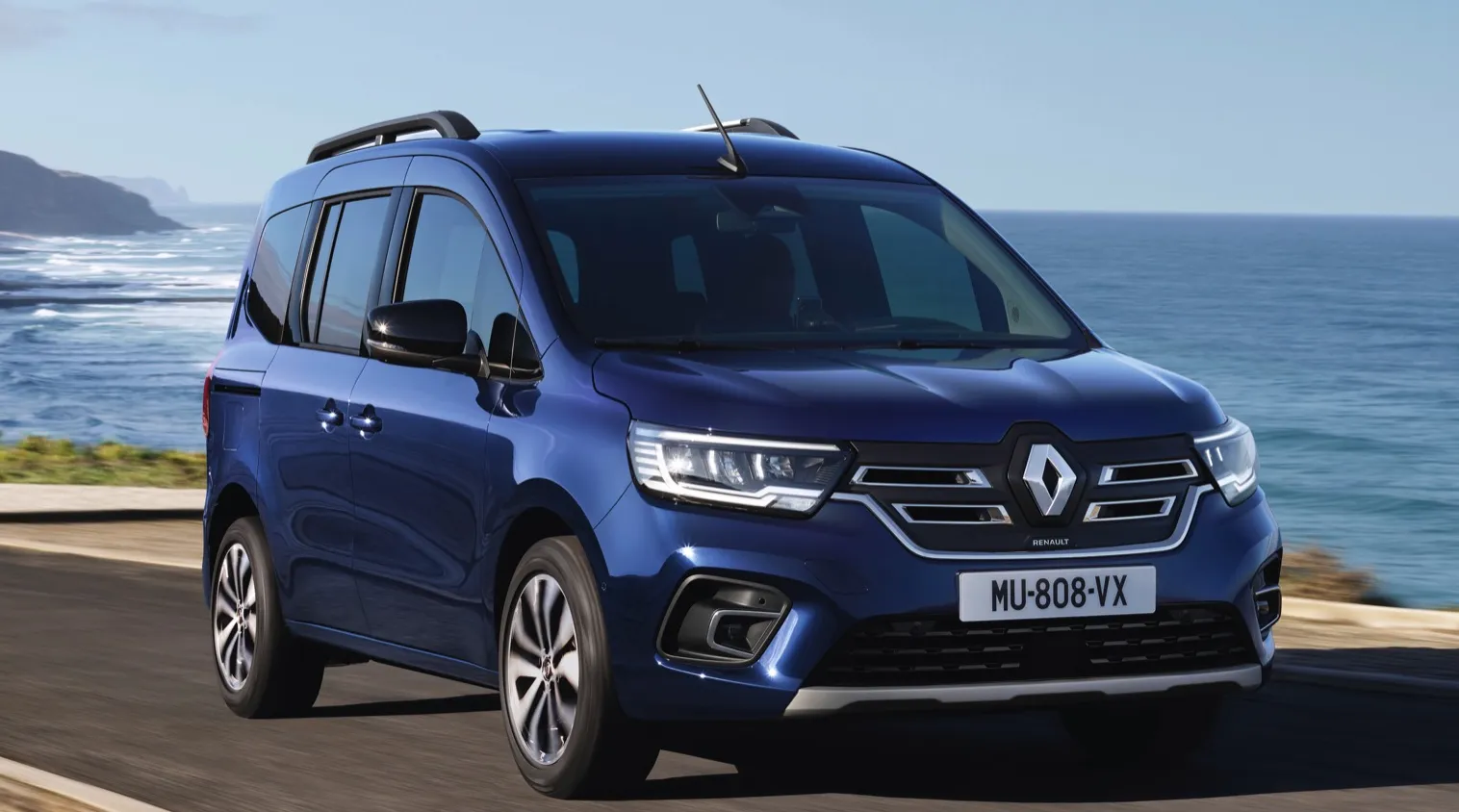
Renault Kangoo E-Tech Electric
Key Specifications
Real Range Estimation
| City - Cold Weather * | 225 km |
| Highway - Cold Weather * | 155 km |
| Combined - Cold Weather * | 185 km |
between 155 - 330 km
| City - Mild Weather * | 330 km |
| Highway - Mild Weather * | 195 km |
| Combined - Mild Weather * | 250 km |
Battery
| Nominal Capacity* | 48.0 kWh |
| Battery Type | Lithium-ion |
| Number of Cells | No Data |
| Architecture | 400 V |
| Warranty Period | No Data |
| Warranty Mileage | No Data |
| Useable Capacity | 45.0 kWh |
| Cathode Material | No Data |
| Pack Configuration | No Data |
| Nominal Voltage | 355 V |
| Form Factor | No Data |
| Name / Reference | No Data |
Performance
| Acceleration 0 - 100 km/h | 12.6 sec |
| Top Speed | 132 km/h |
| Electric Range * | 220 km |
| Total Power | 90 kW (122 PS) |
| Total Torque | 245 Nm |
| Drive | Front |
Home and Destination Charging (0 -> 100%)
Charging is possible by using a regular wall plug or a charging station. Public charging is always done through a charging station. How fast the EV can charge depends on the charging station (EVSE) used and the maximum charging capacity of the EV. The table below shows all possible options for charging the Renault Kangoo E-Tech Electric. Each option shows how fast the battery can be charged from empty to full.
Europe
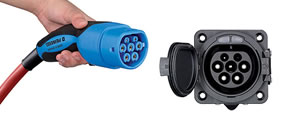
Charging an EV in Europe differs by country. Some European countries primarily use 1-phase connections to the grid, while other countries are almost exclusively using a 3-phase connection. The table below shows all possible ways the Renault Kangoo E-Tech Electric can be charged, but some modes of charging might not be widely available in certain countries.
| Type 2 (Mennekes - IEC 62196) |
|---|
 |
| Charging Point | Max. Power | Power | Time | Rate |
|---|---|---|---|---|
| Standard 11.0 kW On-Board Charger | ||||
| Wall Plug (2.3 kW) | 230V / 1x10A | 2.3 kW | 23h15m | 9 km/h |
| 1-phase 16A (3.7 kW) | 230V / 1x16A | 3.7 kW | 14h30m | 15 km/h |
| 1-phase 32A (7.4 kW) | 230V / 1x32A | 7.4 kW | 7h15m | 30 km/h |
| 3-phase 16A (11 kW) | 400V / 3x16A | 11 kW | 5 hours | 44 km/h |
| 3-phase 32A (22 kW) | 400V / 3x16A | 11 kW † | 5 hours | 44 km/h |
| Optional 22.0kW On-Board Charger | ||||
| Wall Plug (2.3 kW) | 230V / 1x10A | 2.3 kW | 23h15m | 9 km/h |
| 1-phase 16A (3.7 kW) | 230V / 1x16A | 3.7 kW | 14h30m | 15 km/h |
| 1-phase 32A (7.4 kW) | 230V / 1x32A | 7.4 kW | 7h15m | 30 km/h |
| 3-phase 16A (11 kW) | 400V / 3x16A | 11 kW | 5 hours | 44 km/h |
| 3-phase 32A (22 kW) | 400V / 3x32A | 22 kW † | 2h30m | 88 km/h |
† = Limited by on-board charger, vehicle cannot charge faster.
Fast Charging (10 -> 80%)
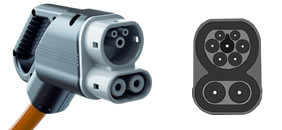
Rapid charging enables longer journeys by adding as much range as possible in the shortest amount of time. Charging power will decrease significantly after 80% state-of-charge has been reached. A typical rapid charge therefore rarely exceeds 80% SoC. The rapid charge rate of an EV depends on the charger used and the maximum charging power the EV can handle. The table below shows all details for rapid charging the Renault Kangoo E-Tech Electric.
- Max. Power: maximum power provided by charge point
- Avg. Power: average power provided by charge point over a session from 10% to 80%
- Time: time needed to charge from 10% to 80%
- Rate: average charging speed over a session from 10% to 80%
| Combined Charging System (CCS Combo 2) * |
|---|
 |
| Charging Point | Max. Power | Avg. Power | Time | Rate |
|---|---|---|---|---|
| CCS (50 kW DC) | 50 kW | 35 kW † | 57 min | 160 km/h |
| CCS (100 kW DC) | 80 kW † | 50 kW † | 40 min | 230 km/h |
| CCS (150 kW DC) | 80 kW † | 50 kW † | 40 min | 230 km/h |
| This vehicle supports Autocharge |
|---|
| This vehicle does not support Plug & Charge |
† = Limited by charging capabilities of vehicle
Autocharge: allows for automatic initiation of a charging session at supported CCS charging stations.
Plug & Charge: allows for automatic initiation of a charging session at supported CCS charging stations in accordance with ISO 15118.
Actual charging rates may differ from data shown due to factors like outside temperature, state of the battery and driving style.
* = Optional in some countries
Dimensions and Weight
| Length | 4486 mm |
| Width | 1919 mm |
| Width with mirrors | 2159 mm |
| Height | 1838 mm |
| Wheelbase | 2716 mm |
| Weight Unladen (EU) | 1870 kg |
| Gross Vehicle Weight (GVWR) | 2370 kg |
| Max. Payload | 575 kg |
| Cargo Volume | 542 L |
| Cargo Volume Max | 2500 L |
| Cargo Volume Frunk | 0 L |
| Roof Load | 80 kg |
| Tow Hitch Possible | Yes |
| Towing Weight Unbraked | 750 kg |
| Towing Weight Braked | 1500 kg |
| Vertical Load Max | 75 kg |
About this Vehicle
Renault Kangoo E-Tech Electric Overview
The Renault Kangoo E-Tech Electric is a compact, mainstream Renault electric van aimed at small businesses, urban fleets, and eco-conscious sole traders who need practical cargo space without tailpipe emissions. Built on the CMF-C/D platform rather than a dedicated EV skateboard, it blends familiar van ergonomics with a modern electric drivetrain, making the transition from diesel to electric straightforward for trades and delivery operators.
This Renault electric commercial targets the light van segment with a focus on efficiency, manoeuvrability, and low running costs. With a 45 kWh lithium‑ion battery and front‑mounted motor, the Kangoo E-Tech Electric offers competitive EV specs for city delivery work, including a WLTP driving range of up to 283–305 km (175–186 miles), depending on configuration and test cycle. It also supports strong AC charging (up to 22 kW) and 80 kW DC fast charging, which are standout features in this class.
In the wider electric vehicle landscape, the Renault Kangoo E-Tech Electric matters because it gives SMEs and fleets a viable alternative to diesel compact vans, with robust range, rapid charging, and regenerative braking modes that extend efficiency. For buyers researching a Renault Kangoo E-Tech Electric review, its blend of usable range, competitive payload, and versatile charging makes it one of the most future-proof small electric vans on sale.
—
Renault Kangoo E-Tech Electric Performance and Driving Experience
On the road, the Renault Kangoo E-Tech Electric prioritises smooth, predictable performance over outright speed. Its single front-mounted motor delivers 90 kW (122 hp) and 245 Nm (181 lb-ft) of torque to the front wheels, providing brisk low-speed response ideal for stop‑start urban driving and heavily loaded runs. Official figures quote 0–100 km/h in around 12.6 seconds, with a top speed of approximately 132–135 km/h (82–84 mph), which is more than adequate for motorway stints.
The front‑wheel‑drive layout keeps handling familiar for drivers coming from combustion Kangoos. The instant torque helps it pull cleanly out of junctions, while the low-mounted battery improves stability. Multiple regenerative braking modes allow one‑pedal‑style driving in town, boosting both comfort and efficiency. Overall, the driving experience is quiet, composed, and well-suited to urban routes and suburban delivery cycles rather than performance‑oriented driving.
| Specification | Value |
|---|---|
| 0-60 mph (0-100 km/h) | 12.1–12.6 sec |
| Top Speed | 82–84 mph / 132–135 km/h |
| Power Output | 122 hp / 90 kW |
| Torque | 181 lb-ft / 245 Nm |
—
Renault Kangoo E-Tech Electric Range and Battery Specifications
The Renault Kangoo E-Tech Electric WLTP range is one of its key selling points. Depending on version and market, official WLTP figures sit between 283 km and 305 km (175–186 miles) on a full charge, enough for most daily urban delivery schedules without midday top‑ups. Some brochures quote “up to 300–305 km WLTP,” while others list 283 km; expect actual range to depend on body style, wheels, and load.
Under the floor sits a 45 kWh lithium‑ion battery, with around 45 kWh usable capacity. Real‑world efficiency figures of roughly 17.5–20.2 kWh/100 km translate to a real‑world range of about 240–270 km (150–170 miles) under mixed driving, with lower figures in cold weather or at sustained motorway speeds. Like any EV, range is affected by temperature, payload, driving style, and terrain, but the Kangoo’s regenerative braking modes help recover energy in city work, making it especially efficient on dense urban routes.
| Range Metric | Value |
|---|---|
| WLTP Range | 175–189 miles / 283–305 km |
| EPA Range | Not officially rated (Europe‑focused model) |
| Real-World Range | ~150–170 miles / ~240–270 km |
| Battery Capacity | ~45.0 kWh (usable) |
—
Renault Kangoo E-Tech Electric Charging Times and Options
Charging flexibility is a major strength of the Renault Kangoo E-Tech Electric. At home or depot, it supports single- or three-phase AC charging up to 11–22 kW depending on specification. On a typical 7 kW wallbox, a full charge from empty to 100% takes around 7–8 hours, making overnight charging simple for fleet use. With a 22 kW AC supply, a full charge can be done in roughly 3 hours, ideal for depots or workplaces with three-phase power.
For rapid turnarounds, the Kangoo E-Tech Electric offers DC fast charging up to 80 kW via a CCS2 connector. In optimal conditions, Renault quotes 10–80% in about 42 minutes, adding roughly 120–150 km of range during a coffee or loading break. Compatibility with widespread CCS and Type 2 infrastructure means it fits seamlessly into existing public charging networks across Europe, FCE‑style highway chargers, and city rapid hubs.
| Charging Method | Time | Speed |
|---|---|---|
| Level 1 (120V) | 20–24 hours (0–100%) | ~2–3 kW |
| Level 2 (240V/7kW) | ~7–8 hours (0–100%) | ~7 kW |
| Level 2 (240V/11–22kW) | ~3–5 hours (0–100%) | ~11–22 kW |
| DC Fast Charge (10-80%) | ~42 min | up to 80 kW |
—
Renault Kangoo E-Tech Electric vs Competitors
In a Renault Kangoo E-Tech Electric vs competitors comparison, its closest EV rivals include the Mercedes eCitan, Peugeot e-Partner, and Citroën ë-Berlingo, while some buyers may also cross‑shop compact electric SUVs like the Hyundai Ioniq 5, Kia EV6, or Tesla Model Y if they want more passenger comfort than cargo space. Against other small electric vans, the Kangoo’s 45 kWh battery, up‑to‑80 kW DC charging, and strong 22 kW AC capability give it an edge for intensive urban fleet use. Versus a Tesla Model Y or Hyundai Ioniq 5, the Renault prioritises payload and practicality over performance and long‑distance range, making it the more efficient choice for last‑mile logistics rather than family road trips.
—
Frequently Asked Questions
Renault Kangoo E-Tech Electric Overview
The Renault Kangoo E-Tech Electric is a compact, mainstream Renault electric van aimed at small businesses, urban fleets, and eco-conscious sole traders who need practical cargo space without tailpipe emissions. Built on the CMF-C/D platform rather than a dedicated EV skateboard, it blends familiar van ergonomics with a modern electric drivetrain, making the transition from diesel to electric straightforward for trades and delivery operators.
This Renault electric commercial targets the light van segment with a focus on efficiency, manoeuvrability, and low running costs. With a 45 kWh lithium‑ion battery and front‑mounted motor, the Kangoo E-Tech Electric offers competitive EV specs for city delivery work, including a WLTP driving range of up to 283–305 km (175–186 miles), depending on configuration and test cycle. It also supports strong AC charging (up to 22 kW) and 80 kW DC fast charging, which are standout features in this class.
In the wider electric vehicle landscape, the Renault Kangoo E-Tech Electric matters because it gives SMEs and fleets a viable alternative to diesel compact vans, with robust range, rapid charging, and regenerative braking modes that extend efficiency. For buyers researching a Renault Kangoo E-Tech Electric review, its blend of usable range, competitive payload, and versatile charging makes it one of the most future-proof small electric vans on sale.
—
Renault Kangoo E-Tech Electric Performance and Driving Experience
On the road, the Renault Kangoo E-Tech Electric prioritises smooth, predictable performance over outright speed. Its single front-mounted motor delivers 90 kW (122 hp) and 245 Nm (181 lb-ft) of torque to the front wheels, providing brisk low-speed response ideal for stop‑start urban driving and heavily loaded runs. Official figures quote 0–100 km/h in around 12.6 seconds, with a top speed of approximately 132–135 km/h (82–84 mph), which is more than adequate for motorway stints.
The front‑wheel‑drive layout keeps handling familiar for drivers coming from combustion Kangoos. The instant torque helps it pull cleanly out of junctions, while the low-mounted battery improves stability. Multiple regenerative braking modes allow one‑pedal‑style driving in town, boosting both comfort and efficiency. Overall, the driving experience is quiet, composed, and well-suited to urban routes and suburban delivery cycles rather than performance‑oriented driving.
| Specification | Value |
|---|---|
| 0-60 mph (0-100 km/h) | 12.1–12.6 sec |
| Top Speed | 82–84 mph / 132–135 km/h |
| Power Output | 122 hp / 90 kW |
| Torque | 181 lb-ft / 245 Nm |
—
Renault Kangoo E-Tech Electric Range and Battery Specifications
The Renault Kangoo E-Tech Electric WLTP range is one of its key selling points. Depending on version and market, official WLTP figures sit between 283 km and 305 km (175–186 miles) on a full charge, enough for most daily urban delivery schedules without midday top‑ups. Some brochures quote “up to 300–305 km WLTP,” while others list 283 km; expect actual range to depend on body style, wheels, and load.
Under the floor sits a 45 kWh lithium‑ion battery, with around 45 kWh usable capacity. Real‑world efficiency figures of roughly 17.5–20.2 kWh/100 km translate to a real‑world range of about 240–270 km (150–170 miles) under mixed driving, with lower figures in cold weather or at sustained motorway speeds. Like any EV, range is affected by temperature, payload, driving style, and terrain, but the Kangoo’s regenerative braking modes help recover energy in city work, making it especially efficient on dense urban routes.
| Range Metric | Value |
|---|---|
| WLTP Range | 175–189 miles / 283–305 km |
| EPA Range | Not officially rated (Europe‑focused model) |
| Real-World Range | ~150–170 miles / ~240–270 km |
| Battery Capacity | ~45.0 kWh (usable) |
—
Renault Kangoo E-Tech Electric Charging Times and Options
Charging flexibility is a major strength of the Renault Kangoo E-Tech Electric. At home or depot, it supports single- or three-phase AC charging up to 11–22 kW depending on specification. On a typical 7 kW wallbox, a full charge from empty to 100% takes around 7–8 hours, making overnight charging simple for fleet use. With a 22 kW AC supply, a full charge can be done in roughly 3 hours, ideal for depots or workplaces with three-phase power.
For rapid turnarounds, the Kangoo E-Tech Electric offers DC fast charging up to 80 kW via a CCS2 connector. In optimal conditions, Renault quotes 10–80% in about 42 minutes, adding roughly 120–150 km of range during a coffee or loading break. Compatibility with widespread CCS and Type 2 infrastructure means it fits seamlessly into existing public charging networks across Europe, FCE‑style highway chargers, and city rapid hubs.
| Charging Method | Time | Speed |
|---|---|---|
| Level 1 (120V) | 20–24 hours (0–100%) | ~2–3 kW |
| Level 2 (240V/7kW) | ~7–8 hours (0–100%) | ~7 kW |
| Level 2 (240V/11–22kW) | ~3–5 hours (0–100%) | ~11–22 kW |
| DC Fast Charge (10-80%) | ~42 min | up to 80 kW |
—
Renault Kangoo E-Tech Electric vs Competitors
In a Renault Kangoo E-Tech Electric vs competitors comparison, its closest EV rivals include the Mercedes eCitan, Peugeot e-Partner, and Citroën ë-Berlingo, while some buyers may also cross‑shop compact electric SUVs like the Hyundai Ioniq 5, Kia EV6, or Tesla Model Y if they want more passenger comfort than cargo space. Against other small electric vans, the Kangoo’s 45 kWh battery, up‑to‑80 kW DC charging, and strong 22 kW AC capability give it an edge for intensive urban fleet use. Versus a Tesla Model Y or Hyundai Ioniq 5, the Renault prioritises payload and practicality over performance and long‑distance range, making it the more efficient choice for last‑mile logistics rather than family road trips.
—
Frequently Asked Questions
Related Vehicles
View All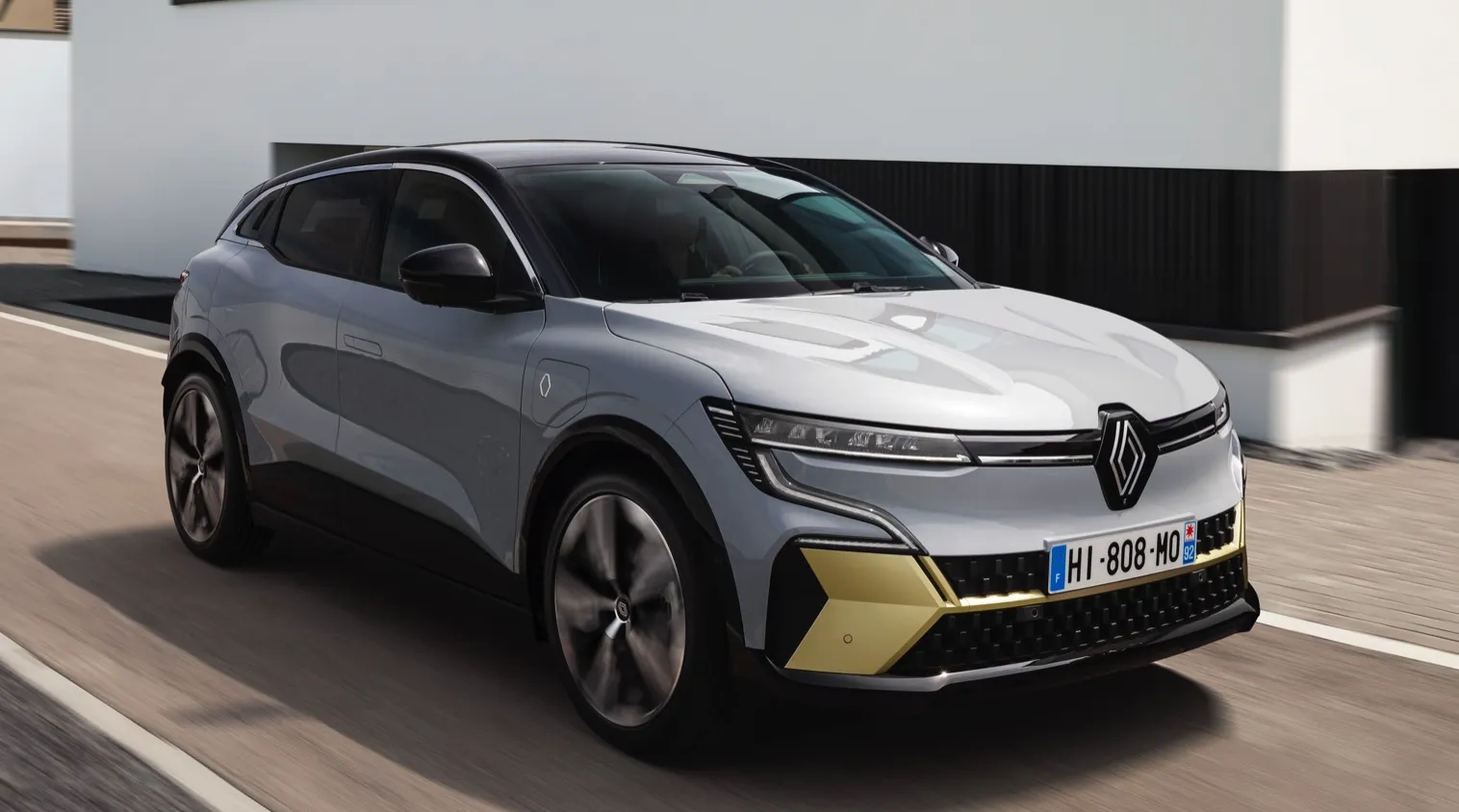 Renault
Renault Megane E-Tech EV60 220hp
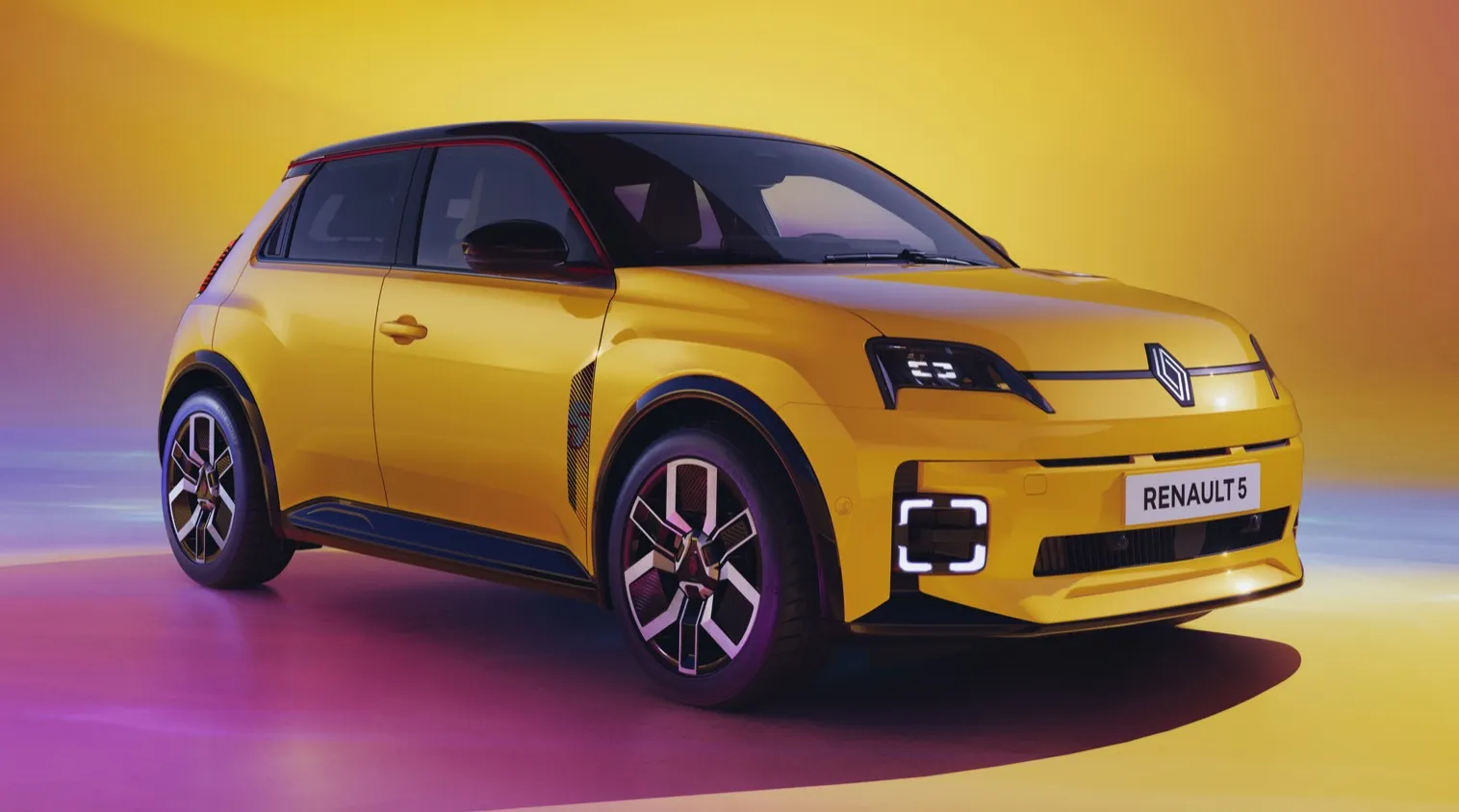 Renault
Renault 5 E-Tech 40kWh 120hp
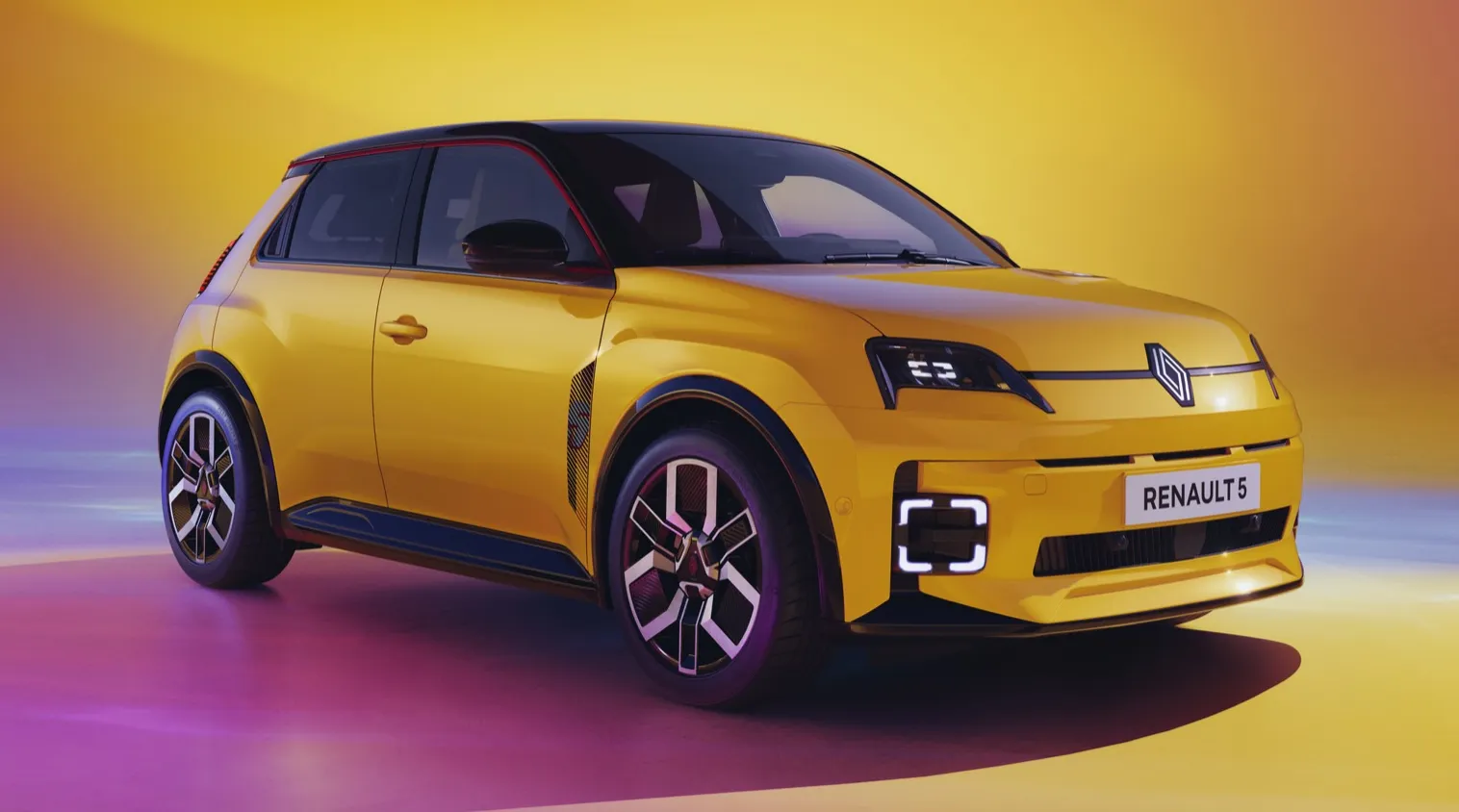 Renault
Renault 5 E-Tech 40kWh 95hp
 Renault