

Genesis GV60 Premium
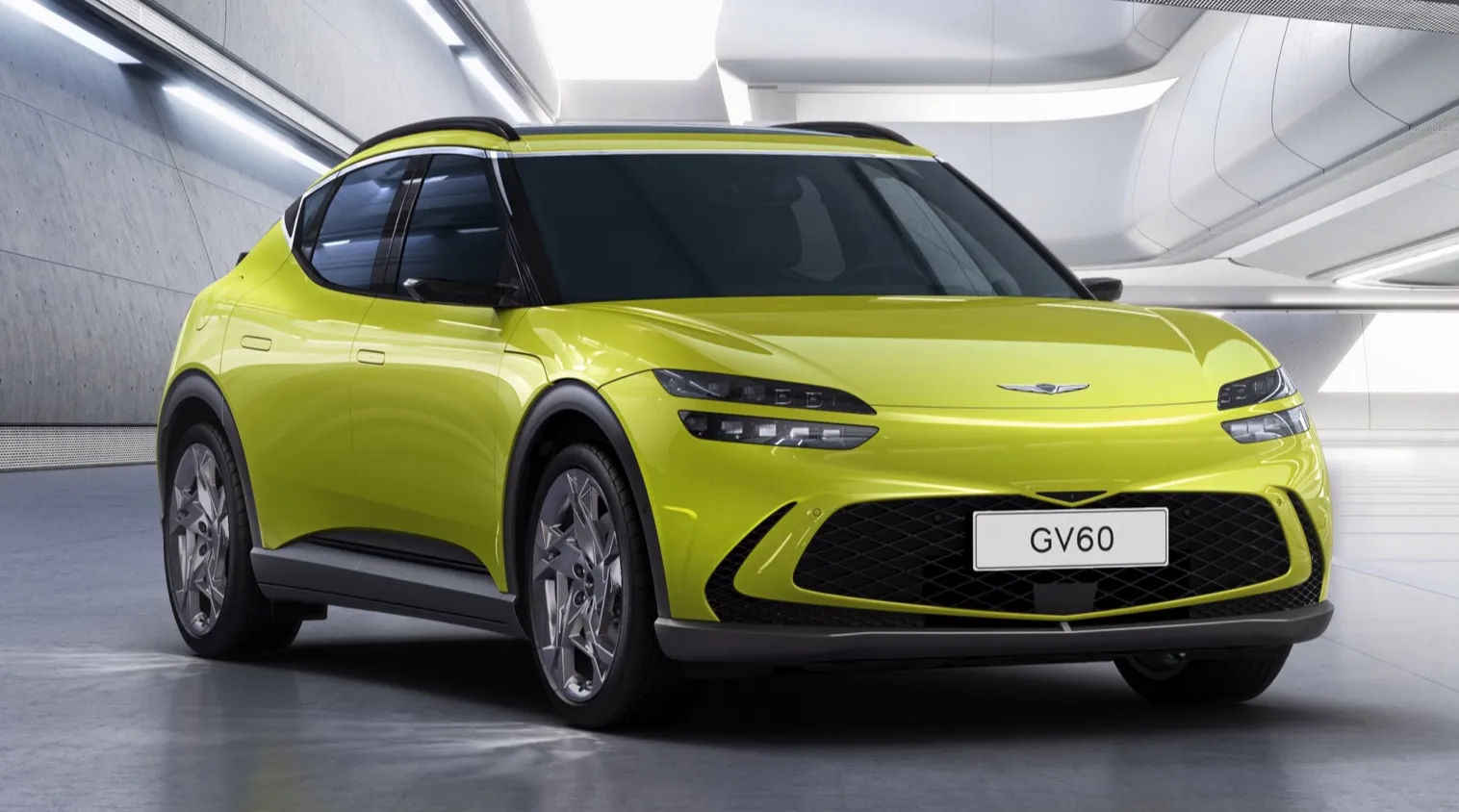
Key Specifications
Real Range Estimation
| City - Cold Weather * | 390 km |
| Highway - Cold Weather * | 275 km |
| Combined - Cold Weather * | 330 km |
between 275 - 575 km
| City - Mild Weather * | 575 km |
| Highway - Mild Weather * | 355 km |
| Combined - Mild Weather * | 445 km |
Battery
| Nominal Capacity | 77.4 kWh |
| Battery Type | Lithium-ion |
| Number of Cells | 384 |
| Architecture | 800 V |
| Warranty Period | No Data |
| Warranty Mileage | No Data |
| Useable Capacity* | 74.0 kWh |
| Cathode Material | No Data |
| Pack Configuration | 192s2p |
| Nominal Voltage | 697 V |
| Form Factor | No Data |
| Name / Reference | No Data |
Performance
| Acceleration 0 - 100 km/h | 7.8 sec |
| Top Speed | 185 km/h |
| Electric Range * | 390 km |
| Total Power | 168 kW (228 PS) |
| Total Torque | 350 Nm |
| Drive | Rear |
Home and Destination Charging (0 -> 100%)
Charging is possible by using a regular wall plug or a charging station. Public charging is always done through a charging station. How fast the EV can charge depends on the charging station (EVSE) used and the maximum charging capacity of the EV. The table below shows all possible options for charging the Genesis GV60 Premium. Each option shows how fast the battery can be charged from empty to full.
Europe
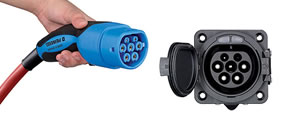
Charging an EV in Europe differs by country. Some European countries primarily use 1-phase connections to the grid, while other countries are almost exclusively using a 3-phase connection. The table below shows all possible ways the Genesis GV60 Premium can be charged, but some modes of charging might not be widely available in certain countries.
| Type 2 (Mennekes - IEC 62196) |
|---|
 |
| Charging Point | Max. Power | Power | Time | Rate |
|---|---|---|---|---|
| Wall Plug (2.3 kW) | 230V / 1x10A | 2.3 kW | 38 hours | 10 km/h |
| 1-phase 16A (3.7 kW) | 230V / 1x16A | 3.7 kW | 23h45m | 16 km/h |
| 1-phase 32A (7.4 kW) | 230V / 1x32A | 7.4 kW | 11h45m | 33 km/h |
| 3-phase 16A (11 kW) | 400V / 3x16A | 11 kW | 8 hours | 49 km/h |
| 3-phase 32A (22 kW) | 400V / 3x16A | 11 kW † | 8 hours | 49 km/h |
† = Limited by on-board charger, vehicle cannot charge faster.
Fast Charging (10 -> 80%)
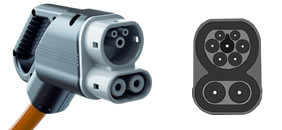
Rapid charging enables longer journeys by adding as much range as possible in the shortest amount of time. Charging power will decrease significantly after 80% state-of-charge has been reached. A typical rapid charge therefore rarely exceeds 80% SoC. The rapid charge rate of an EV depends on the charger used and the maximum charging power the EV can handle. The table below shows all details for rapid charging the Genesis GV60 Premium.
- Max. Power: maximum power provided by charge point
- Avg. Power: average power provided by charge point over a session from 10% to 80%
- Time: time needed to charge from 10% to 80%
- Rate: average charging speed over a session from 10% to 80%
| Combined Charging System (CCS Combo 2) |
|---|
 |
| Charging Point | Max. Power | Avg. Power | Time | Rate |
|---|---|---|---|---|
| CCS (50 kW DC) | 50 kW | 50 kW | 65 min | 250 km/h |
| CCS (150 kW DC) | 150 kW | 149 kW † | 22 min | 740 km/h |
| CCS (300 kW DC) | 233 kW † | 200 kW † | 16 min | 1020 km/h |
| Charge Curve |
|---|
 |
Data made available by Fastned |
| This vehicle supports Autocharge |
|---|
| This vehicle supports Plug & Charge |
† = Limited by charging capabilities of vehicle
Autocharge: allows for automatic initiation of a charging session at supported CCS charging stations.
Plug & Charge: allows for automatic initiation of a charging session at supported CCS charging stations in accordance with ISO 15118.
Actual charging rates may differ from data shown due to factors like outside temperature, state of the battery and driving style.
Dimensions and Weight
| Length | 4515 mm |
| Width | 1890 mm |
| Width with mirrors | No Data |
| Height | 1580 mm |
| Wheelbase | 2900 mm |
| Weight Unladen (EU) | 1975 kg |
| Gross Vehicle Weight (GVWR) | 2495 kg |
| Max. Payload | 595 kg |
| Cargo Volume | 432 L |
| Cargo Volume Max | 1460 L |
| Cargo Volume Frunk | 0 L |
| Roof Load | No Data |
| Tow Hitch Possible | Yes |
| Towing Weight Unbraked | 750 kg |
| Towing Weight Braked | 1600 kg |
| Vertical Load Max | No Data |
About this Vehicle
Genesis GV60 Premium Overview
The Genesis GV60 Premium positions itself as a compact luxury electric SUV, sitting above mainstream EVs yet undercutting traditional German rivals on price and equipment. As a stylish Genesis electric SUV based on Hyundai Motor Group’s E-GMP platform, it targets tech-savvy buyers who want upscale design, strong EV specs, and cutting-edge driver assistance without stepping into Tesla ubiquity or German-brand pricing. In this Genesis GV60 Premium review, the focus is on refinement, performance, and everyday usability.
The GV60 Premium matters in the electric vehicle landscape because it blends a distinctive, coupe-like SUV silhouette with a high-tech cabin and ultra-fast charging that rivals the best in the segment. An expansive 27‑inch OLED display, advanced driver aids, and features like Boost Mode and electronic limited-slip differential (on higher trims) show Genesis’s design and technology philosophy: quiet, effortless performance with a luxury-first feel. For shoppers comparing electric SUVs and crossovers, the Genesis GV60 Premium offers a compelling mix of range, performance, and premium features that help it stand out in a crowded EV market.
Genesis GV60 Premium Performance and Driving Experience
The Genesis GV60 Premium uses a dual-motor all-wheel-drive setup delivering around 314 hp and strong, instant torque, giving brisk acceleration that feels more than adequate for daily driving. With Boost Mode reserved for the top Performance trim, the Premium model is tuned for smooth, confident power delivery rather than outright track pace. Genesis quotes as little as 4.0 seconds 0–60 mph in the most powerful configuration, so the Premium sits just behind that in outright speed while still feeling quick in real-world conditions.
On the road, the GV60 Premium benefits from a low center of gravity and balanced weight distribution. The steering is precise, and the suspension offers a refined, controlled ride that suits its luxury brief. The sophisticated AWD system constantly shuffles torque between front and rear for secure traction in wet or snowy conditions. Overall, the driving experience is quiet, composed, and upscale, with enough performance to entertain without sacrificing comfort.
| Specification | Value |
|---|---|
| 0-60 mph (0-100 km/h) | ~4.5–5.0 sec (Premium est.) |
| Top Speed | 151 mph / 243 km/h (gov-limited, Performance) |
| Power Output | ~314 hp / 234 kW (Premium) |
| Torque | ~446 lb-ft / 605 Nm (Premium est.) |
Genesis GV60 Premium Range and Battery Specifications
For 2026, all Genesis GV60 variants gain a larger 84.0 kWh lithium-ion battery, improving range and efficiency. In rear-wheel-drive form, the GV60 can reach up to 306 miles of range, while dual-motor AWD trims like the Premium and Performance are rated lower due to extra power and weight. The AWD Performance model’s EPA range is about 252 miles; the Genesis GV60 Premium typically sits between those extremes, depending on wheel size and equipment.
In real-world driving, most owners can expect the Genesis GV60 Premium real-world range to land near 240–260 miles in mixed use, with climate control use, high speeds, and cold weather capable of trimming that. The GV60’s efficiency, roughly in the 90–100 MPGe band for AWD configurations, translates to competitive energy use for a luxury electric SUV. Driving style, temperature, and terrain all play critical roles, so highway-heavy or winter driving will lower actual results compared with the official Genesis GV60 WLTP range figures in other markets.
| Range Metric | Value |
|---|---|
| WLTP Range | ~280–300 miles / 450–480 km (market dependent, est.) |
| EPA Range | up to 252 miles / 406 km (AWD Performance) |
| Real-World Range | ~240–260 miles / 386–418 km (Premium est.) |
| Battery Capacity | 84.0 kWh (usable close to this figure) |
Genesis GV60 Premium Charging Times and Options
The Genesis GV60 Premium supports ultra-fast DC charging on an 800‑volt architecture, allowing 10–80% in about 18 minutes on a high-power station. That puts it among the quickest-charging EVs available, similar to the Hyundai Ioniq 5 and Kia EV6 that share the same platform. Peak DC charge power can reach up to about 350 kW on compatible chargers, though real-world speeds depend on charger capability and conditions.
At home, Level 2 AC charging (up to 10.9–11 kW) will refill the GV60 Premium overnight, typically in around 7–9 hours from empty to full on a 240V wallbox. Level 1 (120V) is only a backup, adding range slowly and best used for occasional top-ups. The GV60 Premium is compatible with major public charging networks through CCS connectors, and available vehicle-to-load (V2L) functionality lets you power external devices and equipment from the battery for camping or emergencies.
| Charging Method | Time | Speed |
|---|---|---|
| Level 1 (120V) | 35–45 hours (0–100%) | ~1–2 kW |
| Level 2 (240V/7kW) | ~11–12 hours (0–100%) | ~7 kW |
| Level 2 (240V/11kW) | ~7–9 hours (0–100%) | ~11 kW |
| DC Fast Charge (10-80%) | ~18 min | up to 350 kW |
Genesis GV60 Premium vs Competitors
In a Genesis GV60 Premium vs Tesla Model Y comparison, the Genesis emphasizes interior luxury, refinement, and build quality over raw efficiency and charging network dominance. Against the Hyundai Ioniq 5 and Kia EV6, the GV60 Premium shares similar EV specs and charging performance but adds more upscale materials, a quieter cabin, and additional standard tech. Compared with European rivals like the Audi Q4 e-tron, the Genesis GV60 Premium offers faster DC charging and more distinctive styling, making it a strong alternative for buyers seeking a compact luxury electric SUV with character.
Frequently Asked Questions
Related Vehicles
View All Genesis
Genesis GV70 Electrified Sport
 Genesis
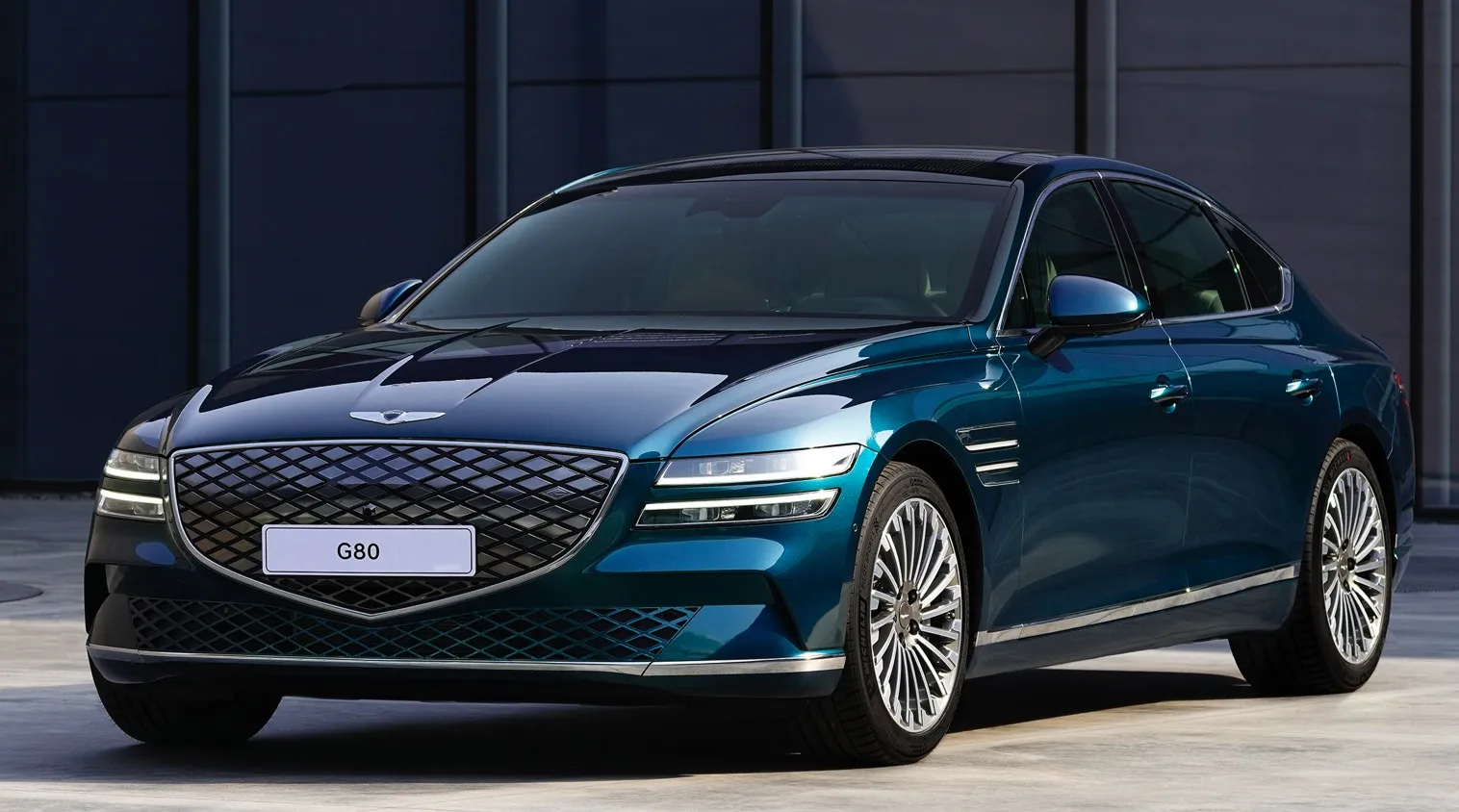
Genesis G80 Electrified Luxury
 Genesis
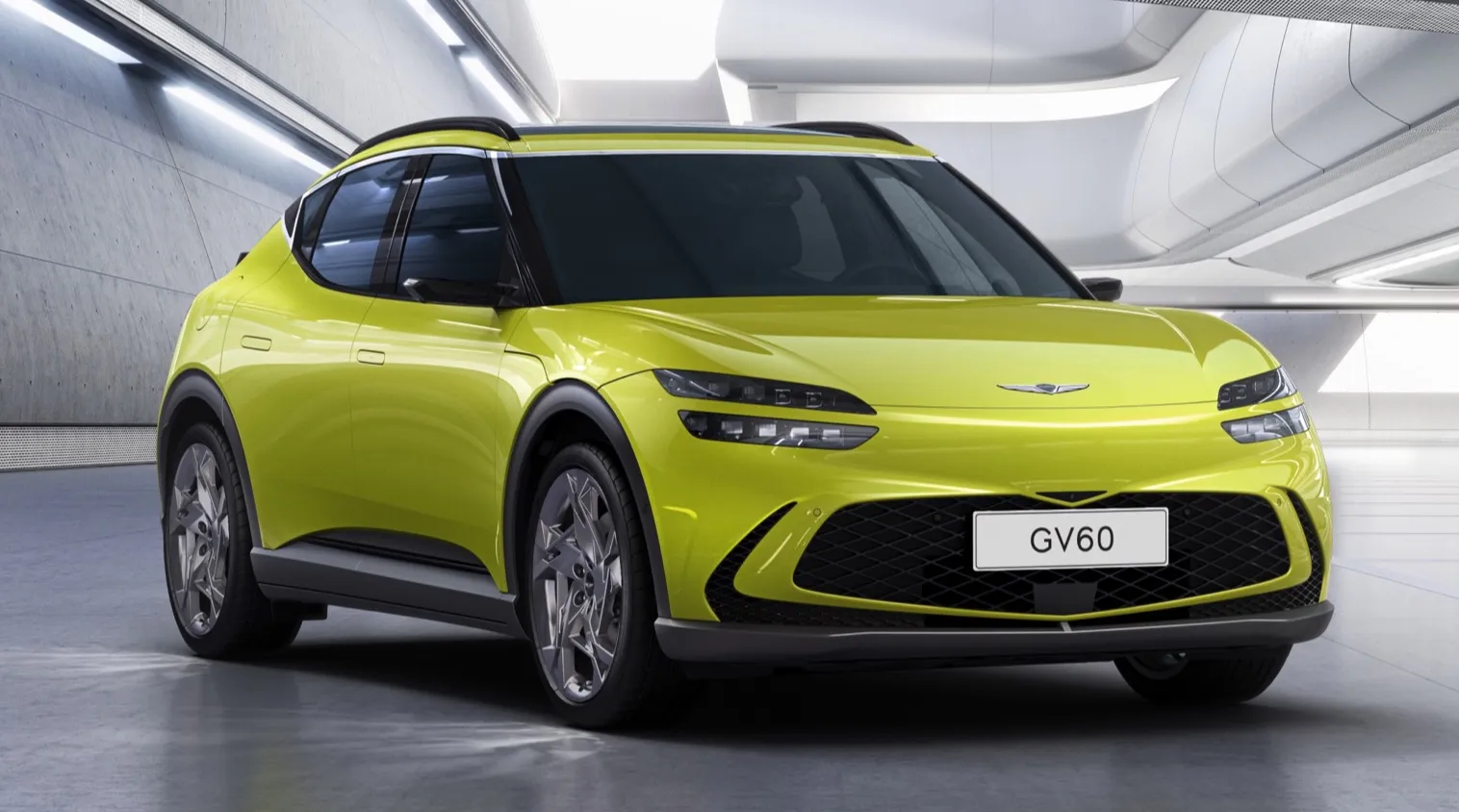
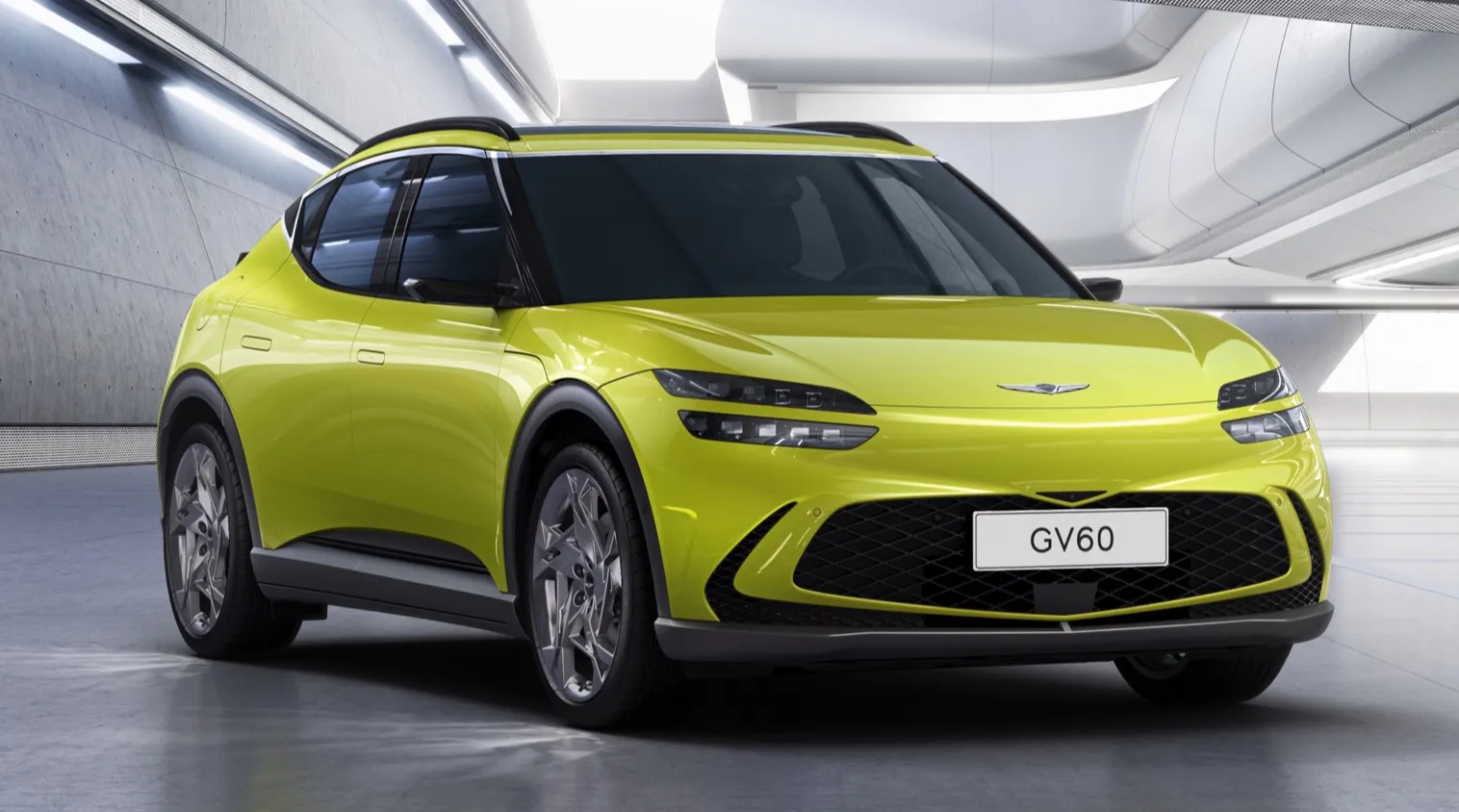
Genesis GV60 Sport
 Genesis