

Ford Mustang Mach-E ER RWD
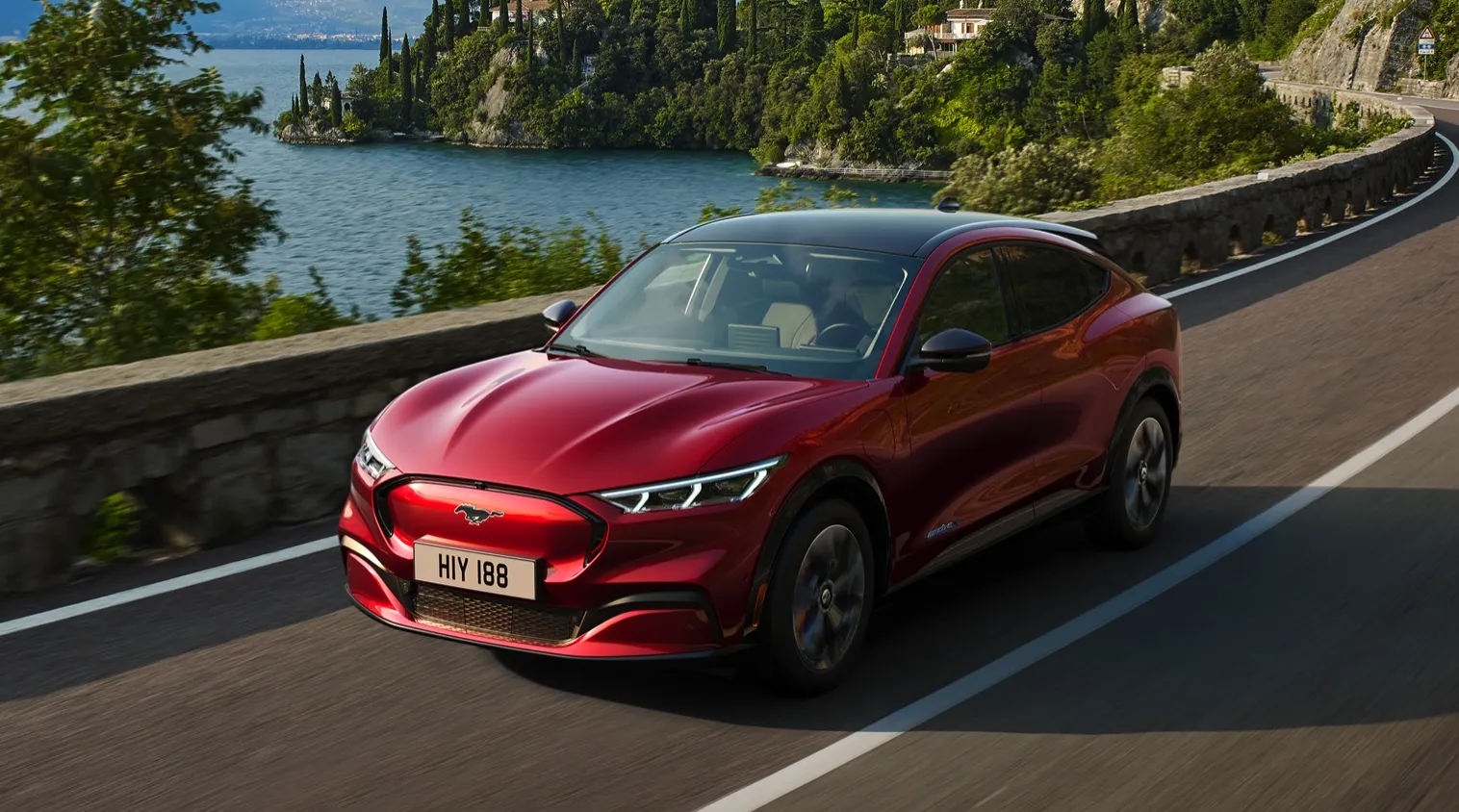
Key Specifications
Real Range Estimation
| City - Cold Weather * | 480 km |
| Highway - Cold Weather * | 345 km |
| Combined - Cold Weather * | 410 km |
between 345 - 705 km
| City - Mild Weather * | 705 km |
| Highway - Mild Weather * | 440 km |
| Combined - Mild Weather * | 550 km |
Battery
| Nominal Capacity | 98.7 kWh |
| Battery Type | Lithium-ion |
| Number of Cells | 376 |
| Architecture | 400 V |
| Warranty Period | 8 years |
| Warranty Mileage | 160,000 km |
| Useable Capacity | 91.0 kWh |
| Cathode Material | No Data |
| Pack Configuration | 94s4p |
| Nominal Voltage | No Data |
| Form Factor | No Data |
| Name / Reference | No Data |
Performance
| Acceleration 0 - 100 km/h | 5.6 sec |
| Top Speed | 180 km/h |
| Electric Range * | 480 km |
| Total Power | 216 kW (294 PS) |
| Total Torque | 525 Nm |
| Drive | Rear |
Home and Destination Charging (0 -> 100%)
Charging is possible by using a regular wall plug or a charging station. Public charging is always done through a charging station. How fast the EV can charge depends on the charging station (EVSE) used and the maximum charging capacity of the EV. The table below shows all possible options for charging the Ford Mustang Mach-E ER RWD. Each option shows how fast the battery can be charged from empty to full.
Europe
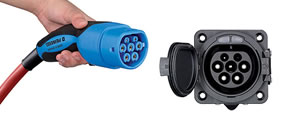
Charging an EV in Europe differs by country. Some European countries primarily use 1-phase connections to the grid, while other countries are almost exclusively using a 3-phase connection. The table below shows all possible ways the Ford Mustang Mach-E ER RWD can be charged, but some modes of charging might not be widely available in certain countries.
| Type 2 (Mennekes - IEC 62196) |
|---|
 |
| Charging Point | Max. Power | Power | Time | Rate |
|---|---|---|---|---|
| Wall Plug (2.3 kW) | 230V / 1x10A | 2.3 kW | 46h45m | 10 km/h |
| 1-phase 16A (3.7 kW) | 230V / 1x16A | 3.7 kW | 29 hours | 17 km/h |
| 1-phase 32A (7.4 kW) | 230V / 1x32A | 7.4 kW | 14h30m | 33 km/h |
| 3-phase 16A (11 kW) | 400V / 3x16A | 11 kW | 9h45m | 49 km/h |
| 3-phase 32A (22 kW) | 400V / 3x16A | 11 kW † | 9h45m | 49 km/h |
† = Limited by on-board charger, vehicle cannot charge faster.
Fast Charging (10 -> 80%)
Rapid charging enables longer journeys by adding as much range as possible in the shortest amount of time. Charging power will decrease significantly after 80% state-of-charge has been reached. A typical rapid charge therefore rarely exceeds 80% SoC. The rapid charge rate of an EV depends on the charger used and the maximum charging power the EV can handle. The table below shows all details for rapid charging the Ford Mustang Mach-E ER RWD.
- Max. Power: maximum power provided by charge point
- Avg. Power: average power provided by charge point over a session from 10% to 80%
- Time: time needed to charge from 10% to 80%
- Rate: average charging speed over a session from 10% to 80%
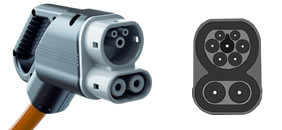
| Combined Charging System (CCS Combo 2) |
|---|
 |
| Charging Point | Max. Power | Avg. Power | Time | Rate |
|---|---|---|---|---|
| CCS (50 kW DC) | 50 kW | 45 kW † | 89 min | 220 km/h |
| CCS (100 kW DC) | 100 kW | 75 kW † | 54 min | 370 km/h |
| CCS (150 kW DC) | 150 kW | 85 kW † | 47 min | 420 km/h |
| CCS (175 kW DC) | 150 kW † | 85 kW † | 47 min | 420 km/h |
| CCS (350 kW DC) | 150 kW † | 85 kW † | 47 min | 420 km/h |
| This vehicle supports Autocharge |
|---|
| This vehicle supports Plug & Charge |
† = Limited by charging capabilities of vehicle
Autocharge: allows for automatic initiation of a charging session at supported CCS charging stations.
Plug & Charge: allows for automatic initiation of a charging session at supported CCS charging stations in accordance with ISO 15118.
Actual charging rates may differ from data shown due to factors like outside temperature, state of the battery and driving style.
Ford Claimed Specifications
The table below shows the claimed specifications from the manufacturer for charging the Ford Mustang Mach-E ER RWD. The specifications can differ from the table above for a variety of reasons. If real-world charge tests are available, these differences can be signifcant. If no real-world tests are available, the table above will be based on the manufacturer specifications as per the table below.
- Max. Power: maximum charge power during charging session
- Charge From: battery percentage (% SoC) where charging session is started
- Charge To: battery percentage (% SoC) where charging session is ended
- Time: time needed for charging session
| Ford Claimed Specifications |
|---|
| Max. Power | Charge From | Charge To | Time |
|---|---|---|---|
| 150 kW | 10 % | 80 % | 36 min |
Dimensions and Weight
| Length | 4713 mm |
| Width | 1881 mm |
| Width with mirrors | 2097 mm |
| Height | 1624 mm |
| Wheelbase | 2984 mm |
| Weight Unladen (EU) | 2150 kg |
| Gross Vehicle Weight (GVWR) | 2595 kg |
| Max. Payload | 520 kg |
| Cargo Volume | 322 L |
| Cargo Volume Max | 1420 L |
| Cargo Volume Frunk | 100 L |
| Roof Load | No Data |
| Tow Hitch Possible | Yes |
| Towing Weight Unbraked | 750 kg |
| Towing Weight Braked | 1500 kg |
| Vertical Load Max | 60 kg |
About this Vehicle
Ford Mustang Mach-E ER RWD Overview
The Ford Mustang Mach-E ER RWD positions itself as a mainstream-to-premium Ford electric SUV aimed at buyers who prioritize maximum range, everyday usability, and rear-wheel-drive driving feel over outright performance. Building on the Mustang heritage, this battery-electric crossover targets family buyers, commuters, and tech-focused drivers who want a stylish EV with strong EV specs and a practical cabin.
As the extended-range rear-wheel-drive variant, the Mustang Mach-E ER RWD pairs a single rear motor with Ford’s larger battery pack to deliver one of the strongest ranges in its class. Extended-range models with RWD are rated for up to 320 miles of EPA range in U.S. spec and around 600 km WLTP in markets like Europe and Australia, depending on trim and wheel choice. The car rides on a dedicated EV platform with a flat floor, a large central touchscreen running Ford’s SYNC 4A system, and over-the-air update capability.
In the broader EV landscape, the Ford Mustang Mach-E ER RWD matters because it offers a compelling alternative to the Tesla Model Y Long Range and Hyundai Ioniq 5 rear-drive long-range models, combining strong electric vehicle range with familiar Ford ergonomics and dealer support. For shoppers researching a Ford Mustang Mach-E review, this ER RWD configuration is the sweet spot for efficiency and value.
—
Ford Mustang Mach-E ER RWD Performance and Driving Experience
In ER RWD form, the 2026 Mustang Mach-E uses a single rear-mounted motor and the larger battery to deliver around 272 hp (203 kW) and 387 lb-ft (525 Nm) of torque, depending on market calibration. Extended-range RWD models are tuned for smooth, linear acceleration rather than brutal launches, but 0–60 mph still lands in the mid-6-second range, which is more than enough for confident merging and passing.
On the road, the rear-wheel-drive layout gives the Mustang Mach-E ER RWD a balanced, natural feel, with predictable traction and a rear-biased push out of corners. The low-mounted battery pack keeps the center of gravity down, helping control body roll. Steering is light but accurate, and selectable drive modes adjust throttle response and steering weight. In everyday driving, the ER RWD feels quiet, composed, and refined, making it a strong choice for long-distance commuters.
| Specification | Value |
|---|---|
| 0-60 mph (0-100 km/h) | ~6.2 sec |
| Top Speed | 112 mph / 180 km/h |
| Power Output | 272 hp / 203 kW |
| Torque | 387 lb-ft / 525 Nm |
—
Ford Mustang Mach-E ER RWD Range and Battery Specifications
The headline figure for the Ford Mustang Mach-E ER RWD is its extended-range battery and impressive driving range. With the 88 kWh (approx. 91 gross, ~88 usable) battery, Ford quotes up to 320 miles EPA for extended-range RWD variants in the U.S. and up to 600 km WLTP for similar Premium ER RWD models in other markets. Real-world range typically lands between 270–300 miles (435–480 km) depending on conditions.
The pack uses modern lithium-ion chemistry and delivers solid efficiency; extended-range RWD models achieve roughly 31 kWh/100 miles or better in EPA testing for standard battery trims, with ER versions slightly higher but offset by the added capacity. Driving style, ambient temperature, speed, and terrain all play significant roles. Highway driving at higher speeds and cold weather will reduce range, while urban/regional driving with lots of regenerative braking can get you closer to the official figures.
| Range Metric | Value |
|---|---|
| WLTP Range | up to 373 miles / 600 km |
| EPA Range | up to 320 miles / 515 km |
| Real-World Range | ~270–300 miles / 435–480 km |
| Battery Capacity | ~88.0 kWh (usable) |
—
Ford Mustang Mach-E ER RWD Charging Times and Options
The Ford Mustang Mach-E ER RWD supports multiple charging options, from basic home charging to high-power DC fast charging. On AC, the car offers up to 11 kW onboard charging, ideal for Level 2 home wallboxes. At 11 kW, a full charge from low state-of-charge typically takes around 8–9 hours, making overnight charging straightforward. On a standard 120V outlet (Level 1), you’re looking at more than a day for a full charge, so a dedicated Level 2 solution is strongly recommended.
On the road, the Mustang Mach-E ER RWD supports DC fast charging up to 150 kW, allowing a 10–80% top-up in roughly 32–36 minutes when connected to a compatible high-power charger. This makes the Mach-E ER RWD practical for road trips, especially when paired with major charging networks. Plug-and-charge support (in markets where enabled) simplifies sessions, and the car’s route planning can take charging stops into account.
| Charging Method | Time | Speed |
|---|---|---|
| Level 1 (120V) | ~30–40 hours (0–100%) | ~1–1.5 kW |
| Level 2 (240V/7kW) | ~12–13 hours (0–100%) | ~7 kW |
| Level 2 (240V/11kW) | ~8–9 hours (0–100%) | ~11 kW |
| DC Fast Charge (10-80%) | ~32–36 min | up to 150 kW |
—
Ford Mustang Mach-E ER RWD vs Competitors
In Ford Mustang Mach-E ER RWD vs Tesla Model Y Long Range comparisons, the Ford typically offers slightly less peak performance but a competitive range, more traditional controls, and a more compliant ride. Against the Hyundai Ioniq 5 rear-wheel-drive Long Range, the Mach-E ER RWD counters the Hyundai’s ultra-fast charging with a more “sporty” driving character and Mustang-inspired styling. Compared to the Kia EV6 RWD, the Mach-E positions itself as the more familiar, SUV-like choice with a strong dealer network and recognizable brand, while the Korean rivals lead in 800V charging and ultra-rapid top-ups. Overall, the Mustang Mach-E comparison story is about range and comfort versus bleeding-edge charging tech.
—
Frequently Asked Questions
Related Vehicles
View All Ford
Ford
Ford Capri Extended Range AWD 2026
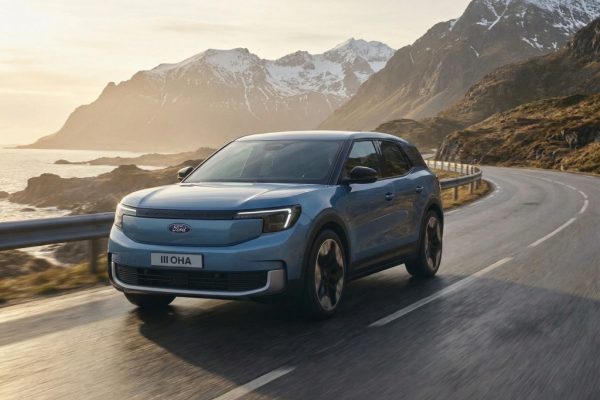 Ford
Ford
Ford Explorer Extended Range RWD 2026
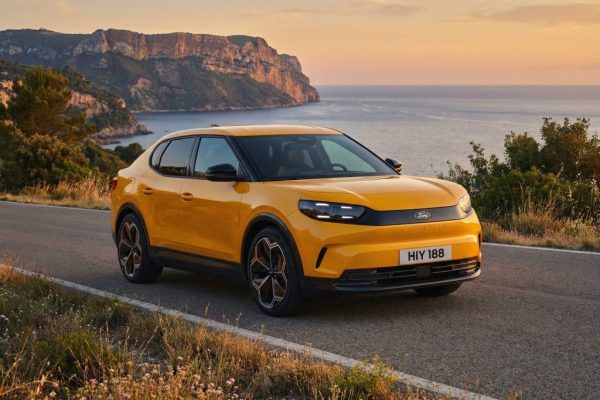 Ford
Ford
Ford Capri Extended Range AWD 2026
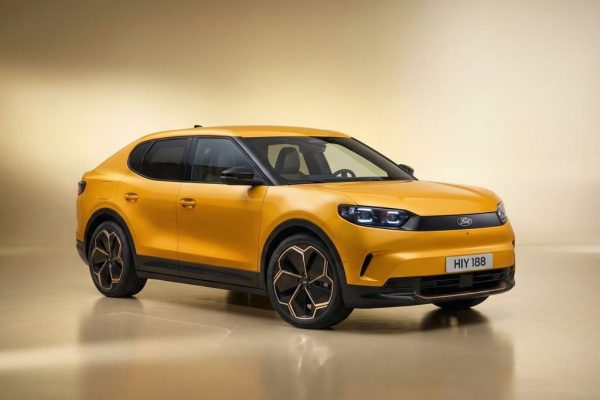 Ford
Ford