

BMW iX1 xDrive30
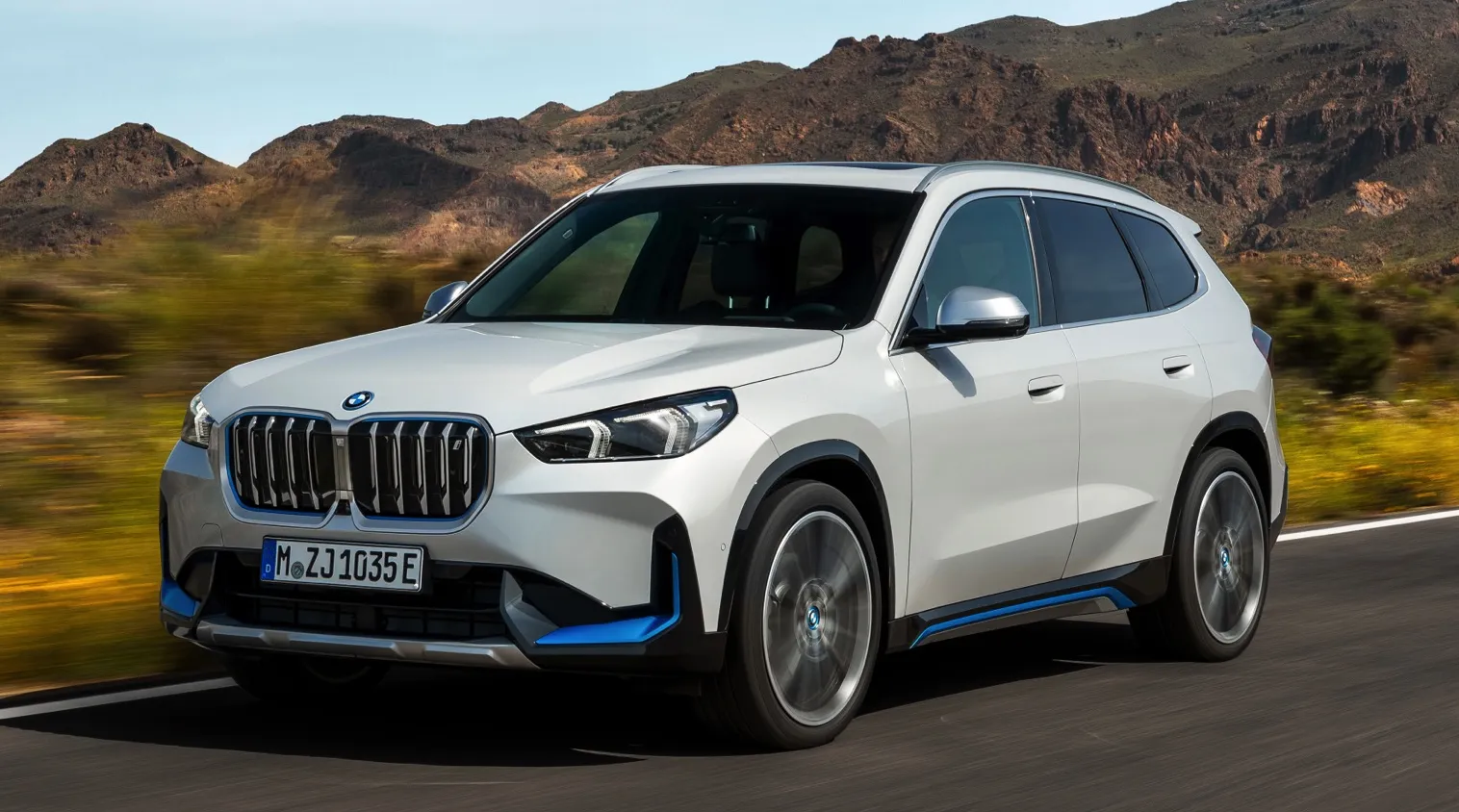
Key Specifications
Real Range
| City - Cold Weather | 370 km |
| Highway - Cold Weather | 270 km |
| Combined - Cold Weather | 320 km |
between 270 - 555 km
| City - Mild Weather | 555 km |
| Highway - Mild Weather | 355 km |
| Combined - Mild Weather | 440 km |
Battery
| Nominal Capacity | 66.5 kWh |
| Battery Type | Lithium-ion |
| Number of Cells | No Data |
| Architecture | 400 V |
| Warranty Period | No Data |
| Warranty Mileage | No Data |
| Useable Capacity | 64.7 kWh |
| Cathode Material | No Data |
| Pack Configuration | No Data |
| Nominal Voltage | 286 V |
| Form Factor | No Data |
| Name / Reference | No Data |
Performance
| Acceleration 0 - 100 km/h | 5.6 sec |
| Top Speed | 180 km/h |
| Electric Range | 380 km |
| Total Power | 230 kW (313 PS) |
| Total Torque | 494 Nm |
| Drive | AWD |
Home and Destination Charging (0 -> 100%)
Charging is possible by using a regular wall plug or a charging station. Public charging is always done through a charging station. How fast the EV can charge depends on the charging station (EVSE) used and the maximum charging capacity of the EV. The table below shows all possible options for charging the BMW iX1 xDrive30. Each option shows how fast the battery can be charged from empty to full.
Europe
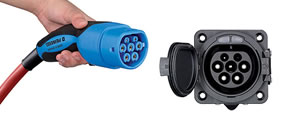
Charging an EV in Europe differs by country. Some European countries primarily use 1-phase connections to the grid, while other countries are almost exclusively using a 3-phase connection. The table below shows all possible ways the BMW iX1 xDrive30 can be charged, but some modes of charging might not be widely available in certain countries.
| Type 2 (Mennekes - IEC 62196) |
|---|
 |
| Charging Point | Max. Power | Power | Time | Rate |
|---|---|---|---|---|
| Standard 11.0 kW On-Board Charger | ||||
| Wall Plug (2.3 kW) | 230V / 1x10A | 2.3 kW | 33h15m | 11 km/h |
| 1-phase 16A (3.7 kW) | 230V / 1x16A | 3.7 kW | 20h45m | 18 km/h |
| 1-phase 32A (7.4 kW) | 230V / 1x32A | 7.4 kW | 10h30m | 36 km/h |
| 3-phase 16A (11 kW) | 400V / 3x16A | 11 kW | 7 hours | 54 km/h |
| 3-phase 32A (22 kW) | 400V / 3x16A | 11 kW † | 7 hours | 54 km/h |
| Optional 22.0kW On-Board Charger * | ||||
| Wall Plug (2.3 kW) | 230V / 1x10A | 2.3 kW | 33h15m | 11 km/h |
| 1-phase 16A (3.7 kW) | 230V / 1x16A | 3.7 kW | 20h45m | 18 km/h |
| 1-phase 32A (7.4 kW) | 230V / 1x32A | 7.4 kW | 10h30m | 36 km/h |
| 3-phase 16A (11 kW) | 400V / 3x16A | 11 kW | 7 hours | 54 km/h |
| 3-phase 32A (22 kW) | 400V / 3x32A | 22 kW † | 3h30m | 100 km/h |
† = Limited by on-board charger, vehicle cannot charge faster.
* = Optional in some countries, standard in others. Check local specifications for details.
Fast Charging (10 -> 80%)
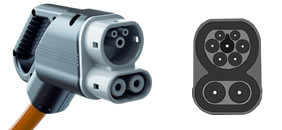
Rapid charging enables longer journeys by adding as much range as possible in the shortest amount of time. Charging power will decrease significantly after 80% state-of-charge has been reached. A typical rapid charge therefore rarely exceeds 80% SoC. The rapid charge rate of an EV depends on the charger used and the maximum charging power the EV can handle. The table below shows all details for rapid charging the BMW iX1 xDrive30.
- Max. Power: maximum power provided by charge point
- Avg. Power: average power provided by charge point over a session from 10% to 80%
- Time: time needed to charge from 10% to 80%
- Rate: average charging speed over a session from 10% to 80%
| Combined Charging System (CCS Combo 2) |
|---|
 |
| Charging Point | Max. Power | Avg. Power | Time | Rate |
|---|---|---|---|---|
| CCS (50 kW DC) | 40 kW † | 39 kW † | 73 min | 210 km/h |
| CCS (150 kW DC) | 128 kW † | 94 kW † | 30 min | 530 km/h |
| Charge Curve |
|---|
 |
Data made available by Fastned |
| This vehicle does not support Autocharge |
|---|
| This vehicle does not support Plug & Charge |
† = Limited by charging capabilities of vehicle
Autocharge: allows for automatic initiation of a charging session at supported CCS charging stations.
Plug & Charge: allows for automatic initiation of a charging session at supported CCS charging stations in accordance with ISO 15118.
Actual charging rates may differ from data shown due to factors like outside temperature, state of the battery and driving style.
BMW Claimed Specifications
The table below shows the claimed specifications from the manufacturer for charging the BMW iX1 xDrive30. The specifications can differ from the table above for a variety of reasons. If real-world charge tests are available, these differences can be signifcant. If no real-world tests are available, the table above will be based on the manufacturer specifications as per the table below.
- Max. Power: maximum charge power during charging session
- Charge From: battery percentage (% SoC) where charging session is started
- Charge To: battery percentage (% SoC) where charging session is ended
- Time: time needed for charging session
| BMW Claimed Specifications |
|---|
| Max. Power | Charge From | Charge To | Time |
|---|---|---|---|
| 130 kW | 10 % | 80 % | 29 min |
About this Vehicle
BMW iX1 xDrive30 Overview
The BMW iX1 xDrive30 positions itself as a premium compact electric SUV, blending BMW’s signature driving dynamics with sustainable mobility in the competitive EV market. Built on the versatile CLAR platform shared with the petrol X1, this BMW electric SUV targets urban professionals and families seeking luxury, technology, and all-wheel-drive capability without compromising on efficiency. As a mainstream premium offering, it undercuts larger BMW EVs like the iX while delivering high-end features such as adaptive suspension and the iDrive infotainment system.
Key distinguishing features include its dual-motor setup for xDrive all-wheel drive, a 64.7 kWh lithium-ion battery, and a design philosophy emphasizing aerodynamic efficiency with a low drag coefficient. In the EV landscape, the BMW iX1 xDrive30 matters for making electric performance accessible in a subcompact package—offering EV specs like 313 horsepower and up to 438 km WLTP range. This iX1 review highlights its role in BMW’s electrification push, appealing to buyers transitioning from traditional SUVs with zero-emissions driving and premium cabin refinement.
BMW iX1 xDrive30 Performance and Driving Experience
The BMW iX1 xDrive30 delivers spirited performance with its dual electric motors producing instant torque, making it feel quicker than its specs suggest despite weighing over 2 tons. Acceleration is punchy from a standstill, thanks to the xDrive all-wheel-drive system distributing power between front and rear axles for superior traction. Handling remains composed with a focus on comfort over outright sportiness, featuring adaptive dampers that smooth out road imperfections while maintaining BMW’s precise steering.
Real-world impressions praise its in-gear responsiveness and family-friendly pace, though the electronically limited top speed keeps it practical rather than extreme.
| Specification | Value |
|---|---|
| 0-60 mph (0-100 km/h) | 5.5 sec (5.7 sec) |
| Top Speed | 112 mph / 180 km/h |
| Power Output | 308 hp / 230 kW |
| Torque | 364 lb-ft / 494 Nm |
BMW iX1 xDrive30 Range and Battery Specifications
Official BMW iX1 xDrive30 WLTP range reaches up to 438 km (272 miles) under TEL conditions, though real-world figures typically settle around 350-400 km depending on factors like cold weather, aggressive driving, or highway speeds. The 64.7 kWh net capacity lithium-ion battery, mounted underfloor for optimal weight distribution, achieves efficiency of 17.3-18.4 kWh/100 km. Terrain and climate play key roles—milder conditions and steady speeds maximize real-world range, while winter drops it by 20-30%.
This setup ensures the iX1 battery specs support daily commutes and weekend trips reliably.
| Range Metric | Value |
|---|---|
| WLTP Range | 272 miles / 438 km |
| EPA Range | Not specified |
| Real-World Range | 217-249 miles / 350-400 km |
| Battery Capacity | 64.7 kWh (usable) |
BMW iX1 xDrive30 Charging Times and Options
Home charging for the BMW iX1 xDrive30 is straightforward with Level 2 AC at 11 kW taking about 6.5 hours for a full charge, ideal for overnight top-ups. DC fast charging shines at up to 130 kW, achieving 10-80% in just 29 minutes, compatible with major networks like Electrify America or Ionity. Practical scenarios include quick motorway stops or garage Level 1 for emergencies, with BMW’s app enabling preconditioning for optimal speeds.
| Charging Method | Time | Speed |
|---|---|---|
| Level 1 (120V) | 24+ hours | ~1.4 kW |
| Level 2 (240V/7kW) | ~10 hours | ~7 kW |
| Level 2 (240V/11kW) | 6.5 hours | ~11 kW |
| DC Fast Charge (10-80%) | 29 min | up to 130 kW |
BMW iX1 xDrive30 vs Competitors
In the BMW iX1 xDrive30 vs Tesla Model Y matchup, the iX1 offers superior build quality and handling but trails in range and charging speed; against the Hyundai Ioniq 5, it provides premium dynamics and AWD grip at a higher price, while edging the Audi Q4 e-tron in power (308 hp vs 295 hp) and efficiency. The iX1 comparison favors BMW loyalists prioritizing refinement over outright value.
Frequently Asked Questions
Related Vehicles
View All BMW
BMW
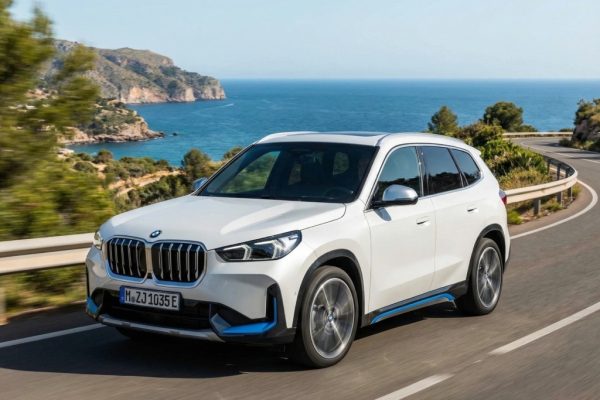
BMW iX2 eDrive20 2026
 BMW
BMW
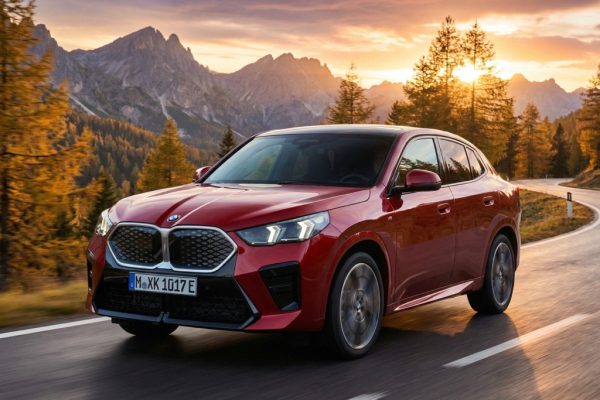
BMW iX1 xDrive30 2026
 BMW
BMW
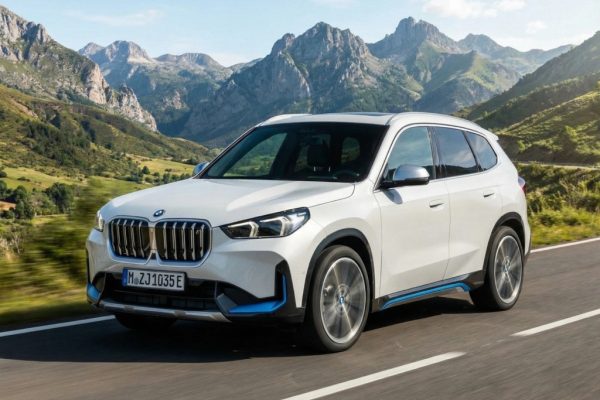
BMW iX2 xDrive30 2026
 BMW
BMW