

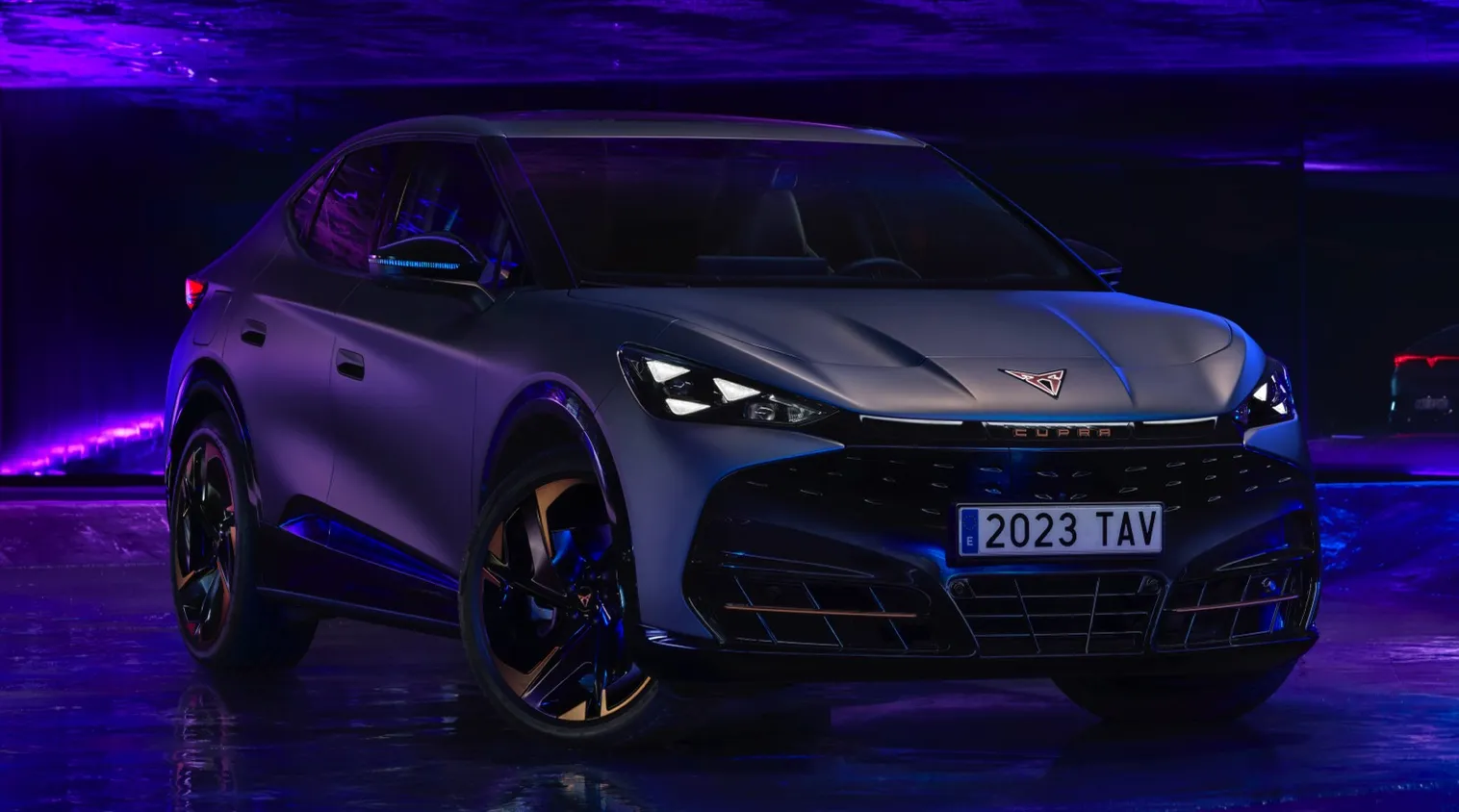
CUPRA Tavascan VZ
Key Specifications
Real Range Estimation
| City - Cold Weather * | 415 km |
| Highway - Cold Weather * | 305 km |
| Combined - Cold Weather * | 360 km |
between 305 - 615 km
| City - Mild Weather * | 615 km |
| Highway - Mild Weather * | 395 km |
| Combined - Mild Weather * | 490 km |
Battery
| Nominal Capacity | 82.0 kWh |
| Battery Type | Lithium-ion |
| Number of Cells | 288 |
| Architecture | 400 V |
| Warranty Period | 8 years |
| Warranty Mileage | 160,000 km |
| Useable Capacity | 77.0 kWh |
| Cathode Material | NCM |
| Pack Configuration | 96s3p |
| Nominal Voltage | 352 V |
| Form Factor | No Data |
| Name / Reference | No Data |
Performance
| Acceleration 0 - 100 km/h | 5.5 sec |
| Top Speed | 180 km/h |
| Electric Range * | 425 km |
| Total Power | 250 kW (340 PS) |
| Total Torque | 545 Nm |
| Drive | AWD |
Home and Destination Charging (0 -> 100%)
Charging is possible by using a regular wall plug or a charging station. Public charging is always done through a charging station. How fast the EV can charge depends on the charging station (EVSE) used and the maximum charging capacity of the EV. The table below shows all possible options for charging the CUPRA Tavascan VZ. Each option shows how fast the battery can be charged from empty to full.
Europe
Charging an EV in Europe differs by country. Some European countries primarily use 1-phase connections to the grid, while other countries are almost exclusively using a 3-phase connection. The table below shows all possible ways the CUPRA Tavascan VZ can be charged, but some modes of charging might not be widely available in certain countries.
| Type 2 (Mennekes - IEC 62196) |
|---|
 |
| Charging Point | Max. Power | Power | Time | Rate |
|---|---|---|---|---|
| Wall Plug (2.3 kW) | 230V / 1x10A | 2.3 kW | 39h30m | 11 km/h |
| 1-phase 16A (3.7 kW) | 230V / 1x16A | 3.7 kW | 24h30m | 17 km/h |
| 1-phase 32A (7.4 kW) | 230V / 1x32A | 7.4 kW | 12h15m | 35 km/h |
| 3-phase 16A (11 kW) | 400V / 3x16A | 11 kW | 8h15m | 52 km/h |
| 3-phase 32A (22 kW) | 400V / 3x16A | 11 kW † | 8h15m | 52 km/h |
† = Limited by on-board charger, vehicle cannot charge faster.
Fast Charging (10 -> 80%)
Rapid charging enables longer journeys by adding as much range as possible in the shortest amount of time. Charging power will decrease significantly after 80% state-of-charge has been reached. A typical rapid charge therefore rarely exceeds 80% SoC. The rapid charge rate of an EV depends on the charger used and the maximum charging power the EV can handle. The table below shows all details for rapid charging the CUPRA Tavascan VZ.
- Max. Power: maximum power provided by charge point
- Avg. Power: average power provided by charge point over a session from 10% to 80%
- Time: time needed to charge from 10% to 80%
- Rate: average charging speed over a session from 10% to 80%
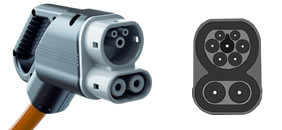
| Combined Charging System (CCS Combo 2) |
|---|
 |
| Charging Point | Max. Power | Avg. Power | Time | Rate |
|---|---|---|---|---|
| CCS (50 kW DC) | 50 kW | 45 kW † | 76 min | 230 km/h |
| CCS (100 kW DC) | 100 kW | 90 kW † | 38 min | 470 km/h |
| CCS (150 kW DC) | 135 kW † | 120 kW † | 28 min | 630 km/h |
| This vehicle does not support Autocharge |
|---|
| This vehicle supports Plug & Charge |
† = Limited by charging capabilities of vehicle
Autocharge: allows for automatic initiation of a charging session at supported CCS charging stations.
Plug & Charge: allows for automatic initiation of a charging session at supported CCS charging stations in accordance with ISO 15118.
Actual charging rates may differ from data shown due to factors like outside temperature, state of the battery and driving style.
CUPRA Claimed Specifications
The table below shows the claimed specifications from the manufacturer for charging the CUPRA Tavascan VZ. The specifications can differ from the table above for a variety of reasons. If real-world charge tests are available, these differences can be signifcant. If no real-world tests are available, the table above will be based on the manufacturer specifications as per the table below.
- Max. Power: maximum charge power during charging session
- Charge From: battery percentage (% SoC) where charging session is started
- Charge To: battery percentage (% SoC) where charging session is ended
- Time: time needed for charging session
| CUPRA Claimed Specifications |
|---|
| Max. Power | Charge From | Charge To | Time |
|---|---|---|---|
| 135 kW | 5 % | 80 % | 28 min |
Dimensions and Weight
| Length | 4644 mm |
| Width | 1861 mm |
| Width with mirrors | 2108 mm |
| Height | 1597 mm |
| Wheelbase | 2766 mm |
| Weight Unladen (EU) | 2273 kg |
| Gross Vehicle Weight (GVWR) | 2780 kg |
| Max. Payload | 582 kg |
| Cargo Volume | 540 L |
| Cargo Volume Max | No Data |
| Cargo Volume Frunk | 0 L |
| Roof Load | 75 kg |
| Tow Hitch Possible | Yes |
| Towing Weight Unbraked | 750 kg |
| Towing Weight Braked | 1200 kg |
| Vertical Load Max | 75 kg |
About this Vehicle
CUPRA Tavascan VZ Overview
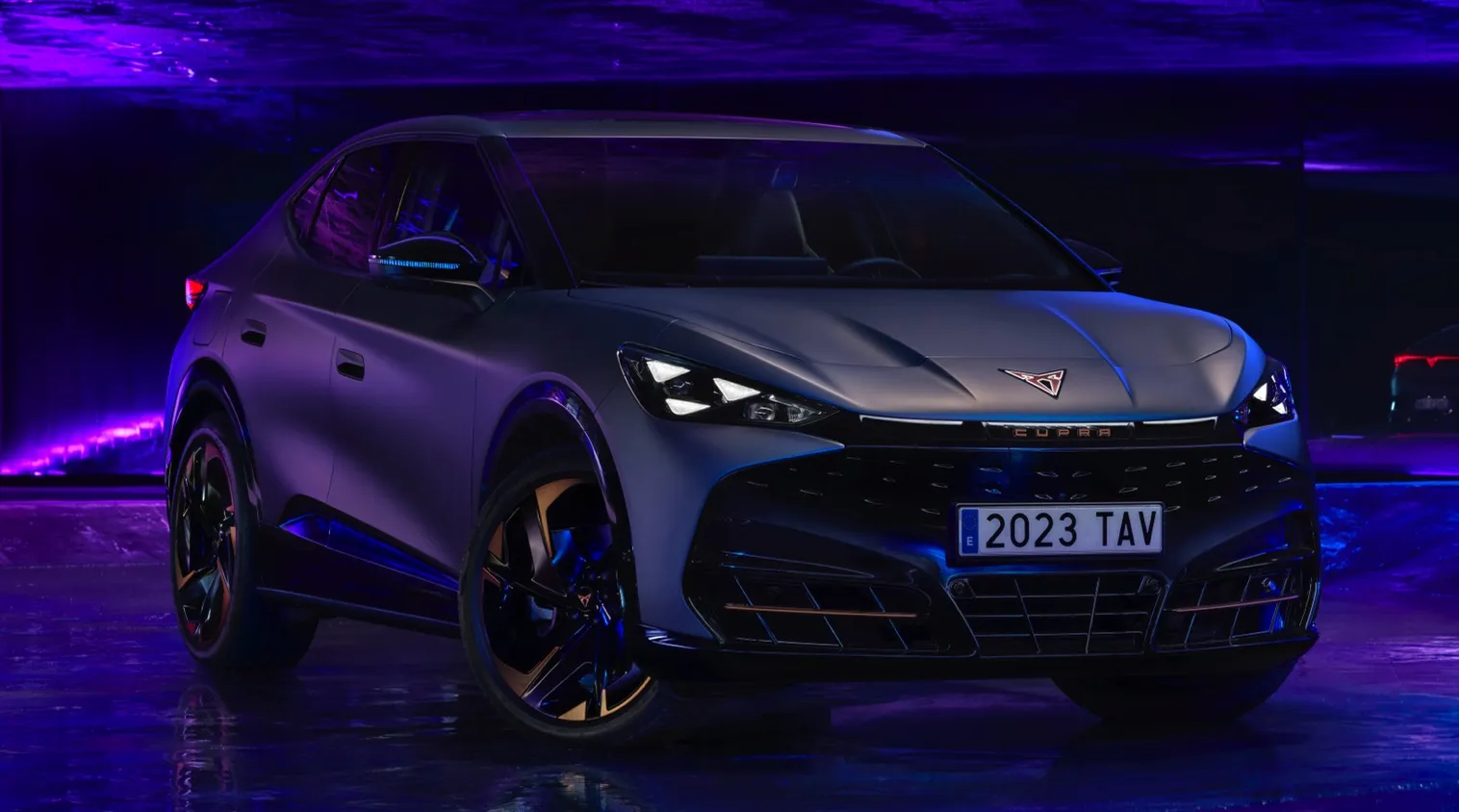
The CUPRA Tavascan VZ is a premium electric SUV coupe that combines Spanish performance heritage with cutting-edge EV technology. Positioned as a high-performance alternative to mainstream electric SUVs, the Tavascan VZ targets driving enthusiasts who demand both efficiency and exhilarating acceleration. Built on Volkswagen’s MEB platform, this electric vehicle features a sleek coupe-SUV design with a drag coefficient of just 0.26, making it one of the most aerodynamic vehicles in its class.
The Tavascan VZ distinguishes itself through its dual-motor all-wheel-drive system and emotional design language that projects power and sophistication. With a 77 kWh usable battery capacity and combined output of 250 kW (340 PS), the CUPRA Tavascan VZ delivers the performance credentials expected from the CUPRA brand while maintaining impressive efficiency. This electric SUV appeals to European buyers seeking a premium EV experience with practical five-seat capacity and 540 liters of cargo space.
The Tavascan VZ matters in the competitive EV landscape because it offers a compelling blend of performance, range, and design at a premium price point. As CUPRA’s flagship electric vehicle, it demonstrates how traditional automotive brands are evolving their performance divisions for the electric era, competing directly with Tesla Model Y Performance and BMW iX M60 variants.
CUPRA Tavascan VZ Performance and Driving Experience
The CUPRA Tavascan VZ delivers impressive performance through its dual-motor AWD setup, combining an AC induction motor at the front with a permanent magnet synchronous motor at the rear. The two-motor configuration delivers 250 kW of combined power and 680 Nm of torque, enabling the Tavascan VZ to accelerate from 0 to 100 km/h in just 5.5 seconds. This performance is accessible and responsive, with the electric powertrain providing instant torque delivery that characterizes modern EV driving dynamics.
The handling characteristics benefit from the low center of gravity provided by the floor-mounted battery pack, while the 4,644 mm length and 2,766 mm wheelbase create a balanced platform. The Tavascan VZ’s all-wheel-drive system enhances traction and stability, particularly in challenging weather conditions. Real-world driving impressions highlight the smooth power delivery and refined cabin experience, with the electric drivetrain operating nearly silently at highway speeds.
| Specification | Value |
|---|---|
| 0-60 mph | 5.3 sec |
| 0-100 km/h | 5.5 sec |
| Top Speed | 180 km/h (112 mph) |
| Power Output | 250 kW (340 PS) |
| Torque | 680 Nm (545 lb-ft) |
CUPRA Tavascan VZ Range and Battery Specifications
The CUPRA Tavascan VZ offers impressive real-world range thanks to its efficient MEB platform and aerodynamic design. Official WLTP testing shows a range of 512-568 km (318-352 miles), though real-world range typically falls between 452-615 km depending on driving conditions, weather, and driving style. The Tavascan VZ achieves energy consumption of approximately 15.2-17 kWh per 100 km, translating to excellent efficiency for a performance-oriented electric SUV.
The battery system uses Lithium Nickel Manganese Cobalt (NMC) chemistry with a gross capacity of 82 kWh and usable capacity of 77 kWh. This substantial battery pack provides the energy density needed for both performance and range, while the 400V architecture supports rapid charging capabilities. Range factors, including cold weather, highway driving at high speeds, and terrain elevation, can reduce real-world range by 15-25% compared to WLTP figures.
| Range Metric | Value |
|---|---|
| WLTP Range | 512-568 km (318-352 miles) |
| Real-World Range | 452-615 km (281-382 miles) |
| Battery Capacity (Gross) | 82 kWh |
| Battery Capacity (Usable) | 77 kWh |
| Energy Efficiency | 15.2-17 kWh/100 km |
CUPRA Tavascan VZ Charging Times and Options
The CUPRA Tavascan VZ supports flexible charging options for both home and public infrastructure. The standard 11 kW on-board AC charger enables home charging via a 240V connection, while DC fast charging capability reaches 135 kW maximum power. This dual-charging approach means owners can top up overnight at home or rapidly recharge during long journeys using public fast-charging networks.
DC fast charging from 10-80% state of charge takes approximately 25-30 minutes, making the Tavascan VZ practical for road trips. The vehicle uses the CCS Type 2 charging port located at the rear right, compatible with most European charging networks. Home charging with a 7 kW Level 2 charger requires approximately 11 hours for a full charge, while 11 kW charging reduces this to around 7 hours.
| Charging Method | Time | Speed |
|---|---|---|
| Level 2 (7 kW) | ~11 hours | 7 kW |
| Level 2 (11 kW) | ~7 hours | 11 kW |
| DC Fast Charge (10-80%) | ~25-30 min | 135 kW |
CUPRA Tavascan VZ vs Competitors
The CUPRA Tavascan VZ competes directly with premium electric SUVs, including the Tesla Model Y Performance, BMW iX M60, and Mercedes-AMG EQE SUV. Compared to the Tesla Model Y Performance, the Tavascan VZ offers superior efficiency and European design sophistication, though the Model Y provides faster acceleration and more extensive Supercharger networks. Against the BMW iX M60, the Tavascan VZ delivers comparable performance with better real-world range and lower energy consumption. The Mercedes-AMG EQE SUV positions similarly in the premium segment, but the Tavascan VZ undercuts pricing while maintaining competitive performance credentials.
Frequently Asked Questions
Related Vehicles
View All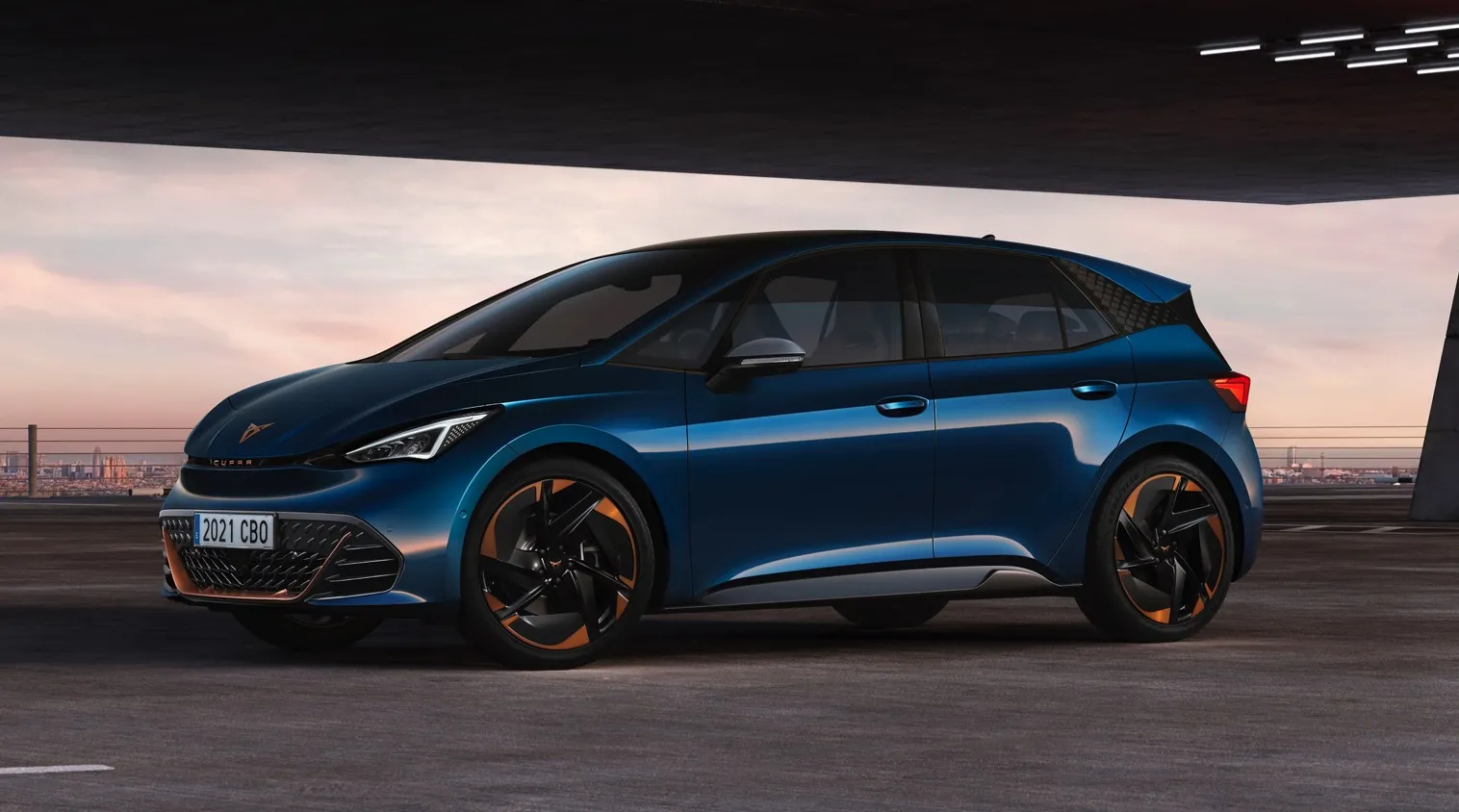 CUPRA
CUPRA
CUPRA Born 170 kW – 77 kWh
 CUPRA
CUPRA
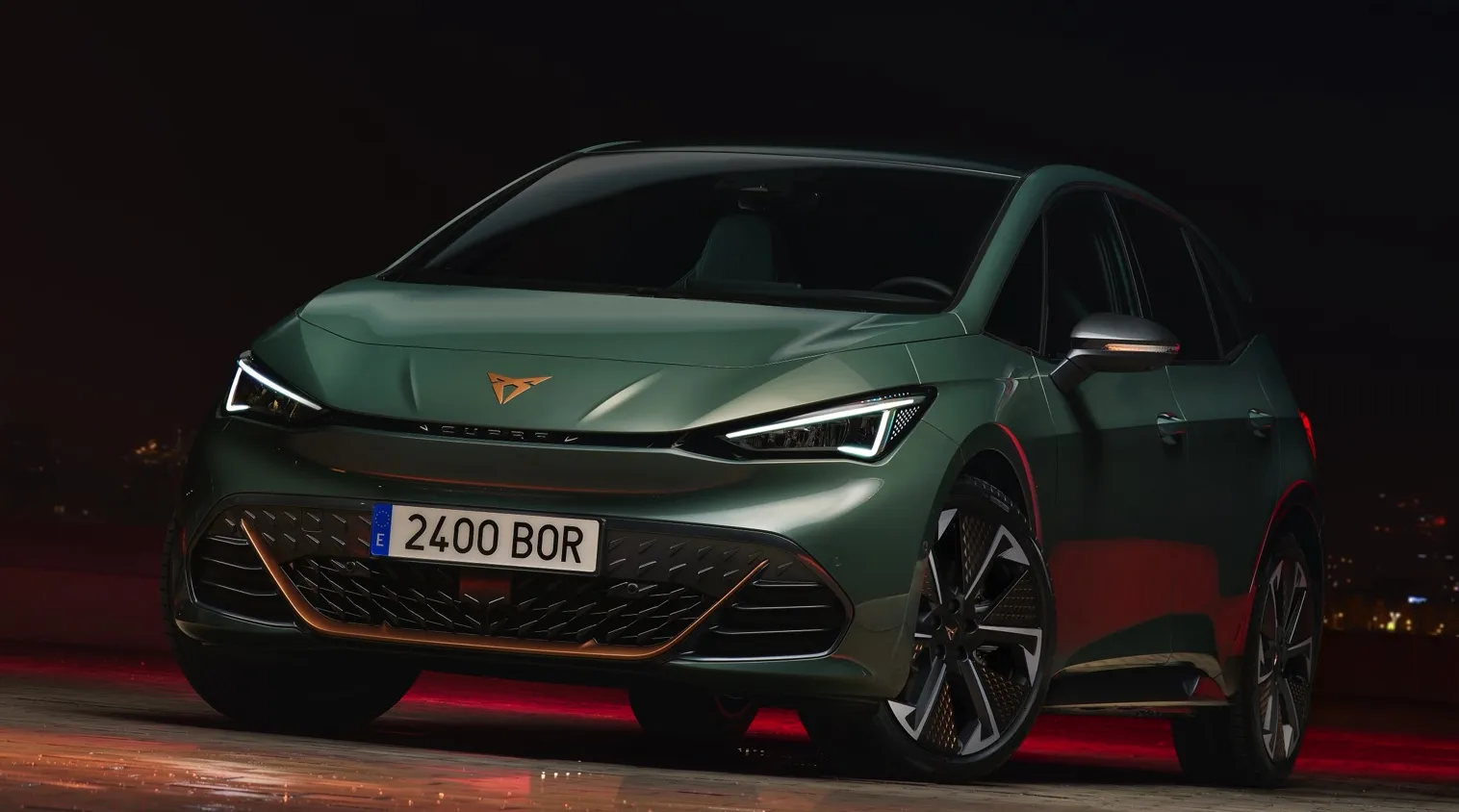
CUPRA Born VZ
 CUPRA
CUPRA
CUPRA Born 170 kW – 59 kWh
 CUPRA
CUPRA