Charging is possible by using a regular wall plug or a charging station. Public charging is always done through a charging station. How fast the EV can charge depends on the charging station (EVSE) used and the maximum charging capacity of the EV. The table below shows all possible options for charging the Hyundai IONIQ 5 63 kWh RWD. Each option shows how fast the battery can be charged from empty to full.
Europe
Charging an EV in Europe differs by country. Some European countries primarily use 1-phase connections to the grid, while other countries are almost exclusively using a 3-phase connection. The table below shows all possible ways the Hyundai IONIQ 5 63 kWh RWD can be charged, but some modes of charging might not be widely available in certain countries.
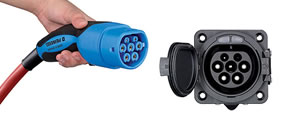
Type 2 (Mennekes - IEC 62196)
Charging Point
Max. Power
Power
Time
Rate
Wall Plug (2.3 kW)
230V / 1x10A
2.3 kW
30h45m
11 km/h
1-phase 16A (3.7 kW)
230V / 1x16A
3.7 kW
19h15m
18 km/h
1-phase 32A (7.4 kW)
230V / 1x32A
7.4 kW
9h45m
35 km/h
3-phase 16A (11 kW)
400V / 3x16A
11 kW
6h30m
53 km/h
3-phase 32A (22 kW)
400V / 3x16A
11 kW †
6h30m
53 km/h
† = Limited by on-board charger, vehicle cannot charge faster.
Fast Charging (10 -> 80%)
Rapid charging enables longer journeys by adding as much range as possible in the shortest amount of time. Charging power will decrease significantly after 80% state-of-charge has been reached. A typical rapid charge therefore rarely exceeds 80% SoC. The rapid charge rate of an EV depends on the charger used and the maximum charging power the EV can handle. The table below shows all details for rapid charging the Hyundai IONIQ 5 63 kWh RWD.
Max. Power: maximum power provided by charge point
Avg. Power: average power provided by charge point over a session from 10% to 80%
Time: time needed to charge from 10% to 80%
Rate: average charging speed over a session from 10% to 80%
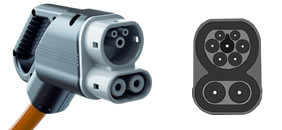
Combined Charging System (CCS Combo 2)
Charging Point
Max. Power
Avg. Power
Time
Rate
CCS (50 kW DC)
50 kW
50 kW
53 min
270 km/h
CCS (100 kW DC)
100 kW
90 kW †
29 min
500 km/h
CCS (150 kW DC)
150 kW
120 kW †
22 min
650 km/h
CCS (175 kW DC)
175 kW
135 kW †
20 min
720 km/h
CCS (350 kW DC)
195 kW †
150 kW †
18 min
800 km/h
This vehicle supports Autocharge
This vehicle supports Plug & Charge
† = Limited by charging capabilities of vehicle
Autocharge: allows for automatic initiation of a charging session at supported CCS charging stations.
Plug & Charge: allows for automatic initiation of a charging session at supported CCS charging stations in accordance with ISO 15118.
Actual charging rates may differ from data shown due to factors like outside temperature, state of the battery and driving style.
Dimensions and Weight
Length
4655 mm
Width
1890 mm
Width with mirrors
2152 mm
Height
1605 mm
Wheelbase
3000 mm
Weight Unladen (EU)
1965 kg
Gross Vehicle Weight (GVWR)
2470 kg
Max. Payload
580 kg
Cargo Volume
520 L
Cargo Volume Max
1580 L
Cargo Volume Frunk
57 L
Roof Load
80 kg
Tow Hitch Possible
Yes
Towing Weight Unbraked
750 kg
Towing Weight Braked
750 kg
Vertical Load Max
100 kg
About this Vehicle
Hyundai IONIQ 5 63 kWh RWD Overview
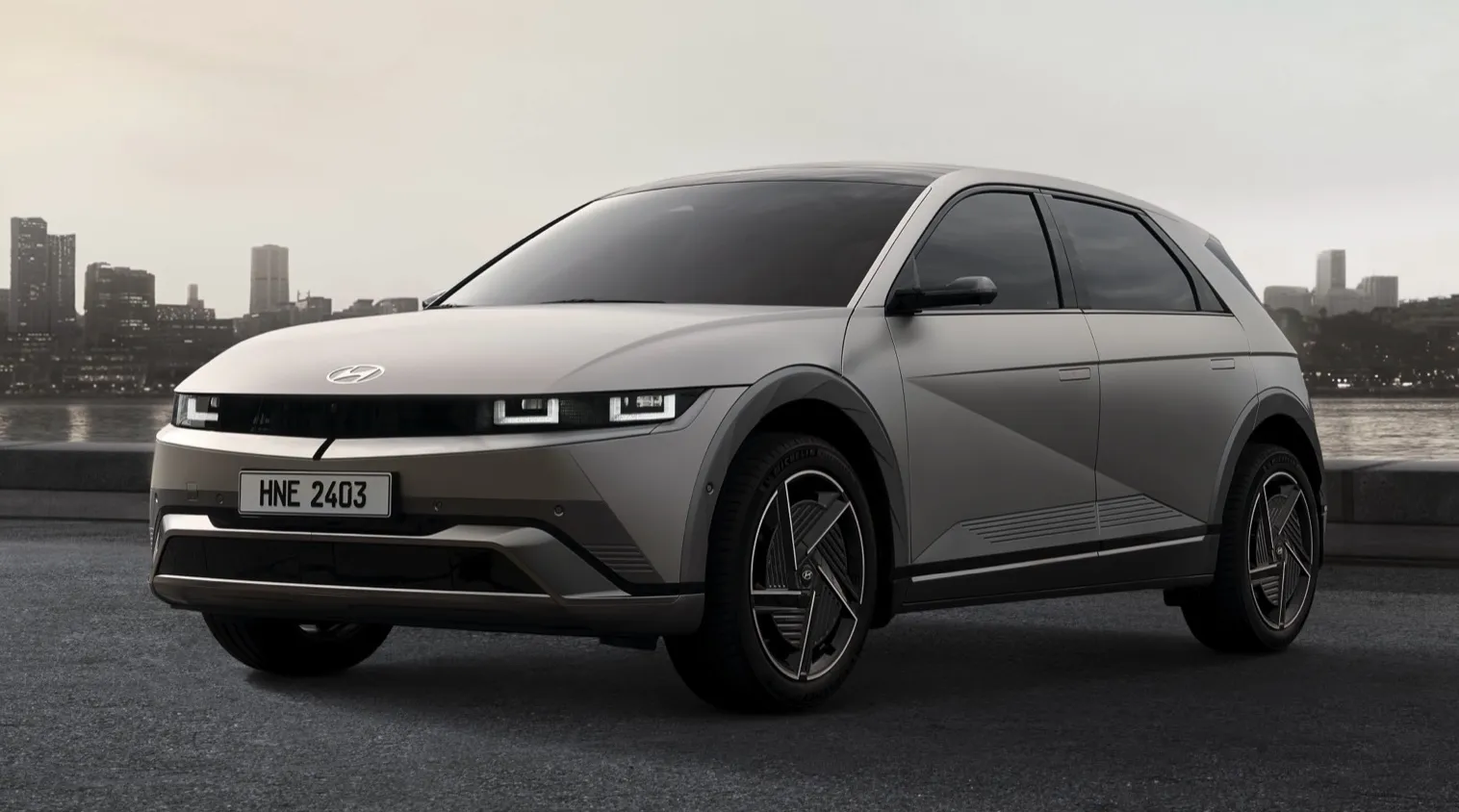
The Hyundai IONIQ 5 63 kWh RWD positions itself as an accessible entry into Hyundai’s premium electric SUV lineup, blending mainstream affordability with cutting-edge EV technology. Priced competitively around $42,000 for base trims, this rear-wheel-drive model targets urban commuters, families, and first-time EV buyers seeking a stylish, practical electric vehicle without the premium cost of larger battery variants. Built on Hyundai’s dedicated E-GMP platform, it emphasizes spacious interiors, retro-futuristic design, and ultra-fast charging, making the IONIQ 5 review a standout in the Hyundai electric SUV segment.
What sets the Hyundai IONIQ 5 63 kWh RWD apart is its 63 kWh lithium-ion battery paired with a single permanent magnet synchronous motor, delivering efficient EV specs for daily drives. Its pixelated lighting, flush door handles, and airy cabin with a frunk offer a unique design philosophy focused on versatility and Vehicle-to-Load (V2L) capability. In the evolving EV landscape, this model matters as Hyundai’s award-winning pioneer—boasting three World Car Awards—proving affordable electric vehicle range and tech can rival luxury brands, appealing to buyers prioritizing value in the competitive crossover market.
Hyundai IONIQ 5 63 kWh RWD Performance and Driving Experience
The Hyundai IONIQ 5 63 kWh RWD delivers smooth, responsive acceleration thanks to its single rear-mounted permanent magnet synchronous motor producing 168 hp (125 kW) and 258 lb-ft (350 Nm) of torque. Power delivery is instant and linear, ideal for city merging and highway cruising, with a 0-60 mph sprint in about 8.5 seconds. Handling shines with a well-tuned suspension (struts front, multilink rear), offering composed dynamics and a 0.80 g skidpad grip, while regenerative braking paddles enhance one-pedal driving. Real-world impressions highlight its quiet ride, precise steering, and efficiency-focused RWD setup, making it engaging for everyday use without AWD complexity.
Specification
Value
0-60 mph (0-100 km/h)
8.5 sec
Top Speed
115 mph / 185 km/h
Power Output
168 hp / 125 kW
Torque
258 lb-ft / 350 Nm
Hyundai IONIQ 5 63 kWh RWD Range and Battery Specifications
Equipped with a 63 kWh (usable) lithium-ion battery at 523 volts, the Hyundai IONIQ 5 63 kWh RWD boasts an EPA range of 245 miles, with WLTP figures up to 273 miles (440 km). Real-world IONIQ 5 real-world range averages 200-240 miles, influenced by cold weather (down to 210 miles in tests), aggressive driving, or hilly terrain; efficiency hits 115 MPGe combined (131 city/101 highway). Its liquid-cooled pack and battery heating system optimize performance across conditions, positioning this as a solid choice for mid-range commutes with IONIQ 5 battery specs emphasizing reliability over long-haul extremes.
Range Metric
Value
WLTP Range
273 miles / 440 km
EPA Range
245 miles / 394 km
Real-World Range
200-240 miles / 322-386 km
Battery Capacity
63.0 kWh (usable)
Hyundai IONIQ 5 63 kWh RWD Charging Times and Options
Home charging for the Hyundai IONIQ 5 63 kWh RWD is straightforward: Level 1 takes about 50 hours from empty, while Level 2 at 11 kW completes a full charge in around 7 hours. Its standout feature is DC fast charging up to 260 kW peak, adding 137 miles in 15 minutes (10-80% SOC) via CCS, with real-world 10-90% in 30 minutes at 141 kW average—compatible with Electrify America and other networks. Practical scenarios like overnight Level 2 top-ups suit daily drivers, while V2L powers appliances, enhancing versatility.
Charging Method
Time
Speed
Level 1 (120V)
50 hours
~1.4 kW
Level 2 (240V/7kW)
10 hours
~7 kW
Level 2 (240V/11kW)
7 hours
~11 kW
DC Fast Charge (10-80%)
18 min
up to 260 kW
Hyundai IONIQ 5 63 kWh RWD vs Competitors
The Hyundai IONIQ 5 63 kWh RWD excels in IONIQ 5 vs Tesla Model Y matchups with faster charging and a roomier interior at a lower price, though the Model Y offers superior range (260+ miles base). Against the Kia EV6, it shares E-GMP roots but provides better value and style; versus the Hyundai Ioniq 5 vs BMW i4, the IONIQ 5 undercuts on cost while matching efficiency, making it a smarter pick for budget-conscious buyers over pricier IONIQ 5 comparison rivals like Audi Q4 e-tron.
Frequently Asked Questions
Expect 200-240 miles in mixed conditions, dropping to 210 miles in cold weather or highway tests; EPA estimates 245 miles, with efficiency at 115 MPGe combined.
Level 2 (11 kW) takes 7 hours for a full charge; DC fast charging (10-80%) adds 137 miles in 15 minutes at up to 260 kW.
It’s exclusively rear-wheel drive (RWD) with a single 168 hp motor, prioritizing efficiency over the AWD’s 320 hp available in larger-battery trims.
Hyundai’s Electric-Global Modular Platform enables a flat floor, 800V architecture for ultra-fast charging, and spacious packaging with frunk and V2L functionality.
The IONIQ 5 charges faster (260 kW vs 250 kW) and costs less, with a more premium interior, but the Model Y edges out in range and software updates.
Yes—pros include rapid charging, spacious design, and value; cons are shorter range than 84 kWh siblings and no AWD, ideal for city-focused EV buyers.> The Hyundai IONIQ 5 63 kWh RWD is a stylish, efficient electric SUV with 245-mile EPA range, 168 hp, and 260 kW fast charging. It stands out for affordability, retro design, and E-GMP platform perks like V2L, outpacing rivals in value for urban commuters. Perfect for EV specs seekers wanting premium features without excess cost.


 Hyundai
 Hyundai
 Hyundai
 Hyundai