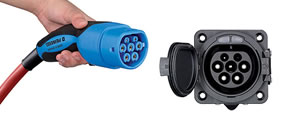
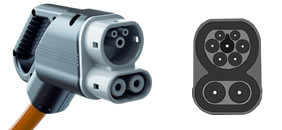
Charging is possible by using a regular wall plug or a charging station. Public charging is always done through a charging station. How fast the EV can charge depends on the charging station (EVSE) used and the maximum charging capacity of the EV. The table below shows all possible options for charging the Voyah Free 106 kWh. Each option shows how fast the battery can be charged from empty to full.
Europe
Charging an EV in Europe differs by country. Some European countries primarily use 1-phase connections to the grid, while other countries are almost exclusively using a 3-phase connection. The table below shows all possible ways the Voyah Free 106 kWh can be charged, but some modes of charging might not be widely available in certain countries.
Type 2 (Mennekes - IEC 62196)
Charging Point
Max. Power
Power
Time
Rate
Wall Plug (2.3 kW)
230V / 1x10A
2.3 kW
51h15m
9 km/h
1-phase 16A (3.7 kW)
230V / 1x16A
3.7 kW
32 hours
15 km/h
1-phase 32A (7.4 kW)
230V / 1x32A
7.4 kW
16 hours
30 km/h
3-phase 16A (11 kW)
400V / 3x16A
11 kW
10h45m
45 km/h
3-phase 32A (22 kW)
400V / 3x16A
11 kW †
10h45m
45 km/h
† = Limited by on-board charger, vehicle cannot charge faster.
Fast Charging (10 -> 80%)
Rapid charging enables longer journeys by adding as much range as possible in the shortest amount of time. Charging power will decrease significantly after 80% state-of-charge has been reached. A typical rapid charge therefore rarely exceeds 80% SoC. The rapid charge rate of an EV depends on the charger used and the maximum charging power the EV can handle. The table below shows all details for rapid charging the Voyah Free 106 kWh.
Voyah has not released details about rapid charging the Free. The information below is based on estimated values of the most likely rapid charging capabilities.
Max. Power: maximum power provided by charge point
Avg. Power: average power provided by charge point over a session from 10% to 80%
Time: time needed to charge from 10% to 80%
Rate: average charging speed over a session from 10% to 80%
Combined Charging System (CCS Combo 2)
Charging Point
Max. Power
Avg. Power
Time
Rate
CCS (50 kW DC)
50 kW
45 kW †
98 min
200 km/h
CCS (100 kW DC)
100 kW
80 kW †
55 min
360 km/h
CCS (150 kW DC)
100 kW †
80 kW †
55 min
360 km/h
This vehicle does not support Plug & Charge
† = Limited by charging capabilities of vehicle
Plug & Charge: allows for automatic initiation of a charging session at supported CCS charging stations in accordance with ISO 15118.
Actual charging rates may differ from data shown due to factors like outside temperature, state of the battery and driving style.
Dimensions and Weight
Length
4905 mm
Width
1950 mm
Width with mirrors
No Data
Height
1645 mm
Wheelbase
2960 mm
Weight Unladen (EU)
2415 kg
Gross Vehicle Weight (GVWR)
2945 kg
Max. Payload
605 kg
Cargo Volume
550 L
Cargo Volume Max
1320 L
Cargo Volume Frunk
72 L
Roof Load
75 kg
Tow Hitch Possible
Yes
Towing Weight Unbraked
750 kg
Towing Weight Braked
2000 kg
Vertical Load Max
No Data
About this Vehicle
Voyah Free 106 kWh Overview
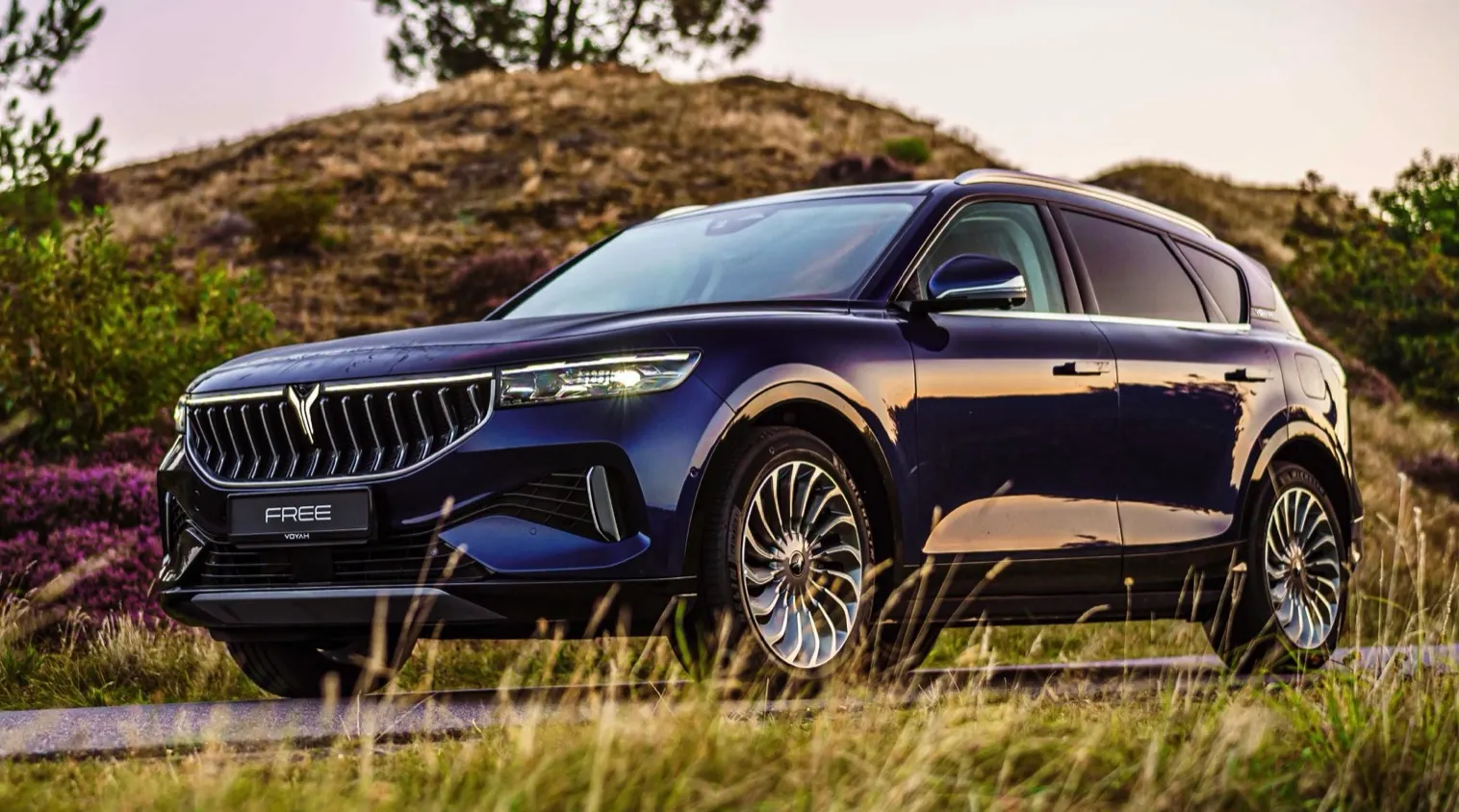
The Voyah Free 106 kWh positions itself as a premium Chinese electric SUV, blending luxury features with advanced EV technology in the competitive mid-to-large SUV segment. Manufactured by Dongfeng’s Voyah brand, this Voyah Free review highlights its appeal to families and tech-savvy buyers seeking spacious, high-performance electric vehicles. With dimensions of 4.905 meters long, 1.905 meters wide, and a 2.960-meter wheelbase, it offers ample room for five passengers and a 560 + 72-liter trunk, making it ideal for long trips.
Key distinguishing features include its ESSA (Electric Smart Secure Architecture) platform, dual-motor all-wheel-drive setup, and a massive 106 kWh battery for impressive EV specs. The Voyah Free electric SUV stands out with premium touches like leather seats, three 12.3-inch screens, LED daytime running lights, and active steering. In the EV landscape, it matters as an accessible luxury alternative from China, challenging established players with strong power, solid range, and rapid charging, all while delivering a refined driving experience.
Voyah Free 106 kWh Performance and Driving Experience
The Voyah Free 106 kWh delivers thrilling performance from its dual electric motors producing 489 hp and 720 Nm of torque, propelling this AWD SUV from 0-100 km/h in 4.4 seconds. Its all-wheel-drive system provides confident traction, with responsive power delivery suited for highways and twisty roads. Real-world impressions praise its smooth acceleration, stable handling thanks to a low center of gravity from the underfloor battery, and top speed of 200 km/h, making it engaging for daily commutes or spirited drives.
Specification
Value
0-60 mph (0-100 km/h)
4.4 sec
Top Speed
124 mph / 200 km/h
Power Output
489 hp / 360 kW
Torque
531 lb-ft / 720 Nm
Voyah Free 106 kWh Range and Battery Specifications
Boasting a 106 kWh usable battery (NCM chemistry), the Voyah Free 106 kWh achieves an official WLTP range of 500 km (310 miles), though real-world figures hover around 400-450 km depending on conditions. Energy efficiency stands at 20.0-20.2 kWh/100 km, influenced by cold weather, aggressive driving, or hilly terrain. This Voyah Free battery specs setup excels in mixed use, offering competitive endurance for a premium electric vehicle range.
Range Metric
Value
WLTP Range
310 miles / 500 km
EPA Range
Not specified
Real-World Range
250-280 miles / 400-450 km
Battery Capacity
106 kWh (usable)
Voyah Free 106 kWh Charging Times and Options
Home charging for the Voyah Free 106 kWh is practical with an 11 kW onboard AC charger, fully replenishing from empty in about 12 hours on Level 2. DC fast charging peaks at 120 kW, hitting 20-80% in 45 minutes via CCS port, compatible with major networks. This suits road trips, with everyday scenarios like overnight Level 2 topping up for daily needs.
Charging Method
Time
Speed
Level 1 (120V)
100+ hours
~1.4 kW
Level 2 (240V/7kW)
~17 hours
~7 kW
Level 2 (240V/11kW)
~12 hours
~11 kW
DC Fast Charge (10-80%)
45 min
up to 120 kW
Voyah Free 106 kWh vs Competitors
In the Voyah Free 106 kWh vs competitors matchup, it edges the Hyundai Ioniq 5 with superior 106 kWh capacity and 489 hp versus the Ioniq 5’s 84 kWh/325 hp, plus better AWD torque. Against the Tesla Model Y Long Range, the Voyah matches 500 km WLTP range but adds luxury screens and space at a potentially lower price point. Compared to the Kia EV6 GT-Line, its 4.4-second sprint and larger battery give it an advantage in endurance, though Tesla leads in charging network access.
Frequently Asked Questions
The Voyah Free 106 kWh delivers 400-450 km (250-280 miles) in real-world conditions, factoring in moderate weather and highway driving, compared to its official 500 km WLTP rating.
Level 2 (11 kW) takes ~12 hours for a full charge; DC fast charging (up to 120 kW) achieves 10-80% in 45 minutes, ideal for quick stops.
It’s all-wheel drive (AWD) with dual motors totaling 489 hp, providing superior traction over single-motor RWD variants in the lineup.
The Dongfeng Electric Smart Secure Architecture (ESSA) is a modular EV platform enabling the Voyah Free’s low battery placement for better handling, spacious cabin, and efficient 106 kWh pack integration.
The Voyah offers a matching 500 km range and faster 4.4-second acceleration, but with more interior luxury screens and trunk space, at a competitive price against the Model Y Long Range.
Yes, with pros like 489 hp power, 106 kWh battery for 500 km range, and premium features; cons include limited global charging network access and unproven brand reliability outside China.> The Voyah Free 106 kWh is a premium Chinese electric SUV from Dongfeng with 489 hp dual-motor AWD, 500 km WLTP range, and a 106 kWh NCM battery. It accelerates 0-100 km/h in 4.4 seconds, charges to 80% in 45 minutes at 120 kW, and rivals Tesla Model Y with superior luxury and space. Ideal for buyers seeking high-performance EV value.
1 / 11
We use cookies to improve your experience on our website. By browsing this website, you agree to our use of cookies. Learn more