

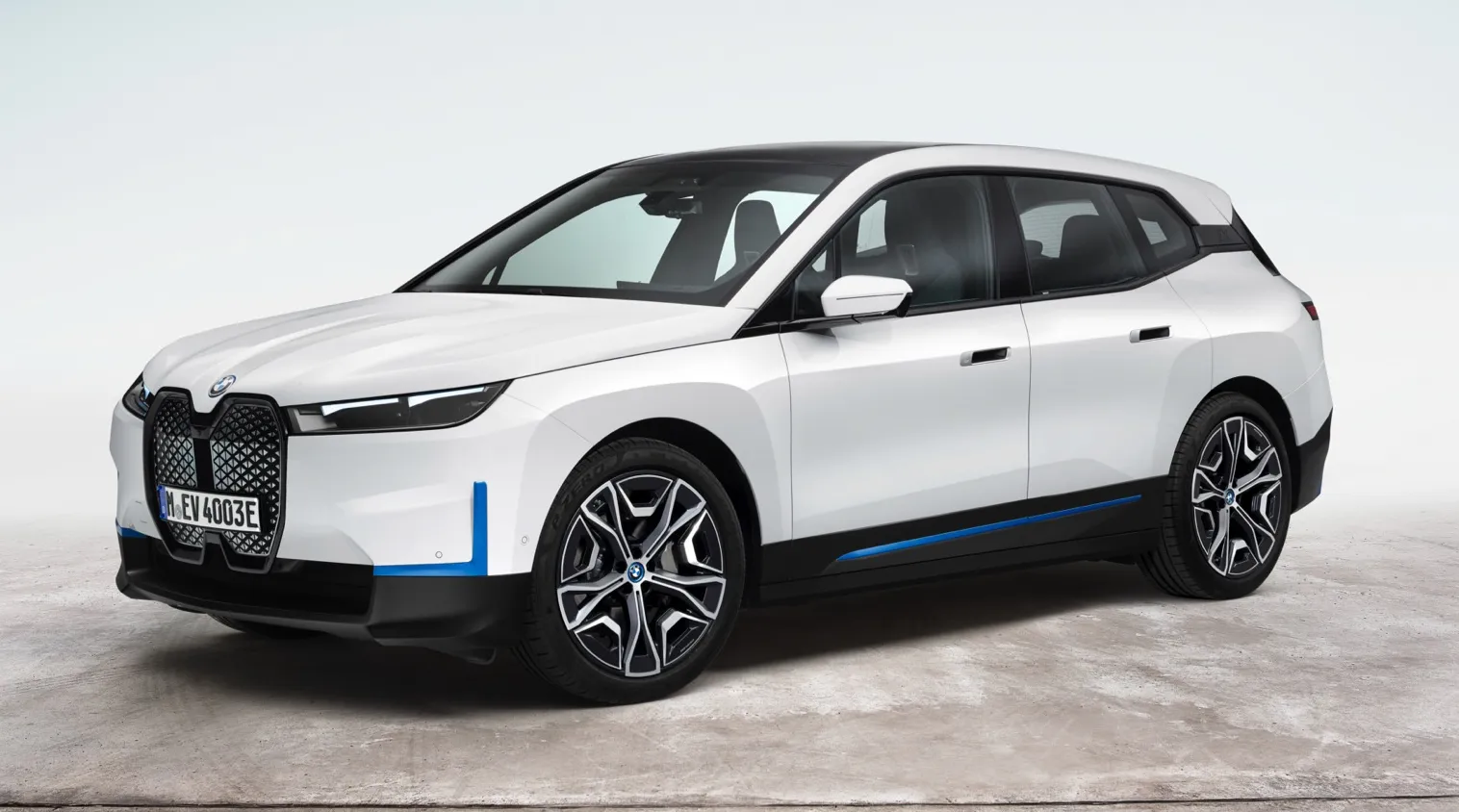
BMW iX M60
Key Specifications
Real Range Estimation
| City - Cold Weather * | 480 km |
| Highway - Cold Weather * | 350 km |
| Combined - Cold Weather * | 410 km |
between 350 - 685 km
| City - Mild Weather * | 685 km |
| Highway - Mild Weather * | 445 km |
| Combined - Mild Weather * | 545 km |
Battery
| Nominal Capacity | 111.5 kWh |
| Battery Type | Lithium-ion |
| Number of Cells | No Data |
| Architecture | 400 V |
| Warranty Period | No Data |
| Warranty Mileage | No Data |
| Useable Capacity | 105.2 kWh |
| Cathode Material | No Data |
| Pack Configuration | No Data |
| Nominal Voltage | 369 V |
| Form Factor | No Data |
| Name / Reference | No Data |
Performance
| Acceleration 0 - 100 km/h | 3.8 sec |
| Top Speed | 250 km/h |
| Electric Range * | 485 km |
| Total Power | 455 kW (619 PS) |
| Total Torque | 1100 Nm |
| Drive | AWD |
Home and Destination Charging (0 -> 100%)
Charging is possible by using a regular wall plug or a charging station. Public charging is always done through a charging station. How fast the EV can charge depends on the charging station (EVSE) used and the maximum charging capacity of the EV. The table below shows all possible options for charging the BMW iX M60. Each option shows how fast the battery can be charged from empty to full.
Europe
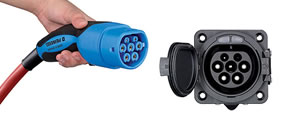
Charging an EV in Europe differs by country. Some European countries primarily use 1-phase connections to the grid, while other countries are almost exclusively using a 3-phase connection. The table below shows all possible ways the BMW iX M60 can be charged, but some modes of charging might not be widely available in certain countries.
| Type 2 (Mennekes - IEC 62196) |
|---|
 |
| Charging Point | Max. Power | Power | Time | Rate |
|---|---|---|---|---|
| Standard 11.0 kW On-Board Charger | ||||
| Wall Plug (2.3 kW) | 230V / 1x10A | 2.3 kW | 54 hours | 9 km/h |
| 1-phase 16A (3.7 kW) | 230V / 1x16A | 3.7 kW | 33h30m | 14 km/h |
| 1-phase 32A (7.4 kW) | 230V / 1x32A | 7.4 kW | 16h45m | 29 km/h |
| 3-phase 16A (11 kW) | 400V / 3x16A | 11 kW | 11h15m | 43 km/h |
| 3-phase 32A (22 kW) | 400V / 3x16A | 11 kW † | 11h15m | 43 km/h |
| Optional 22.0kW On-Board Charger * | ||||
| Wall Plug (2.3 kW) | 230V / 1x10A | 2.3 kW | 54 hours | 9 km/h |
| 1-phase 16A (3.7 kW) | 230V / 1x16A | 3.7 kW | 33h30m | 14 km/h |
| 1-phase 32A (7.4 kW) | 230V / 1x32A | 7.4 kW | 16h45m | 29 km/h |
| 3-phase 16A (11 kW) | 400V / 3x16A | 11 kW | 11h15m | 43 km/h |
| 3-phase 32A (22 kW) | 400V / 3x32A | 22 kW † | 5h45m | 84 km/h |
† = Limited by on-board charger, vehicle cannot charge faster.
* = Optional in some countries, standard in others. Check local specifications for details.
Fast Charging (10 -> 80%)
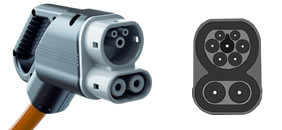
Rapid charging enables longer journeys by adding as much range as possible in the shortest amount of time. Charging power will decrease significantly after 80% state-of-charge has been reached. A typical rapid charge therefore rarely exceeds 80% SoC. The rapid charge rate of an EV depends on the charger used and the maximum charging power the EV can handle. The table below shows all details for rapid charging the BMW iX M60.
- Max. Power: maximum power provided by charge point
- Avg. Power: average power provided by charge point over a session from 10% to 80%
- Time: time needed to charge from 10% to 80%
- Rate: average charging speed over a session from 10% to 80%
| Combined Charging System (CCS Combo 2) |
|---|
 |
| Charging Point | Max. Power | Avg. Power | Time | Rate |
|---|---|---|---|---|
| CCS (50 kW DC) | 50 kW | 49 kW † | 95 min | 210 km/h |
| CCS (150 kW DC) | 150 kW | 132 kW † | 35 min | 580 km/h |
| CCS (300 kW DC) | 195 kW † | 148 kW † | 31 min | 650 km/h |
| Charge Curve |
|---|
 |
Data made available by Fastned |
| This vehicle does not support Autocharge |
|---|
| This vehicle supports Plug & Charge |
† = Limited by charging capabilities of vehicle
Autocharge: allows for automatic initiation of a charging session at supported CCS charging stations.
Plug & Charge: allows for automatic initiation of a charging session at supported CCS charging stations in accordance with ISO 15118.
Actual charging rates may differ from data shown due to factors like outside temperature, state of the battery and driving style.
Dimensions and Weight
| Length | 4953 mm |
| Width | 1967 mm |
| Width with mirrors | 2230 mm |
| Height | 1696 mm |
| Wheelbase | 3000 mm |
| Weight Unladen (EU) | 2659 kg |
| Gross Vehicle Weight (GVWR) | 3160 kg |
| Max. Payload | 576 kg |
| Cargo Volume | 500 L |
| Cargo Volume Max | 1750 L |
| Cargo Volume Frunk | No Data |
| Roof Load | 75 kg |
| Tow Hitch Possible | Yes |
| Towing Weight Unbraked | 750 kg |
| Towing Weight Braked | 2500 kg |
| Vertical Load Max | 100 kg |
About this Vehicle
BMW iX M60 Overview
The BMW iX M60 positions itself as a premium high-performance electric SUV in BMW’s iX lineup, blending luxury, cutting-edge technology, and M-tuned dynamics for discerning buyers seeking an upscale EV experience. Previously a standout trim, the 2026 BMW iX evolves with the M60’s spirit carried forward into the potent M70 xDrive variant, targeting affluent professionals, tech enthusiasts, and performance drivers who demand SAV versatility without compromising on power or refinement. Built on BMW’s advanced CLAR platform adapted for electrification, the iX M60 features dual electric motors, all-wheel drive, and M-specific enhancements like adaptive air suspension and Integral Active Steering.
Key distinguishing features include its bold, futuristic design with a refreshed grille, updated lighting, and exclusive M styling cues, paired with a spacious cabin boasting sustainable materials and the latest iDrive 8.5 infotainment. In the competitive EV landscape, the BMW iX M60 review highlights its mattering through superior build quality, razor-sharp handling, and real-world usability, setting it apart from mainstream rivals. With EV specs like up to 610 hp in prior M60 guise now amplified in the M70, it underscores BMW’s commitment to performance EVs, offering BMW electric SUV excellence with ranges supporting long-distance travel.
BMW iX M60 Performance and Driving Experience
The BMW iX M60 delivers explosive acceleration with dual electric motors producing up to 610 hp and instant torque, launching from 0-60 mph in approximately 3.8 seconds, thanks to its M-optimized power delivery for seamless, surge-like thrust. Handling shines via precision suspension with double-wishbone front and five-link rear axles, stroke-dependent dampers, and standard adaptive two-axle air suspension on higher trims, complemented by M Sport brakes and rear-axle steering for agile dynamics in an SUV body. The xDrive all-wheel-drive system intelligently distributes power between axles for superior traction and cornering grip, delivering a balanced, engaging drive that feels planted yet responsive.
Real-world impressions praise its refined ride, low noise levels (around 65 dBA at highway speeds), and sporty poise, making it ideal for spirited canyon runs or effortless highway cruising.
| Specification | Value |
|---|---|
| 0-60 mph (0-100 km/h) | 3.8 sec |
| Top Speed | 124 mph / 200 km/h |
| Power Output | 610 hp / 455 kW |
| Torque | 811 lb-ft / 1100 Nm |
BMW iX M60 Range and Battery Specifications
The BMW iX M60 boasts an official BMW iX M60 WLTP range of around 300 miles, with EPA estimates closer to 290-302 miles depending on wheels and conditions, though real-world range often hits 280-290 miles in mixed driving. Its high-capacity battery, approximately 111-113 kWh usable from a liquid-cooled lithium-ion pack, employs advanced chemistry for efficiency around 84-99 MPGe combined. BMW iX M60 real-world range varies with factors like cold weather (dropping 20-30%), aggressive acceleration, or highway speeds above 75 mph, but its aerodynamic design and regenerative braking help maintain strong figures.
| Range Metric | Value |
|---|---|
| WLTP Range | 320 miles / 515 km |
| EPA Range | 290 miles / 467 km |
| Real-World Range | 285 miles / 459 km |
| Battery Capacity | 111.5 kWh (usable) |
BMW iX M60 Charging Times and Options
Charging the BMW iX M60 is versatile, with Level 2 AC at home delivering full charges overnight via 11 kW onboard, while DC fast charging peaks at 195 kW for 10-80% in under 35 minutes on compatible networks like Electrify America or IONITY. It supports BMW’s expansive charging ecosystem, including Plug & Charge for seamless public sessions. Practical scenarios shine for daily commutes with Level 1 top-ups or road trips with rapid DC stops, minimizing downtime.
| Charging Method | Time | Speed |
|---|---|---|
| Level 1 (120V) | 48 hours | ~1.4 kW |
| Level 2 (240V/7kW) | 12 hours | ~7 kW |
| Level 2 (240V/11kW) | 10 hours | ~11 kW |
| DC Fast Charge (10-80%) | 35 min | up to 195 kW |
BMW iX M60 vs Competitors
In the BMW iX M60 vs Tesla Model Y, the BMW edges out with superior interior luxury and handling precision over the Tesla’s raw efficiency and Supercharger network, while against the Audi e-tron GT and Mercedes EQE SUV, the iX M60 offers better range and M-tuned performance at a competitive price point around $110,000. The BMW iX M60 comparison reveals its advantage in ride comfort and tech integration, though rivals like the Hyundai Ioniq 5 undercut on value.
Frequently Asked Questions
Related Vehicles
View All BMW
BMW
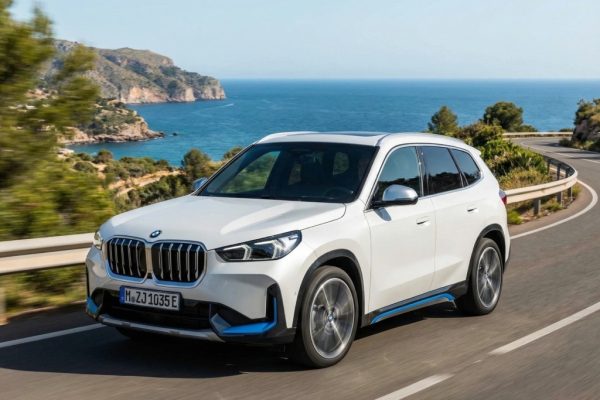
BMW iX2 eDrive20 2026
 BMW
BMW
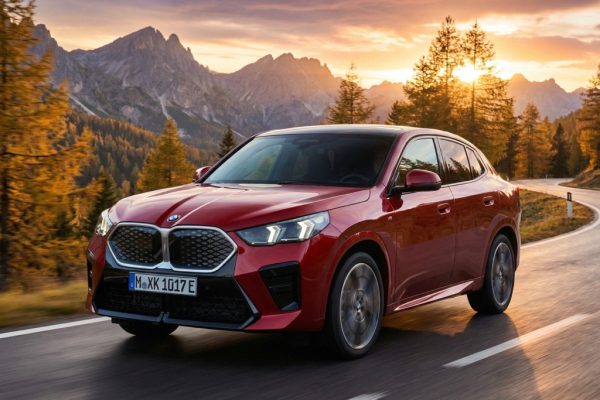
BMW iX1 xDrive30 2026
 BMW
BMW
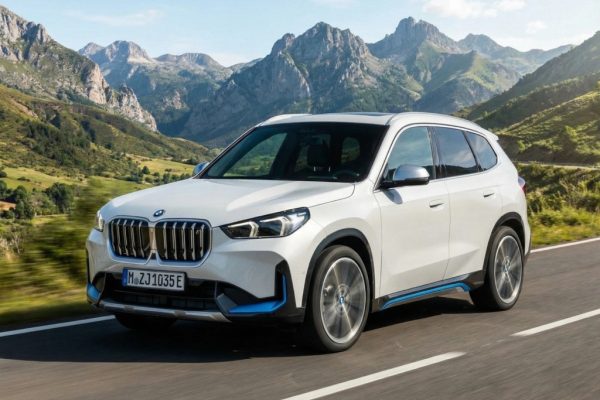
BMW iX2 xDrive30 2026
 BMW
BMW