

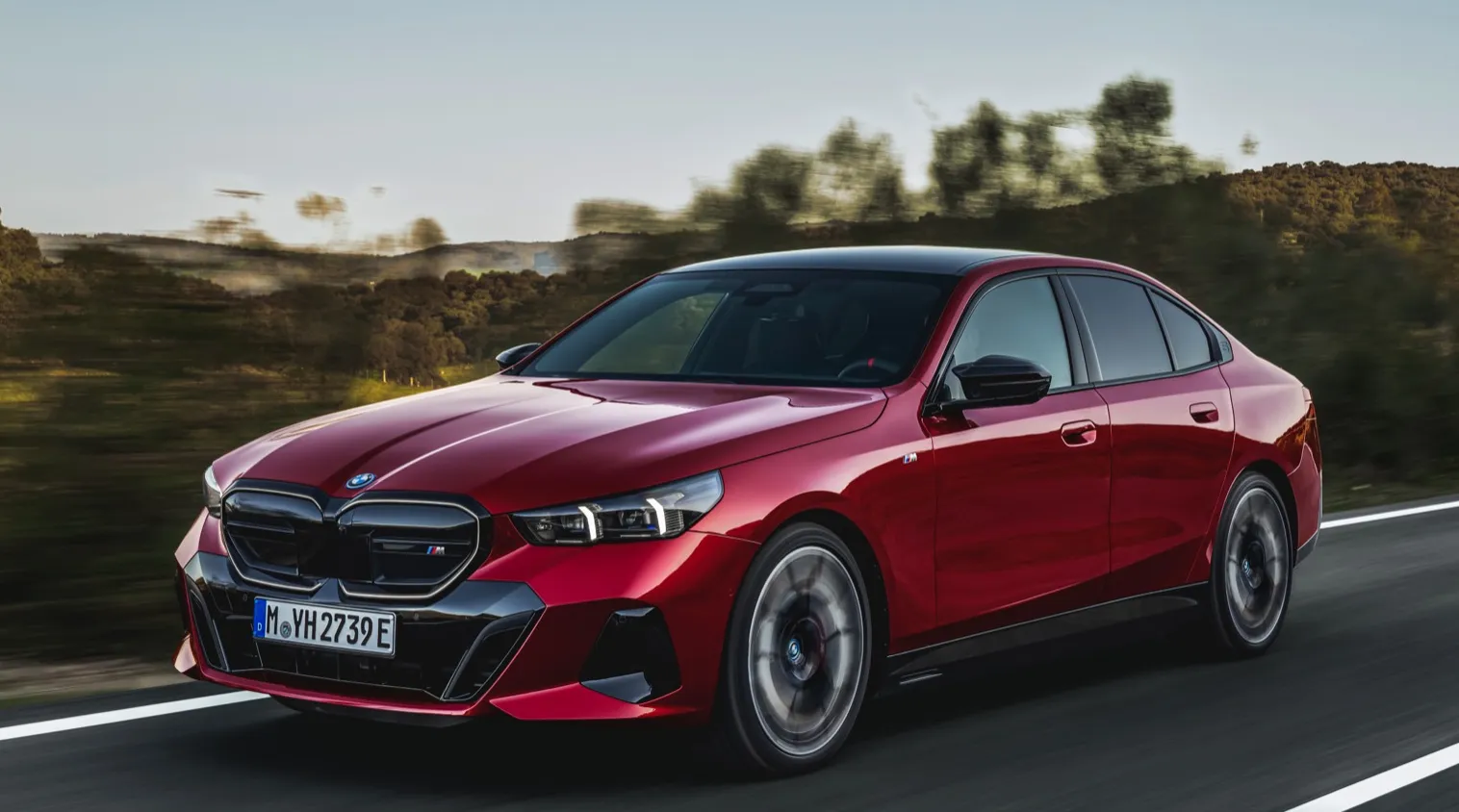
BMW i5 M60 xDrive Sedan
Key Specifications
Real Range
| City - Cold Weather | 405 km |
| Highway - Cold Weather | 305 km |
| Combined - Cold Weather | 355 km |
between 305 - 595 km
| City - Mild Weather | 595 km |
| Highway - Mild Weather | 390 km |
| Combined - Mild Weather | 480 km |
Battery
| Nominal Capacity | 84.4 kWh |
| Battery Type | Lithium-ion |
| Number of Cells | No Data |
| Architecture | 400 V |
| Warranty Period | No Data |
| Warranty Mileage | No Data |
| Useable Capacity | 81.2 kWh |
| Cathode Material | No Data |
| Pack Configuration | No Data |
| Nominal Voltage | 400 V |
| Form Factor | No Data |
| Name / Reference | No Data |
Performance
| Acceleration 0 - 100 km/h | 3.8 sec |
| Top Speed | 230 km/h |
| Electric Range | 420 km |
| Total Power | 442 kW (601 PS) |
| Total Torque | 820 Nm |
| Drive | AWD |
Home and Destination Charging (0 -> 100%)
Charging is possible by using a regular wall plug or a charging station. Public charging is always done through a charging station. How fast the EV can charge depends on the charging station (EVSE) used and the maximum charging capacity of the EV. The table below shows all possible options for charging the BMW i5 M60 xDrive Sedan. Each option shows how fast the battery can be charged from empty to full.
Europe
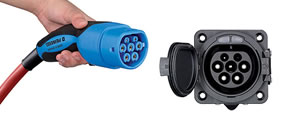
Charging an EV in Europe differs by country. Some European countries primarily use 1-phase connections to the grid, while other countries are almost exclusively using a 3-phase connection. The table below shows all possible ways the BMW i5 M60 xDrive Sedan can be charged, but some modes of charging might not be widely available in certain countries.
| Type 2 (Mennekes - IEC 62196) |
|---|
 |
| Charging Point | Max. Power | Power | Time | Rate |
|---|---|---|---|---|
| Standard 11.0 kW On-Board Charger | ||||
| Wall Plug (2.3 kW) | 230V / 1x10A | 2.3 kW | 41h45m | 10 km/h |
| 1-phase 16A (3.7 kW) | 230V / 1x16A | 3.7 kW | 26 hours | 16 km/h |
| 1-phase 32A (7.4 kW) | 230V / 1x32A | 7.4 kW | 13 hours | 32 km/h |
| 3-phase 16A (11 kW) | 400V / 3x16A | 11 kW | 8h45m | 48 km/h |
| 3-phase 32A (22 kW) | 400V / 3x16A | 11 kW † | 8h45m | 48 km/h |
| Optional 22.0kW On-Board Charger | ||||
| Wall Plug (2.3 kW) | 230V / 1x10A | 2.3 kW | 41h45m | 10 km/h |
| 1-phase 16A (3.7 kW) | 230V / 1x16A | 3.7 kW | 26 hours | 16 km/h |
| 1-phase 32A (7.4 kW) | 230V / 1x32A | 7.4 kW | 13 hours | 32 km/h |
| 3-phase 16A (11 kW) | 400V / 3x16A | 11 kW | 8h45m | 48 km/h |
| 3-phase 32A (22 kW) | 400V / 3x32A | 22 kW † | 4h30m | 93 km/h |
† = Limited by on-board charger, vehicle cannot charge faster.
Fast Charging (10 -> 80%)
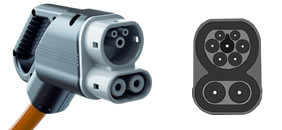
Rapid charging enables longer journeys by adding as much range as possible in the shortest amount of time. Charging power will decrease significantly after 80% state-of-charge has been reached. A typical rapid charge therefore rarely exceeds 80% SoC. The rapid charge rate of an EV depends on the charger used and the maximum charging power the EV can handle. The table below shows all details for rapid charging the BMW i5 M60 xDrive Sedan.
- Max. Power: maximum power provided by charge point
- Avg. Power: average power provided by charge point over a session from 10% to 80%
- Time: time needed to charge from 10% to 80%
- Rate: average charging speed over a session from 10% to 80%
| Combined Charging System (CCS Combo 2) |
|---|
 |
| Charging Point | Max. Power | Avg. Power | Time | Rate |
|---|---|---|---|---|
| CCS (50 kW DC) | 50 kW | 50 kW | 72 min | 240 km/h |
| CCS (150 kW DC) | 150 kW | 123 kW † | 29 min | 600 km/h |
| CCS (300 kW DC) | 206 kW † | 137 kW † | 26 min | 670 km/h |
| Charge Curve |
|---|
 |
Data made available by Fastned |
| This vehicle supports Autocharge |
|---|
| This vehicle does not support Plug & Charge |
† = Limited by charging capabilities of vehicle
Autocharge: allows for automatic initiation of a charging session at supported CCS charging stations.
Plug & Charge: allows for automatic initiation of a charging session at supported CCS charging stations in accordance with ISO 15118.
Actual charging rates may differ from data shown due to factors like outside temperature, state of the battery and driving style.
BMW Claimed Specifications
The table below shows the claimed specifications from the manufacturer for charging the BMW i5 M60 xDrive Sedan. The specifications can differ from the table above for a variety of reasons. If real-world charge tests are available, these differences can be signifcant. If no real-world tests are available, the table above will be based on the manufacturer specifications as per the table below.
- Max. Power: maximum charge power during charging session
- Charge From: battery percentage (% SoC) where charging session is started
- Charge To: battery percentage (% SoC) where charging session is ended
- Time: time needed for charging session
| BMW Claimed Specifications |
|---|
| Max. Power | Charge From | Charge To | Time |
|---|---|---|---|
| 205 kW | 10 % | 80 % | 30 min |
Dimensions and Weight
| Length | 5060 mm |
| Width | 1900 mm |
| Width with mirrors | No Data |
| Height | 1505 mm |
| Wheelbase | 2995 mm |
| Weight Unladen (EU) | 2380 kg |
| Gross Vehicle Weight (GVWR) | 2895 kg |
| Max. Payload | 590 kg |
| Cargo Volume | 490 L |
| Cargo Volume Max | No Data |
| Cargo Volume Frunk | 0 L |
| Roof Load | 75 kg |
| Tow Hitch Possible | Yes |
| Towing Weight Unbraked | 750 kg |
| Towing Weight Braked | 2000 kg |
| Vertical Load Max | 80 kg |
About this Vehicle
BMW i5 M60 xDrive Sedan Overview
The BMW i5 M60 xDrive Sedan stands as a premium electric sedan in BMW’s i5 lineup, blending high-performance M engineering with zero-emission luxury. Positioned as the top-tier model above the eDrive40 and xDrive40, it targets affluent enthusiasts seeking sports sedan thrills in an electric vehicle. With dual electric motors delivering all-wheel drive, adaptive suspension, and M-specific styling like blacked-out accents and a lip spoiler, the i5 M60 xDrive redefines executive transport. Starting at around $84,100, it appeals to buyers upgrading from gas-powered 5 Series or rival EVs, offering BMW i5 M60 xDrive review highlights like rear-wheel steering for agile handling.
This BMW electric sedan matters in the EV landscape for its fusion of BMW’s driving dynamics with sustainable power, challenging Tesla and luxury German peers. Built on the advanced CLAR platform optimized for electrification, it features the BMW Curved Display, sustainable Veganza upholstery, and M Sport seats. Key distinguishing traits include 593 horsepower in Sport mode, a 17-speaker Bowers & Wilkins system, and up to 253 miles EPA range, making it a benchmark for performance-focused EV specs in the luxury segment.
BMW i5 M60 xDrive Sedan Performance and Driving Experience
The BMW i5 M60 xDrive Sedan unleashes ferocious acceleration with its dual permanent magnet synchronous motors—one front (257 hp, 269 lb-ft) and one rear (335 hp, 317 lb-ft)—combining for 593 hp and 605 lb-ft of instant torque. It sprints 0-60 mph in 3.3-3.7 seconds, hitting the quarter-mile in 11.5 seconds at 124 mph, with a top speed around 130 mph. All-wheel drive (xDrive) ensures grip in all conditions, enhanced by active anti-roll bars, sport-tuned adaptive suspension, wider 21-inch tires, and rear-axle steering for nimble dynamics.
Real-world driving impresses with smooth, silent power delivery and precise handling, feeling more athletic than typical luxury EVs. The direct-drive transmission and multilink suspension deliver poise on twisty roads, though its 5,225-lb curb weight is noticeable in corners.
| Specification | Value |
|---|---|
| 0-60 mph (0-100 km/h) | 3.7 sec |
| Top Speed | 130 mph / 209 km/h |
| Power Output | 593 hp / 442 kW |
| Torque | 605 lb-ft / 820 Nm |
BMW i5 M60 xDrive Sedan Range and Battery Specifications
The BMW i5 M60 xDrive packs an 84.3 kWh liquid-cooled lithium-ion battery (81.2 kWh usable in prior tests), delivering an EPA range of 253 miles, with BMW claiming up to 239-253 miles depending on wheels and conditions. WLTP range figures are higher, but real-world range hovers around 220-240 miles in mixed driving, dropping in cold weather or aggressive modes due to its power-hungry setup. Efficiency rates up to 91 MPGe highway, with tested 75-mph highway at 88 MPGe, influenced by driving style, terrain, and HVAC use.
Factors like the efficient inverter and low-friction bearings in 2026 models boost range slightly over 2025, but the M60 prioritizes performance over max efficiency.
| Range Metric | Value |
|---|---|
| WLTP Range | ~300 miles / 483 km |
| EPA Range | 253 miles / 407 km |
| Real-World Range | 220-240 miles / 354-386 km |
| Battery Capacity | 84.3 kWh (usable) |
BMW i5 M60 xDrive Sedan Charging Times and Options
Charging the BMW i5 M60 xDrive Sedan is straightforward with an 11 kW onboard AC charger for Level 2 home setups, fully replenishing from empty in about 8-10 hours on 240V/11 kW. Level 1 (120V) suits overnight top-ups for daily needs. DC fast charging peaks at 205 kW, achieving 10-80% in under 30 minutes on compatible networks like Electrify America, though real speeds average 150-180 kW.
It pairs well with CCS connectors and BMW’s public charging apps, ideal for road trips. Practical scenarios include daily Level 2 for commuters or DC stops, adding 100+ miles in 20 minutes.
| Charging Method | Time | Speed |
|---|---|---|
| Level 1 (120V) | 20+ hours | ~1.4 kW |
| Level 2 (240V/7kW) | ~12 hours | ~7 kW |
| Level 2 (240V/11kW) | ~8 hours | ~11 kW |
| DC Fast Charge (10-80%) | ~30 min | up to 205 kW |
BMW i5 M60 xDrive Sedan vs Competitors
In the BMW i5 M60 xDrive vs Tesla Model 3 Performance, the BMW edges with superior luxury and handling, but trails in range and price. Against the Mercedes EQE, it offers sharper dynamics and more power (593 hp vs EQE’s 402 hp), while the Audi e-tron GT matches speed but lacks the i5’s spacious cabin. The Porsche Taycan is purer in track focus, yet the i5 M60 provides better value in EV comparison for daily luxury-sport use.
Frequently Asked Questions
Related Vehicles
View All BMW
BMW
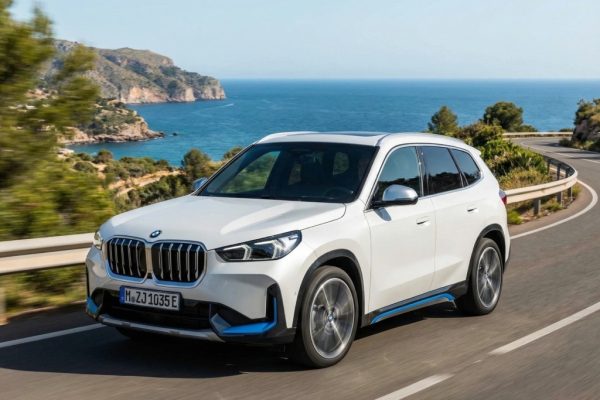
BMW iX2 eDrive20 2026
 BMW
BMW
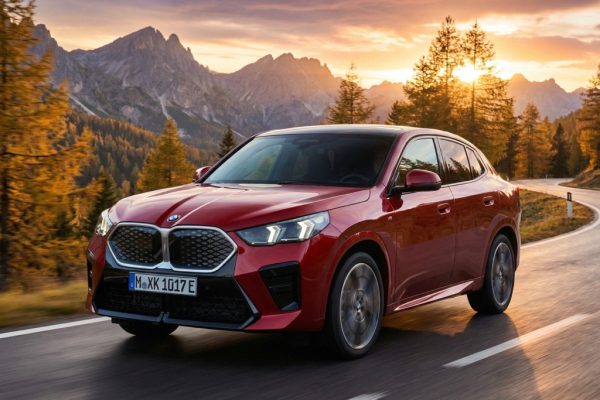
BMW iX1 xDrive30 2026
 BMW
BMW
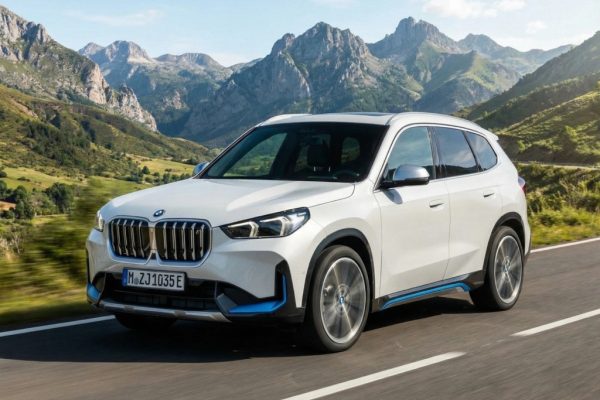
BMW iX2 xDrive30 2026
 BMW
BMW