

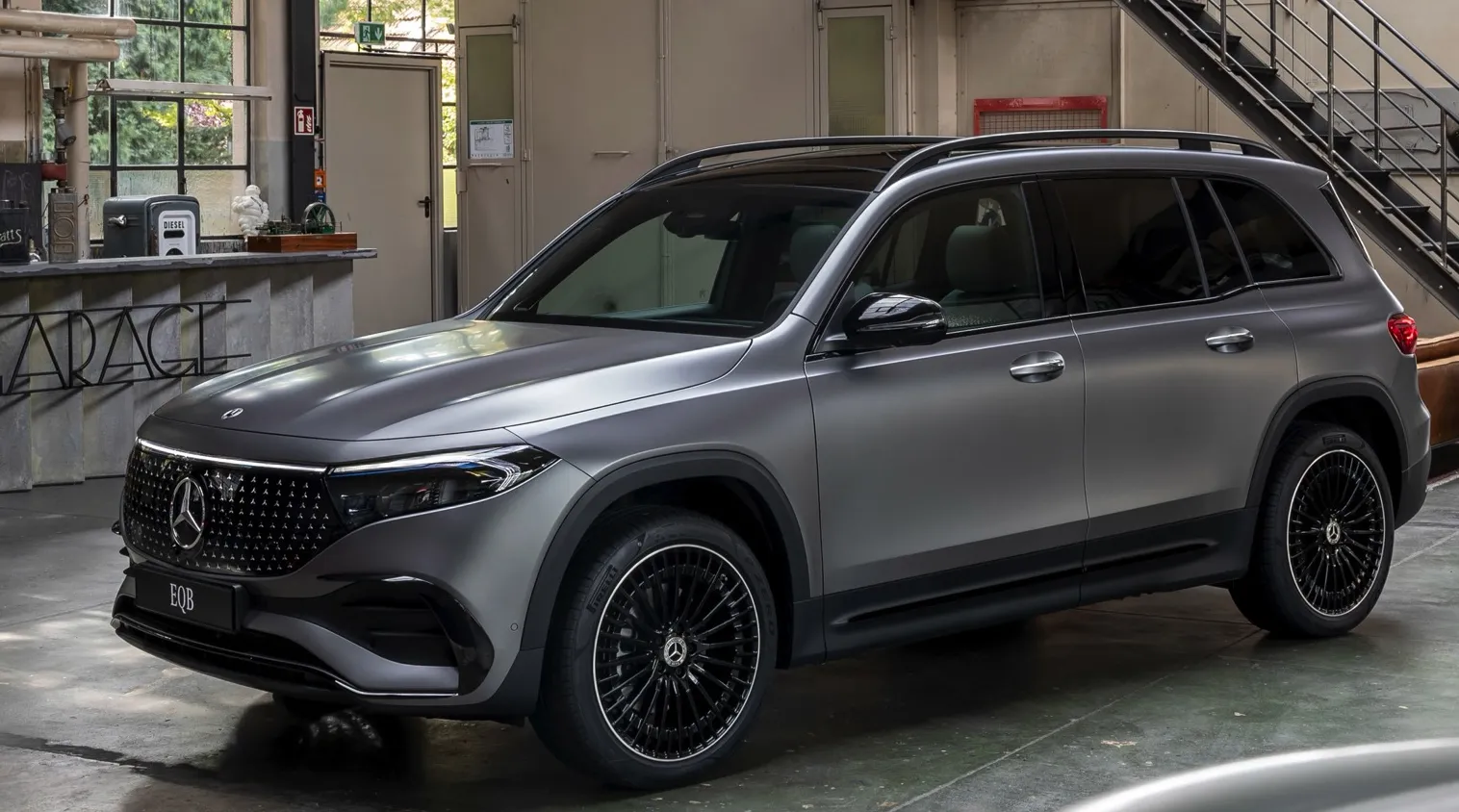
Mercedes-Benz EQB 300 4MATIC
Key Specifications
Real Range
| City - Cold Weather | 340 km |
| Highway - Cold Weather | 250 km |
| Combined - Cold Weather | 295 km |
between 250 - 500 km
| City - Mild Weather | 500 km |
| Highway - Mild Weather | 315 km |
| Combined - Mild Weather | 395 km |
Battery
| Nominal Capacity | 69.7 kWh |
| Battery Type | Lithium-ion |
| Number of Cells | 300 |
| Architecture | 400 V |
| Warranty Period | 8 years |
| Warranty Mileage | 160,000 km |
| Useable Capacity | 66.5 kWh |
| Cathode Material | No Data |
| Pack Configuration | 100s3p |
| Nominal Voltage | 367 V |
| Form Factor | No Data |
| Name / Reference | No Data |
Performance
| Acceleration 0 - 100 km/h | 8.0 sec |
| Top Speed | 160 km/h |
| Electric Range | 345 km |
| Total Power | 168 kW (228 PS) |
| Total Torque | 390 Nm |
| Drive | AWD |
Home and Destination Charging (0 -> 100%)
Charging is possible by using a regular wall plug or a charging station. Public charging is always done through a charging station. How fast the EV can charge depends on the charging station (EVSE) used and the maximum charging capacity of the EV. The table below shows all possible options for charging the Mercedes-Benz EQB 300 4MATIC. Each option shows how fast the battery can be charged from empty to full.
Europe
Charging an EV in Europe differs by country. Some European countries primarily use 1-phase connections to the grid, while other countries are almost exclusively using a 3-phase connection. The table below shows all possible ways the Mercedes-Benz EQB 300 4MATIC can be charged, but some modes of charging might not be widely available in certain countries.
| Type 2 (Mennekes - IEC 62196) |
|---|
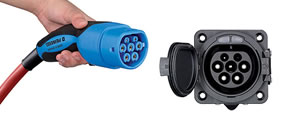 |
| Charging Point | Max. Power | Power | Time | Rate |
|---|---|---|---|---|
| Standard 11.0 kW On-Board Charger | ||||
| Wall Plug (2.3 kW) | 230V / 1x10A | 2.3 kW | 34 hours | 10 km/h |
| 1-phase 16A (3.7 kW) | 230V / 1x16A | 3.7 kW | 21h15m | 16 km/h |
| 1-phase 32A (7.4 kW) | 230V / 1x32A | 7.4 kW | 10h45m | 32 km/h |
| 3-phase 16A (11 kW) | 400V / 3x16A | 11 kW | 7h15m | 48 km/h |
| 3-phase 32A (22 kW) | 400V / 3x16A | 11 kW † | 7h15m | 48 km/h |
| Optional 22.0kW On-Board Charger | ||||
| Wall Plug (2.3 kW) | 230V / 1x10A | 2.3 kW | 34 hours | 10 km/h |
| 1-phase 16A (3.7 kW) | 230V / 1x16A | 3.7 kW | 21h15m | 16 km/h |
| 1-phase 32A (7.4 kW) | 230V / 1x32A | 7.4 kW | 10h45m | 32 km/h |
| 3-phase 16A (11 kW) | 400V / 3x16A | 11 kW | 7h15m | 48 km/h |
| 3-phase 32A (22 kW) | 400V / 3x32A | 22 kW † | 3h45m | 92 km/h |
† = Limited by on-board charger, vehicle cannot charge faster.
Fast Charging (10 -> 80%)
Rapid charging enables longer journeys by adding as much range as possible in the shortest amount of time. Charging power will decrease significantly after 80% state-of-charge has been reached. A typical rapid charge therefore rarely exceeds 80% SoC. The rapid charge rate of an EV depends on the charger used and the maximum charging power the EV can handle. The table below shows all details for rapid charging the Mercedes-Benz EQB 300 4MATIC.
- Max. Power: maximum power provided by charge point
- Avg. Power: average power provided by charge point over a session from 10% to 80%
- Time: time needed to charge from 10% to 80%
- Rate: average charging speed over a session from 10% to 80%
| Combined Charging System (CCS Combo 2) |
|---|
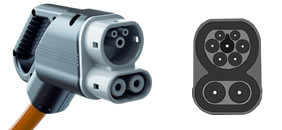 |
| Charging Point | Max. Power | Avg. Power | Time | Rate |
|---|---|---|---|---|
| CCS (50 kW DC) | 50 kW | 45 kW † | 65 min | 220 km/h |
| CCS (100 kW DC) | 100 kW | 90 kW † | 33 min | 430 km/h |
| CCS (150 kW DC) | 112 kW † | 100 kW † | 29 min | 500 km/h |
| This vehicle supports Autocharge |
|---|
| This vehicle supports Plug & Charge |
† = Limited by charging capabilities of vehicle
Autocharge: allows for automatic initiation of a charging session at supported CCS charging stations.
Plug & Charge: allows for automatic initiation of a charging session at supported CCS charging stations in accordance with ISO 15118.
Actual charging rates may differ from data shown due to factors like outside temperature, state of the battery and driving style.
Mercedes-Benz Claimed Specifications
The table below shows the claimed specifications from the manufacturer for charging the Mercedes-Benz EQB 300 4MATIC. The specifications can differ from the table above for a variety of reasons. If real-world charge tests are available, these differences can be signifcant. If no real-world tests are available, the table above will be based on the manufacturer specifications as per the table below.
- Max. Power: maximum charge power during charging session
- Charge From: battery percentage (% SoC) where charging session is started
- Charge To: battery percentage (% SoC) where charging session is ended
- Time: time needed for charging session
| Mercedes-Benz Claimed Specifications |
|---|
| Max. Power | Charge From | Charge To | Time |
|---|---|---|---|
| 100 kW | 10 % | 80 % | 32 min |
Dimensions and Weight
| Length | 4684 mm |
| Width | 1834 mm |
| Width with mirrors | 2020 mm |
| Height | 1667 mm |
| Wheelbase | 2829 mm |
| Weight Unladen (EU) | 2165 kg |
| Gross Vehicle Weight (GVWR) | 2600 kg |
| Max. Payload | 510 kg |
| Cargo Volume | 495 L |
| Cargo Volume Max | 1710 L |
| Cargo Volume Frunk | 0 L |
| Roof Load | 75 kg |
| Tow Hitch Possible | Yes |
| Towing Weight Unbraked | 750 kg |
| Towing Weight Braked | 1700 kg |
| Vertical Load Max | 80 kg |
About this Vehicle
Mercedes-Benz EQB 300 4MATIC Overview
The Mercedes-Benz EQB 300 4MATIC positions itself as a premium compact electric SUV in the Mercedes-Benz electric SUV lineup, blending luxury with family-friendly practicality. Starting at $57,200 MSRP, it targets urban professionals and growing families seeking a versatile EV with optional seven-passenger seating via a third row. Built on the same platform as the gas-powered GLB but optimized for electrification, the EQB 300 4MATIC features dual electric motors for all-wheel drive, advanced MBUX infotainment with a 10.25-inch touchscreen, and premium touches like synthetic leather upholstery and 64-color ambient lighting. Its boxy design philosophy emphasizes spacious cargo (up to 61.8 cubic feet with seats folded) and Mercedes me Charge compatibility for seamless public charging.
In the competitive EV landscape, the Mercedes-Benz EQB 300 4MATIC stands out for its upscale interior and optional third row, rare in compact electric SUVs. With EV specs like a 70.5 kWh battery delivering up to 205-227 miles of range, it appeals to buyers prioritizing refinement over outright performance. This EQB 300 4MATIC review highlights its role as a gateway to Mercedes’ EQ family, offering Active Brake Assist, Blind Spot Assist, and regenerative braking as standard, making it a sophisticated choice for daily commutes and weekend getaways.
Mercedes-Benz EQB 300 4MATIC Performance and Driving Experience
The Mercedes-Benz EQB 300 4MATIC delivers smooth, composed performance with 225 horsepower and 288 lb-ft of torque from its dual-motor setup—a front asynchronous motor and rear permanently excited synchronous motor producing 168 kW total. Acceleration hits 0-60 mph in 7.0-7.6 seconds, paired with a top speed of 100 mph, making it responsive for city driving and highway merges. Its all-wheel-drive 4MATIC system enhances traction in wet or snowy conditions, while the single-speed direct drive transmission and regenerative paddle shifters provide intuitive control.
Handling benefits from four-wheel independent suspension and stabilizer bars, offering a settled ride despite the 4,630-pound curb weight. Real-world impressions note its heavier feel compared to the GLB, prioritizing comfort over sportiness with a 38.4-foot turning circle ideal for parking. Braking from 70-0 mph takes 178 feet, and it grips at 0.85 g on skidpad tests, ensuring confident dynamics for family use.
| Specification | Value |
|---|---|
| 0-60 mph (0-100 km/h) | 7.0-7.6 sec |
| Top Speed | 100 mph / 160 km/h |
| Power Output | 225 hp / 168 kW |
| Torque | 288 lb-ft / 390 Nm |
Mercedes-Benz EQB 300 4MATIC Range and Battery Specifications
Official Mercedes-Benz EQB 300 4MATIC WLTP range estimates hover around 250-340 km in city-cold weather per real-world tests, but EPA figures peg it at 205-227 miles, with real-world range typically 200-227 miles depending on conditions. The 70.5 kWh (usable ~66.5-69.7 kWh) liquid-cooled lithium-ion battery achieves 96 MPGe combined efficiency (33 kWh/100 mi), excelling in efficiency for its class. Factors like cold weather, aggressive driving, or loaded cargo can reduce EQB 300 4MATIC real-world range by 20-30%, while highway cruising optimizes it.
EQB 300 4MATIC battery specs include advanced thermal management for consistent performance, supporting the SUV’s practical daily use with up to 93 MPGe highway.
| Range Metric | Value |
|---|---|
| WLTP Range | 250-340 km / 155-211 miles |
| EPA Range | 205-227 miles / 330-366 km |
| Real-World Range | 200-227 miles / 322-366 km |
| Battery Capacity | 70.5 kWh (usable) |
Mercedes-Benz EQB 300 4MATIC Charging Times and Options
Home charging for the Mercedes-Benz EQB 300 4MATIC is straightforward: Level 1 (120V) takes about 24+ hours for a full charge, while Level 2 at 240V/9.6 kW onboard charger completes it in 7.75 hours. DC fast charging peaks at 100 kW via SAE Combo port, achieving 10-80% in around 30-35 minutes, compatible with Mercedes me Charge across major US networks like Electrify America. Practical scenarios include overnight Level 2 for daily 200-mile needs or quick DC top-ups for road trips.
The Mercedes-Benz Wallbox enhances home setups, with pre-entry climate control minimizing range loss during charging.
| Charging Method | Time | Speed |
|---|---|---|
| Level 1 (120V) | 24+ hours | ~1.4 kW |
| Level 2 (240V/7kW) | ~10 hours | ~7 kW |
| Level 2 (240V/11kW) | 7.75 hours | ~9.6-11 kW |
| DC Fast Charge (10-80%) | 30-35 min | up to 100 kW |
Mercedes-Benz EQB 300 4MATIC vs Competitors
The Mercedes-Benz EQB 300 4MATIC vs Tesla Model Y favors Mercedes’ luxury interior and optional third row, though the Model Y offers superior 300+ mile range and quicker acceleration at a lower price. Against the Hyundai Ioniq 5, the EQB provides premium build quality and AWD refinement but trails in fast-charging speed (350 kW peak) and value. Compared to the Audi Q4 e-tron, the EQB 300 4MATIC matches in upscale feel while edging out with seven-seat versatility, though Audi’s handling feels sportier. In EQB 300 4MATIC comparisons, it shines for families valuing badge prestige over raw efficiency.
Frequently Asked Questions
Related Vehicles
View All Mercedes-Benz
Mercedes-Benz EQA 300 4MATIC
 Mercedes-Benz
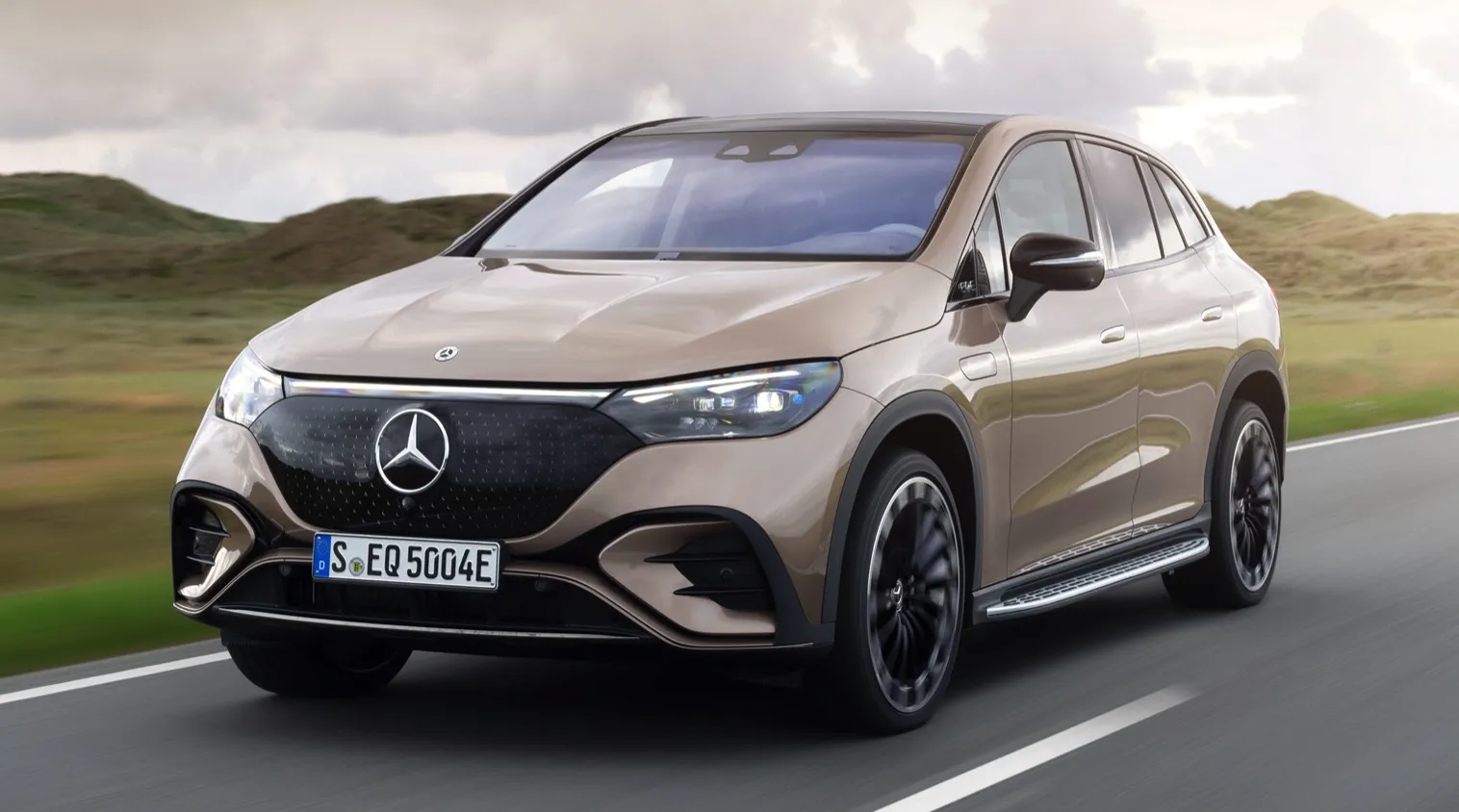
Mercedes-Benz EQE SUV 300
 Mercedes-Benz
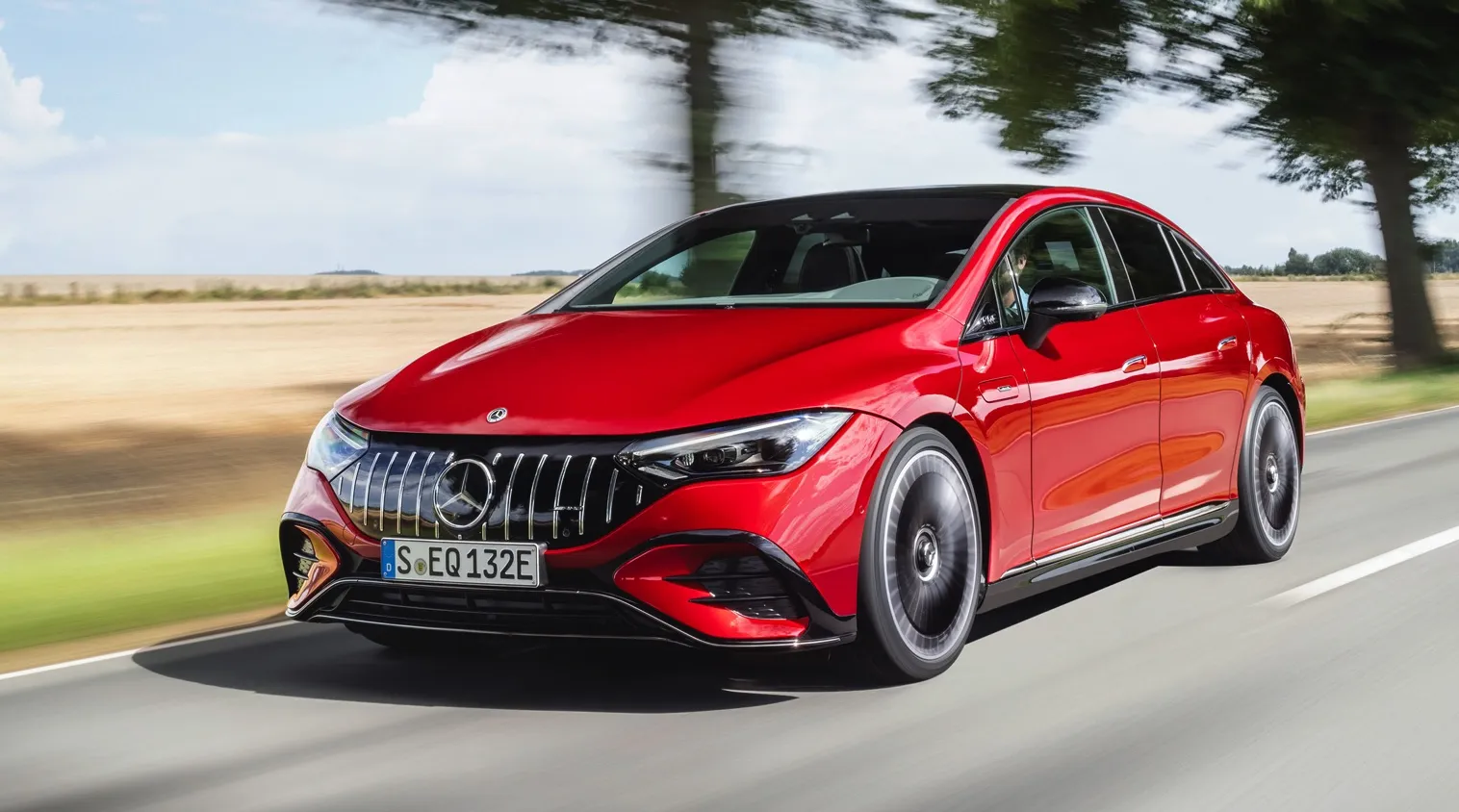
Mercedes-Benz EQE AMG 43 4MATIC
 Mercedes-Benz