Charging is possible by using a regular wall plug or a charging station. Public charging is always done through a charging station. How fast the EV can charge depends on the charging station (EVSE) used and the maximum charging capacity of the EV. The table below shows all possible options for charging the Nissan Leaf. Each option shows how fast the battery can be charged from empty to full.
Europe
Charging an EV in Europe differs by country. Some European countries primarily use 1-phase connections to the grid, while other countries are almost exclusively using a 3-phase connection. The table below shows all possible ways the Nissan Leaf can be charged, but some modes of charging might not be widely available in certain countries.
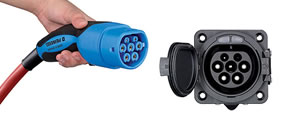
Type 2 (Mennekes - IEC 62196)
Charging Point
Max. Power
Power
Time
Rate
Standard 3.6 kW On-Board Charger
Wall Plug (2.3 kW)
230V / 1x10A
2.3 kW
20 hours
12 km/h
1-phase 16A (3.7 kW)
230V / 1x16A
3.6 kW †
12h30m
19 km/h
1-phase 32A (7.4 kW)
230V / 1x16A
3.6 kW †
12h45m
18 km/h
3-phase 16A (11 kW)
230V / 1x16A
3.6 kW †
12h45m
18 km/h
3-phase 32A (22 kW)
230V / 1x16A
3.6 kW †
12h45m
18 km/h
Optional 6.6kW On-Board Charger *
Wall Plug (2.3 kW)
230V / 1x10A
2.3 kW
20 hours
12 km/h
1-phase 16A (3.7 kW)
230V / 1x16A
3.7 kW
12h30m
19 km/h
1-phase 32A (7.4 kW)
230V / 1x29A
6.6 kW †
7 hours
34 km/h
3-phase 16A (11 kW)
230V / 1x16A
3.7 kW †
12h30m
19 km/h
3-phase 32A (22 kW)
230V / 1x29A
6.6 kW †
7 hours
34 km/h
† = Limited by on-board charger, vehicle cannot charge faster.
* = Optional in some countries, standard in others. Check local specifications for details.
Fast Charging (10 -> 80%)
Rapid charging enables longer journeys by adding as much range as possible in the shortest amount of time. Charging power will decrease significantly after 80% state-of-charge has been reached. A typical rapid charge therefore rarely exceeds 80% SoC. The rapid charge rate of an EV depends on the charger used and the maximum charging power the EV can handle. The table below shows all details for rapid charging the Nissan Leaf.
Max. Power: maximum power provided by charge point
Avg. Power: average power provided by charge point over a session from 10% to 80%
Time: time needed to charge from 10% to 80%
Rate: average charging speed over a session from 10% to 80%
CHAdeMO
Charging Point
Max. Power
Avg. Power
Time
Rate
CHAdeMO (50 kW DC)
46 kW †
40 kW †
43 min
230 km/h
Charge Curve
Data made available by Fastned
This vehicle does not support Autocharge
This vehicle does not support Plug & Charge
† = Limited by charging capabilities of vehicle
Autocharge: allows for automatic initiation of a charging session at supported CCS charging stations.
Plug & Charge: allows for automatic initiation of a charging session at supported CCS charging stations in accordance with ISO 15118.
Actual charging rates may differ from data shown due to factors like outside temperature, state of the battery and driving style.
Dimensions and Weight
Length
4490 mm
Width
1788 mm
Width with mirrors
2030 mm
Height
1530 mm
Wheelbase
2700 mm
Weight Unladen (EU)
1580 kg
Gross Vehicle Weight (GVWR)
1995 kg
Max. Payload
490 kg
Cargo Volume
435 L
Cargo Volume Max
1176 L
Cargo Volume Frunk
No Data
Roof Load
35 kg
Tow Hitch Possible
No Data
Towing Weight Unbraked
0 kg
Towing Weight Braked
0 kg
Vertical Load Max
No Data
About this Vehicle
2026 Nissan Leaf Overview
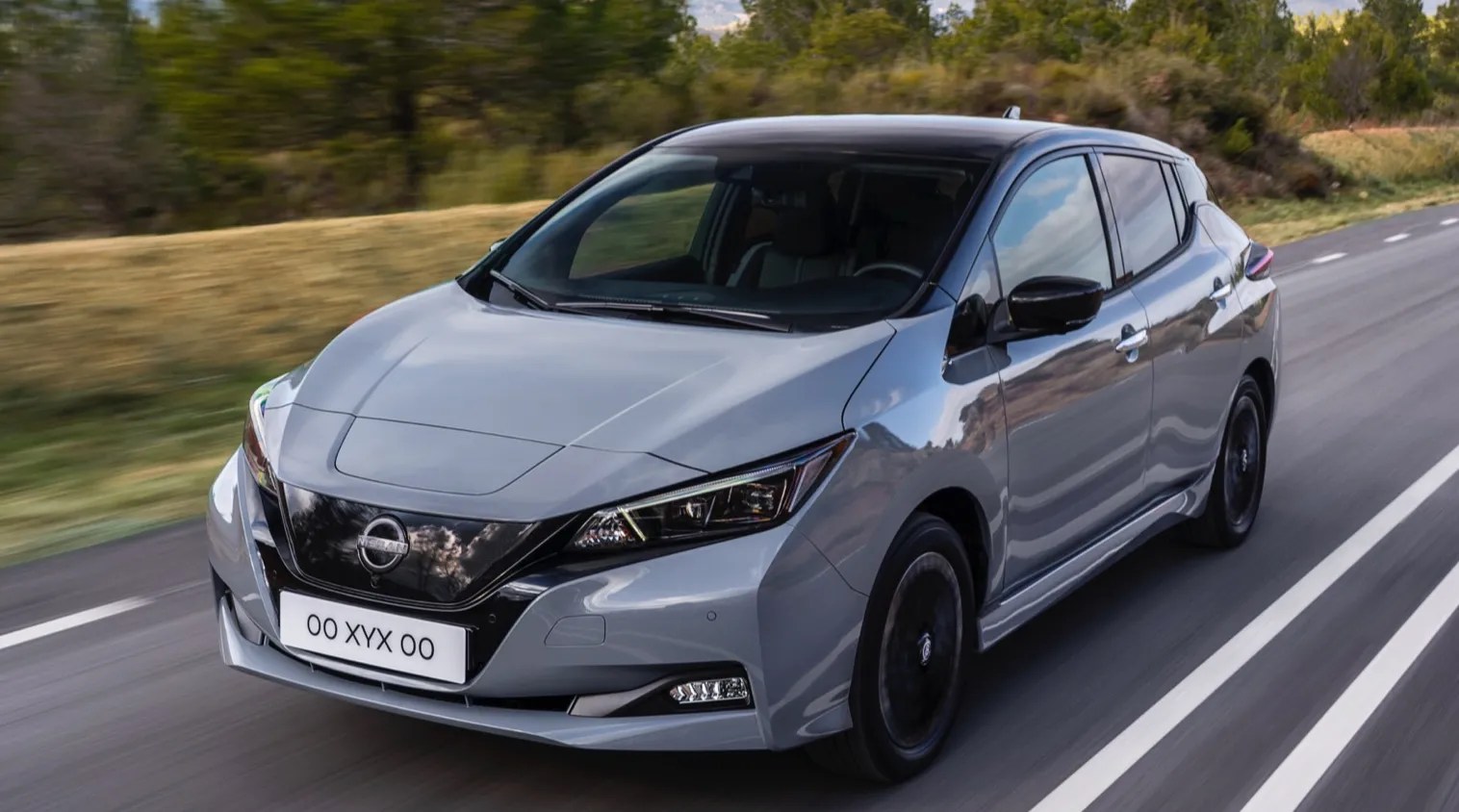
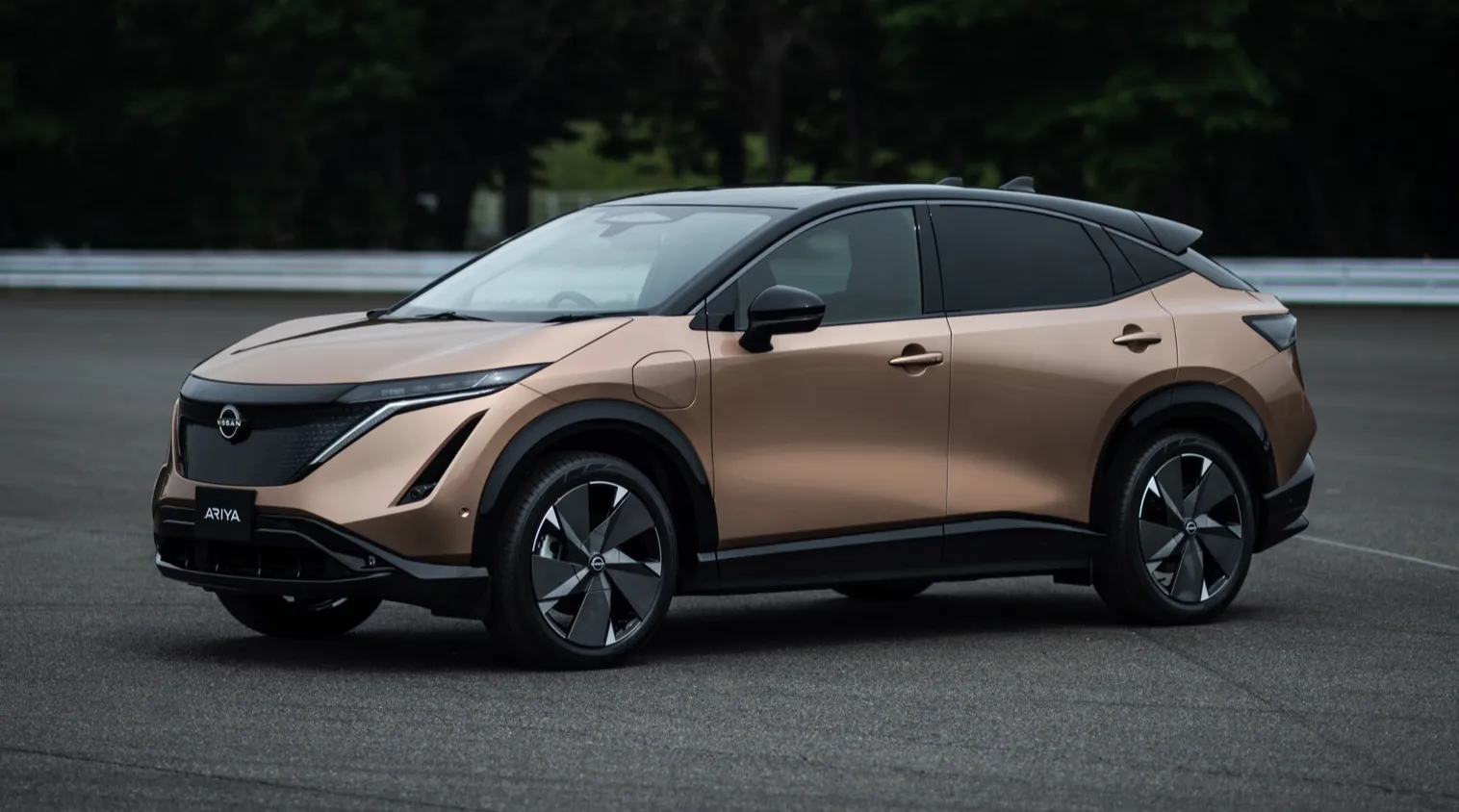
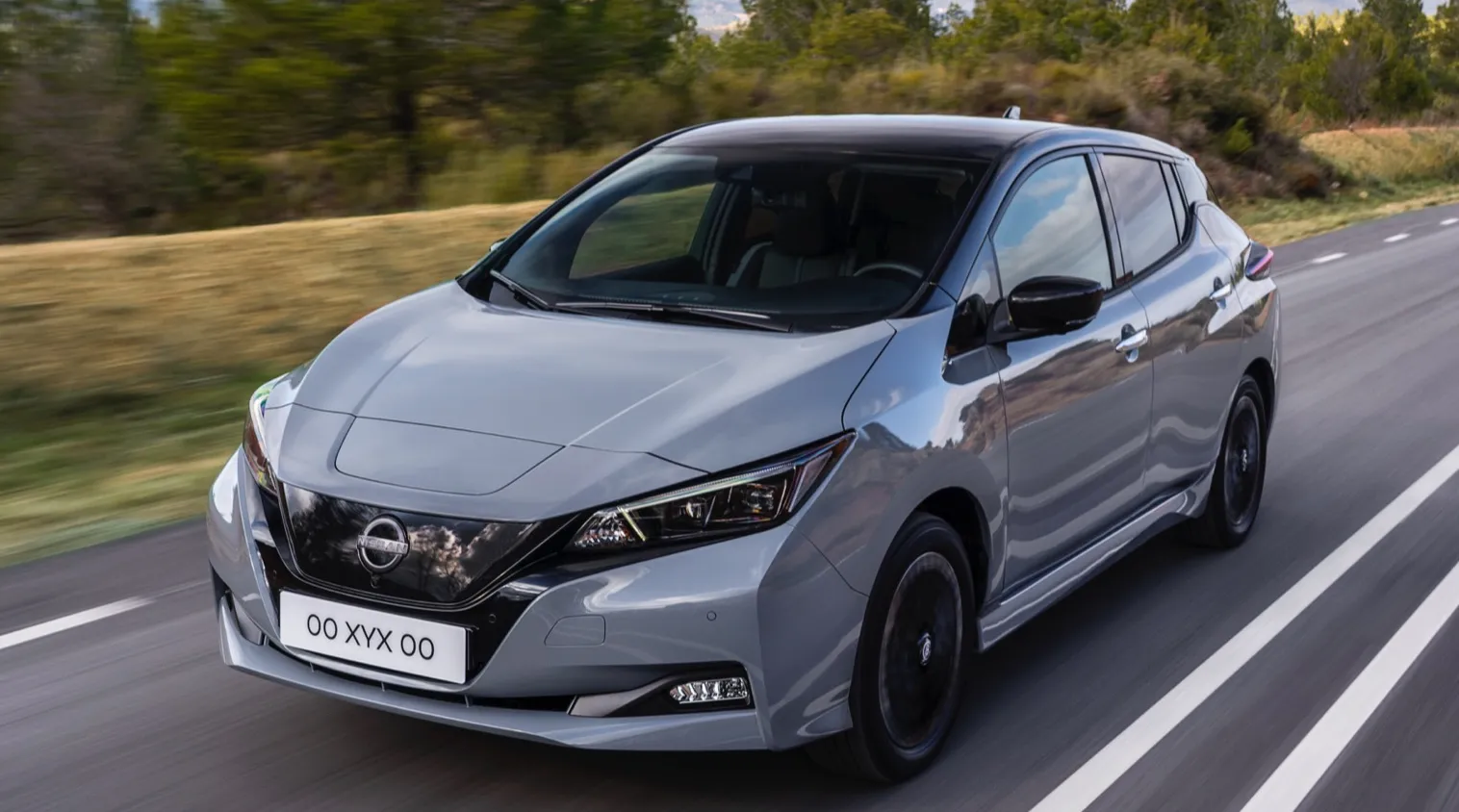
The 2026 Nissan Leaf positions itself as an accessible mainstream electric hatchback with crossover styling, blending affordability and modern EV tech for urban commuters and families seeking efficient daily drivers. As Nissan’s flagship electric vehicle, the Leaf targets budget-conscious buyers in the subcompact EV segment, offering updated EV specs like a sleek aerodynamic design and advanced driver aids without the premium price tag of luxury rivals. Its Nissan Leaf review highlights a refreshed platform with a lower 0.26 drag coefficient, motorized flush door handles, and a spacious, minimalist interior featuring redesigned seats for better second-row knee room and optional 64-color ambient lighting.
What sets the 2026 Nissan Leaf apart is its new dedicated EV architecture, delivering up to 303-mile range and NACS-compatible fast charging for seamless road trips. In the evolving EV landscape, the Leaf matters as a pioneer—Nissan’s first mass-market EV since 2010—now evolved with liquid-cooled battery tech and ProPILOT Assist standard, making electric vehicle range and usability more practical for everyday adoption.
2026 Nissan Leaf Performance and Driving Experience
The 2026 Nissan Leaf delivers responsive EV performance with instant torque from its front-wheel-drive electric motor, available in 174 hp base or 214 hp upgraded versions paired with 261 lb-ft of torque. Acceleration feels smooth and immediate, enhanced by e-Step regenerative braking that slows the vehicle by lifting off the pedal while recapturing energy for better efficiency. Four drive modes—Standard, Eco, Sport, and Personal—let drivers customize throttle response, while a low center of gravity and multi-link rear suspension sharpen handling for confident city maneuvers and highway stability. Real-world impressions praise its quiet cabin, acoustic windshield, and precise dynamics, making the Leaf enjoyable for commutes despite its compact footprint.
Specification
Value
0-60 mph (0-100 km/h)
6.5 sec
Top Speed
98 mph / 158 km/h
Power Output
<strong>214 hp / 160 kW</strong>
Torque
<strong>261 lb-ft / 354 Nm</strong>
2026 Nissan Leaf Range and Battery Specifications
The 2026 Nissan Leaf boasts an impressive EPA-estimated 303-mile range on its top S+ trim, powered by a new 75 kWh liquid-cooled lithium-ion battery that prioritizes longevity and thermal management. Real-world Leaf WLTP range equivalents and tests suggest 250-280 miles depending on conditions, with base models offering slightly less via a smaller pack option. Energy efficiency shines at up to 131 MPGe city, influenced by factors like cold weather (mitigated by battery preconditioning), aggressive driving, or hilly terrain—efficiency drops to around 100-110 MPGe highway. The Leaf battery specs emphasize durability, with Nissan’s engineering reducing degradation for long-term ownership.
Range Metric
Value
WLTP Range
<strong>303 miles / 488 km</strong>
EPA Range
<strong>303 miles / 488 km</strong>
Real-World Range
<strong>250-280 miles / 402-451 km</strong>
Battery Capacity
<strong>75 kWh (usable)</strong>
2026 Nissan Leaf Charging Times and Options
Charging the 2026 Nissan Leaf is streamlined with dual ports and NACS compatibility for Tesla Supercharger access, plus up to 150 kW DC fast charging that takes it from 10-80% in about 30 minutes. Home options include Level 1 for overnight top-ups and Level 2 at 7-11 kW for daily routines, fully charging the 75 kWh pack in 7-10 hours. Practical scenarios like workplace Level 2 or public stations make it versatile, with winter preconditioning speeding sessions. Nissan’s in-house tech simplifies ownership across networks.
Charging Method
Time
Speed
Level 1 (120V)
30+ hours
~1.4 kW
Level 2 (240V/7kW)
10-11 hours
~7 kW
Level 2 (240V/11kW)
7-8 hours
~11 kW
DC Fast Charge (10-80%)
~30 min
up to <strong>150 kW</strong>
2026 Nissan Leaf vs Competitors
In the Nissan Leaf vs Tesla Model 3 matchup, the Leaf offers superior value with its 303-mile range and standard ProPILOT Assist at a lower starting price around $30,000, though the Model 3 edges out in acceleration and premium build. Compared to the Hyundai Ioniq 5, the Leaf provides better efficiency and a more affordable entry but trails in ultra-fast 350 kW charging and interior wow-factor. Against the Kia EV6, it prioritizes range over sporty dynamics, making it ideal for practical buyers.
Frequently Asked Questions
The 2026 Nissan Leaf achieves 250-280 miles in real-world conditions on its 75 kWh battery, factoring in moderate weather and mixed driving—less than the 303-mile EPA in extreme cold or highway speeds.
Home Level 2 charging (7-11 kW) takes 7-11 hours for a full charge, while DC fast charging at up to 150 kW completes 10-80% in about 30 minutes, with NACS access for broad compatibility.
The 2026 Nissan Leaf is front-wheel-drive (FWD) only, prioritizing efficiency over AWD traction for its commuter-focused design.
ProPILOT Assist combines adaptive cruise control with lane-centering steering to keep the Leaf centered in lanes and maintain speed/distance, standard on all trims for hands-on highway assistance.
The Leaf matches the Model 3’s range at 303 miles with lower pricing and unique e-Step regen, but the Tesla offers quicker acceleration and a larger network edge.
Yes, with pros like 303-mile range, fast charging, and value-packed safety tech, cons include FWD-only and modest acceleration, ideal for budget EV shoppers.> The 2026 Nissan Leaf from Nissan delivers up to 303 miles of EPA range, 214 hp, and 150 kW fast charging in a sleek subcompact crossover. Its liquid-cooled 75 kWh battery, ProPILOT Assist, and affordable pricing make it a top choice for efficient urban driving and family commutes over pricier rivals.




 Nissan
 Nissan
 Nissan
 Nissan