Charging is possible by using a regular wall plug or a charging station. Public charging is always done through a charging station. How fast the EV can charge depends on the charging station (EVSE) used and the maximum charging capacity of the EV. The table below shows all possible options for charging the Hyundai IONIQ 5 N. Each option shows how fast the battery can be charged from empty to full.
Europe
Charging an EV in Europe differs by country. Some European countries primarily use 1-phase connections to the grid, while other countries are almost exclusively using a 3-phase connection. The table below shows all possible ways the Hyundai IONIQ 5 N can be charged, but some modes of charging might not be widely available in certain countries.
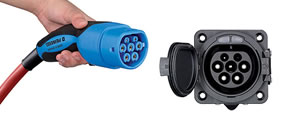
Type 2 (Mennekes - IEC 62196)
Charging Point
Max. Power
Power
Time
Rate
Wall Plug (2.3 kW)
230V / 1x10A
2.3 kW
41 hours
10 km/h
1-phase 16A (3.7 kW)
230V / 1x16A
3.7 kW
25h30m
15 km/h
1-phase 32A (7.4 kW)
230V / 1x32A
7.4 kW
12h45m
31 km/h
3-phase 16A (11 kW)
400V / 3x16A
11 kW
8h45m
45 km/h
3-phase 32A (22 kW)
400V / 3x16A
11 kW †
8h45m
45 km/h
† = Limited by on-board charger, vehicle cannot charge faster.
Fast Charging (10 -> 80%)
Rapid charging enables longer journeys by adding as much range as possible in the shortest amount of time. Charging power will decrease significantly after 80% state-of-charge has been reached. A typical rapid charge therefore rarely exceeds 80% SoC. The rapid charge rate of an EV depends on the charger used and the maximum charging power the EV can handle. The table below shows all details for rapid charging the Hyundai IONIQ 5 N.
Max. Power: maximum power provided by charge point
Avg. Power: average power provided by charge point over a session from 10% to 80%
Time: time needed to charge from 10% to 80%
Rate: average charging speed over a session from 10% to 80%
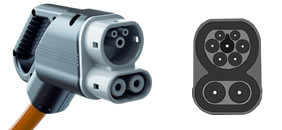
Combined Charging System (CCS Combo 2)
Charging Point
Max. Power
Avg. Power
Time
Rate
CCS (50 kW DC)
50 kW
49 kW †
72 min
220 km/h
CCS (150 kW DC)
150 kW
144 kW †
25 min
650 km/h
CCS (350 kW DC)
263 kW †
205 kW †
17 min
960 km/h
Charge Curve
Data made available by Fastned
This vehicle supports Autocharge
This vehicle supports Plug & Charge
† = Limited by charging capabilities of vehicle
Autocharge: allows for automatic initiation of a charging session at supported CCS charging stations.
Plug & Charge: allows for automatic initiation of a charging session at supported CCS charging stations in accordance with ISO 15118.
Actual charging rates may differ from data shown due to factors like outside temperature, state of the battery and driving style.
Dimensions and Weight
Length
4715 mm
Width
1940 mm
Width with mirrors
2152 mm
Height
1585 mm
Wheelbase
3000 mm
Weight Unladen (EU)
2225 kg
Gross Vehicle Weight (GVWR)
2660 kg
Max. Payload
510 kg
Cargo Volume
480 L
Cargo Volume Max
1540 L
Cargo Volume Frunk
0 L
Roof Load
0 kg
Tow Hitch Possible
No
Towing Weight Unbraked
0 kg
Towing Weight Braked
0 kg
Vertical Load Max
0 kg
About this Vehicle
Hyundai IONIQ 5 N Overview
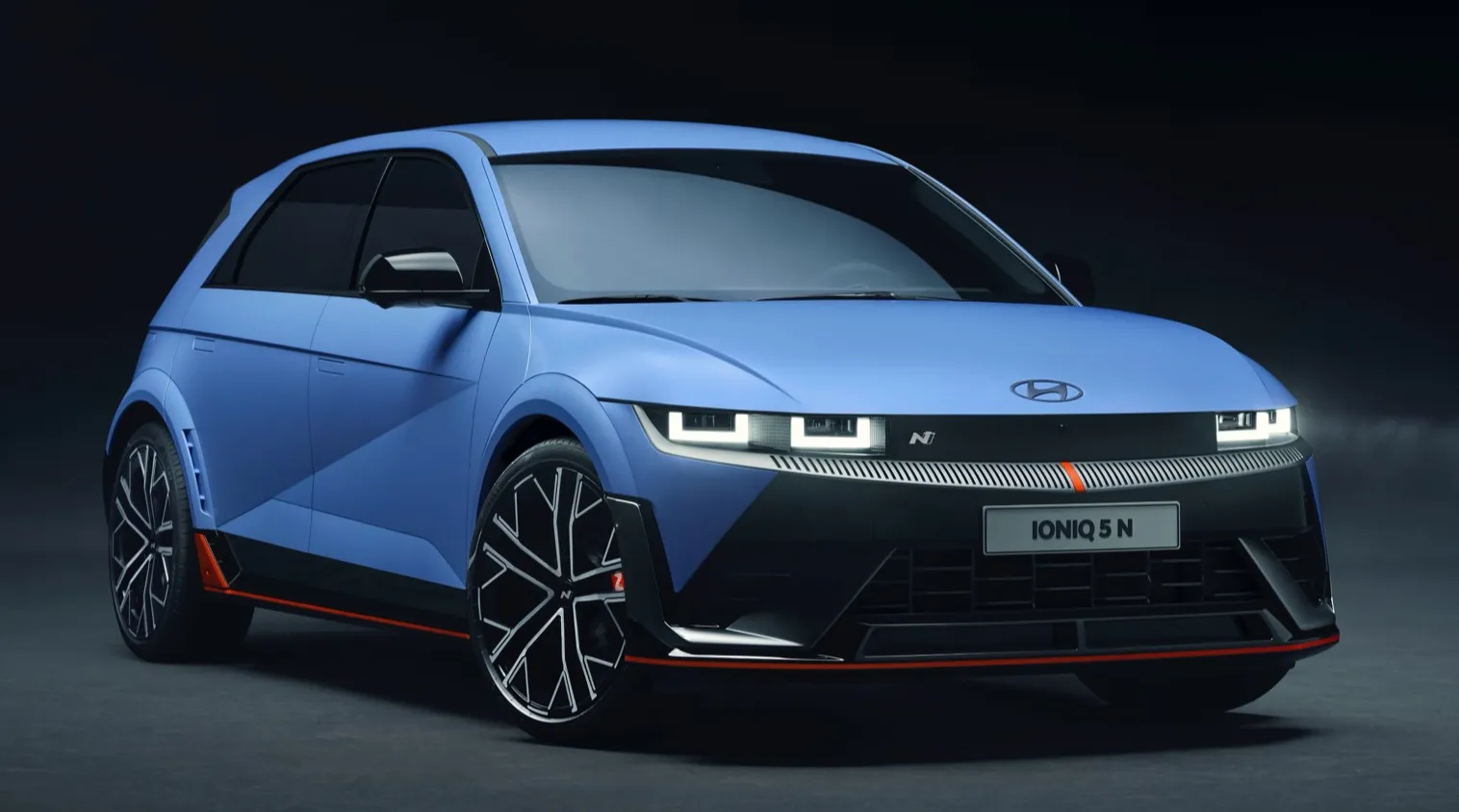
The Hyundai IONIQ 5 N stands as a premium high-performance electric SUV in Hyundai’s N lineup, blending track-ready dynamics with everyday usability. Positioned as the most powerful road-going Hyundai EV, it targets enthusiasts seeking thrilling driving experiences without sacrificing the practicality of a crossover. Built on Hyundai’s advanced E-GMP platform, the IONIQ 5 N features aggressive styling with a wider stance, lowered suspension, and functional aero elements like cooling vents and active air flaps. Its EV specs include dual-motor all-wheel drive, simulated gearshifts, and exclusive N modes, making it a standout in the Hyundai electric SUV segment.
What sets the Hyundai IONIQ 5 N apart is its N-specific technology, such as N Grin Boost for temporary power surges, N Drift Optimizer for tail-happy slides, and track-focused preconditioning. In the competitive EV landscape, this IONIQ 5 N review highlights why it matters: it proves affordable brands can deliver supercar-level fun, challenging pricier rivals with 641 hp bursts and synthetic engine sounds. Ideal for track days or spirited commutes, the Hyundai IONIQ 5 N redefines performance EVs with its bold design philosophy and driver-centric features.
Hyundai IONIQ 5 N Performance and Driving Experience
The Hyundai IONIQ 5 N delivers explosive acceleration with its dual-motor AWD setup, rocketing from 0-60 mph in 2.8 seconds thanks to 601 hp standard and a peak of 641 hp via N Grin Boost. Power distribution adjusts dynamically between front (235 hp) and rear (406 hp) motors, enabling Drift Mode for controlled slides and precise handling. Multiple drive modes—Eco, Normal, Sport, N, plus Sprint and Endurance—fine-tune steering, damping, and throttle, while paddle-activated e-Shift simulates gear changes for an engaging, gas-car feel. Real-world impressions praise its agility, responsive N Pedal for turn-in sharpness, and high-grip Pirelli P Zero tires on 21-inch wheels.
Specification
Value
0-60 mph (0-100 km/h)
2.8 sec
Top Speed
162 mph / 260 km/h
Power Output
641 hp / 478 kW
Torque
568 lb-ft / 770 Nm
Hyundai IONIQ 5 N Range and Battery Specifications
The Hyundai IONIQ 5 N offers an EPA-estimated 221 miles of range, with real-world highway tests achieving around 190 miles due to its performance focus. Its 84.0 kWh liquid-cooled lithium-ion battery prioritizes power over efficiency, yielding 78 MPGe combined. IONIQ 5 N WLTP range equivalents align closely with EPA figures, but real-world range drops in aggressive driving, cold weather, or track use—factors mitigated by Endurance Mode and battery preconditioning. Energy efficiency hovers at higher Wh/mi rates from wide tires and AWD, yet smart energy management sustains spirited drives.
Range Metric
Value
WLTP Range
~230 miles / 370 km
EPA Range
221 miles / 356 km
Real-World Range
190 miles / 306 km
Battery Capacity
84.0 kWh (usable)
Hyundai IONIQ 5 N Charging Times and Options
Charging the Hyundai IONIQ 5 N is practical with an onboard 10.9 kW AC charger for Level 2 home setups, reaching full from empty in about 8 hours on 11 kW. DC fast charging peaks at 238 kW, adding significant range in 35 minutes for 10-90% via CCS (with NACS adapter compatibility). It supports V2L for powering devices and battery preconditioning for optimal speeds. Everyday scenarios like overnight Level 2 top-ups suit commuters, while 129 kW average DC rates enable quick road-trip refills on major networks.
Charging Method
Time
Speed
Level 1 (120V)
84 hours
~1.4 kW
Level 2 (240V/7kW)
12 hours
~7 kW
Level 2 (240V/11kW)
8 hours
~10.9 kW
DC Fast Charge (10-80%)
25 min
up to 238 kW
Hyundai IONIQ 5 N vs Competitors
In the Hyundai IONIQ 5 N vs Tesla Model Y Performance, the IONIQ 5 N edges out with Drift Mode and synthetic shifts for more playful dynamics, though the Model Y offers superior range (up to 303 miles). Compared to the Kia EV6 GT, it shares E-GMP roots but amps up track features like N Grin Boost over the EV6’s 576 hp. Against the BMW i4 M50, the IONIQ 5 N provides better value with SUV utility and 641 hp peaks, making it a fiercer daily driver alternative.
Frequently Asked Questions
The Hyundai IONIQ 5 N delivers about 190 miles on highway tests, below its EPA 221 miles due to performance tuning, wide tires, and AWD. Track or cold weather can reduce it further, but Endurance Mode helps preserve real-world range.
Level 2 (11 kW) takes ~8 hours for a full charge; DC fast charging (238 kW peak) hits 10-80% in 25 minutes or 10-90% in 35 minutes at 129 kW average, ideal for quick stops.
The Hyundai IONIQ 5 N is exclusively dual-motor AWD, with adjustable torque split for Drift Mode and customizable front/rear bias via N Drift Optimizer Pro.
N Grin Boost temporarily surges power to 641 hp (650 PS) and 568 lb-ft for 10 seconds, maximizing battery and motor output with just a 10-second cooldown—perfect for overtakes or drag starts.
The Hyundai IONIQ 5 N matches 0-60 in ~2.8 seconds but adds fun features like simulated shifts and drift modes, trading some range (221 vs 303 miles) for superior handling engagement.
Yes, for performance fans—the Hyundai IONIQ 5 N excels with 641 hp thrills, track prowess, and value, though shorter range and firm ride suit enthusiasts over efficiency seekers. Pros: explosive power, playful dynamics; cons: 221-mile range limits long trips.> The Hyundai IONIQ 5 N is Hyundai’s flagship performance electric SUV with 641 hp, dual-motor AWD, and 221-mile EPA range from its 84 kWh battery. Standout N tech like Grin Boost and Drift Mode deliver track-level fun in a practical package, outpacing rivals in driver engagement. Perfect for EV enthusiasts craving supercar thrills at accessible pricing.



 Hyundai
 Hyundai
 Hyundai
 Hyundai