Charging is possible by using a regular wall plug or a charging station. Public charging is always done through a charging station. How fast the EV can charge depends on the charging station (EVSE) used and the maximum charging capacity of the EV. The table below shows all possible options for charging the Volkswagen ID.3 GTX. Each option shows how fast the battery can be charged from empty to full.
Europe
Charging an EV in Europe differs by country. Some European countries primarily use 1-phase connections to the grid, while other countries are almost exclusively using a 3-phase connection. The table below shows all possible ways the Volkswagen ID.3 GTX can be charged, but some modes of charging might not be widely available in certain countries.
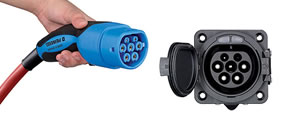
Type 2 (Mennekes - IEC 62196)
Charging Point
Max. Power
Power
Time
Rate
Wall Plug (2.3 kW)
230V / 1x10A
2.3 kW
40h30m
11 km/h
1-phase 16A (3.7 kW)
230V / 1x16A
3.7 kW
25h15m
18 km/h
1-phase 32A (7.4 kW)
230V / 1x32A
7.4 kW
12h45m
36 km/h
3-phase 16A (11 kW)
400V / 3x16A
11 kW
8h30m
54 km/h
3-phase 32A (22 kW)
400V / 3x16A
11 kW †
8h30m
54 km/h
† = Limited by on-board charger, vehicle cannot charge faster.
Fast Charging (10 -> 80%)
Rapid charging enables longer journeys by adding as much range as possible in the shortest amount of time. Charging power will decrease significantly after 80% state-of-charge has been reached. A typical rapid charge therefore rarely exceeds 80% SoC. The rapid charge rate of an EV depends on the charger used and the maximum charging power the EV can handle. The table below shows all details for rapid charging the Volkswagen ID.3 GTX.
Max. Power: maximum power provided by charge point
Avg. Power: average power provided by charge point over a session from 10% to 80%
Time: time needed to charge from 10% to 80%
Rate: average charging speed over a session from 10% to 80%
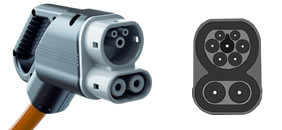
Combined Charging System (CCS Combo 2)
Charging Point
Max. Power
Avg. Power
Time
Rate
CCS (50 kW DC)
50 kW
50 kW
70 min
270 km/h
CCS (100 kW DC)
100 kW
90 kW †
39 min
490 km/h
CCS (150 kW DC)
150 kW
115 kW †
30 min
640 km/h
CCS (175 kW DC)
175 kW
130 kW †
27 min
710 km/h
CCS (350 kW DC)
185 kW †
135 kW †
26 min
740 km/h
This vehicle does not support Autocharge
This vehicle supports Plug & Charge
† = Limited by charging capabilities of vehicle
Autocharge: allows for automatic initiation of a charging session at supported CCS charging stations.
Plug & Charge: allows for automatic initiation of a charging session at supported CCS charging stations in accordance with ISO 15118.
Actual charging rates may differ from data shown due to factors like outside temperature, state of the battery and driving style.
Volkswagen Claimed Specifications
The table below shows the claimed specifications from the manufacturer for charging the Volkswagen ID.3 GTX. The specifications can differ from the table above for a variety of reasons. If real-world charge tests are available, these differences can be signifcant. If no real-world tests are available, the table above will be based on the manufacturer specifications as per the table below.
Max. Power: maximum charge power during charging session
Charge From: battery percentage (% SoC) where charging session is started
Charge To: battery percentage (% SoC) where charging session is ended
Time: time needed for charging session
Volkswagen Claimed Specifications
Max. Power
Charge From
Charge To
Time
185 kW
10 %
80 %
26 min
Dimensions and Weight
Length
4322 mm
Width
1809 mm
Width with mirrors
2070 mm
Height
1538 mm
Wheelbase
2770 mm
Weight Unladen (EU)
1985 kg
Gross Vehicle Weight (GVWR)
2430 kg
Max. Payload
520 kg
Cargo Volume
385 L
Cargo Volume Max
1267 L
Cargo Volume Frunk
0 L
Roof Load
0 kg
Tow Hitch Possible
No
Towing Weight Unbraked
0 kg
Towing Weight Braked
0 kg
Vertical Load Max
0 kg
About this Vehicle
Volkswagen ID.3 GTX Overview
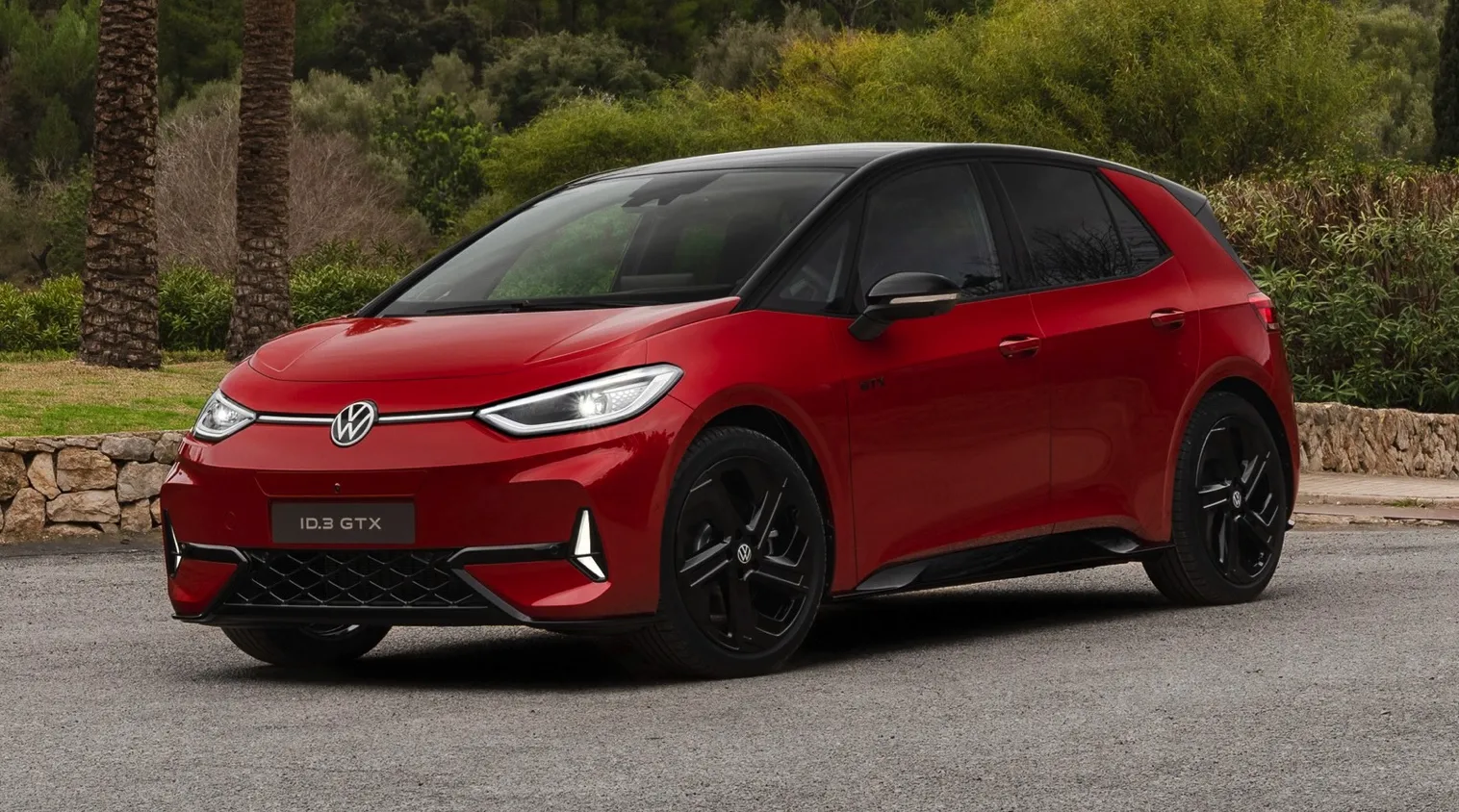
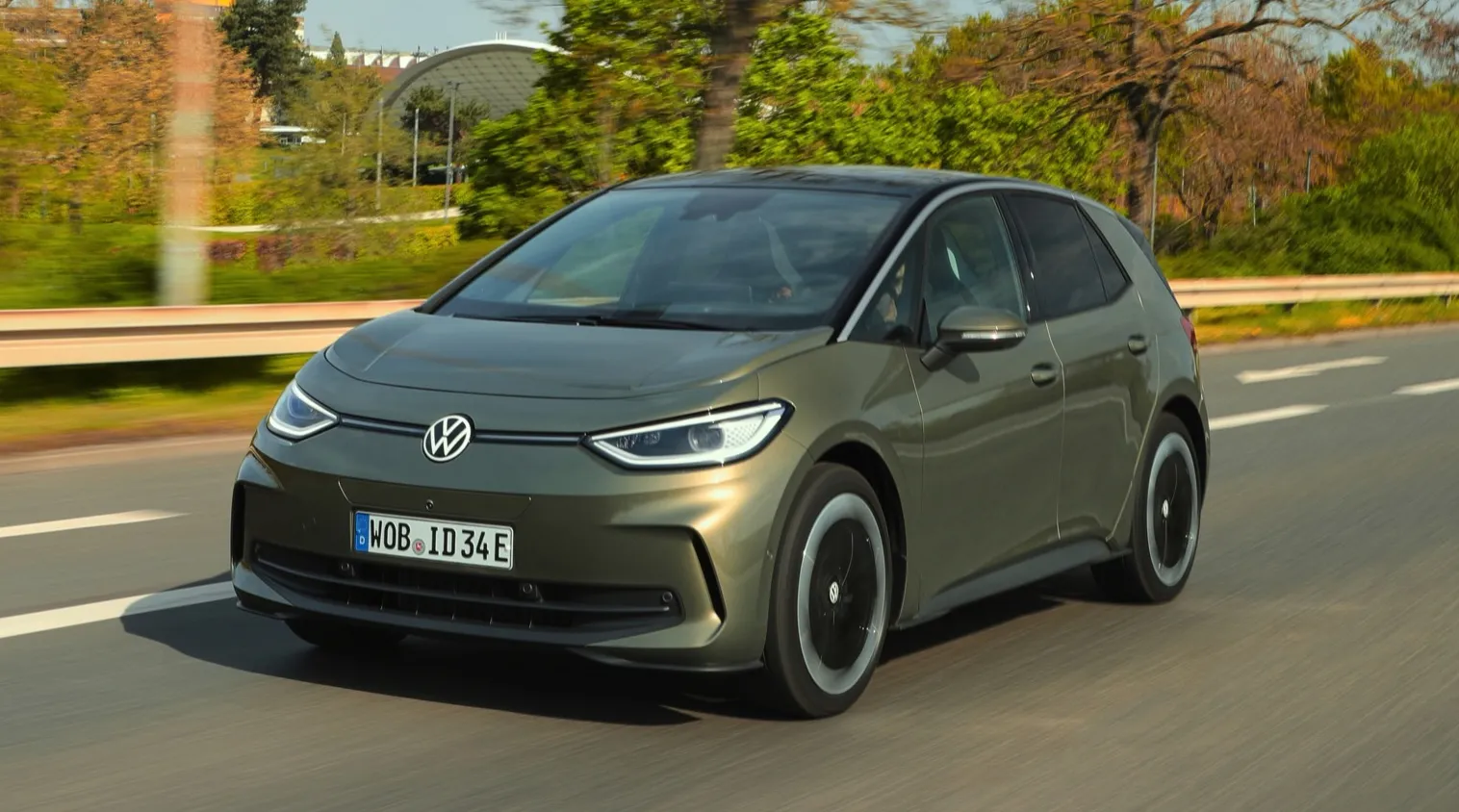
The Volkswagen ID.3 GTX positions itself as a premium electric hatchback in the compact EV segment, blending sporty performance with everyday practicality. As Volkswagen’s flagship in the ID.3 lineup, this electric vehicle targets enthusiasts seeking a hot hatch alternative without compromising on efficiency or family-friendly features. Built on the updated MEB platform, it introduces the high-efficiency AP550 motor and a sport-tuned chassis with a low center of gravity from its centrally mounted battery, delivering agile handling and distinctive GTX styling like aggressive bumpers and 20-inch wheels.
What sets the ID.3 GTX apart is its dual-output options—standard 286 hp or Performance Plus at 326 hp—both rear-wheel drive for pure driving dynamics. In the EV landscape, the Volkswagen ID.3 GTX matters as a convincing electric hot hatch, challenging the notion that EVs can’t be fun. With EV specs including up to 369 miles WLTP range and advanced infotainment, it’s ideal for urban commuters and weekend drivers. This ID.3 GTX review highlights its role in Volkswagen’s push toward accessible performance EVs, competing in a market dominated by crossovers.
Volkswagen ID.3 GTX Performance and Driving Experience
The Volkswagen ID.3 GTX delivers thrilling acceleration with progressive power delivery from its rear-mounted electric motor, avoiding the jerky surge of some rivals. The Performance Plus variant hits 0-62 mph in 5.7 seconds, feeling venomous yet composed, with strong motorway overtaking and no wheelspin thanks to precise torque vectoring. Handling shines with MacPherson strut front and multilink rear suspension, electronically controlled dampers, and a tight 10.5-meter turning circle, making it nimble in corners and easy to park. Real-world impressions praise its cheeky edge—effortless shove without drama, ideal for spirited drives.
Specification
Value
0-60 mph (0-100 km/h)
5.7 sec
Top Speed
124 mph / 200 km/h
Power Output
326 hp / 240 kW
Torque
402 lb-ft / 545 Nm
Volkswagen ID.3 GTX Range and Battery Specifications
Official ID.3 GTX WLTP range reaches 369 miles (594-605 km) for the Performance Plus, but real-world figures settle at 280-340 miles depending on conditions—high 200s on motorways, up to 320 miles mixed. The 79 kWh usable battery (84 kWh gross) uses NMC chemistry in a 96s3p pack at 352V, paired with the efficient AP550 motor for 13.1-16.5 kWh/100 km consumption. ID.3 GTX real-world range factors like cold weather, aggressive driving, or highway speeds can drop it to 470 km, but efficiency assist and regenerative braking help maintain strong figures.
Battery specs emphasize longevity and quick replenishment, with the sandwich floor design optimizing weight distribution for stability.
Range Metric
Value
WLTP Range
369 miles / 594 km
EPA Range
Not specified
Real-World Range
280-340 miles / 450-547 km
Battery Capacity
79 kWh (usable)
Volkswagen ID.3 GTX Charging Times and Options
Home charging for the Volkswagen ID.3 GTX is straightforward with Level 2 at 11 kW taking about 8.5 hours for a full top-up, while Level 1 suits overnight top-ups. DC fast charging peaks at 185 kW, achieving 5-80% in around 26 minutes, compatible with CCS2 ports across major networks. Practical scenarios include quick motorway stops or garage Level 2 for daily use, with efficiency aiding minimal downtime.
Charging Method
Time
Speed
Level 1 (120V)
30+ hours
~1.4 kW
Level 2 (240V/7kW)
12 hours
~7 kW
Level 2 (240V/11kW)
8.5 hours
~11 kW
DC Fast Charge (10-80%)
26 min
up to 185 kW
Volkswagen ID.3 GTX vs Competitors
The Volkswagen ID.3 GTX edges out the Hyundai Ioniq 5 in handling purity with its rear-drive setup and lower stance, offering better real-world fun despite similar 300-mile ranges, though the Ioniq 5 has AWD options. Against the Tesla Model 3, the ID.3 GTX vs Tesla favors Volkswagen for a more progressive throttle and tighter turning, but Tesla wins on Supercharger access and autopilot. Compared to the Kia EV6, the GTX provides superior efficiency in hatchback form, though the EV6 boasts faster charging.
Frequently Asked Questions
The Volkswagen ID.3 GTX achieves 280-340 miles in mixed driving, dropping to high 200s on motorways at 4 m/kWh efficiency; cold weather or Sport mode reduces it to around 290 miles.
Level 2 at 11 kW takes 8.5 hours for a full charge; DC fast charging hits 185 kW peak for 5-80% in 26 minutes.
The ID.3 GTX is rear-wheel drive only, with both 286 hp and 326 hp variants using a single rear motor for optimal traction and balance.
The AP550 is Volkswagen’s high-efficiency motor/inverter unit, delivering up to 240 kW in the Performance Plus with improved energy use and progressive power for sporty yet efficient driving.
The ID.3 GTX offers sharper handling and a funnier drive than the Model 3, with comparable 300+ mile range, but lags in charging network and software polish.
Yes, with pros like 326 hp punch, 369-mile WLTP range, and agile dynamics; cons include no AWD and motorway range dips, making it a top EV hatchback choice.> The Volkswagen ID.3 GTX is a rear-drive electric hot hatch with 326 hp, 369-mile WLTP range, and 79 kWh battery, excelling in progressive acceleration and efficiency. Its AP550 motor and sport chassis make it a standout for fun daily driving, outshining rivals in handling while offering fast 185 kW charging. Ideal for EV buyers wanting hatchback agility over crossover bulk.


 Volkswagen
 Volkswagen
 Volkswagen
 Volkswagen