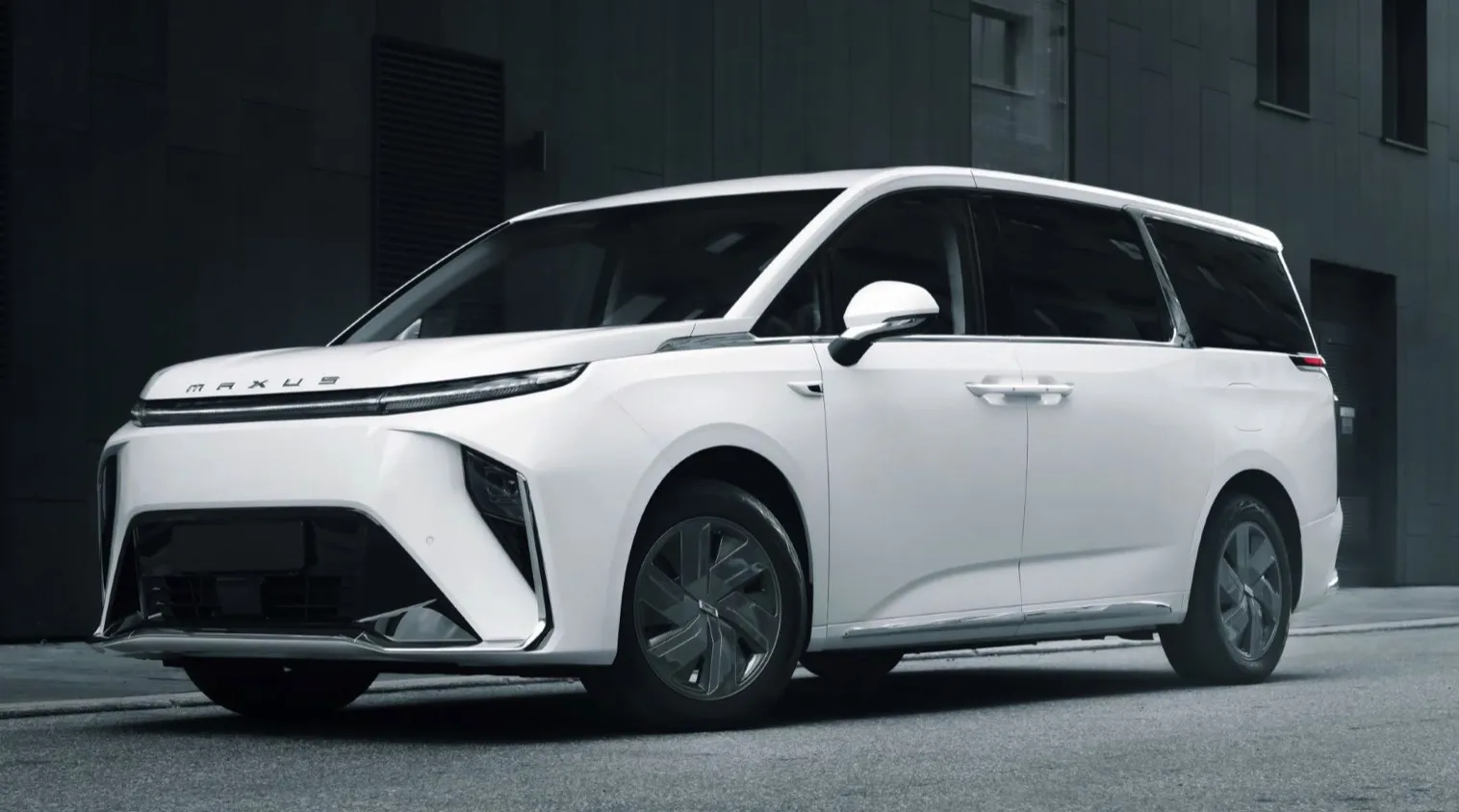
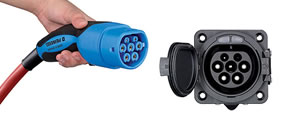
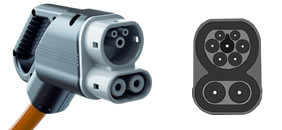
Charging is possible by using a regular wall plug or a charging station. Public charging is always done through a charging station. How fast the EV can charge depends on the charging station (EVSE) used and the maximum charging capacity of the EV. The table below shows all possible options for charging the Maxus MIFA 9. Each option shows how fast the battery can be charged from empty to full.
Europe
Charging an EV in Europe differs by country. Some European countries primarily use 1-phase connections to the grid, while other countries are almost exclusively using a 3-phase connection. The table below shows all possible ways the Maxus MIFA 9 can be charged, but some modes of charging might not be widely available in certain countries.
Type 2 (Mennekes - IEC 62196)
Charging Point
Max. Power
Power
Time
Rate
Wall Plug (2.3 kW)
230V / 1x10A
2.3 kW
43 hours
8 km/h
1-phase 16A (3.7 kW)
230V / 1x16A
3.7 kW
26h45m
14 km/h
1-phase 32A (7.4 kW)
230V / 1x32A
7.4 kW
13h30m
27 km/h
3-phase 16A (11 kW)
400V / 3x16A
11 kW
9 hours
41 km/h
3-phase 32A (22 kW)
400V / 3x16A
11 kW †
9 hours
41 km/h
† = Limited by on-board charger, vehicle cannot charge faster.
Fast Charging (10 -> 80%)
Rapid charging enables longer journeys by adding as much range as possible in the shortest amount of time. Charging power will decrease significantly after 80% state-of-charge has been reached. A typical rapid charge therefore rarely exceeds 80% SoC. The rapid charge rate of an EV depends on the charger used and the maximum charging power the EV can handle. The table below shows all details for rapid charging the Maxus MIFA 9.
Max. Power: maximum power provided by charge point
Avg. Power: average power provided by charge point over a session from 10% to 80%
Time: time needed to charge from 10% to 80%
Rate: average charging speed over a session from 10% to 80%
Combined Charging System (CCS Combo 2)
Charging Point
Max. Power
Avg. Power
Time
Rate
CCS (50 kW DC)
50 kW
50 kW
74 min
200 km/h
CCS (150 kW DC)
114 kW †
103 kW †
36 min
420 km/h
Charge Curve
Data made available by Fastned
This vehicle does not support Plug & Charge
† = Limited by charging capabilities of vehicle
Plug & Charge: allows for automatic initiation of a charging session at supported CCS charging stations in accordance with ISO 15118.
Actual charging rates may differ from data shown due to factors like outside temperature, state of the battery and driving style.
Weight-
About this Vehicle
Maxus MIFA 9 Overview
The Maxus MIFA 9 positions itself as a premium electric MPV in the EV landscape, blending luxury chauffeur-driven comfort with family-friendly versatility. Produced by SAIC Maxus since June 2023, this Maxus electric MPV targets affluent families, executives, and those seeking a spacious alternative to traditional vans like the Mercedes V-Class. Its EV specs shine through a dedicated electric platform shared with the gasoline Maxus G90 but elevated with grander design, advanced tech, and superior equipment, making the MIFA 9 review highlight its role in expanding premium electric vehicle range options for seven passengers.
Key distinguishing features include a massive 5,270 mm length, 3,200 mm wheelbase, and innovative second-row captain’s chairs with massage, heating, cooling, and reclining functions. The Maxus MIFA 9 matters in the EV market by prioritizing rear-seat luxury—think pop-out cupholders, household sockets, and a panoramic sunroof—while delivering solid electric SUV/MPV practicality with 466 liters of trunk space expanding to 2,179 liters. In a segment dominated by Tesla and European rivals, it offers competitive MIFA 9 review value, especially in markets like Europe and Asia, where spacious, tech-laden EVs are gaining traction.
Maxus MIFA 9 Performance and Driving Experience
The Maxus MIFA 9 delivers composed, leisurely performance suited to its luxury MPV role, with a single front-wheel-drive (FWD) electric motor producing smooth power delivery. Acceleration feels relaxed at 9.2 seconds to 62 mph, prioritizing serene highway cruising up to 112 mph over sporty thrills, while the soft suspension absorbs bumps effectively yet maintains stability. Real-world driving impressions praise its pliant ride, good noise insulation, and straight-line composure, though moderate cornering induces body roll—ideal for chauffeured comfort rather than enthusiastic driving. The MacPherson front and multi-link rear suspension, paired with L2 autonomous driving aids like adaptive cruise control, enhances everyday usability.
Specification
Value
0-60 mph (0-100 km/h)
9.2 sec
Top Speed
112 mph / 180 km/h
Power Output
245 hp / 180 kW
Torque
258 lb-ft / 350 Nm
Maxus MIFA 9 Range and Battery Specifications
Official Maxus MIFA 9 WLTP range spans 267-274 miles (430-440 km) depending on trim, with CLTC figures up to 348 miles (560 km) in select markets; real-world range typically hits around 250-275 miles under mixed conditions. The 90 kWh ternary lithium battery (90 kWh gross/usable in top trims) powers efficient motoring at roughly 22-25 kWh/100 km, influenced by weather, driving style, and the vehicle’s 2,385-2,610 kg curb weight. A 77 kWh option suits shorter needs with 299 miles CLTC. Factors like cold weather or heavy loads can reduce MIFA 9 real-world range by 20-30%, but its efficiency stands out for a large MPV.
Range Metric
Value
WLTP Range
267-274 miles / 430-440 km
EPA Range
Not available
Real-World Range
250-275 miles / 400-440 km
Battery Capacity
90 kWh (usable)
Maxus MIFA 9 Charging Times and Options
The Maxus MIFA 9 supports practical home charging via Level 2 AC at 11 kW, fully replenishing the 90 kWh pack in about 8.5 hours, while Level 1 takes longer for overnight top-ups. DC fast charging peaks at up to 100 kW, achieving 10-80% in 30 minutes for road trips. It’s compatible with major networks, though peak speeds assume optimal conditions. Practical scenarios favor daily Level 2 for families, with fast DC ideal for highway stops—expect 0.5 hours for significant range adds.
Charging Method
Time
Speed
Level 1 (120V)
30+ hours
~1.5 kW
Level 2 (240V/7kW)
13 hours
~7 kW
Level 2 (240V/11kW)
8.5 hours
~11 kW
DC Fast Charge (10-80%)
30 min
up to 100 kW
Maxus MIFA 9 vs Competitors
In the Maxus MIFA 9 vs competitors arena, it undercuts the Mercedes EQV (similar space but pricier at $70K+) with better EV range and luxury seats, while matching the Kia EV9’s family appeal but emphasizing MPV chauffeur vibes over SUV ruggedness. Against the Tesla Model Y, the MIFA 9 comparison offers vastly more seating and cargo for seven, though it trails in acceleration and supercharger access—ideal for those prioritizing rear-passenger opulence over raw performance.
Frequently Asked Questions
The Maxus MIFA 9 real-world range averages 250-275 miles (400-440 km) in mixed driving, dropping to 200-230 miles in cold weather or with full loads, based on its 90 kWh battery and efficient FWD setup.
Home Level 2 (11 kW) takes 8.5 hours for a full charge; DC fast charging (up to 100 kW) delivers 10-80% in 30 minutes, making it practical for daily use and longer trips.
The Maxus MIFA 9 is exclusively front-wheel drive (FWD) across all trims, prioritizing efficiency and cost over AWD traction for its luxury MPV focus.
The Maxus MIFA 9 uses SAIC’s dedicated NEV (New Energy Vehicle) platform, optimized for a 90 kWh ternary lithium battery, 245 hp motor, and MPV-specific luxury like zero-gravity second-row seats with massage.
The Maxus MIFA 9 vs Kia EV9 favors superior second-row luxury and MPV space for seven, with similar 90 kWh capacity but slower acceleration; the EV9 edges in AWD options and faster charging.
Yes, for luxury family transport—pros include exceptional rear-seat comfort, 267+ mile WLTP range, and value pricing ($40K-$61K); cons are leisurely 9.2-second acceleration and FWD-only drivetrain.> The Maxus MIFA 9 by SAIC is a premium electric MPV with a 90 kWh battery, up to 274-mile WLTP range, and 245 hp FWD power, excelling in chauffeur-level second-row luxury with massage seats and panoramic roof. Ideal for families seeking spacious EV specs over sportiness, it rivals the Kia EV9 and Mercedes EQV at a competitive price.
1 / 13
We use cookies to improve your experience on our website. By browsing this website, you agree to our use of cookies. Learn more