Charging is possible by using a regular wall plug or a charging station. Public charging is always done through a charging station. How fast the EV can charge depends on the charging station (EVSE) used and the maximum charging capacity of the EV. The table below shows all possible options for charging the Polestar 2 Long Range Performance. Each option shows how fast the battery can be charged from empty to full.
Europe
Charging an EV in Europe differs by country. Some European countries primarily use 1-phase connections to the grid, while other countries are almost exclusively using a 3-phase connection. The table below shows all possible ways the Polestar 2 Long Range Performance can be charged, but some modes of charging might not be widely available in certain countries.
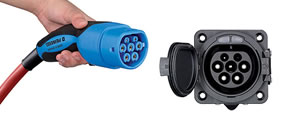
Type 2 (Mennekes - IEC 62196)
Charging Point
Max. Power
Power
Time
Rate
Wall Plug (2.3 kW)
230V / 1x10A
2.3 kW
40h30m
11 km/h
1-phase 16A (3.7 kW)
230V / 1x16A
3.7 kW
25h15m
18 km/h
1-phase 32A (7.4 kW)
230V / 1x32A
7.4 kW
12h45m
35 km/h
3-phase 16A (11 kW)
400V / 3x16A
11 kW
8h30m
53 km/h
3-phase 32A (22 kW)
400V / 3x16A
11 kW †
8h30m
53 km/h
† = Limited by on-board charger, vehicle cannot charge faster.
Fast Charging (10 -> 80%)
Rapid charging enables longer journeys by adding as much range as possible in the shortest amount of time. Charging power will decrease significantly after 80% state-of-charge has been reached. A typical rapid charge therefore rarely exceeds 80% SoC. The rapid charge rate of an EV depends on the charger used and the maximum charging power the EV can handle. The table below shows all details for rapid charging the Polestar 2 Long Range Performance.
Max. Power: maximum power provided by charge point
Avg. Power: average power provided by charge point over a session from 10% to 80%
Time: time needed to charge from 10% to 80%
Rate: average charging speed over a session from 10% to 80%
Combined Charging System (CCS Combo 2)
Charging Point
Max. Power
Avg. Power
Time
Rate
CCS (50 kW DC)
50 kW
50 kW
70 min
270 km/h
CCS (100 kW DC)
100 kW
85 kW †
41 min
460 km/h
CCS (150 kW DC)
150 kW
105 kW †
33 min
570 km/h
CCS (175 kW DC)
175 kW
115 kW †
30 min
630 km/h
CCS (350 kW DC)
205 kW †
125 kW †
28 min
670 km/h
This vehicle supports Autocharge
This vehicle does not support Plug & Charge
† = Limited by charging capabilities of vehicle
Autocharge: allows for automatic initiation of a charging session at supported CCS charging stations.
Plug & Charge: allows for automatic initiation of a charging session at supported CCS charging stations in accordance with ISO 15118.
Actual charging rates may differ from data shown due to factors like outside temperature, state of the battery and driving style.
Polestar Claimed Specifications
The table below shows the claimed specifications from the manufacturer for charging the Polestar 2 Long Range Performance. The specifications can differ from the table above for a variety of reasons. If real-world charge tests are available, these differences can be signifcant. If no real-world tests are available, the table above will be based on the manufacturer specifications as per the table below.
Max. Power: maximum charge power during charging session
Charge From: battery percentage (% SoC) where charging session is started
Charge To: battery percentage (% SoC) where charging session is ended
Time: time needed for charging session
Polestar Claimed Specifications
Max. Power
Charge From
Charge To
Time
205 kW
10 %
80 %
28 min
Dimensions and Weight
Length
4606 mm
Width
1859 mm
Width with mirrors
1985 mm
Height
1473 mm
Wheelbase
2735 mm
Weight Unladen (EU) *
2175 kg
Gross Vehicle Weight (GVWR)
No Data
Max. Payload
No Data
Cargo Volume
407 L
Cargo Volume Max
1097 L
Cargo Volume Frunk
41 L
Roof Load
75 kg
Tow Hitch Possible
Yes
Towing Weight Unbraked
750 kg
Towing Weight Braked
1500 kg
Vertical Load Max
90 kg
About this Vehicle
Polestar 2 Long Range Performance Overview
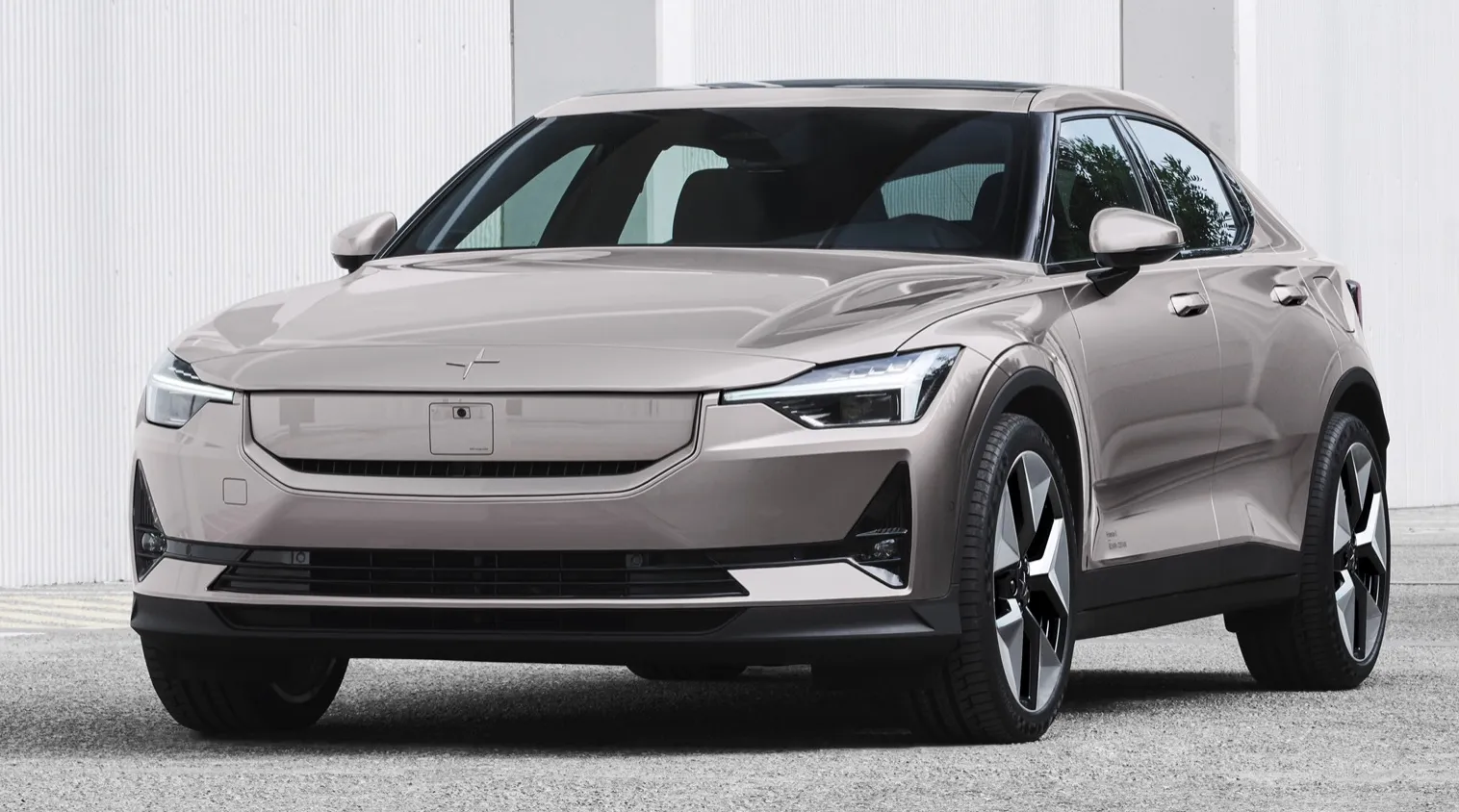
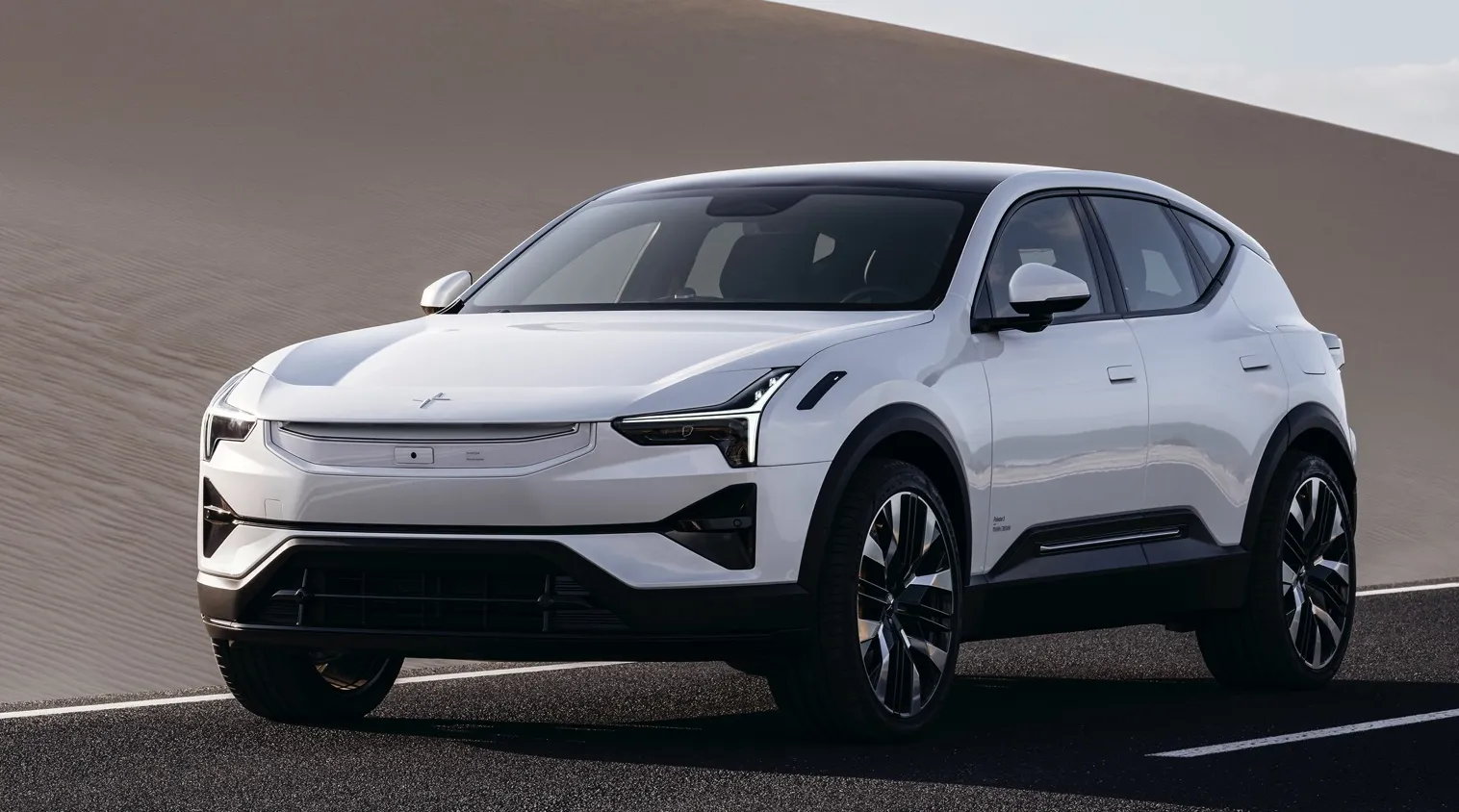
The Polestar 2 Long Range Performance positions itself as a premium electric sedan in the competitive EV market, blending Scandinavian minimalist design with high-performance credentials from the Swedish brand’s Volvo heritage. Targeted at discerning drivers seeking a driver’s EV with sporty dynamics, it appeals to urban professionals and enthusiasts who prioritize refined technology over outright luxury excess. Built on Polestar’s optimized electric vehicle platform, it features a dual-motor AWD setup enhanced by the Performance pack, including upgraded power delivery and Brembo brakes for superior stopping power.
Key distinguishing features include its 476 hp output, advanced heat pump for efficiency, and Google-integrated infotainment, setting it apart in the Polestar 2 review landscape. This model matters because it elevates the Polestar electric sedan category by balancing blistering acceleration with practical EV specs, challenging the notion that performance EVs sacrifice range. With WLTP figures up to 568 km and real-world adaptability, the Polestar 2 Long Range Performance stands out for its driver-focused philosophy in a sea of tech-heavy rivals.
Polestar 2 Long Range Performance and Driving Experience
The Polestar 2 Long Range Performance delivers explosive acceleration thanks to its dual electric motors producing 476 hp and 546 lb-ft of torque, rocketing from 0-60 mph in 4.0 seconds. Power delivery is instant and linear, with the Performance pack’s software tuning enhancing throttle response for track-like responsiveness. Handling shines through its low center of gravity, precise steering, and Ohlins dampers, achieving 0.88 g on the skidpad for confident cornering. The AWD system intelligently distributes torque between front (135 kW) and rear (215 kW) motors, providing grip in all conditions without compromising agility. Real-world impressions reveal a composed ride on highways, with 70-0 mph braking in 166 feet, making it thrilling for spirited drives yet comfortable daily.
Specification
Value
0-60 mph (0-100 km/h)
<strong>4.0 sec</strong>
Top Speed
<strong>127 mph / 205 km/h</strong>
Power Output
<strong>476 hp / 350 kW</strong>
Torque
<strong>546 lb-ft / 740 Nm</strong>
Polestar 2 Long Range Performance Range and Battery Specifications
Official Polestar 2 Long Range Performance WLTP range stands at 568 km (353 miles), but EPA estimates drop to 254 miles due to testing rigor, with real-world figures around 250 miles on highways at 75 mph. The 82 kWh nominal battery (79 kWh usable) employs lithium-ion chemistry optimized for density, paired with a heat pump that boosts cold-weather efficiency to 23.9-25.4 kWh/100 miles. Energy consumption averages 32 kWh/100 miles EPA, influenced by weather—dropping 20-30% in cold—driving style, and terrain, where aggressive acceleration cuts range noticeably. Tools like the range assistant app help maximize Polestar 2’s real-world range.
Range Metric
Value
WLTP Range
<strong>353 miles / 568 km</strong>
EPA Range
<strong>254 miles</strong>
Real-World Range
<strong>250 miles</strong>
Battery Capacity
<strong>79 kWh (usable)</strong>
Polestar 2 Long Range Performance Charging Times and Options
Home charging for the Polestar 2 Long Range Performance is straightforward with Level 1 at 120V for overnight top-ups or Level 2 at 11 kW for 8 hours full charge. DC fast charging peaks at 205 kW via CCS, achieving 10-80% in under 30 minutes, compatible with Electrify America and other networks. Practical scenarios include road trips with 150-200 miles added in 20 minutes, ideal for the Polestar 2 battery specs. Preconditioning optimizes sessions, minimizing degradation.
Charging Method
Time
Speed
Level 1 (120V)
<strong>24+ hours</strong>
~1.4 kW
Level 2 (240V/7kW)
<strong>11 hours</strong>
~7 kW
Level 2 (240V/11kW)
<strong>8 hours</strong>
~11 kW
DC Fast Charge (10-80%)
<strong><30 min</strong>
up to <strong>205 kW</strong>
Polestar 2 Long Range Performance vs Competitors
The Polestar 2 Long Range Performance edges the Tesla Model 3 Performance in build quality and handling (0.88 g vs. Tesla’s 0.95 g but with superior ride comfort), while matching its 4.0-second 0-60. Against the BMW i4 M50, it offers better AWD torque vectoring and value at similar Polestar 2 vs BMW i4 pricing, though BMW leads in rear space. Compared to the Hyundai Ioniq 5, the Polestar provides superior power (476 hp vs. 320 hp) and a premium interior, winning the Polestar 2 comparison for driving purists despite slightly less cargo room.
Frequently Asked Questions
Expect around 250 miles on 75-mph highways per Car and Driver tests, with city driving up to 300+ miles in mild weather; cold reduces it by 20-30% to 200 miles, aided by the heat pump.
Level 2 (11 kW) takes 8 hours for a full charge; DC fast charging at 205 kW hits 10-80% in under 30 minutes, adding 150+ miles quickly.
It’s dual-motor AWD standard, with 135 kW front and 215 kW rear motors for optimal traction and performance.
The pack upgrades to 476 hp / 350 kW via software tuning, plus Brembo brakes, Ohlins dampers, and 20-inch wheels for enhanced acceleration and dynamics.
Similar 4.0-sec 0-60 and range, but Polestar excels in interior quality, handling composure, and Google integration over Tesla’s minimalist approach.
Yes, for performance fans—pros include 476 hp thrust, premium cabin, and 254-mile EPA range; cons are middling rear space and higher price vs. Tesla.> The Polestar 2 Long Range Performance is a premium AWD electric sedan with 476 hp, 254-mile EPA range, and 4.0-sec 0-60 acceleration from its 79 kWh battery. It stands out with superior handling, Scandinavian design, and 205 kW fast charging, making it ideal for enthusiasts seeking Tesla alternatives with refined dynamics.




 Polestar
 Polestar
 Polestar
 Polestar