

Polestar 3 Long Range Performance
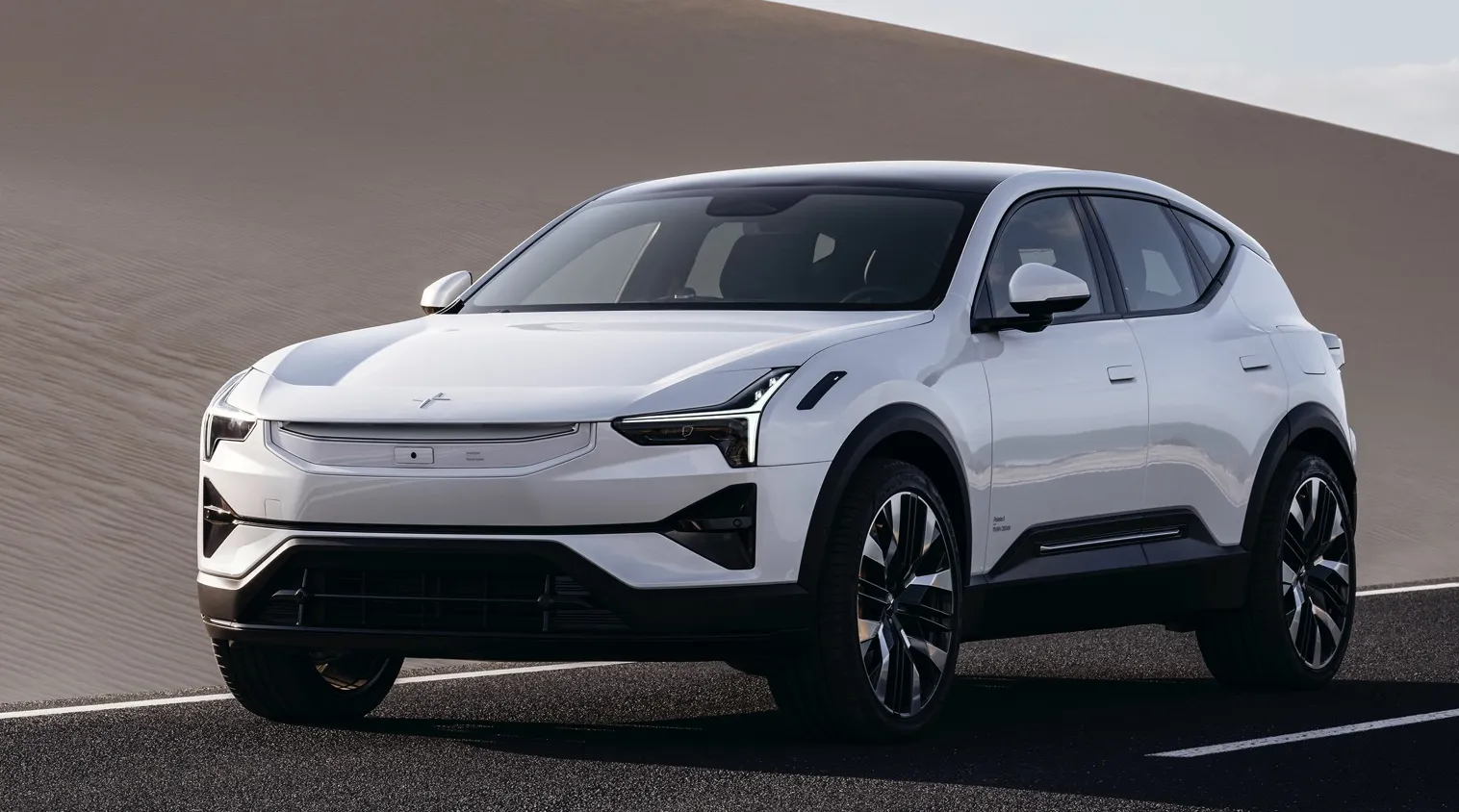
Key Specifications
Real Range Estimation
| City - Cold Weather * | 475 km |
| Highway - Cold Weather * | 340 km |
| Combined - Cold Weather * | 400 km |
between 340 - 670 km
| City - Mild Weather * | 670 km |
| Highway - Mild Weather * | 425 km |
| Combined - Mild Weather * | 530 km |
Battery
| Nominal Capacity | 111.0 kWh |
| Battery Type | Lithium-ion |
| Number of Cells | 204 |
| Architecture | 400 V |
| Warranty Period | 8 years |
| Warranty Mileage | 160,000 km |
| Useable Capacity | 107.0 kWh |
| Cathode Material | NCM |
| Pack Configuration | 102s2p |
| Nominal Voltage | No Data |
| Form Factor | No Data |
| Name / Reference | No Data |
Performance
| Acceleration 0 - 100 km/h | 4.7 sec |
| Top Speed | 210 km/h |
| Electric Range * | 470 km |
| Total Power | 380 kW (517 PS) |
| Total Torque | 910 Nm |
| Drive | AWD |
Home and Destination Charging (0 -> 100%)
Charging is possible by using a regular wall plug or a charging station. Public charging is always done through a charging station. How fast the EV can charge depends on the charging station (EVSE) used and the maximum charging capacity of the EV. The table below shows all possible options for charging the Polestar 3 Long Range Performance. Each option shows how fast the battery can be charged from empty to full.
Europe
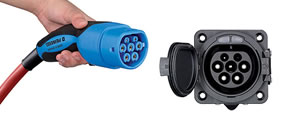
Charging an EV in Europe differs by country. Some European countries primarily use 1-phase connections to the grid, while other countries are almost exclusively using a 3-phase connection. The table below shows all possible ways the Polestar 3 Long Range Performance can be charged, but some modes of charging might not be widely available in certain countries.
| Type 2 (Mennekes - IEC 62196) |
|---|
 |
| Charging Point | Max. Power | Power | Time | Rate |
|---|---|---|---|---|
| Wall Plug (2.3 kW) | 230V / 1x10A | 2.3 kW | 54h45m | 9 km/h |
| 1-phase 16A (3.7 kW) | 230V / 1x16A | 3.7 kW | 34h15m | 14 km/h |
| 1-phase 32A (7.4 kW) | 230V / 1x32A | 7.4 kW | 17 hours | 28 km/h |
| 3-phase 16A (11 kW) | 400V / 3x16A | 11 kW | 11h30m | 41 km/h |
| 3-phase 32A (22 kW) | 400V / 3x16A | 11 kW † | 11h30m | 41 km/h |
† = Limited by on-board charger, vehicle cannot charge faster.
Fast Charging (10 -> 80%)
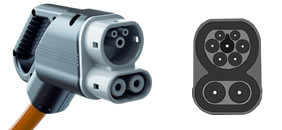
Rapid charging enables longer journeys by adding as much range as possible in the shortest amount of time. Charging power will decrease significantly after 80% state-of-charge has been reached. A typical rapid charge therefore rarely exceeds 80% SoC. The rapid charge rate of an EV depends on the charger used and the maximum charging power the EV can handle. The table below shows all details for rapid charging the Polestar 3 Long Range Performance.
- Max. Power: maximum power provided by charge point
- Avg. Power: average power provided by charge point over a session from 10% to 80%
- Time: time needed to charge from 10% to 80%
- Rate: average charging speed over a session from 10% to 80%
| Combined Charging System (CCS Combo 2) |
|---|
 |
| Charging Point | Max. Power | Avg. Power | Time | Rate |
|---|---|---|---|---|
| CCS (50 kW DC) | 50 kW | 50 kW | 95 min | 200 km/h |
| CCS (100 kW DC) | 100 kW | 85 kW † | 56 min | 350 km/h |
| CCS (150 kW DC) | 150 kW | 110 kW † | 43 min | 450 km/h |
| CCS (175 kW DC) | 175 kW | 125 kW † | 38 min | 510 km/h |
| CCS (350 kW DC) | 250 kW † | 150 kW † | 32 min | 610 km/h |
| This vehicle supports Autocharge |
|---|
| This vehicle does not support Plug & Charge |
† = Limited by charging capabilities of vehicle
Autocharge: allows for automatic initiation of a charging session at supported CCS charging stations.
Plug & Charge: allows for automatic initiation of a charging session at supported CCS charging stations in accordance with ISO 15118.
Actual charging rates may differ from data shown due to factors like outside temperature, state of the battery and driving style.
Polestar Claimed Specifications
The table below shows the claimed specifications from the manufacturer for charging the Polestar 3 Long Range Performance. The specifications can differ from the table above for a variety of reasons. If real-world charge tests are available, these differences can be signifcant. If no real-world tests are available, the table above will be based on the manufacturer specifications as per the table below.
- Max. Power: maximum charge power during charging session
- Charge From: battery percentage (% SoC) where charging session is started
- Charge To: battery percentage (% SoC) where charging session is ended
- Time: time needed for charging session
| Polestar Claimed Specifications |
|---|
| Max. Power | Charge From | Charge To | Time |
|---|---|---|---|
| 250 kW | 10 % | 80 % | 30 min |
Dimensions and Weight
| Length | 4900 mm |
| Width | 1968 mm |
| Width with mirrors | 2120 mm |
| Height | 1614 mm |
| Wheelbase | 2985 mm |
| Weight Unladen (EU) | 2660 kg |
| Gross Vehicle Weight (GVWR) | 3050 kg |
| Max. Payload | 465 kg |
| Cargo Volume | 484 L |
| Cargo Volume Max | 1411 L |
| Cargo Volume Frunk | 32 L |
| Roof Load | 100 kg |
| Tow Hitch Possible | Yes |
| Towing Weight Unbraked | 750 kg |
| Towing Weight Braked | 2200 kg |
| Vertical Load Max | 100 kg |
About this Vehicle
# Polestar 3 Long Range Performance: Premium Electric SUV Review
Polestar 3 Overview
The Polestar 3 represents a significant milestone for the Swedish electric performance brand, establishing itself as a premium all-electric SUV that combines Scandinavian design philosophy with cutting-edge EV technology. Positioned in the luxury electric SUV segment, the Polestar 3 targets discerning buyers who demand both performance and practicality without compromising on environmental responsibility. This all-electric performance SUV features a sophisticated 800V architecture that enables rapid charging capabilities, while its modular powertrain options—ranging from a single-motor rear-wheel-drive configuration to a dual-motor all-wheel-drive setup with an available Performance pack—allow buyers to prioritize either efficiency or exhilarating acceleration.
The Polestar 3 Long Range Performance variant exemplifies the brand’s commitment to delivering engaging driving dynamics alongside impressive real-world usability. Built on a dedicated electric platform, the Polestar 3 distinguishes itself through its minimalist Scandinavian interior design, advanced safety features, and integration with Google services, including Google Maps and Google Assistant. The vehicle’s significance in the EV landscape lies in its ability to challenge established premium electric SUV competitors while offering a unique blend of performance, range, and charging speed that appeals to tech-forward luxury buyers.
Polestar 3 Performance and Driving Experience
The Polestar 3 Long Range Dual Motor delivers impressive acceleration with 489 horsepower and 620 lb-ft of torque, achieving 0-60 mph in just 4.8 seconds. When equipped with the optional Performance pack, the Polestar 3 reaches 517 horsepower and 671 lb-ft of torque, enabling a blistering 4.5-second sprint to 60 mph. The dual-motor configuration features a sophisticated computer-controlled torque vectoring system that actively redistributes power between wheels to maximize traction and cornering performance, resulting in faster acceleration and better handling on slippery surfaces.
The Polestar 3’s driving experience benefits from its advanced suspension tuning and responsive steering. The standard self-leveling air suspension provides a refined ride quality, while the Performance pack adds sport-tuned chassis adjustments and revised steering calibration for more direct feedback. With a top speed of 130 mph and impressive braking performance, the Polestar 3 delivers engaging dynamics that justify its performance-oriented positioning.
| Specification | Value |
|---|---|
| 0-60 mph | 4.8 sec (4.5 sec with Performance pack) |
| Top Speed | 130 mph |
| Power Output | 489 hp (517 hp with Performance pack) |
| Torque | 620 lb-ft (671 lb-ft with Performance pack) |
Polestar 3 Range and Battery Specifications
The Polestar 3 Long Range Dual Motor offers an EPA-estimated range of 315 miles, making it suitable for most daily driving and weekend trips. The single-motor variant extends this to 350 miles, while the Performance-tuned model achieves 279 miles due to its more aggressive power delivery and performance-oriented tire selection. Real-world range testing shows the Polestar 3 can deliver between 280-320 miles depending on driving conditions, weather, and driving style.
All Polestar 3 models feature a high-capacity 111 kWh battery pack with advanced thermal management and an energy-saving heat pump that recycles waste heat from the motors and battery to preserve charge. The Polestar 3 achieves impressive energy efficiency ratings, with the single-motor variant reaching 95 MPGe combined, while the dual-motor model manages 88 MPGe combined. Range-optimizing features include a dedicated range assistant app, pre-entry climate control, and intelligent energy management systems that help drivers maximize their driving distance.
| Range Metric | Value |
|---|---|
| EPA Range (Dual Motor) | 315 miles |
| EPA Range (Single Motor) | 350 miles |
| EPA Range (Performance) | 279 miles |
| Battery Capacity | 111 kWh |
| Energy Efficiency | 35-44 kWh/100 mi |
Polestar 3 Charging Times and Options
The Polestar 3 features an advanced 800V architecture that enables exceptional DC fast-charging speeds. With up to 350 kW peak charging capability, the Polestar 3 can charge from 10-80% in as little as 20-30 minutes using compatible DC fast chargers. This rapid charging capability makes the Polestar 3 ideal for long-distance travel and reduces charging anxiety for daily commuters.
Home charging options provide flexibility for different installation scenarios. Level 2 charging at 240V delivers approximately 7-11 kW, depending on the charger specification, adding roughly 25-35 miles of range per hour. The Polestar 3 accepts the SAE Combo fast-charging standard, ensuring compatibility with the expanding network of public charging infrastructure across North America.
| Charging Method | Time | Speed |
|---|---|---|
| Level 1 (120V) | 40+ hours | ~1.4 kW |
| Level 2 (240V/7kW) | 15 hours | 7 kW |
| Level 2 (240V/11kW) | 10 hours | 11 kW |
| DC Fast Charge (10-80%) | 20-30 min | up to 350 kW |
Polestar 3 vs Competitors
The Polestar 3 competes directly with the Tesla Model Y, BMW iX, and Mercedes-Benz EQE SUV. Compared to the Tesla Model Y, the Polestar 3 offers superior charging speed (350 kW vs 250 kW) and a more refined interior design, though the Model Y provides slightly better range efficiency. Against the BMW iX, the Polestar 3 delivers more responsive handling and faster acceleration in its Performance configuration, while matching the iX’s premium interior quality. The Polestar 3 outperforms the Mercedes EQE SUV in acceleration and charging speed while offering comparable luxury appointments and technology integration.
Frequently Asked Questions
Related Vehicles
View All Polestar
Polestar 3 Long Range Single motor
 Polestar
Polestar 2 Standard Range Single Motor
 Polestar
Polestar 2 Long Range Single Motor
 Polestar