
Honda Riding Assist-e
Riding Assist-e



Vehicle Overview
Honda Riding Assist-e Review (2025)
Self-Balancing Electric Motorcycle Technology Explained
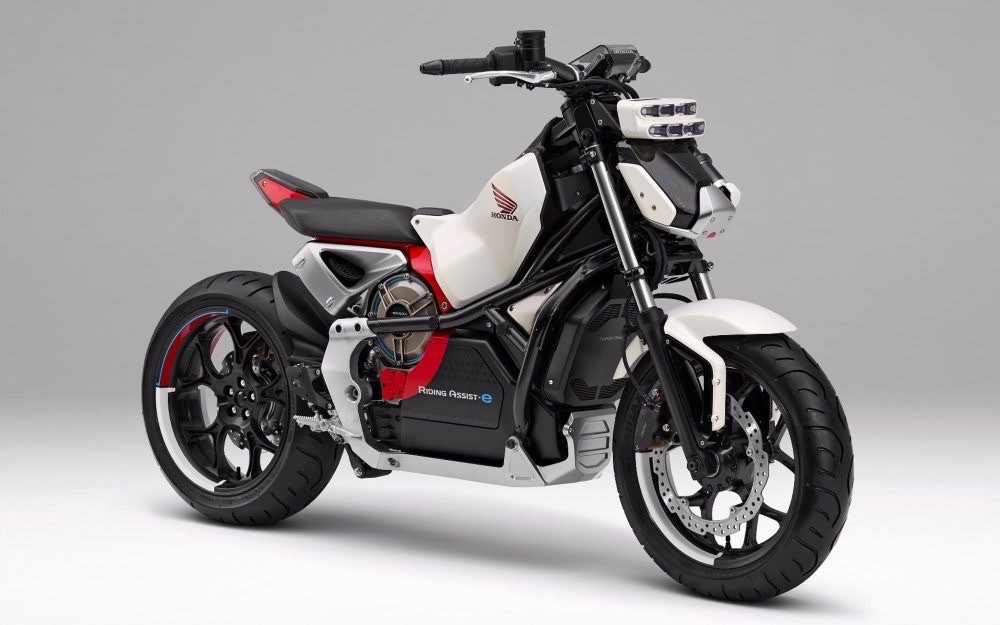
The Honda Riding Assist-e is not a conventional production motorcycle, but one of the most important future mobility technologies ever developed by Honda. First unveiled at CES, Riding Assist-e demonstrates a self-balancing electric motorcycle system that can stay upright, move autonomously at low speed, and dramatically reduce the difficulty of riding.
Rather than focusing on performance or range, Honda Riding Assist-e represents a technological foundation for the next generation of electric motorcycles, scooters, and autonomous two-wheelers.
What Is Honda Riding Assist-e?
Honda Riding Assist-e is a technology demonstrator that combines:
-
Electric drivetrain
-
Self-balancing robotics
-
Autonomous low-speed movement
-
Rider-assist intelligence
It is based on Honda’s robotics research (ASIMO) and adapted for two-wheel mobility.
👉 Important:
Honda Riding Assist-e is not currently sold to the public. It is a concept platform showcasing future Honda EV and safety technologies.
Estimated Price (If Commercialized)
-
Estimated future price: $8,000–$12,000 USD
(depending on battery size and final production form)
👉 Honda has not announced pricing, but experts expect it to enter the market as a premium urban electric motorcycle or scooter once commercialized.
Key Technical Highlights
-
Drivetrain: Electric
-
Self-balancing system: Yes (no kickstand required)
-
Autonomous movement: Low-speed forward/backward
-
Steering: Adaptive robotic steering geometry
-
Seat height adjustment: Automatic (lowers when stopping)
-
Human assistance required: Minimal
The bike can:
-
Stay upright at a standstill
-
Follow the rider while walking
-
Balance itself at walking speed
-
Eliminate tip-overs in traffic or parking
How Honda Riding Assist-e Works
Honda uses a robotic balance control system, not gyroscopes.
Core technologies:
-
Adaptive steering angle control
-
Front fork articulation
-
Real-time balance correction
-
AI-based motion prediction
Unlike traditional motorcycles, the system actively manages balance, especially at 0–10 km/h, where most falls occur.
Riding Experience (Concept Demonstrations)
During demonstrations, Riding Assist-e shows:
-
Zero effort at stops
-
No need to put feet down
-
Extremely low stress for beginners
-
Smooth low-speed maneuvering
This technology could dramatically reduce accidents, especially for:
-
New riders
-
Elderly riders
-
Urban commuters
-
Delivery riders
Battery, Range & Charging (Concept Estimates)
Honda has not released final numbers, but expected specs include:
-
Battery capacity: ~4–6 kWh
-
Range: 50–70 miles (80–110 km) city use
-
Charging: AC charging (home/workplace)
-
Focus: Efficiency over speed
Why Honda Riding Assist-e Matters
This technology could transform:
-
Urban mobility
-
Electric scooters
-
Electric motorcycles
-
Autonomous delivery vehicles
Key benefits:
-
Fewer accidents
-
Easier learning curve
-
More inclusive mobility
-
Reduced rider fatigue
👉 It represents the future of electric two-wheel safety, not just a single model.
Pros & Cons (Technology Perspective)
✅ Pros
-
Revolutionary self-balancing technology
-
Eliminates low-speed falls
-
Ideal for beginners and cities
-
Scalable across scooters & motorcycles
-
Backed by Honda robotics expertise
❌ Cons
-
Not commercially available yet
-
Higher complexity and cost
-
Purists may dislike automation
Comparison: Honda Riding Assist-e vs Traditional Electric Motorcycles
| Feature | Riding Assist-e | Traditional EV Bike |
|---|---|---|
| Self-balancing | ✅ Yes | ❌ No |
| Beginner-friendly | ⭐⭐⭐⭐⭐ | ⭐⭐⭐ |
| Urban safety | Very high | Medium |
| Autonomy | Partial | None |
| Availability | Concept | Production |
Who Is Honda Riding Assist-e For?
When commercialized, it will be ideal for:
-
Urban commuters
-
Beginners
-
Elderly riders
-
Delivery & fleet use
-
Cities with traffic congestion
Not aimed at:
-
Sport riders
-
Track use
-
Off-road riding
Final Verdict
The Honda Riding Assist-e is one of the most important electric motorcycle concepts ever created. It shows a future where two-wheel mobility is safer, easier, and more accessible, without sacrificing the freedom of riding.
While it is not yet a production motorcycle, the technology behind Riding Assist-e is likely to appear in future Honda electric scooters and motorcycles within this decade.
Detailed Specifications
- Motor Power
- Electric