
Rivian Targets Full Autonomy With In-House AI Superchip and Next-Gen Autopilot Platform
American EV startup Rivian has unveiled its most ambitious autonomous driving push yet, revealing a custom AI processor, a new autonomy software stack, and a paid self-driving subscription at its first-ever Autonomy & AI Day.
According to Rivian founder and CEO RJ Scaringe, the company’s long-term goal is to achieve Level 4 autonomous driving, where vehicles can operate without driver intervention in defined conditions.
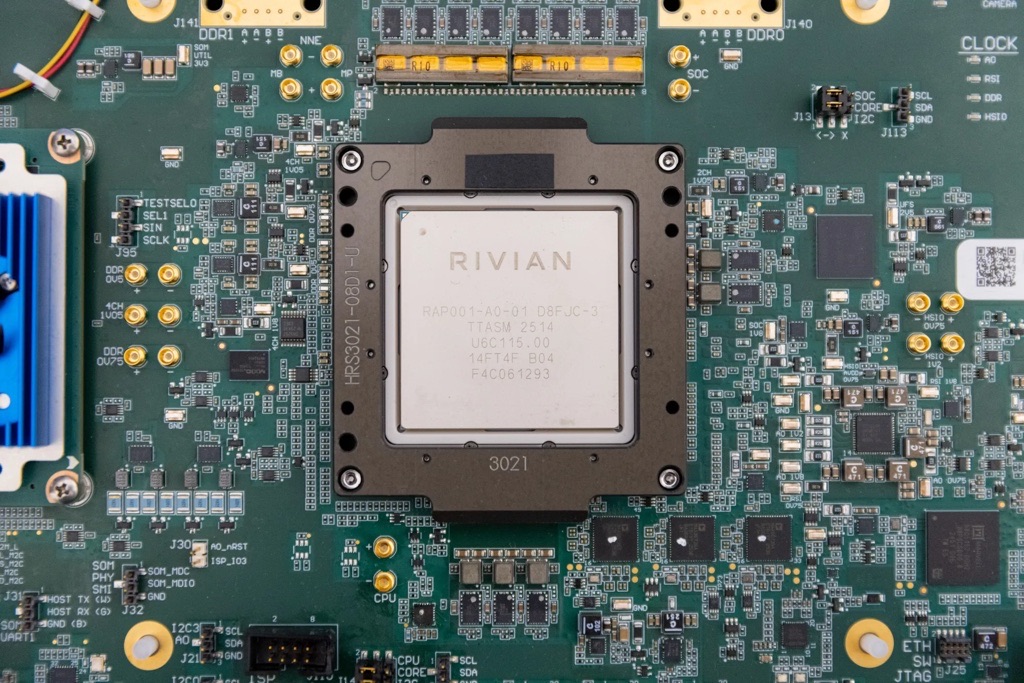
Rivian Autonomy Processor (RAP1): The Company’s Own AI Chip
At the heart of Rivian’s autonomy strategy is its first-generation in-house processor, called the Rivian Autonomy Processor (RAP1).
Key highlights of RAP1 and the associated hardware platform:
-
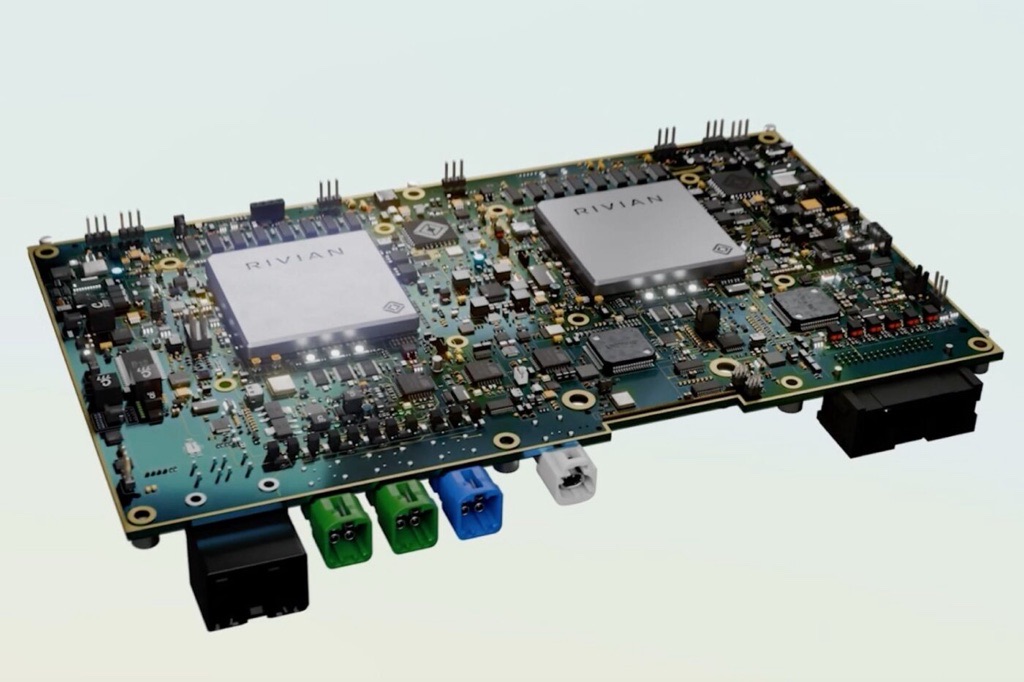
Forms the core of the ACM3 (Autonomy Compute Module 3)
-
Up to 1,600 TOPS (trillion operations per second)
-
Capable of processing up to 5 billion pixels per second
-
Optimized for vision-first autonomous driving
-
Designed as a scalable architecture for future upgrades
Rivian says RAP1 is purpose-built to handle massive real-time sensor data workloads while reducing latency and power consumption compared to off-the-shelf solutions.
Vision-First Autonomy, With LiDAR Coming Later
Rivian’s current approach prioritizes camera-based perception, similar to Tesla’s strategy. However, the company confirmed that future vehicles — including the upcoming R2 platform — will also integrate LiDAR sensors.
This hybrid approach suggests Rivian is aiming for sensor redundancy to support higher levels of autonomy and improved safety in complex environments.
The first vehicles equipped with the full RAP1-based hardware stack are expected to enter production in late 2026.
Large Driving Model: AI Trained Like a Language Model
On the software side, Rivian introduced its Large Driving Model (LDM) — an AI system trained in a way similar to large language models, but focused on driving behavior.
Key characteristics of Rivian’s Large Driving Model:
-
Learns from massive real-world driving datasets
-
Predicts and plans driving actions rather than following rigid rules
-
Continuously improves through fleet learning
-
Designed to generalize across different roads and conditions
This approach allows the vehicle to better understand complex traffic scenarios, rather than relying solely on pre-programmed logic.
Hands-Free Driving Coming Soon to R1 Owners
Rivian confirmed that second-generation R1 vehicles will soon receive a Hands-Free driving feature, allowing drivers to remove their hands from the wheel on approved roads.
Key details:
-
Initially available in the United States and Canada
-
Operates on mapped highways and compatible roads
-
Requires driver supervision
This marks Rivian’s first major step toward more advanced autonomy features in customer vehicles.

Autonomy+ Subscription Launching in 2026
Access to Rivian’s most advanced self-driving features will be offered through a paid subscription called Autonomy+, scheduled to launch in early 2026.
While pricing has not yet been disclosed, Rivian positions Autonomy+ as:
-
A recurring revenue stream
-
A way to continuously unlock new AI-driven features
-
A core pillar of its long-term EV strategy
A Strategic Bet on AI and Safety
Rivian views autonomy and AI not just as convenience features, but as key enablers of vehicle safety, differentiation, and long-term competitiveness.
By developing its own silicon, AI models, and software stack, Rivian is following a path similar to Tesla — but with a more sensor-diverse strategy and a longer-term push toward higher autonomy levels.
A Clear Signal of Rivian’s Ambitions
With its custom AI superchip, Large Driving Model, hands-free driving rollout, and subscription-based autonomy platform, Rivian is signaling that it intends to compete seriously in the autonomous driving race.
While Level 4 autonomy remains a challenging goal, the technologies unveiled at Autonomy & AI Day show that Rivian is laying the groundwork now — with production-ready hardware and scalable AI systems — rather than relying on promises alone.