
Renault Filante Record 2025 Sets New EV Efficiency Benchmark With 626-Mile Range
Renault has demonstrated how far electric vehicle efficiency can be pushed without increasing battery size. The French automaker’s experimental Renault Filante Record 2025 has officially covered 626 miles (1,007 km) on a single charge, setting a new benchmark for real-world EV efficiency.
Remarkably, the record-breaking prototype uses a standard 87 kWh battery, identical in capacity to the unit found in the production Renault Scenic E-Tech. At the end of the run, the vehicle still retained 11% battery charge, indicating a theoretical range of more than 700 miles (1,130 km).
Efficiency Over Battery Size: Renault’s Core Strategy
Unlike many long-range EV concepts that rely on oversized battery packs, Renault focused on aerodynamics, weight reduction, and energy management.
Key efficiency highlights:
-
Energy consumption: 7.8 kWh per 100 km
-
Average speed during the attempt: 63 mph (101 km/h)
-
Continuous driving time: 10 hours
-
Total laps completed: 239 on a 2.6-mile circuit
This energy usage is roughly 50% lower than that of a typical family electric car, proving that intelligent design can dramatically outperform brute-force battery scaling.
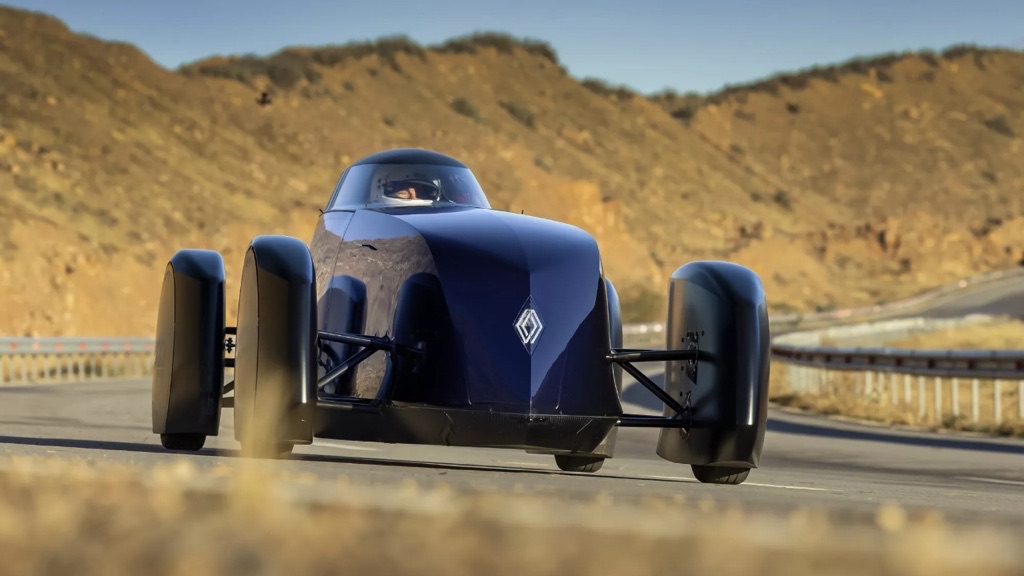
Extreme Aerodynamics Inspired by Aviation
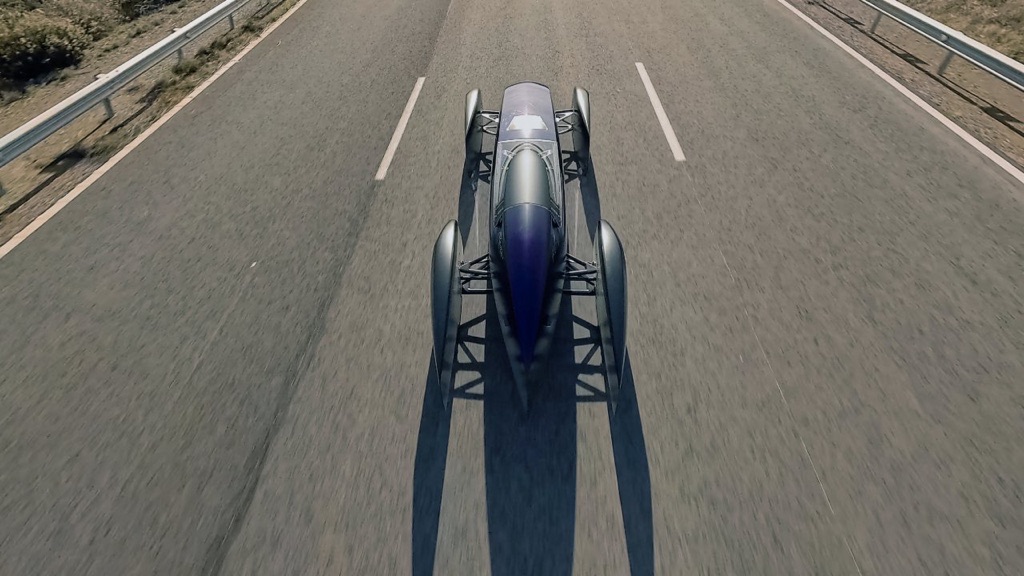
The Filante Record 2025 features an ultra-low-drag body developed using extensive wind tunnel testing. Engineers eliminated or covered all unnecessary aerodynamic disturbances, including:
-
Traditional LED lighting
-
External air intakes
-
Styling-focused body elements
The result is a fighter-jet-inspired carbon-fiber body, complete with a transparent canopy and elongated rear section optimized for airflow stability at sustained highway speeds.
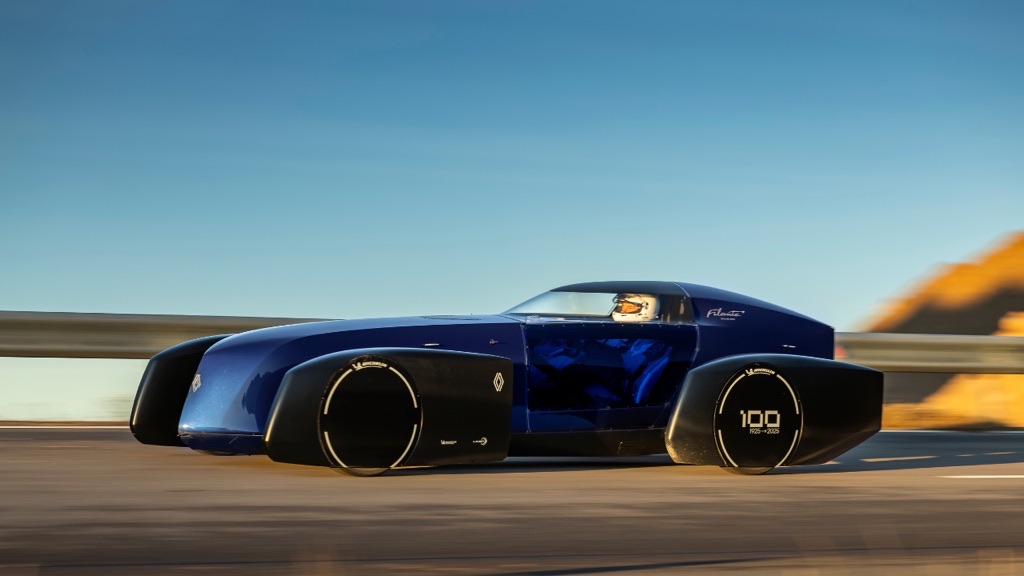
Lightweight Motorsport Engineering
To minimize mass, Renault employed advanced materials typically reserved for motorsport and aerospace applications:
-
Carbon fiber monocoque chassis
-
Aluminum alloys
-
Scalmalloy, a 3D-printed high-strength aluminum-magnesium alloy
The chassis was developed in collaboration with Ligier, a company renowned for building race car structures. The vehicle is strictly single-seat, emphasizing efficiency over practicality.
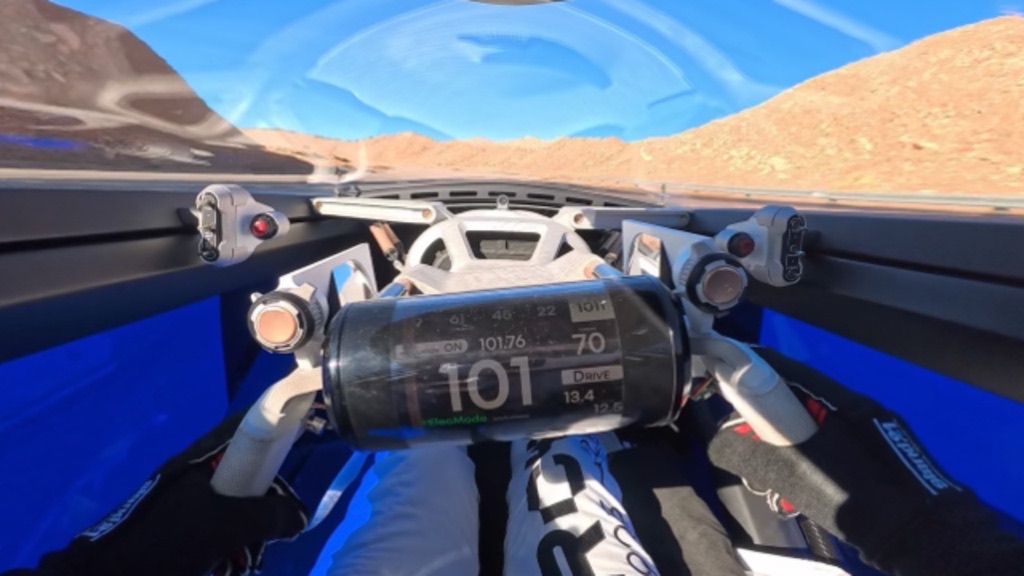
Drive-by-Wire Technology and Endurance Testing
The Filante Record 2025 uses fully steer-by-wire and brake-by-wire systems, with no mechanical link between driver inputs and the wheels. Over the course of the attempt:
-
Three drivers rotated during brief pit stops
-
No charging was performed
-
Stops were limited to driver changes and safety checks
The vehicle maintained consistent speed and stability throughout the endurance run, reinforcing the viability of advanced electronic control systems in future EV platforms.
Why This Record Matters for Production EVs
While the Filante Record 2025 is a one-off prototype, its purpose is far from symbolic. Renault built the car as a mobile laboratory to develop technologies that can be transferred to mass-market vehicles.
Key takeaways for future electric cars:
-
Longer range without larger batteries
-
Lower vehicle weight improves efficiency more than added capacity
-
Aerodynamic optimization remains the single most effective tool for extending EV range
-
Standard battery packs can deliver exceptional results when paired with efficient platforms
A Glimpse Into the Future of Electric Mobility
The Renault Filante Record 2025 proves that EV range limitations are not dictated solely by battery chemistry. Instead, efficiency-first engineering can unlock distances previously considered unrealistic for electric vehicles.
While this prototype will never reach showrooms, the lessons learned from its development are likely to influence Renault’s next generation of electric cars — vehicles that combine practicality, comfort, and significantly extended real-world range.
If even a fraction of this technology reaches production models, range anxiety may soon become a thing of the past.