

A Strategic EV Launch for a Changing Market
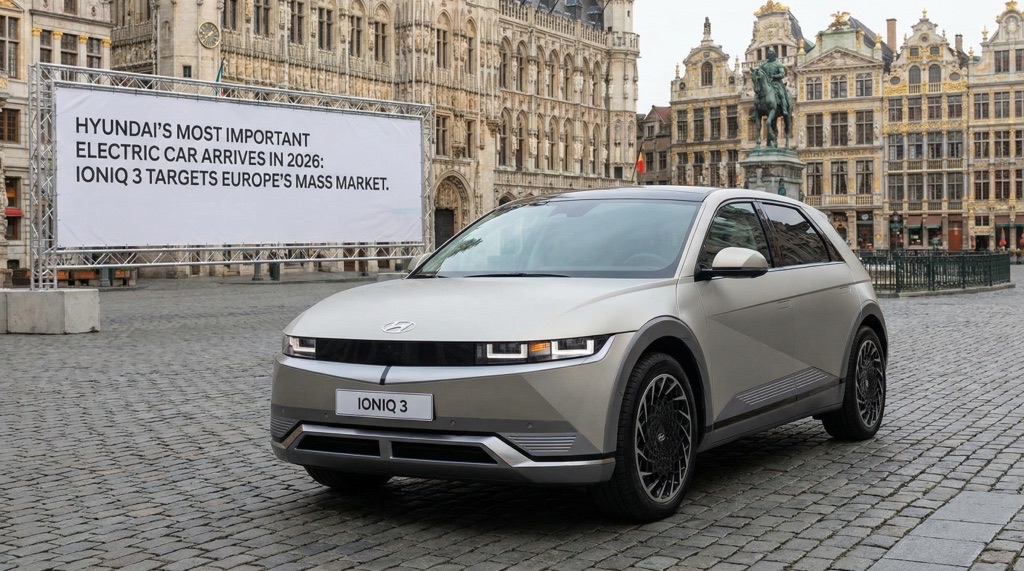
In 2026, Hyundai will introduce the Hyundai Ioniq 3, a new electric vehicle that the company considers one of the most critical projects in its EV lineup. Designed as a more affordable electric car, the Ioniq 3 is aimed primarily at the European mass market, where demand for compact and mid-size EVs remains stable despite broader economic uncertainty.
The Ioniq 3 is not just another addition to Hyundai’s electric portfolio. It reflects a clear strategic pivot, positioning Europe as a priority region at a time when global EV market conditions are becoming increasingly fragmented.
Why Europe Comes First for Hyundai
Hyundai’s renewed focus on Europe is driven by mounting challenges in the United States. Rising import tariffs, the rollback of EV tax incentives, and growing regulatory uncertainty have made the US market less predictable in the short term.
Europe, by contrast, continues to offer:
-
Stable demand for compact and affordable EVs
-
A dense charging infrastructure
-
Strong regulatory support for electrification
-
High acceptance of Korean and Asian brands
As a result, the Ioniq 3 is being developed specifically to meet European customer expectations, both in terms of size and pricing.

A Direct Competitor in Europe’s Most Competitive Segment
The Hyundai Ioniq 3 will enter one of the most fiercely contested EV segments in Europe. Its main rivals are expected to include compact electric models from:
-
Volkswagen Group
-
Renault
-
Stellantis
-
Chinese manufacturers such as BYD
This segment is critical because it represents the core of the European car market — vehicles that balance affordability, efficiency, and everyday usability. Hyundai’s goal is to deliver a competitive alternative that does not rely on premium pricing or niche positioning.
Design: Concept Roots, Production Reality
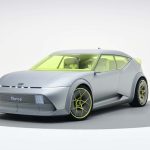
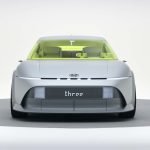
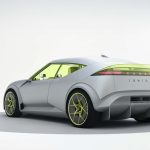
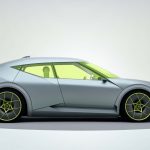
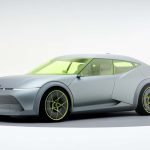
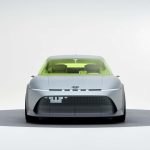
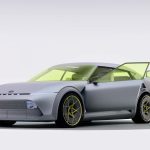
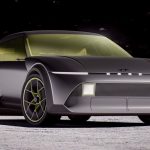
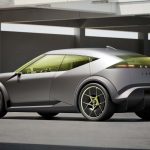
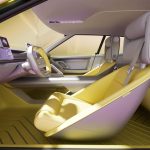
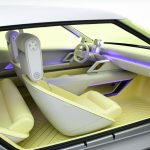
Hyundai offered an early glimpse of the Ioniq 3’s design with the Three Concept, unveiled at the IAA Mobility show in Munich. While the production version is expected to adopt a more restrained and practical form, key design elements will remain.
These include:
-
Hyundai’s signature pixel-inspired lighting
-
Clean, geometric surfacing
-
A modern, tech-oriented appearance consistent with the Ioniq family
The result should be a design that stands out without alienating mainstream buyers — a crucial balance for high-volume European sales.
Platform, Powertrain, and Battery Options
Technically, the Ioniq 3 will be closely related to the Kia EV3. It will use the 400-volt version of Hyundai’s E-GMP platform, prioritizing cost efficiency over ultra-fast charging.
Expected technical highlights include:
-
Front-wheel drive or all-wheel drive
-
Battery options of 58.3 kWh and 81.4 kWh
-
Competitive real-world range suitable for both urban and regional driving
-
Proven E-GMP efficiency and thermal management
By opting for a 400V architecture rather than a more expensive 800V setup, Hyundai aims to keep costs under control while still delivering respectable charging speeds for everyday use.














Pricing: The Key to Mass-Market Success
Hyundai is targeting a starting price of around €30,000, positioning the Ioniq 3 squarely in the heart of the European EV market. This pricing strategy is critical, as it places the model within reach of traditional compact-car buyers transitioning from internal combustion vehicles.
At this level, the Ioniq 3 will compete directly with both established European brands and increasingly aggressive Chinese EV offerings — making value, reliability, and brand trust decisive factors.
Why the Ioniq 3 Matters for Hyundai
The Ioniq 3 is more than a single model launch. It represents Hyundai’s broader EV strategy for the second half of the decade:
-
Strengthening its position in Europe
-
Expanding EV adoption beyond premium segments
-
Balancing technology and affordability
-
Defending market share against Chinese competition
If successful, the Ioniq 3 could become one of Hyundai’s highest-volume electric cars, shaping the brand’s European presence well into the 2030s.
Outlook: A Make-or-Break EV for Europe
With the Ioniq 3, Hyundai is betting on scale rather than spectacle. In a market where EV adoption increasingly depends on price, practicality, and trust, this approach may prove decisive.
As electric mobility moves from early adopters to the mainstream, the Hyundai Ioniq 3 could emerge as one of the most important electric cars of 2026 — not because it is the fastest or most powerful, but because it is designed to be the right EV for Europe at the right time.