

A Major Step Toward Next-Generation Electric Vehicles
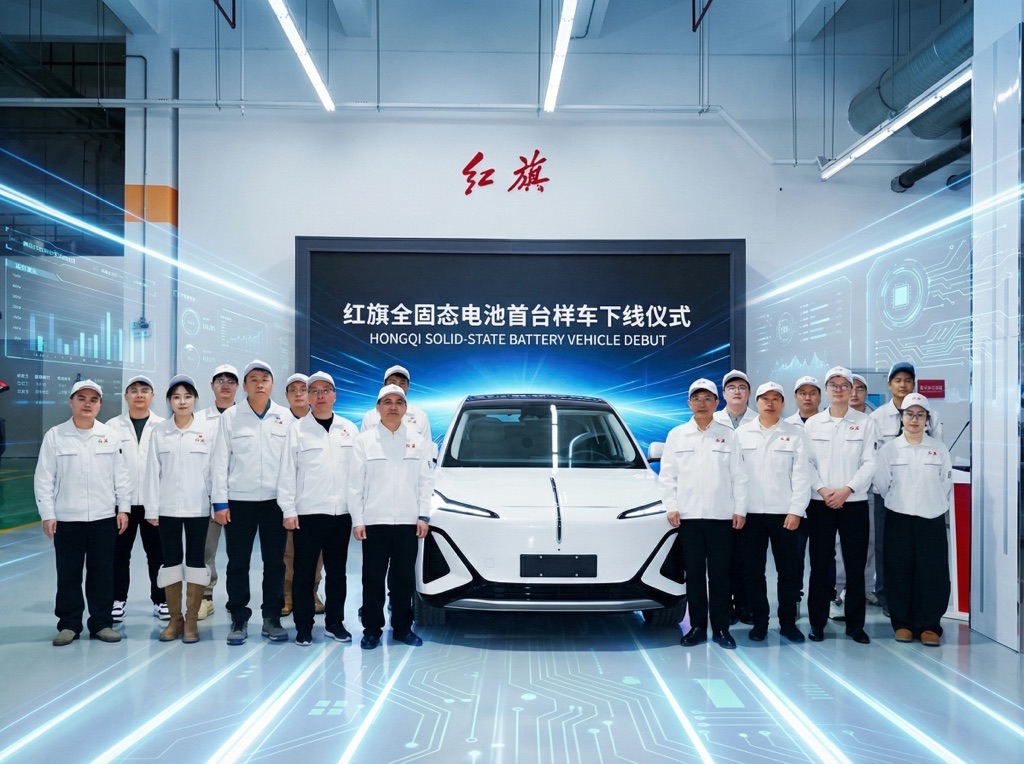
Chinese automaker FAW Hongqi has officially revealed its first electric vehicle prototype powered by a solid-state battery, marking a significant milestone in the global race to commercialize next-generation battery technology.
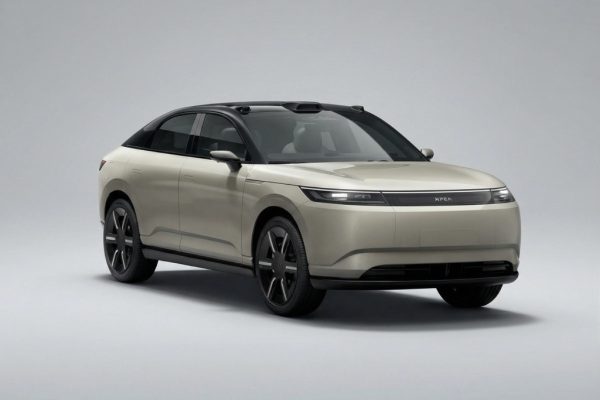
On December 31, Hongqi confirmed that it successfully installed its in-house developed solid-state battery into the Tiangong 06 prototype, making it the brand’s first working EV to use this highly anticipated battery architecture.
Solid-state batteries are widely viewed as the holy grail of EV energy storage, promising higher energy density, improved safety, faster charging, and longer lifespan compared to today’s lithium-ion batteries.
What Hongqi Has (and Hasn’t) Revealed So Far
While the announcement is significant, Hongqi has so far withheld detailed technical specifications. The company did not disclose:
-
Energy density (Wh/kg)
-
Battery capacity
-
Charging speed
-
Official driving range
However, Hongqi emphasized that the achievement itself represents a technological breakthrough, stating that its engineers successfully overcame multiple material, manufacturing, and engineering challenges associated with solid-state battery integration.
For now, the Tiangong 06 serves as a technology demonstrator rather than a production-ready model.
Why Solid-State Batteries Matter So Much
Solid-state batteries replace the liquid electrolyte found in conventional lithium-ion cells with a solid material. This shift enables several critical advantages:
Key Benefits of Solid-State EV Batteries
| Advantage | Impact on EVs |
|---|---|
| Higher energy density | Longer range without larger batteries |
| Improved safety | Lower risk of thermal runaway |
| Faster charging | Reduced charging times |
| Better durability | Longer battery lifespan |
Industry-wide projections suggest that solid-state EVs could achieve ranges of up to 1,000 km (620 miles) on a single charge under favorable conditions.
China’s Growing Lead in Solid-State EV Development
Hongqi is not alone in this push. China’s automotive industry is moving aggressively toward solid-state technology.
-
Dongfeng Motor has already announced plans to launch the first mass-produced EV with a solid-state battery, claiming a 1,000 km range.
-
BYD and CATL are also actively developing solid-state solutions, though their early deployments are expected to focus on limited-volume or niche vehicles.
Most analysts expect initial commercial solid-state EVs to appear around 2027, with broader adoption later in the decade.
What Hongqi’s Prototype Really Signals
Although Hongqi’s announcement lacks detailed performance figures, its importance should not be underestimated. Successfully integrating a solid-state battery into a functioning vehicle platform demonstrates:
-
Internal battery R&D capability
-
Progress beyond lab-scale testing
-
Serious intent to compete in next-generation EV technology
For a brand traditionally associated with luxury sedans and government vehicles, this move also signals Hongqi’s ambition to become a technology leader in the electric era.
Outlook: From Prototype to Production
The Tiangong 06 prototype does not mean that Hongqi will launch a solid-state EV tomorrow. Scaling this technology to mass production remains extremely challenging due to cost, manufacturing complexity, and supply-chain constraints.
Still, with multiple Chinese manufacturers converging on similar timelines, the solid-state EV era appears closer than ever.
If current development trajectories hold, the second half of this decade could redefine what electric vehicles are capable of — in range, safety, and performance.
FAW Hongqi has successfully integrated its first in-house solid-state battery into the Tiangong 06 electric vehicle prototype. While specifications remain undisclosed, the breakthrough highlights China’s accelerating push toward next-generation EV batteries capable of delivering up to 1,000 km of range. With Dongfeng, BYD, and CATL also advancing solid-state technology, commercial adoption is increasingly expected around 2027.