
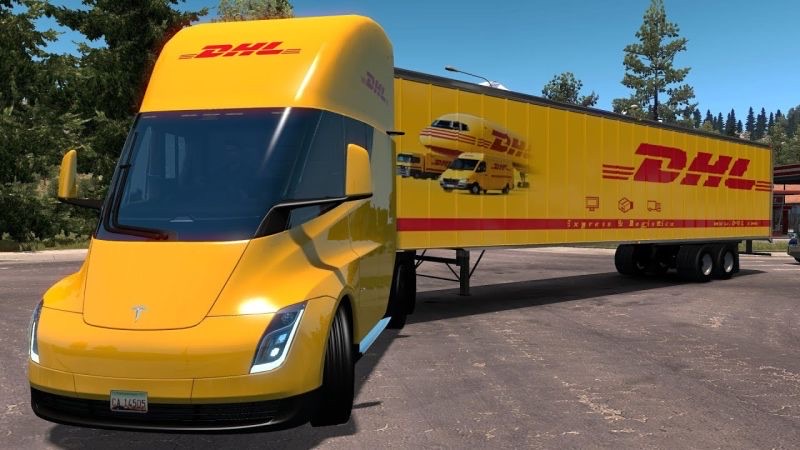
DHL Receives Its First Tesla Semi — Marks a Major Expansion of Electric Heavy-Duty Logistics in 2025
Key Highlights
-
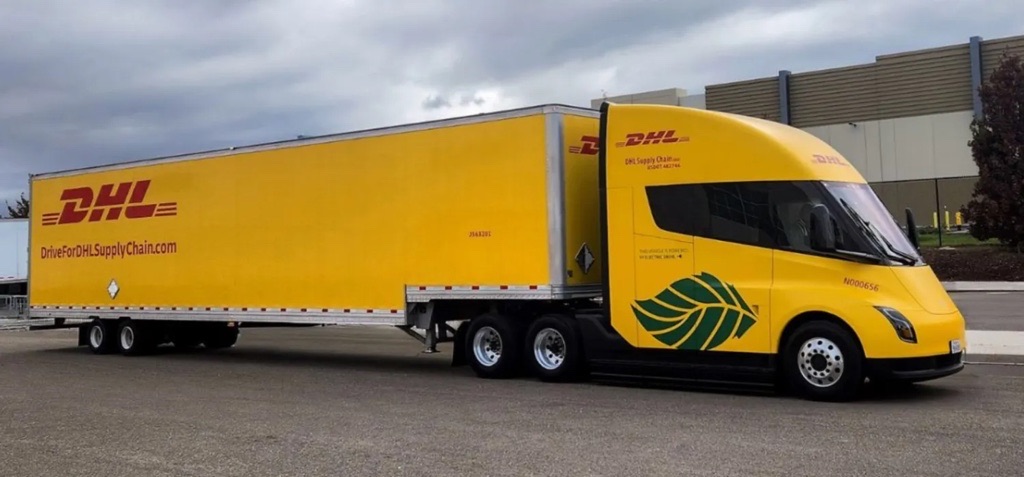
🚚 DHL takes delivery of its first Tesla Semi for U.S. operations
-
🔋 Real-world consumption: 1.07 kWh per km with a 34-ton payload
-
🛣 Tested on a 600 km route in California
-
⚡ Range: 800 km (500 miles) per charge
-
🔌 Current usage: ~160 km/day, charged once per week
-
📦 DHL’s Class 8 electric fleet in North America now exceeds 150 vehicles
-
🏭 Mass production of Tesla Semi delayed from 2025 → 2026
Introduction
DHL has officially added its first Tesla Semi electric truck to its North American fleet, marking another major step toward large-scale electrification of heavy-duty logistics. For nearly two years, PepsiCo was the only company operating the Semi in significant numbers. But as Tesla edges closer to mass production at Gigafactory Nevada, more units are entering the fleets of large customers including Walmart, Costco, Sysco, and now DHL.
Full Technical Specifications (Known Data)
| Feature | Value |
|---|---|
| Battery Range | 800 km (500 miles) |
| Real-world Energy Consumption | 1.07 kWh/km with 34-ton payload |
| Payload | ~34,000 kg |
| Typical Daily Usage | ~160 km/day |
| Charging Frequency | About once per week |
| Tested Route | 600 km (Livermore, California) |
| Production Status | Limited production (since 2022) |
| Planned Mass Production | Delayed to 2026 |
⚠️ Note: Tesla has not officially disclosed exact battery capacity of the Semi, so only confirmed operational metrics are included.
How It Compares to Other Electric Heavy Trucks
| Model | Range | Energy Consumption | Status |
|---|---|---|---|
| Tesla Semi | 800 km | 1.07 kWh/km (real-world DHL test) | Limited production |
| Volvo VNR Electric | 275 km | ~1.9 kWh/km | Production |
| Freightliner eCascadia | 370 km | ~2.0 kWh/km | Production |
| Nikola Tre BEV | 530 km | ~1.6 kWh/km | Production |
Tesla currently leads the segment in real-world efficiency and long-range performance.
What DHL Says
“The Tesla Semi opens operational possibilities previously unavailable to heavy electric trucks,”
— Jim Monkmeyer, President of Transportation, DHL Supply Chain North America.
The company confirms the vehicle is already operating in Central California, following successful pilot testing earlier this year.
Market Context and Production Timeline
Tesla began limited production of the Semi in late 2022. In 2023, it demonstrated the truck driving over 1,700 km in a single day during the NACFE Run on Less program — though organizers did not disclose payload weight.
Tesla originally planned to scale Semi production in 2025, but in late 2024 shifted the target to 2026 due to battery supply prioritization and factory expansion needs.
Expert Analysis — What This Means for the EV Truck Market
DHL’s adoption of the Semi is significant because:
1. It validates the Semi for commercial, high-load operations.
A 34-ton test with 1.07 kWh/km efficiency places Tesla ahead of all current competitors.
2. DHL is one of the world’s largest logistics networks.
When it integrates a new vehicle platform, the industry pays attention.
3. Range and charging efficiency change long-haul economics.
An 800 km range opens up new duty cycles that diesel trucks typically dominate.
4. The Semi fleet expansion is accelerating.
With major customers (Walmart, Costco, Sysco) receiving trucks, the market is preparing for mass adoption ahead of Tesla’s 2026 production ramp.
If Tesla maintains these performance metrics at scale, the Semi could disrupt both diesel truck markets and competing electric Class 8 manufacturers.
Availability and Deployment
| Region | Use Case | Deployment Status |
|---|---|---|
| USA (California) | Regional logistics, pilot routes | Active |
| USA (DHL fleet) | General freight, Class 8 electrification | Expanding in 2025–2026 |
| Global | Not yet available | Pending Tesla production expansion |
DHL expects to increase the number of Tesla Semis in its fleet next year.
Frequently Asked Questions (Semantic FAQ)
Q: How far can the Tesla Semi travel on a single charge?
A: Up to 800 km (500 miles) under typical Class 8 freight conditions.
Q: What is the energy consumption when fully loaded?
A: DHL recorded 1.07 kWh/km while transporting a 34-ton load.
Q: When will Tesla begin mass production?
A: Tesla now targets 2026 for scaled production, delayed from 2025.
Q: How often does DHL need to charge the Semi?
A: Around once per week, based on 160 km/day usage.
Conclusion
DHL’s first Tesla Semi marks a pivotal moment for electric freight transport. Real-world efficiency results confirm that long-range heavy electric trucks are becoming operationally viable. As more Semis appear in the fleets of global logistics leaders, the momentum toward zero-emission trucking will accelerate ahead of Tesla’s 2026 production scale-up.