
34 Sensors and 3 LiDARs: What China-Approved Level 3 Arcfox Alpha S Can Do
China has taken another concrete step toward legal Level 3 autonomous driving, and BAIC BluePark is among the first automakers to cross that threshold.
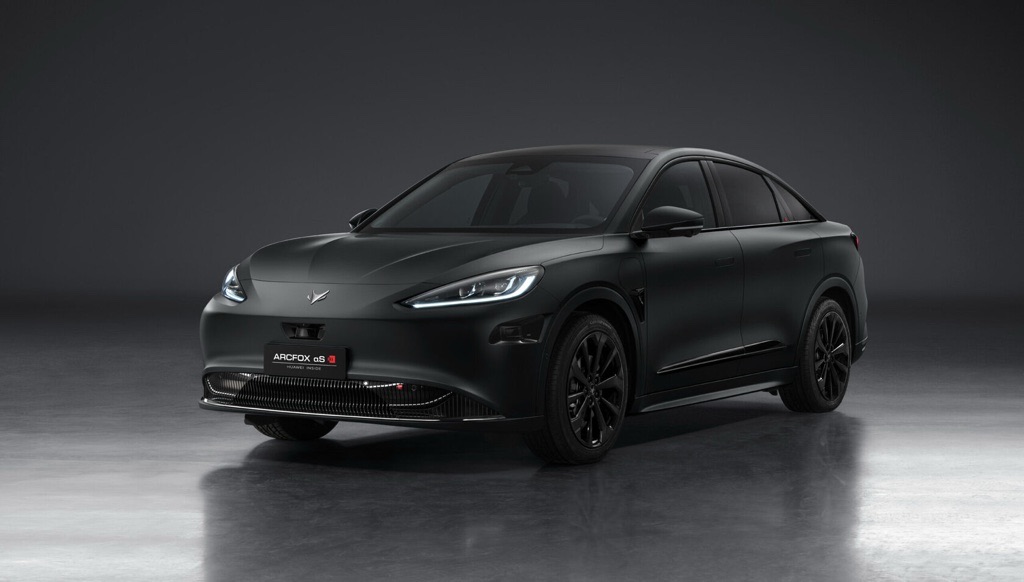
The company has confirmed that its electric sedan Arcfox Alpha S, type approval code BJ7001A61NBEV, has officially received regulatory permission to operate with Level 3 “conditional” autonomous driving on public roads in China.
What Level 3 Means in This Case
According to BAIC BluePark, the approved Level 3 function allows:
-
Automated driving within a single lane
-
Operation on highways and urban expressways
-
Maximum speed: up to 80 km/h
-
Use in environments with predictable road infrastructure
This aligns with how Level 3 autonomy is being rolled out in China: limited, clearly defined scenarios where system behavior can be validated and supervised more reliably.
Regulatory Approval Is More Than a Formality
BAIC emphasized that Level 3 approval in China is not a simple administrative sign-off.
The process includes:
-
Pre-selection by regulators
-
Technical defense and documentation review
-
Extensive road testing
-
Formal safety evaluation
The Alpha S has completed the full approval cycle. However, the vehicle currently operates under temporary test license plates, which are standard for L3 road testing. In China, there is typically a gap between test operation and full commercial sales, even after regulatory clearance.
Still, BAIC positions itself among the first manufacturers nearing real-world commercialization of Level 3 systems.
Sensor Stack: 34 Sensors, 3 LiDAR Units
The technical specification is one of the most advanced disclosed for an L3 passenger vehicle in China.
The Arcfox Alpha S Level 3 system includes:
-
34 high-performance sensors
-
3 LiDAR units
-
Full 360-degree environmental perception
This multi-sensor approach provides redundancy and higher confidence in object detection, lane recognition, and situational awareness — a key requirement for Level 3 autonomy, where the vehicle temporarily assumes responsibility for driving.



“Aviation-Grade” Safety Redundancy
BAIC places strong emphasis on what it calls an aviation-style safety architecture.
Redundant systems are implemented across critical domains, including:
-
Perception and sensing
-
Decision-making and planning
-
Steering actuation
-
Braking systems
-
Vehicle communications
-
Power supply
-
Positioning and localization
The goal is to prevent single-point failures — scenarios where one malfunction could lead to loss of vehicle control — a core regulatory concern for conditional autonomy.
BAIC Plans to Expand Its Level 3 Lineup
Beyond the Alpha S, BAIC BluePark confirmed plans to expand its Level 3 portfolio.
Key points:
-
Level 3 systems are planned for mid-range and premium EV segments
-
Several additional L3 models are already under development
-
The company sees L3 as a strategic differentiator rather than a one-off technology showcase
This suggests BAIC intends to scale Level 3 beyond limited flagship models, aligning with China’s broader push toward regulated autonomous driving.


A Meaningful Step for Legal Autonomy in China
While the approved operating conditions are still limited, the Arcfox Alpha S demonstrates that Level 3 autonomy is moving from pilot projects toward regulated deployment in China.
With regulatory clearance, a heavy sensor stack, and deep system redundancy, BAIC’s L3 program reflects how Chinese automakers are pursuing autonomy:
structured, infrastructure-aware, and tightly supervised.
As more manufacturers follow this path, China is emerging as one of the world’s most active real-world testing grounds for legally approved Level 3 autonomous vehicles.