
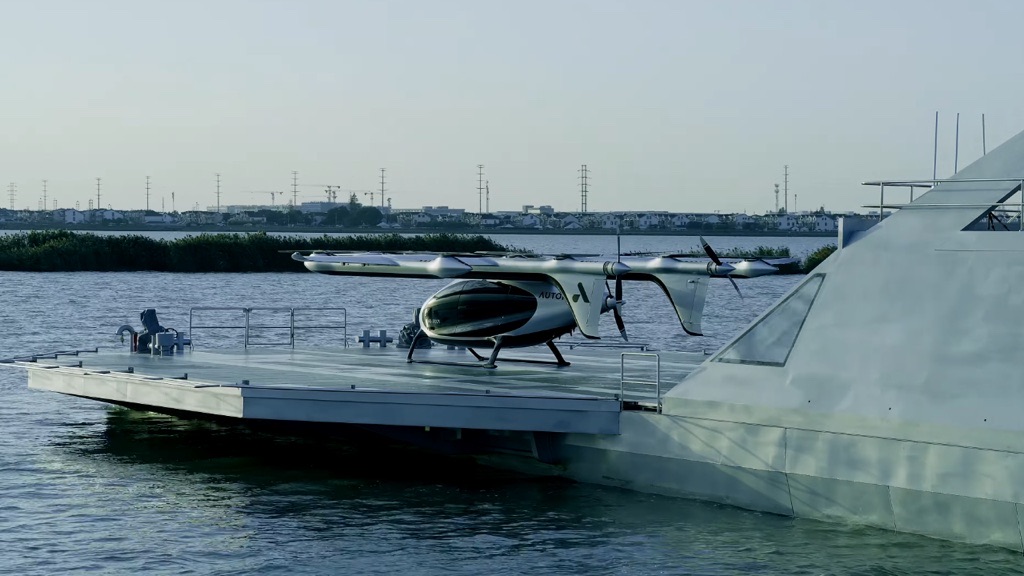
AutoFlight Reveals Floating Solar-Powered Vertiport for Future Electric Sky-Taxi Networks
Urban congestion has long pushed commuters to look for alternatives to gridlocked roads, but traditional helicopters proved too loud, too costly, and too dependent on scarce rooftop landing pads. Now, with the rapid rise of electric vertical take-off and landing aircraft (eVTOLs), a new form of urban and regional mobility is emerging — cleaner, quieter, and far more flexible. The challenge, however, remains the same: where do these aircraft land?
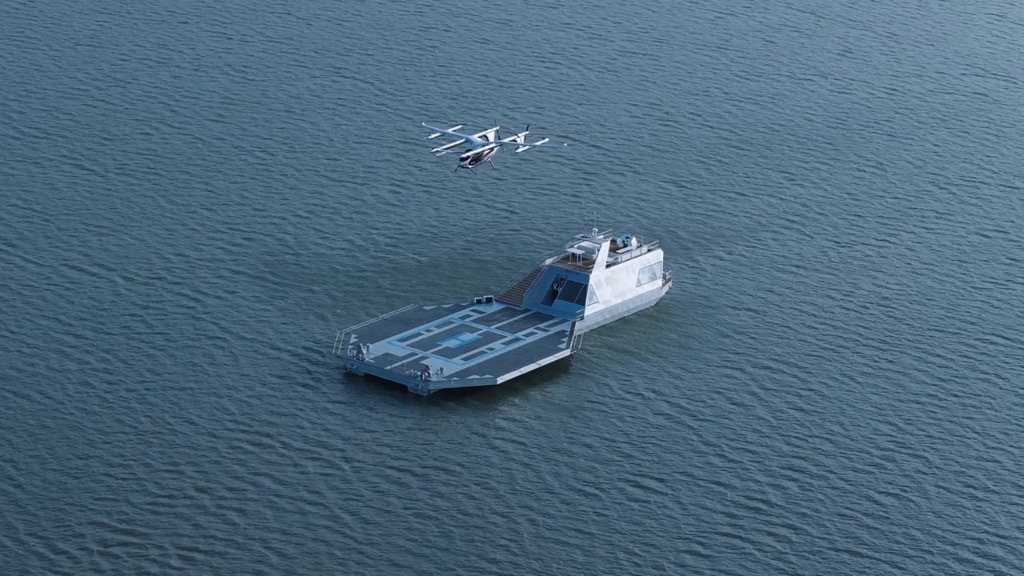
AutoFlight, the company behind the Prosperity I air taxi, believes it has the answer. The company has unveiled a floating, solar-powered vertiport, designed to act as a mobile hub for eVTOL operations across coastal and waterfront cities. The solution has already completed a demonstration flight on November 22, 2025, over Dianshan Lake in Shanghai.
The Rise of Electric Sky-Taxis
Modern eVTOLs promise a future where commuters can bypass ground traffic entirely. Aircraft like AutoFlight’s Prosperity I can:
-
Lift over 4,409 pounds (2,000 kg)
-
Carry four passengers plus a pilot
-
Cruise at 124 mph (200 km/h)
-
Fly up to 155 miles (250 km) on a single charge
This performance makes eVTOLs ideal for short regional hops, business travel, and airport connections — if infrastructure can keep up.
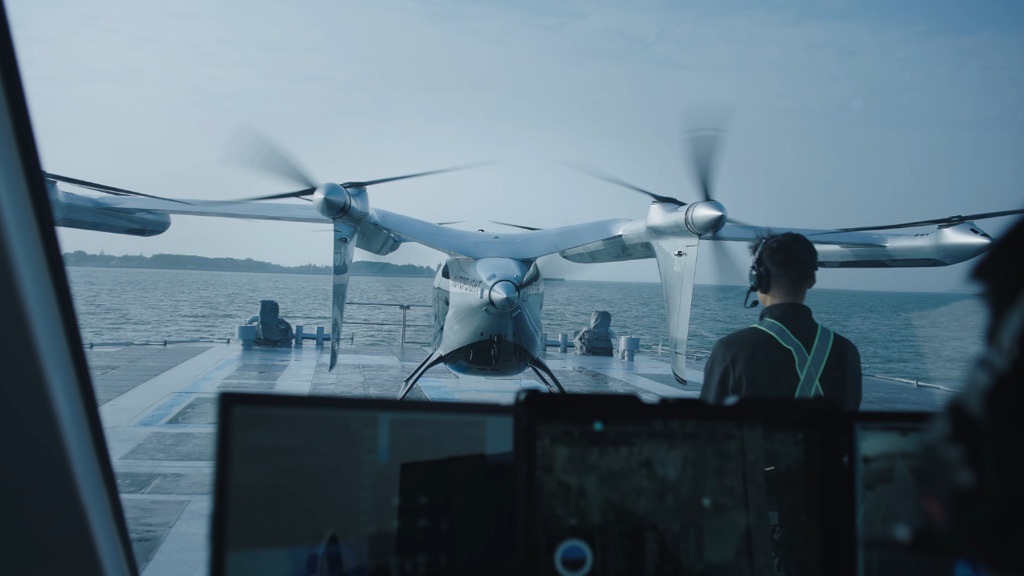
A Floating Airport: AutoFlight’s Mobile Vertiport
To address the bottleneck of suitable landing zones, AutoFlight developed what it calls the Integrated Sea-Air Low-Altitude Economy Solution — essentially, a self-propelled, solar-powered airport on a barge.
Key Features of the Floating Vertiport
-
Powered by solar panels built directly into the landing pad
-
Houses a technical operations centre and compact passenger lounge
-
Mobile design allows relocation along coastlines and rivers
-
Zero-emissions and self-sufficient, supporting eVTOL charging
The vertiport can reposition itself depending on daily demand. If traffic is heavy downtown, the platform can simply move to a quieter section of the waterfront — a level of flexibility fixed rooftop pads cannot offer.
Built for Both Passenger and Cargo eVTOLs
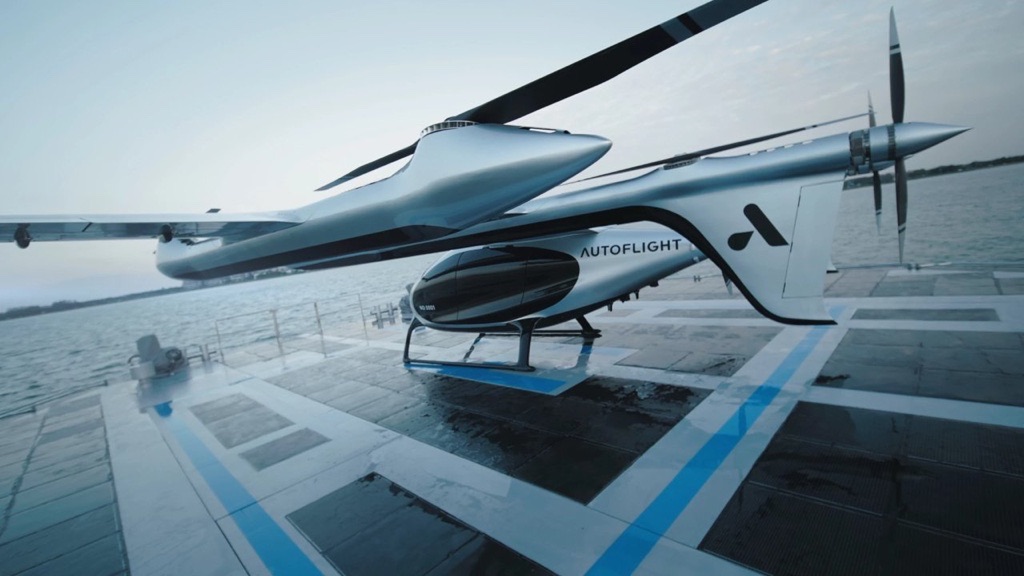
AutoFlight’s floating hub is designed to support multiple aircraft types, including:
Prosperity I (Passenger eVTOL)
-
Seats: 4 passengers + 1 pilot
-
Payload: 772 lbs (350 kg)
-
Propulsion: 10 lift propellers + 3 pusher propellers
White Shark & CarryAll (Cargo Aircraft)
-
Dedicated logistics rotorcraft
-
Compatible with the vertiport’s deck and charging systems
The modular platform can host any or all of the company’s aircraft, making it a versatile base of operations.
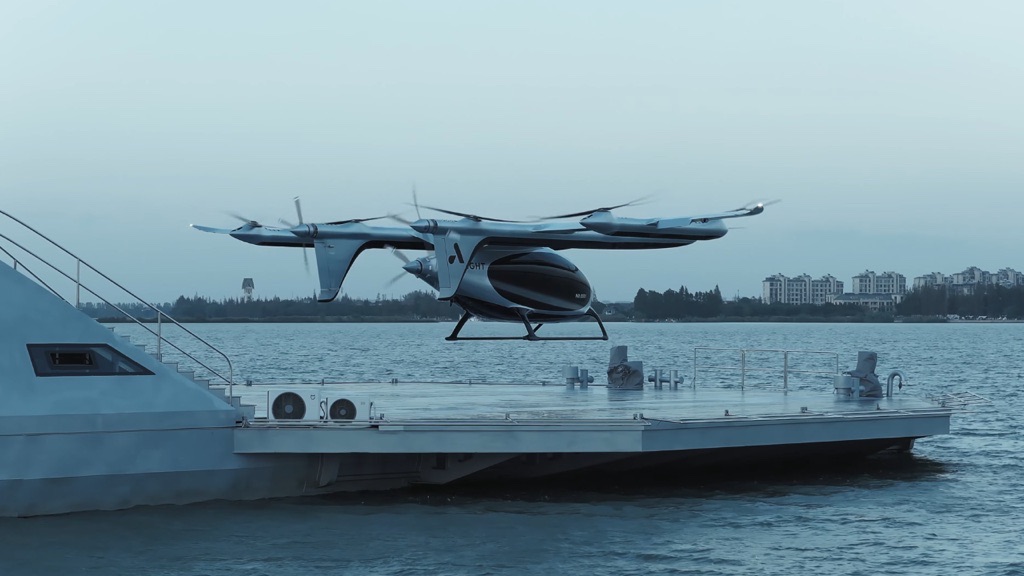
Applications Beyond Urban Air Mobility
AutoFlight envisions the floating vertiport being used for:
-
Urban and intercity passenger transport
-
Offshore maintenance support
-
Search and rescue missions
-
Emergency response
-
Air tourism over lakes, coasts, and scenic regions
The ability to cluster multiple vertiports offers a scalable way to rapidly expand eVTOL infrastructure. Cities could deploy several units during peak demand — effectively creating a temporary floating airport.
Successful Demonstration in Shanghai
AutoFlight showcased the concept during a public demonstration on Dianshan Lake, where the Prosperity I performed takeoffs and landings on the floating platform. Elliott Richards from Everything Electric attended the event and described the system as one of the first truly practical solutions to the infrastructure challenges facing eVTOL adoption.
A Promising Step Toward Electric Air Mobility
While questions remain about cost, large-scale coordination, and weather stability, AutoFlight’s approach offers the most flexible vertiport concept to date. With eVTOL aircraft becoming increasingly capable, having a deployable, zero-emission landing and charging platform may solve one of the industry’s biggest barriers.
It’s not the final step — passengers still need a way to reach shore — but it’s a major move toward making electric sky-taxis a functional part of modern transportation networks.