
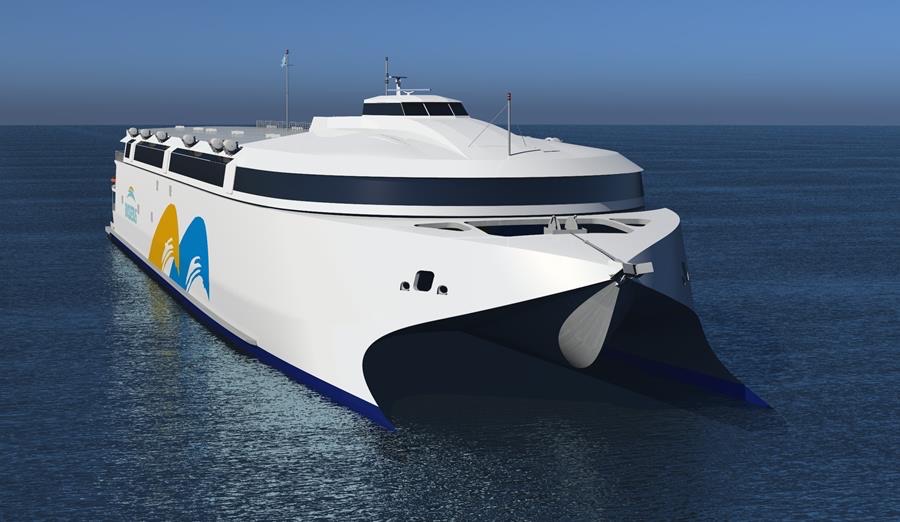
World’s Largest Electric Vehicle Takes to the Water: Australia Tests a 427-Foot Battery-Powered Ferry
Australia has just redefined what an electric vehicle can be.
Shipbuilder Incat Tasmania has successfully powered up and tested Hull 096, the largest battery-electric ship ever built — and, according to its creators, the largest electric vehicle of any kind on the planet.
Measuring an astonishing 427 feet (130 metres) in length, the fully electric ferry represents a major milestone in zero-emission transport, not just for maritime applications but for the entire EV industry.
Built for 2,100 Passengers and 220 Cars
Hull 096 is being built for Buquebus, a South American ferry operator, and is designed to transport:
-
Up to 2,100 passengers
-
More than 220 vehicles
This places it firmly in the category of high-capacity, high-speed passenger ferries, rather than experimental or niche vessels.
Despite its size, the ship is engineered for regular commercial service, operating on fixed routes with predictable charging cycles.
A 40+ MWh Battery System — The Largest Ever Installed
At the core of the vessel is a record-breaking battery system:
-
Battery weight: approximately 275 tonnes
-
Installed capacity: over 40 megawatt-hours (MWh)
-
Battery size comparison: roughly four times larger than any previous maritime battery installation
This alone makes Hull 096 a floating power station. For perspective, its battery capacity exceeds that of thousands of electric cars combined.
From LNG to Full Battery-Electric
Originally planned as a liquefied natural gas (LNG)-powered vessel, Hull 096 underwent a complete redesign during the COVID-era disruption.
Incat and Buquebus made the bold decision to abandon LNG entirely and switch to a 100% battery-electric propulsion system — a move that required substantial engineering changes to structure, weight distribution, propulsion, and onboard systems.
The result is one of the most ambitious conversions in modern shipbuilding.
First Power-Up and Sea Movement in Tasmania
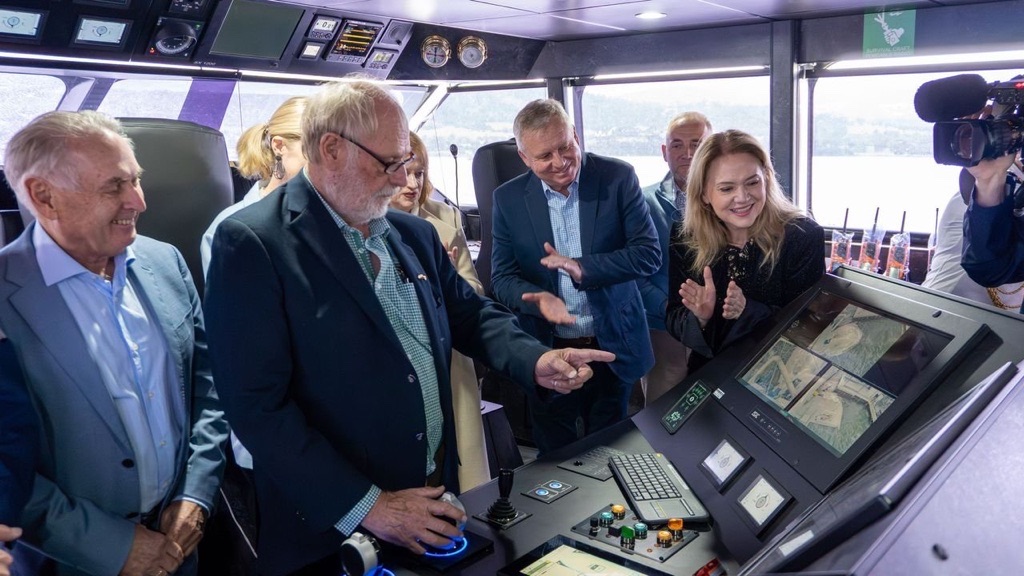
The vessel recently completed its first live power-up and movement test on the River Derwent in Hobart, Tasmania.
During the test:
-
The battery system was energised
-
The waterjet propulsion system engaged
-
The ship moved under its own electric power — silently
No combustion engines. No exhaust smoke. Just a 427-foot aluminium vessel gliding through the water.
Electric Propulsion and Performance
While Incat has not yet published full performance specifications for Hull 096, the company has confirmed that similar battery-electric high-speed ferries under construction are capable of:
-
Speeds exceeding 40 knots (≈46 mph / 74 km/h)
At this scale, such speeds place the vessel among the fastest large ferries in the world — electric or otherwise.
Designed for Fixed Routes and Rapid Turnaround
Concerns about “range anxiety” at sea are addressed by the vessel’s operational profile.
Hull 096 is designed for:
-
Short-to-medium fixed ferry routes
-
Rapid port turnaround
-
High-capacity charging between crossings
In practice, the ship operates like a giant electric shuttle — sailing from port A to port B, unloading passengers and vehicles, recharging, and repeating the cycle.
Cost and Investment
While official pricing has not been disclosed, comparable high-speed ferries from Incat typically exceed $100 million USD.
Given the unprecedented scale of the battery system, Hull 096 likely represents one of the most expensive electric vehicles ever constructed, but also one with the potential for significantly lower operating and maintenance costs over its lifespan.
Tasmania Leading Electric Shipbuilding
Tasmania has long been a global leader in aluminium shipbuilding, and Incat is now positioning itself at the forefront of electric maritime transport.
The company has already secured contracts for:
-
Three additional battery-electric ferries for a Danish operator
-
Each featuring battery systems of up to 45 MWh
This suggests that Hull 096 is not a one-off experiment, but the beginning of a new generation of electric ships.
A Turning Point for Zero-Emission Shipping
While combustion engines will remain part of marine transport for years to come, Hull 096 demonstrates that large-scale, fully electric vessels are now commercially viable.
A silent, zero-emission ship carrying thousands of people and hundreds of cars is no longer science fiction — it is already moving under its own power.