2026 Toyota HiLux BEV Will Retain Off-Road Capability, But Fleet Use Is the Priority
By bike_ev_admin December 15, 2025
4 min read
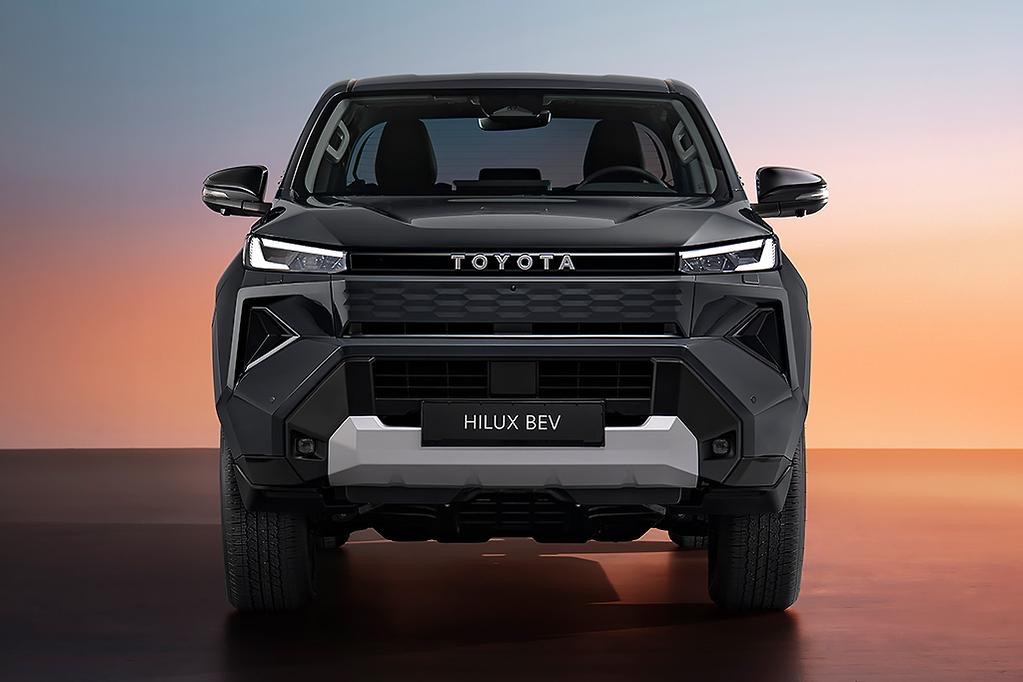
Toyota has confirmed new details about the 2026 Toyota HiLux BEV, revealing that while the battery-electric ute will retain genuine off-road capability, it is not intended to directly replace the diesel HiLux as a hardcore off-road workhorse.
Instead, Toyota says the HiLux BEV has been developed primarily to meet the needs of fleet customers, including mining, agriculture, airports, and government operators, with a strong focus on zero emissions, durability, and reliability in harsh environments.
Key Details at a Glance
Australian launch: First half of 2026
Variants:
HiLux BEV SR cab-chassis
HiLux BEV SR5 dual-cab pick-up
Drivetrain: Dual-motor electric AWD
Range: ~315 km (NEDC / ADR)
Payload & towing: Reduced vs diesel HiLux
Pricing: To be announced, expected above low-$70K AUD
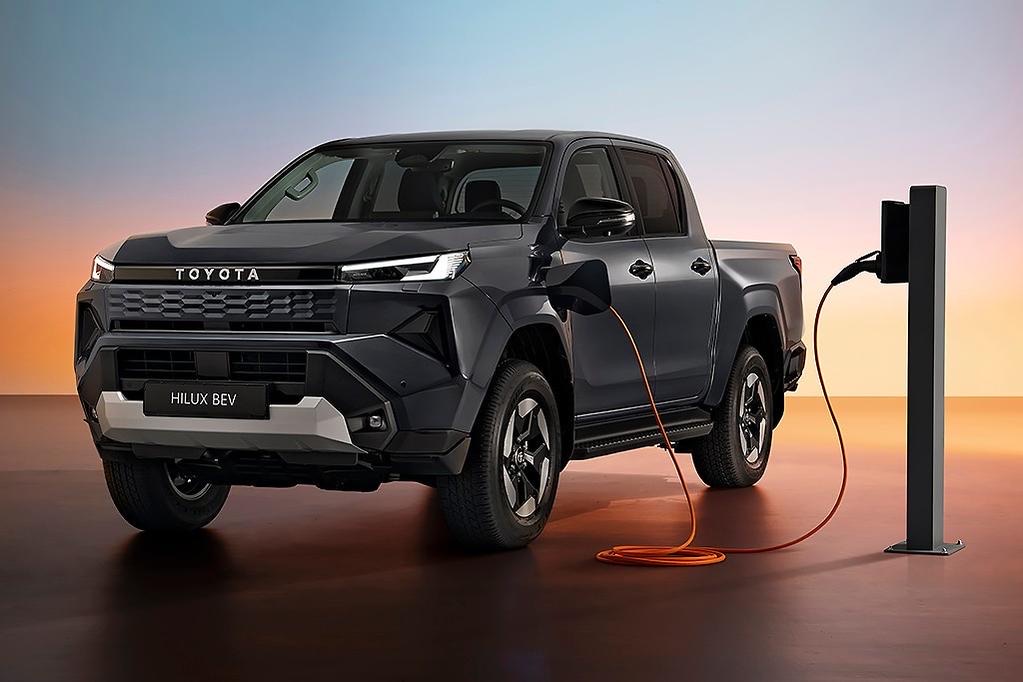
The HiLux BEV was revealed publicly during the 2026 HiLux national media launch, confirming long-rumoured details about Toyota’s electric ute strategy.
2026 Toyota HiLux BEV
2026 Toyota HiLux BEV
2026 Toyota HiLux BEV
2026 Toyota HiLux BEV
Designed for Zero Emissions, Not Extreme Touring
Toyota Australia has been clear that the primary goal of the HiLux BEV is zero tailpipe emissions, not long-distance touring or prolonged low-range off-road driving.
“The program for [the HiLux EV] has been quite the challenge for all the design and engineering side,” said Ray Munday, Senior Manager of Vehicle Evaluations at Toyota Australia.
“The technology is not there yet where there’s one single pathway to do super-low carbon emissions and drive a very long way.”
As a result, Toyota has prioritised short-range, high-reliability use cases, particularly where vehicles return to base for charging.
Off-Road Capability Remains a Core Part of HiLux DNA
Despite its fleet-first focus, Toyota insists the HiLux BEV remains a true HiLux when it comes to off-road ability.
The electric ute features:
Electronically controlled all-wheel drive
Five-mode Multi-Terrain Select system:
Rock
Sand
Mud
Dirt
Moguls
However, Toyota stresses that it is not designed for hours of continuous low-range crawling, such as national park ranger or expedition-style use.
“It’s still a capable product, in name it’s still a HiLux,” Munday explained.
“But where a Park Ranger might drive for hours in low range, that’s not what we see this product being.”
2026 Toyota HiLux BEV
Battery, Motors and Driving Range
The 2026 Toyota HiLux BEV is powered by a 59.2 kWh lithium-ion battery, made up of 80 cells and integrated into the existing IMV ladder-frame chassis. The battery is protected by dedicated underbody shielding for off-road use.
Powertrain details include:
Front electric motor: 205 Nm
Rear electric motor: 268 Nm
Combined output: reported overseas at 143 kW
Estimated range: ~315 km (NEDC / ADR cycle)
Charging Performance
Toyota claims the following charging times:
AC charging (10–100%): ~6.5 hours
DC fast charging (10–80%): ~30 minutes (optimal conditions)
This reinforces the vehicle’s intended use in controlled fleet environments with access to charging infrastructure.
Payload, Towing and Off-Road Geometry
As expected, payload and towing figures are significantly lower than diesel HiLux models:
Payload: ~715 kg
Braked towing: 2,000 kg
Off-road dimensions remain competitive and closely aligned with diesel dual-cab 4×4 HiLux models:
Wading depth: 700 mm
Approach angle: 29 degrees
Departure angle: 24 degrees
Ground clearance: 218 mm
2026 Toyota HiLux BEV
2026 Toyota HiLux BEV
2026 Toyota HiLux BEV
Global Development and Local Testing
The core HiLux BEV technology was developed in Japan, with additional engineering input from Toyota Thailand, where Australian-market HiLux models are built.
Toyota Australia has also been actively involved in real-world trials, including a HiLux BEV pilot program with BHP, testing the vehicle in demanding mining environments.
Not a Volume Seller, But a Strategic Step
Toyota Australia’s sales and marketing chief Sean Hanley has acknowledged that the HiLux BEV will not be a high-volume model.
“It has definite specific applications we believe in mining, airport, government agency-type areas, back-to-base charging,” Hanley said.
The HiLux BEV represents one step in Toyota’s broader electrification roadmap, which aims for 30% of Australian sales to be zero- and low-emissions vehicles (ZLEVs) by 2030.
More HiLux Powertrains Coming
Toyota has confirmed that additional electrified HiLux variants are planned:
Fuel-cell electric HiLux (FCEV): due in 2028
Plug-in hybrid HiLux (PHEV): under development and likely to follow