
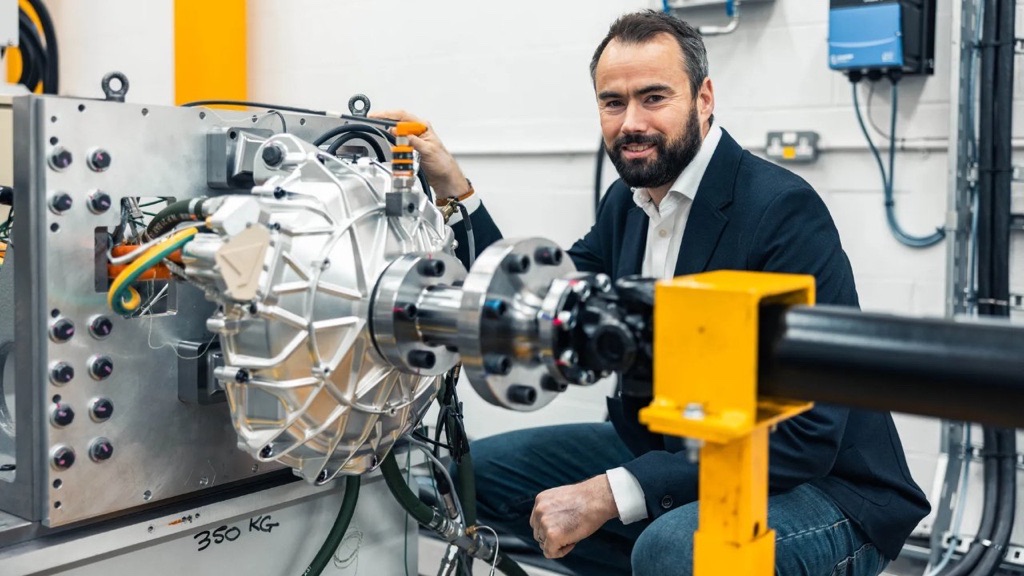
YASA Develops 1,000-HP In-Wheel Motor, Paving the Way for 4,000-HP Electric Hypercars
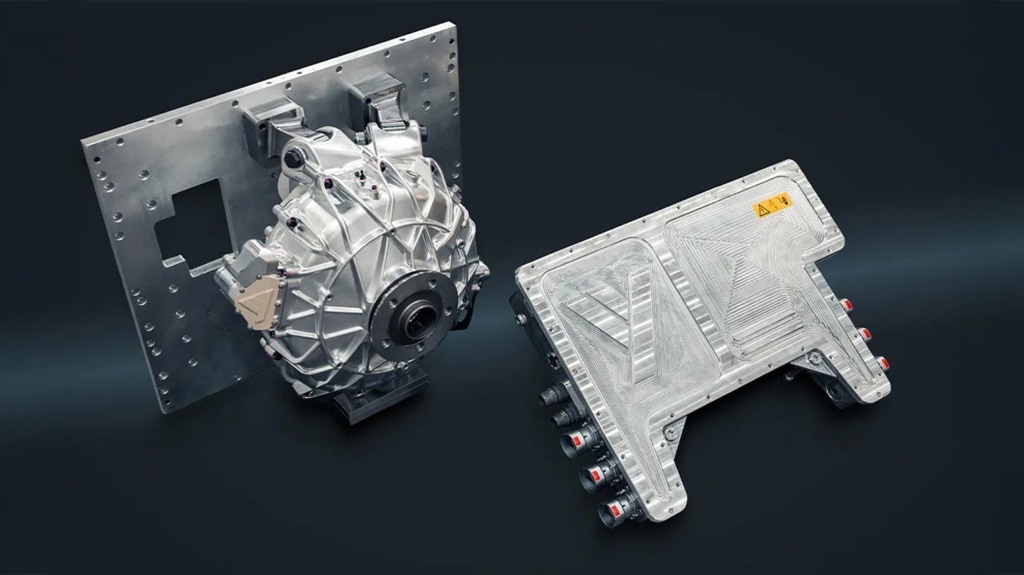
YASA, the British engineering company known for its ultra-compact axial flux motors, has once again pushed the limits of electric propulsion. The company has developed the world’s first mass-neutral in-wheel axial flux motor, capable of delivering more than 1,000 horsepower per wheel. When scaled to four wheels, this technology could enable road-legal EVs to exceed 4,000 combined horsepower — a figure previously unimaginable outside of jet aircraft and top-fuel drag machines.
A New Benchmark in Electric Motor Power Density
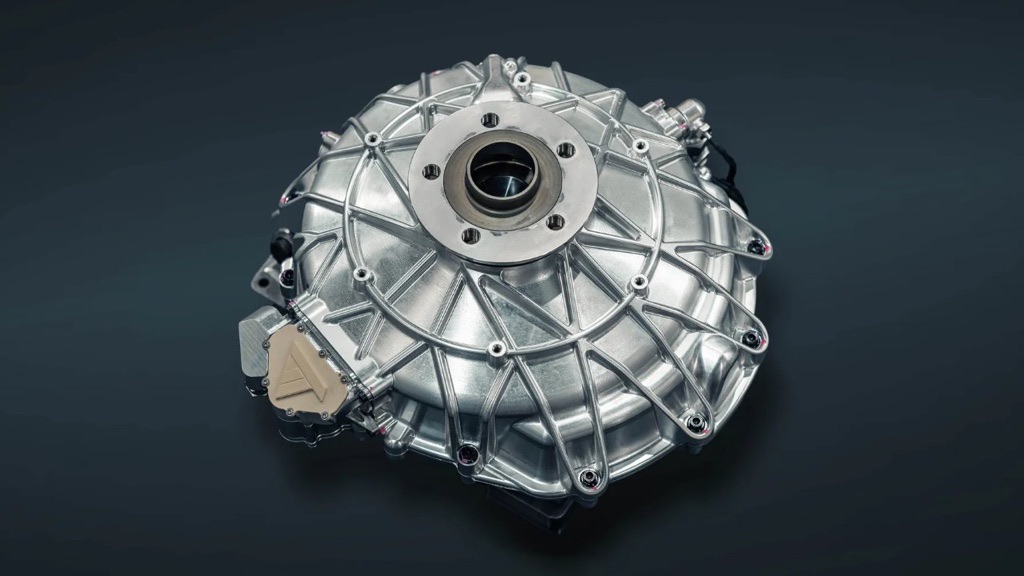
Earlier this year, YASA broke an unofficial world record when a prototype axial flux motor weighing just 28.9 lbs (13.1 kg) produced more than 737 hp. Months later, engineers refined the design, reducing the weight to 28 lbs (12.7 kg) and testing it on a more powerful dynamometer. The result:
-
1,005 horsepower peak output
-
35.9 horsepower per pound power density
-
Approximately 3× higher density than leading radial EV motors
These numbers represent a dramatic leap in electric motor efficiency. YASA’s axial flux architecture — thin, disc-shaped, and compact — differs fundamentally from the cylindrical radial motors used in most EVs today.
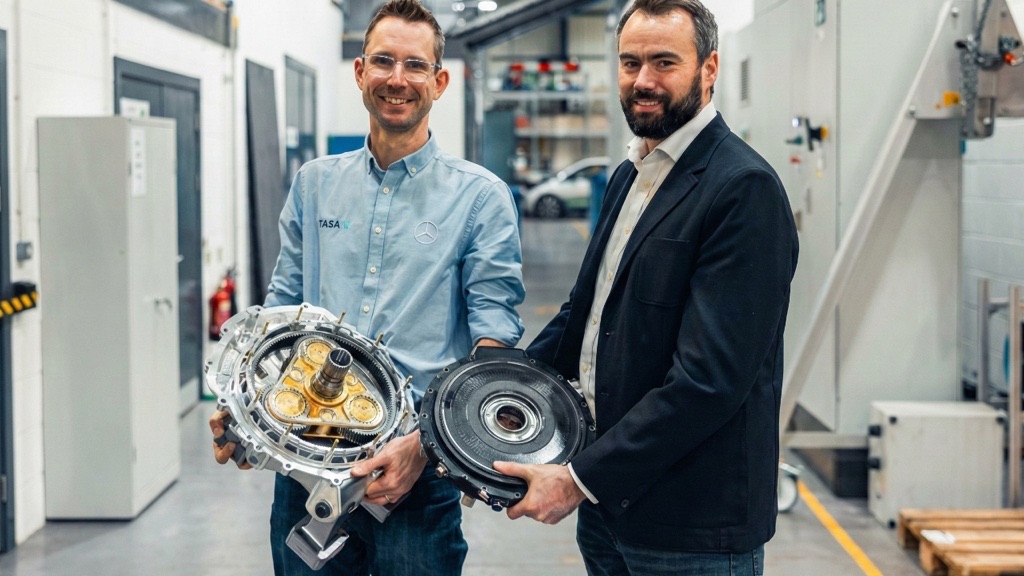
A Major Breakthrough: The First “Mass-Neutral” In-Wheel Motor
Traditional in-wheel motors add significant unsprung weight, degrading handling and ride quality. For decades, this challenge has prevented automakers from adopting in-wheel designs.
YASA claims it has overcome this limitation.
Because the axial flux motor is extremely compact and lightweight, it adds negligible mass at the wheel compared to conventional EV hardware. According to CTO Tim Woolmer, this makes YASA’s prototype the first truly mass-neutral in-wheel motor, suitable for high-performance applications.
The company also developed a complementary 33-lb dual inverter with an extraordinary 60.8 hp per pound density, enabling the system to be packaged compactly at each wheel.
What 1,000 HP Per Wheel Actually Means
If installed on all four corners of a future EV, the performance potential is unprecedented:
-
4 wheels × 1,005 hp = ~4,020 horsepower
-
Instant torque vectoring at each wheel
-
Extremely powerful regenerative braking
-
Potential elimination of rear friction brakes
YASA even suggests that regen braking could be so strong that physical rear brakes may become unnecessary — a radical idea for vehicles in the 4,000-hp category.
EV Performance Has Been Redefined
The rapid escalation in electric power output has already reshaped the performance landscape:
-
Xiaomi SU7 Ultra: 1,500 hp
-
Tesla Plaid: ~1,020 hp
-
Lucid Sapphire: ~1,200 hp
-
BYD Yangwang U9 Xtreme: 3,000 hp
Just a decade ago, reaching 1,000 horsepower required exotic internal combustion builds, turbocharging, and constant mechanical tuning. Now, YASA has created a motor capable of surpassing that threshold in a single wheel, small enough to fit in a backpack.
Prototype Today, Scalable Technology Tomorrow
While these record runs were conducted on prototype units, YASA says the technology is:
-
Scalable
-
Compact enough for production vehicles
-
Cost-efficient to manufacture
-
Intended for integration in future performance EVs
More updates are expected in 2026, as the company transitions from laboratory testing to production-ready engineering.
Conclusion
YASA’s breakthrough in axial flux in-wheel motors represents a paradigm shift for electric propulsion. If commercialized, the technology could enable hypercars with more than 4,000 horsepower, unprecedented torque control, simplified drivetrains, and smaller braking systems.
The world of EV performance is entering a new era — one where the limits are no longer defined by engines, turbos, or traction alone, but by how much power engineers dare to place inside the wheels themselves.