
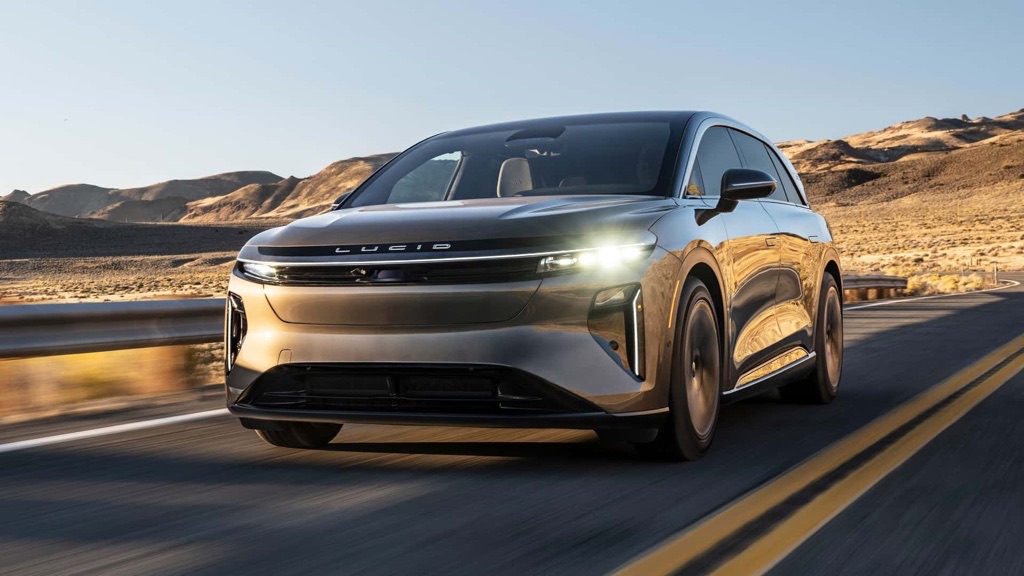
Lucid Gravity Touring Charging Test: How Long It Really Takes to Go From 0% to 100%
The Lucid Gravity Touring is the brand’s most affordable electric SUV, positioned $15,000 below the Gravity Grand Touring. To reach that lower price point, Lucid fitted the Touring with a smaller battery, lower peak charging power, and reduced performance. A new real-world charging test from Out of Spec Testing now provides the first comprehensive look at how the entry-level Gravity charges from 0% to 100%.
Smaller Battery, Lower Voltage, Slower Charging
The Lucid Gravity Touring is powered by an 89 kWh battery pack operating at around 700 volts. On a sufficiently powerful DC fast charger, it can accept up to 300 kW of power. Lucid claims that under optimal conditions, owners can add 200 miles of range in 15 minutes, with a full EPA-rated driving range of 337 miles.
For comparison:
Gravity Grand Touring (higher trim)
-
123 kWh battery
-
450 miles EPA range
-
900+ volt architecture
-
Up to 400 kW charging power
-
Adds 200 miles in under 11 minutes
The Touring clearly sacrifices charging speed and range for affordability — but how noticeable is the difference in the real world?
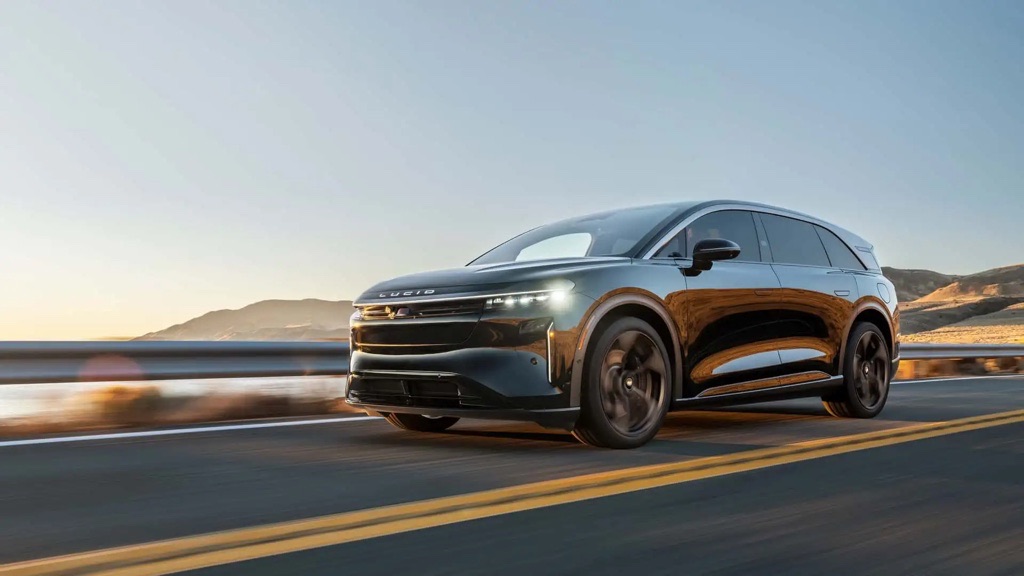
0% to 100%: Real Charging Data
Kyle Conner from Out of Spec Testing conducted a complete 0%–100% charging session with a fully preconditioned battery on a charger capable of delivering the full 300 kW. The results were better than expected in the early stages, but—as with most EVs—charging slowed dramatically past 70–80%.
Key Results
-
0% → 50%: 12 minutes
-
0% → 70%: 20 minutes
-
0% → 80%: 25 minutes
-
0% → 100%: 1 hour 14 minutes
-
Energy delivered: ~98 kWh (more than the pack’s nominal capacity)
This is a strong charging curve up to 70% state of charge, after which speeds begin falling sharply.
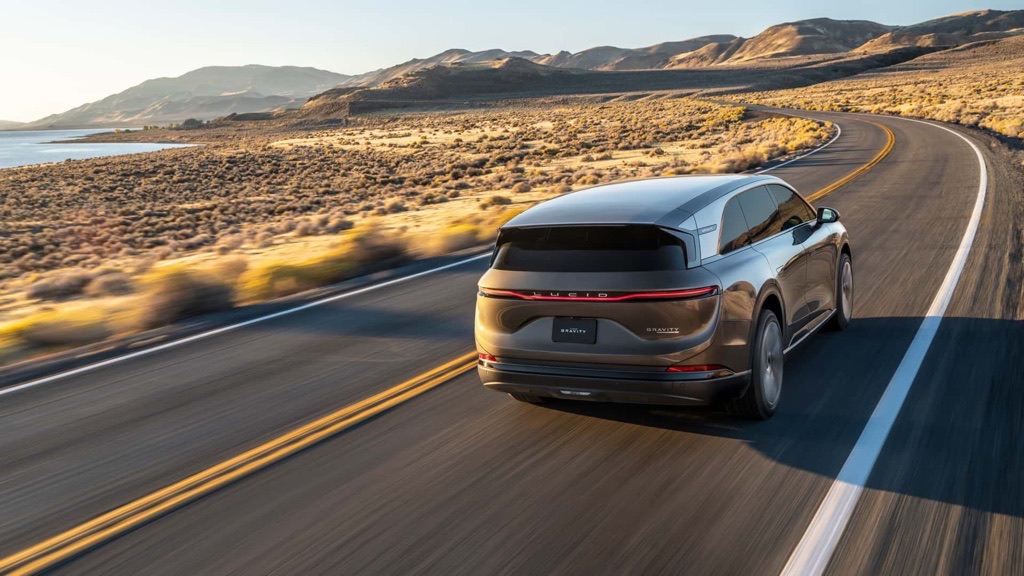
Optimal Charging Strategy
Based on Kyle’s test, the Gravity Touring is best used within a 10%–80% or 0%–70% window during road trips. Beyond that point, charging slows dramatically:
-
70%+ charging becomes inefficient
-
80%+ charging is very slow
-
90%+ charging should be avoided unless necessary
Lucid’s entry-level SUV can move quickly through the early part of the charging curve, making shorter road-trip stops feasible if drivers avoid topping all the way up.
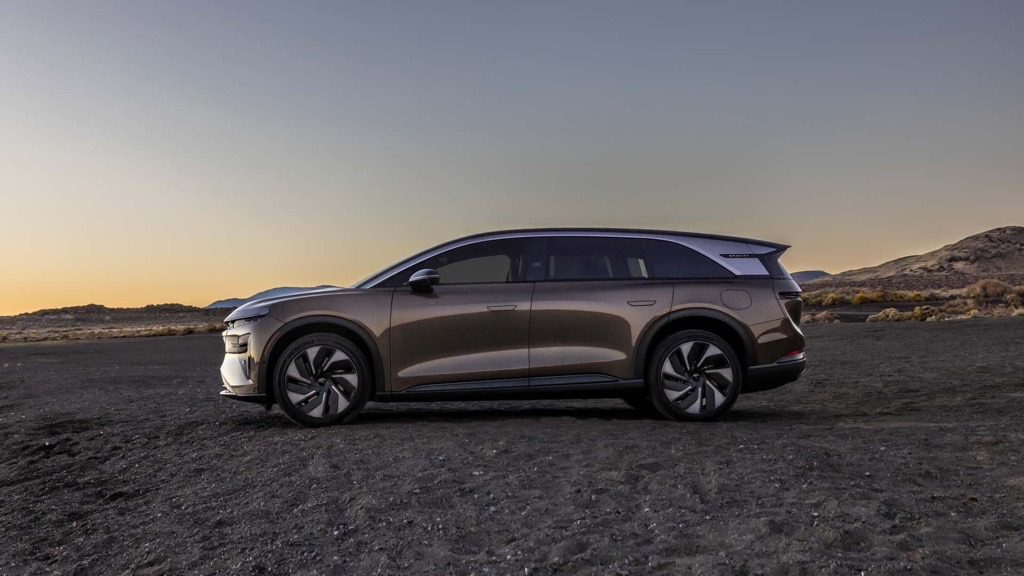
Real-World Range vs. EPA Ratings
During the test, Kyle noted that he never saw efficiency above 2.9 miles/kWh on the highway with the aero wheels. Using that real-world number:
-
Estimated real range: ~258 miles
-
Usable road-trip range (10% → 80%): ~180 miles
-
Usable range (0% → 70%): ~180 miles
In other words, despite the smaller 89 kWh pack, the Gravity Touring’s charging performance compensates fairly well — but long-distance drivers may still prefer the larger Grand Touring battery.
Charging Session Table
| Minutes | State of Charge | Power |
|---|---|---|
| 0 | 0% | 310 kW |
| 2 | 10% | 305 kW |
| 4 | 20% | 280 kW |
| 6 | 30% | 250 kW |
| 9 | 40% | 215 kW |
| 12 | 50% | 180 kW |
| 15 | 60% | 140 kW |
| 20 | 70% | 113 kW |
| 25 | 80% | 80 kW |
| 34 | 90% | 50 kW |
| 75 | 100% | – |




Conclusion
The Lucid Gravity Touring offers strong early charging performance and competitive mid-range speeds for a large electric SUV. However, its smaller battery and lower voltage architecture limit fast-charging efficiency beyond 70%.
With a full real-world charging session now available, buyers have a clearer picture of what to expect — and whether paying extra for the Grand Touring’s faster charging and longer range is worthwhile.
Lucid’s own test will come soon, and more data will follow as the Gravity reaches customers.